

When I meet someone in the clinic whose face flushes easily, I ask what they eat before I ask which cosmetics they use. Rosacea is a condition in which blood vessels and inflammation are intertwined, so the food on your table every day quietly influences how intense the redness becomes. In this post, I would like to go through, one by one and with the mechanisms behind them, the foods known to be able to aggravate rosacea.
Starting with three familiar triggers
The first thing I talk about is hot drinks.
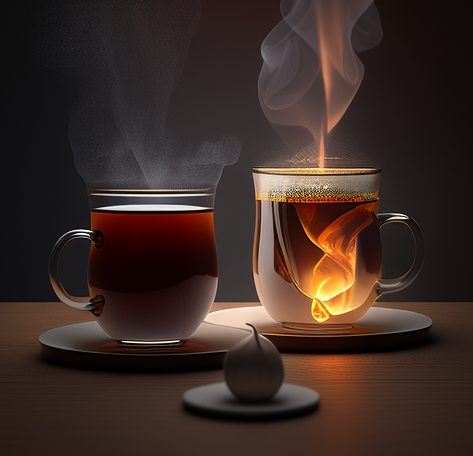
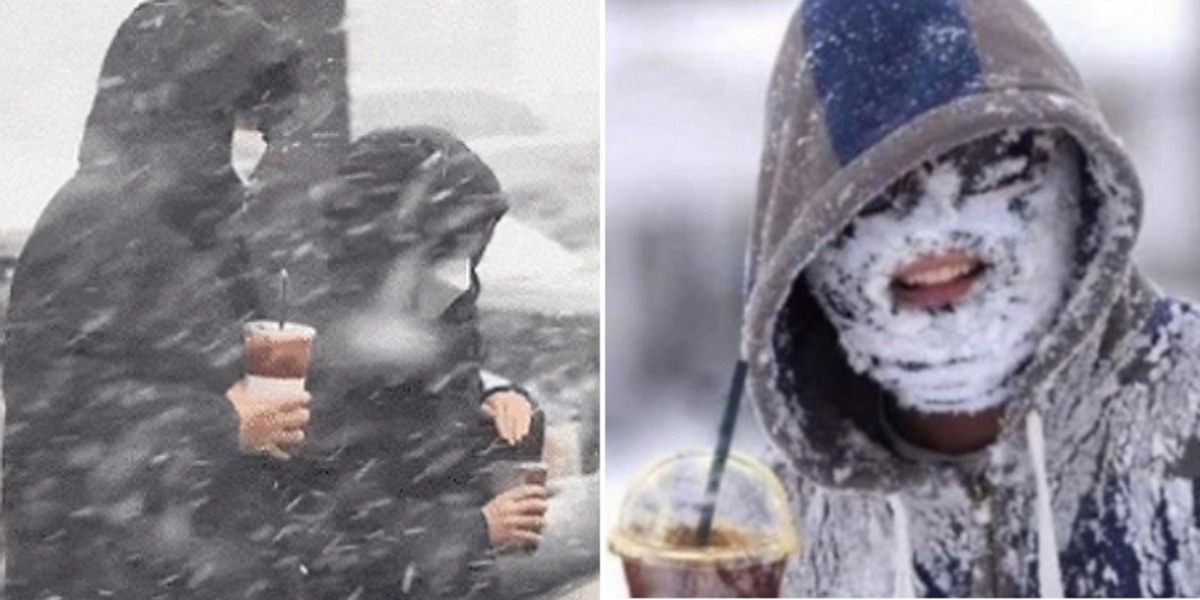
The high temperature of hot coffee or tea can dilate the blood vessels of the face and aggravate rosacea. However, there are reports that the caffeine in coffee itself may actually be helpful, so simply lowering the temperature is the realistic approach. That is why I tend to recommend an iced Americano.
The second is spicy food. Foods rich in capsaicin, which Koreans enjoy, are counted among the representative triggers that aggravate rosacea.
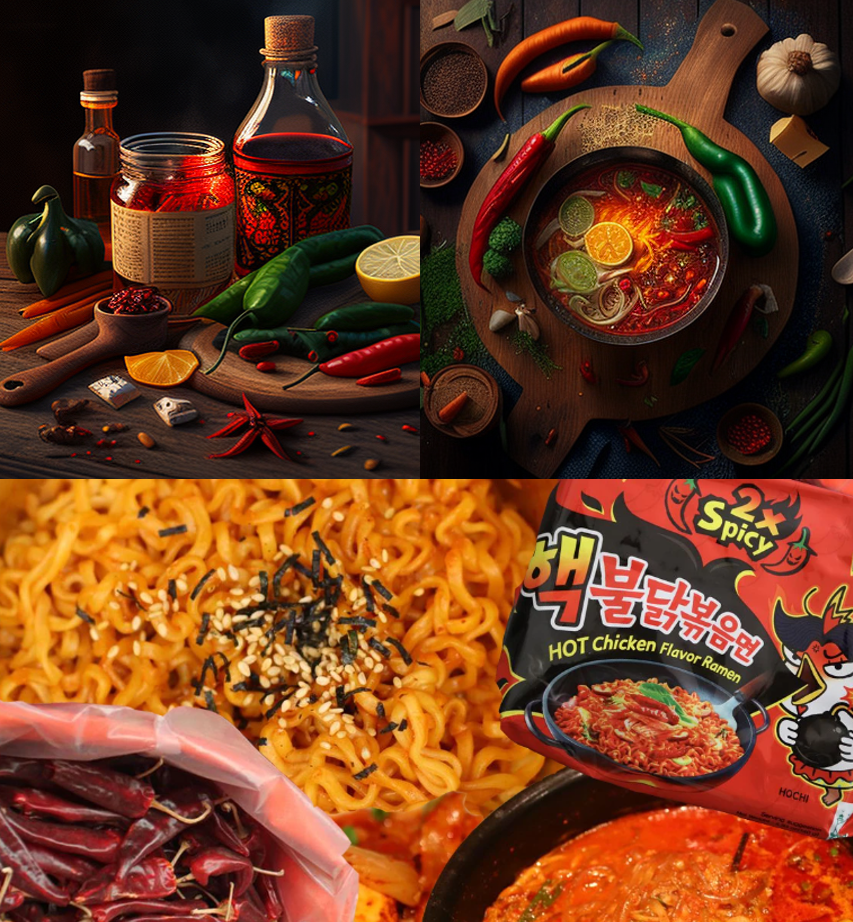
Many people say they need something spicy to relieve stress, but if your flushing tends to be severe, I recommend eating it less often.
The third is alcohol.
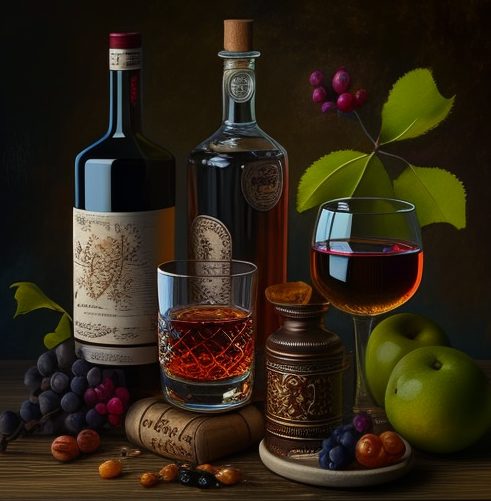
When consumed, alcohol dilates blood vessels and inhibits the breakdown of histamine, which can make the flushing even worse.
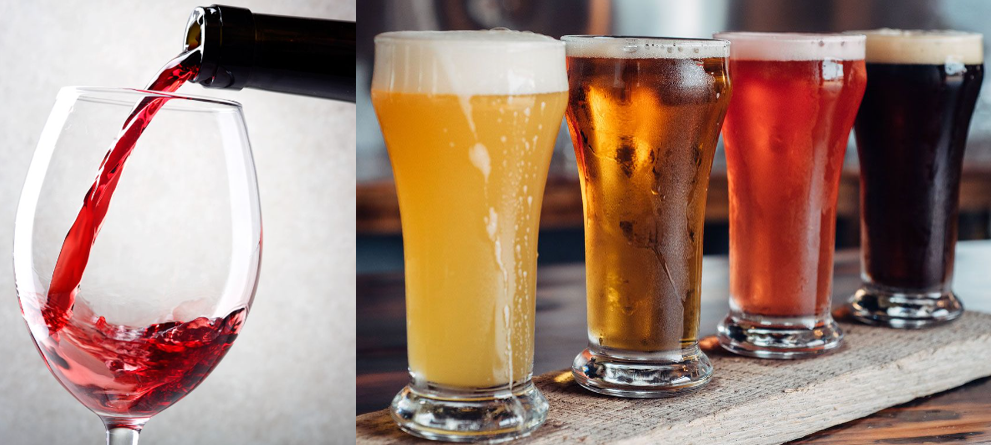
If I had to distinguish between them, fermented drinks such as red wine and beer tend to irritate rosacea more than clear drinks such as white wine or distilled spirits. Even so, regardless of the type, it is better to refrain from alcohol. Up to this point, the content is probably familiar to anyone who has lived with flushing for a long time.
An unexpected culprit: cinnamaldehyde
From here, a slightly unfamiliar name appears: foods containing cinnamaldehyde.
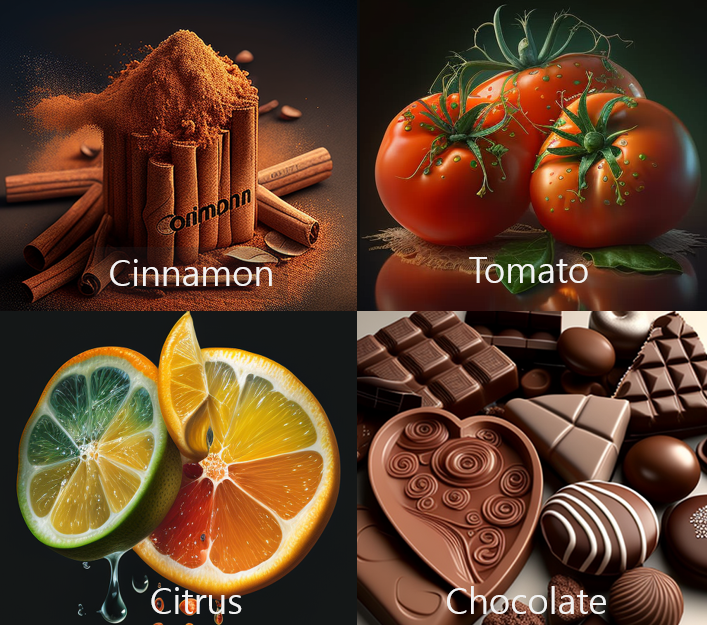
Typical examples are cinnamon, tomatoes, citrus fruits (lemon, orange, lime) and chocolate. If you have flushing and like to top your coffee with cinnamon powder, that habit is worth reconsidering first.
One more point: cooking tomatoes actually raises their cinnamaldehyde concentration. If you do need to eat them, I recommend eating them raw rather than cooked.
Different foods press the same switch
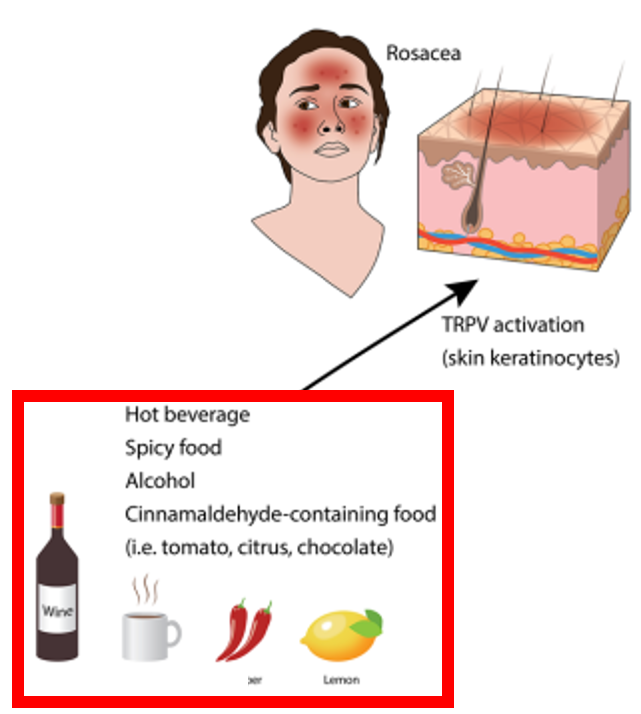
The triggers I have described so far ultimately converge on a single pathway. Hot drinks, spicy food, alcohol and cinnamaldehyde stimulate the TRPV1 receptor in the skin, drawing out blood vessel dilation and an inflammatory response.
The foods may differ, but the switches that make your face flush often overlap. So rather than cutting something out completely, it is more realistic to find the combinations that often make your face burn and reduce them.
This perspective applies not only to diet but equally to skincare. I recommend also reading the post I wrote earlier, Why it is better to take away cosmetics than to add more.
Histamine, which has recently drawn attention
The fourth axis is histamine. It has recently been attracting interest as another factor that can aggravate rosacea.
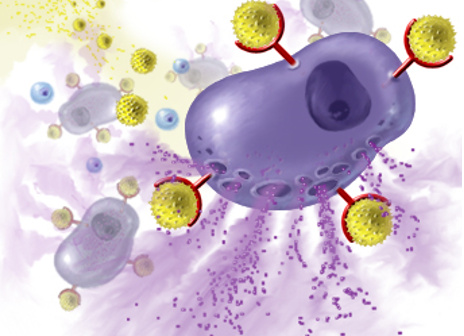
Histamine is a substance stored in the body's mast cells that triggers an immune response when it is released (degranulation). The problem is that foods containing a lot of histamine are more common than you might think.
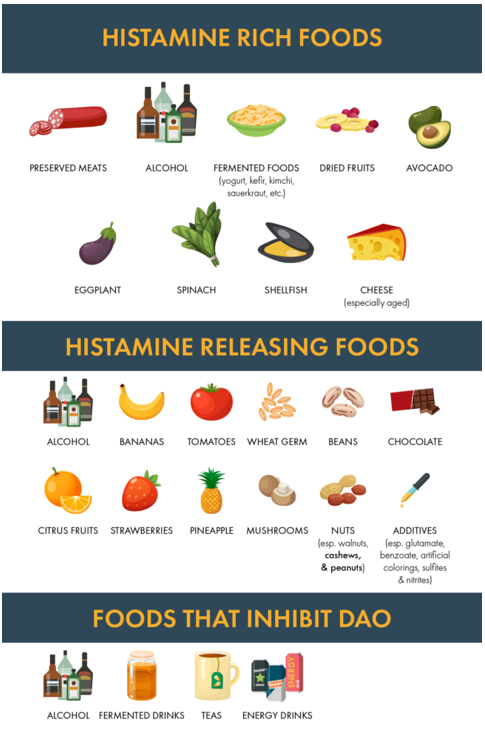
Aged cheese, oily fish such as mackerel, spinach, tomatoes, citrus fruits, strawberries, wine, beer, sausages, plums, pineapple, kiwi, bananas, chocolate and even nuts. Just skimming the list shows how broad it is.
Histamine in the Korean diet: what does research say
Fortunately, there are studies that have looked at the histamine content of the Korean diet.
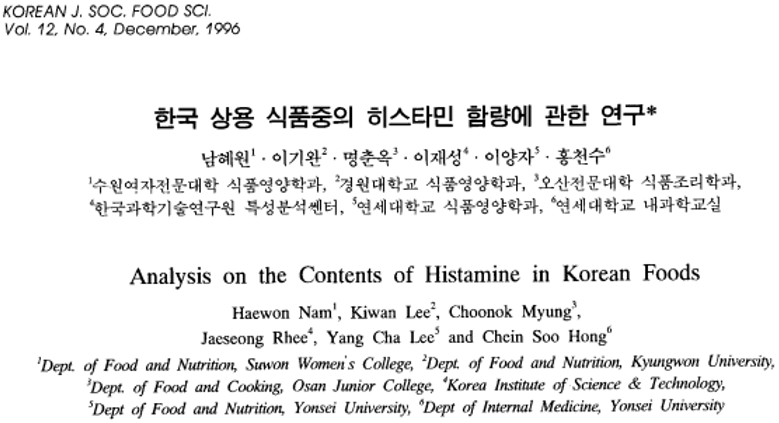
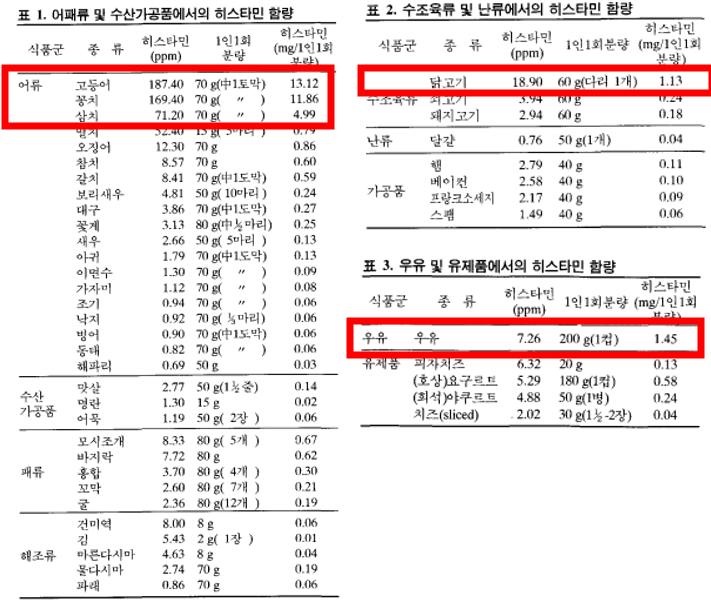
According to these data, oily fish such as mackerel, Pacific saury and Spanish mackerel contained a lot of histamine, and chicken and milk also showed relatively high levels.
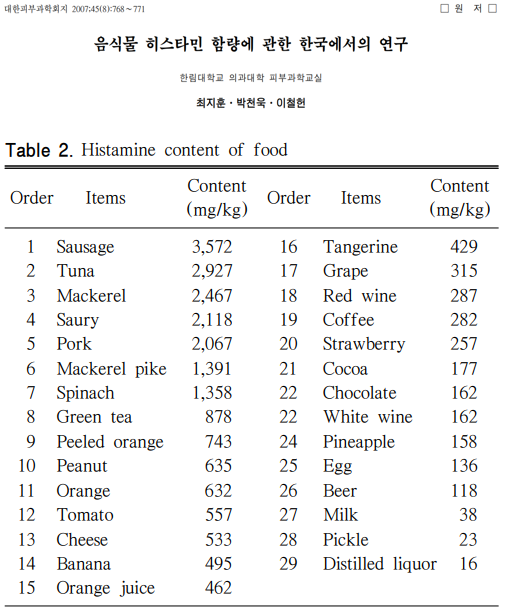
A study conducted by dermatologists also detected high levels of histamine in sausages, blue-backed fish (tuna, mackerel, Pacific saury, Spanish mackerel), pork, spinach and other foods. The foods discussed so far can be organized by type as follows.
| Category | Typical foods | Pathway acting on the face |
|---|---|---|
| Temperature stimulus | Hot coffee, hot tea | Blood vessel dilation from heat |
| Capsaicin | Spicy food | TRPV1 receptor stimulation |
| Alcohol | Fermented drinks such as red wine and beer | Blood vessel dilation, inhibition of histamine breakdown |
| Cinnamaldehyde | Cinnamon, tomatoes, citrus fruits, chocolate | TRPV1 receptor stimulation |
| Histamine | Blue-backed fish, aged cheese, sausages, spinach | Triggers immune and inflammatory responses |
Does that mean cutting all of them out?
There is one point I hope you will not misunderstand. Restricting all of the foods above just because they are high in histamine is not desirable. There is no reason to avoid the entire list at the cost of upsetting your nutritional balance.
The approach I recommend in the clinic is this.
- First check which foods on the list above you eat often
- For a few days, keep a record of what you ate on days when your face felt especially hot
- If certain foods keep overlapping, carefully reduce how often you eat them at that point
Narrowing down the foods that actually trigger a reaction in you is something you can keep up for much longer than vaguely cutting everything out.
Diet is only one axis of care. I have continued to cover how the symptoms, causes and actual treatment connect in the posts Symptoms of rosacea, Causes of rosacea and Treatment of rosacea. If your flushing is stubborn and hard to settle, Why I also look at gut health may be helpful too.
If your flushing keeps coming back no matter how much you adjust your diet, it is better to set a care plan together that fits your current condition.
Consult via chatReferences
- Kim, Hei Sung. "Microbiota in rosacea." American Journal of Clinical Dermatology 21.1 (2020): 25-35. Woo, Yu Ri, et al. "Updates on the risk of neuropsychiatric and gastrointestinal comorbidities in rosacea and its possible relationship with the gut–brain–skin axis." International Journal of Molecular Sciences 21.22 (2020): 8427.
- Nam, H., et al. "Analysis on the contents of histamine in Korean foods." Korean J Soc Food Sci 12 (1996): 487-492.
- Choi, Ji-Hoon, Chun-Wook Park, and Cheol-Heon Lee. "A study of histamine content in food in Korea." Korean Journal of Dermatology (2007): 768-771.
Author: Dr. Cho Mingyeol, Medical Director (board-certified dermatologist; Master Certification in Pigmentation, Acne, Rosacea and Hair from the Korean Dermatologists Association). You can find the full profile on the Medical Team page. First published 2023-03-01 / Last reviewed 2026-07-09
This article is intended for general information only; the appropriate treatment and outcomes may vary depending on each individual's condition.