

We now live in an era where you can even ask artificial intelligence how rosacea is treated. If you actually ask a chatbot, it gives you a very well-organized answer.
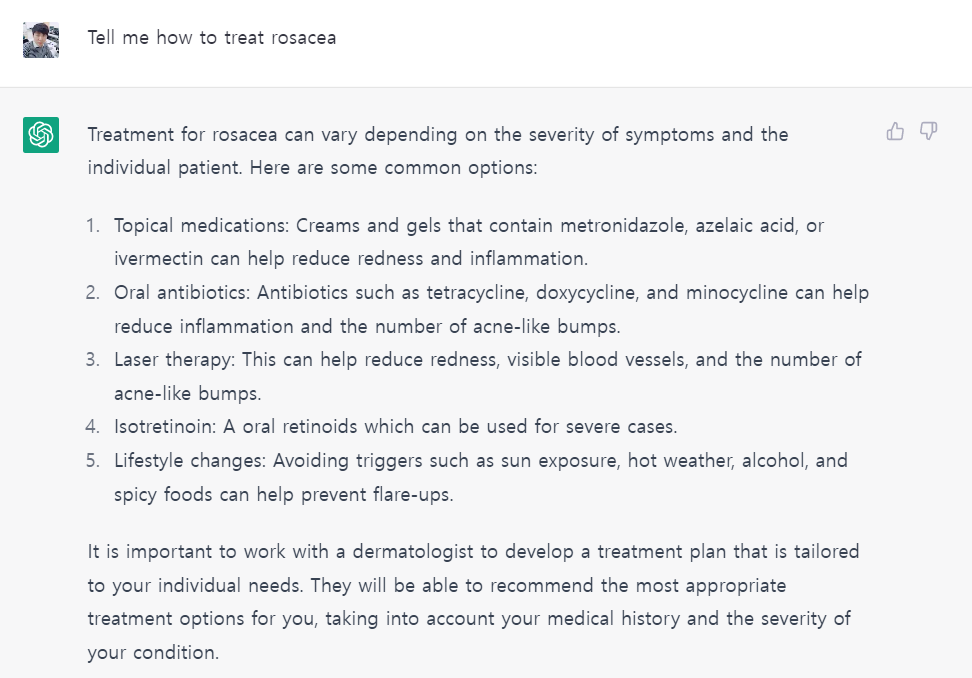

From a textbook standpoint, it is a flawless answer. But when I face real patients in the clinic, the priorities and combinations between these textbook sentences become far more important.
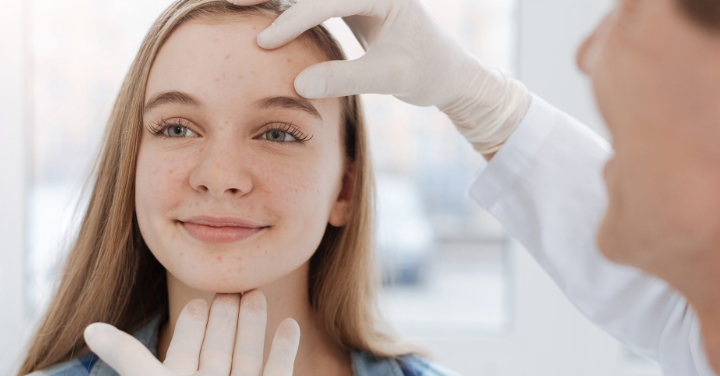
So in this post, rather than listing the answer key, I would like to lay out the order and perspective with which I approach rosacea treatment in the clinic.
I see treatment not as a single procedure but as three axes
For me, treating rosacea is not a matter of a single procedure but the work of aligning three axes together.
- Restoring the skin barrier
- Suppressing the inflammatory response
- Regulating vascular tone
These three axes are not separate from one another; when one collapses, the others are shaken as well. That is why an approach that holds on to only one of them rarely lasts long.
Why I talk about barrier repair first
Flushing is ultimately the phenomenon of the skin's blood vessels dilating and showing through. When blood vessels are dilated,
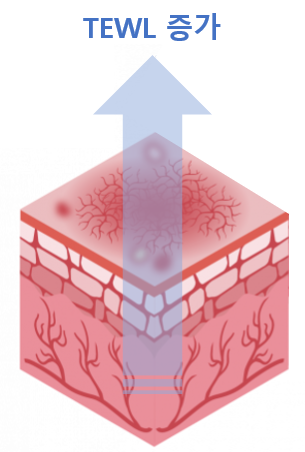
transepidermal water loss, the loss of moisture out of the body through the skin, known as TEWL, increases.
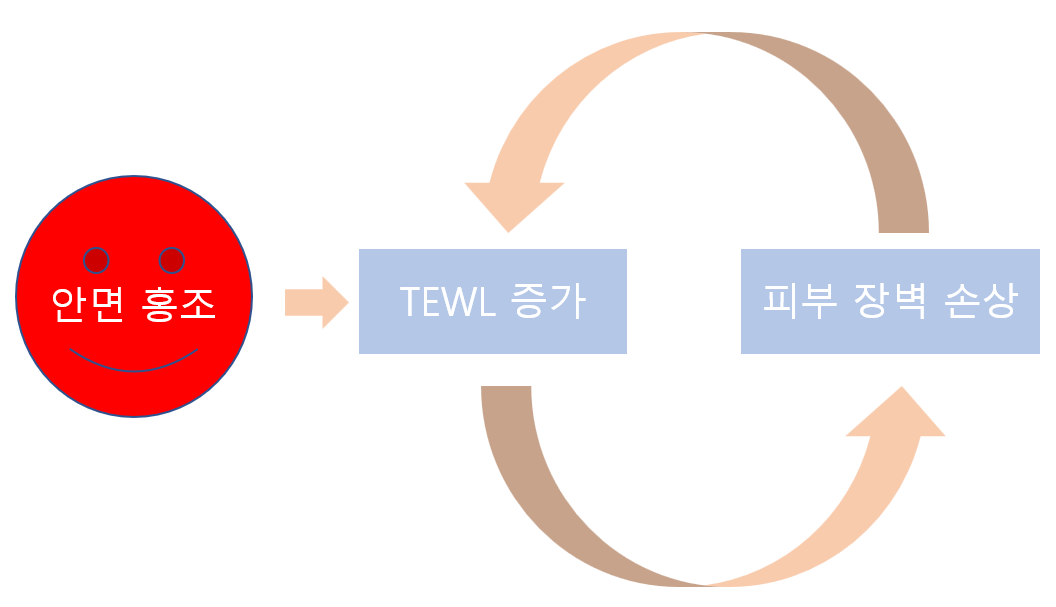
If flushing is left as it is, this water loss leads to damage to the skin barrier. That is why, before any procedure, I recommend correcting lifestyle habits, including avoiding aggravating factors and adjusting cleansing habits. For some people this alone is enough for the barrier to recover; if not, we then move on to dermatological treatment.
When we help restore the barrier at a dermatology clinic, depending on the patient's condition, we use ultrasound and similar methods to improve the penetration of ingredients with anti-inflammatory or intensive moisturizing effects. Most often, we push ultra-low-molecular-weight hyaluronic acid deep into the skin with electrophoresis or high-density ultrasound to refill the barrier.
Even while you are receiving treatment at a clinic, proper cleansing and appropriate use of moisturizer are still half of the treatment. If this foundation is shaky, the effect of any procedure you add will have a hard time lasting.
I have explained in more detail why I emphasize cleansing and moisturizing so much in Why I ask about cleansing habits first in the clinic and my post comparing the skin barrier to the Great Wall, so I recommend reading them together.
Where to break the vicious cycle of inflammation
When the inflammatory response persists, it too leads to barrier damage, and the damaged barrier in turn invites flushing, creating a vicious cycle.
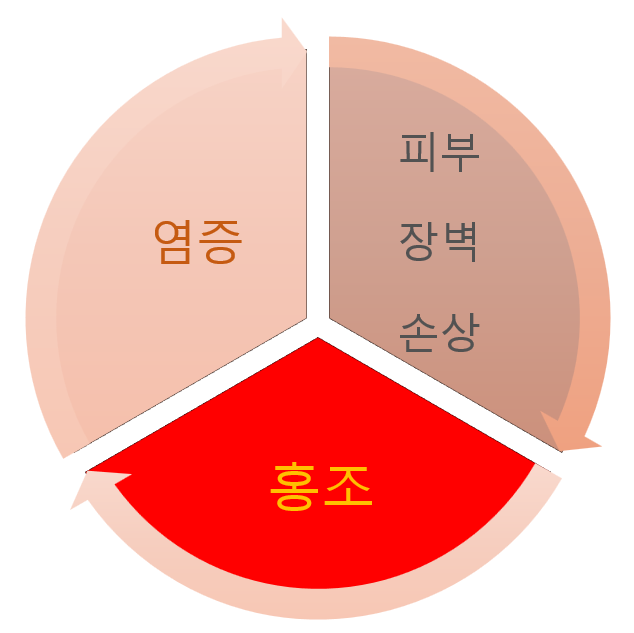
So in treating flushing, this chain of inflammation needs to be broken somewhere.
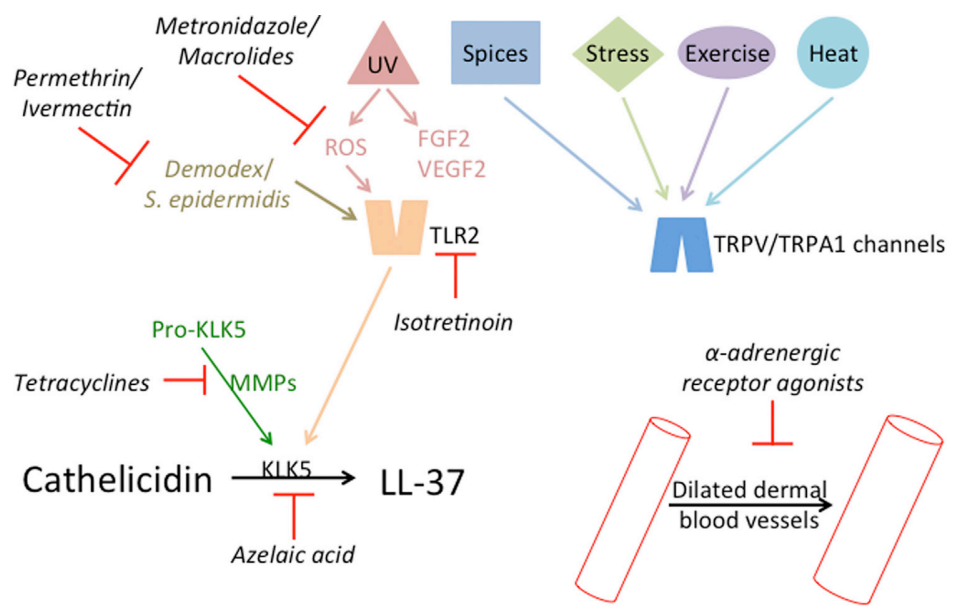
Suppressing Demodex mites and the inflammatory response is mainly done with oral and topical medications.
- As oral medication, we use the tetracycline-class antibiotics doxycycline or minocycline. Because gastrointestinal symptoms such as heartburn or bloating can occur, it is best to decide the dose and timing together with your doctor.
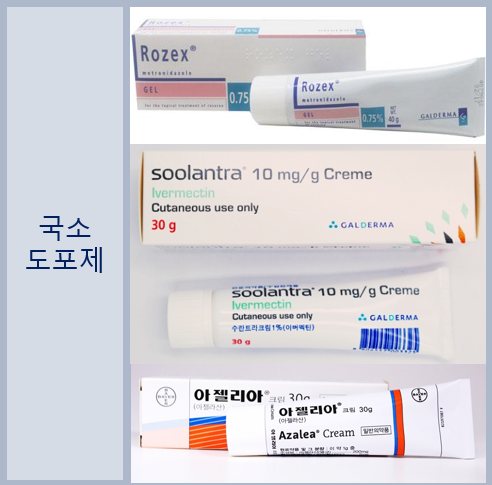
- Topical agents include Soolantra cream (ivermectin), Rozex gel (metronidazole) and Azelia cream (azelaic acid). Because they can sometimes cause irritation, it is better to use small amounts with the aim of preventing flare-ups rather than applying them diligently.
I sometimes also consider Elidel cream (pimecrolimus), a non-steroidal ointment mainly used for atopic dermatitis.
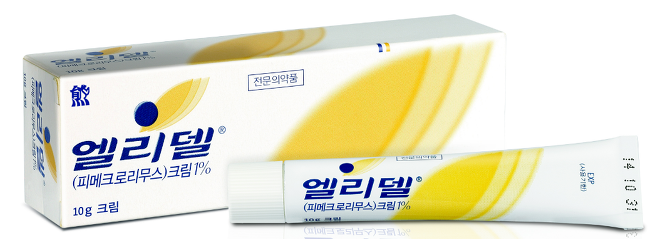
It can occasionally cause a burning sensation, so this too is used after discussing it with your doctor. Oral antihistamines are also reported to help to some extent by suppressing mast cells and reducing inflammation and itching. They are known to be relatively safe, so you can think of them as a baseline that we keep in place.
Meanwhile, how I choose a procedure when dealing with red marks is covered separately in Why I recommend PDL before IPL for red marks. If it is hard to tell where your case falls, feel free to ask through Consult via chat now.
Why dilated blood vessels need to be addressed
The flushing of rosacea appears when blood vessels lose their own ability to regulate and become excessively dilated.
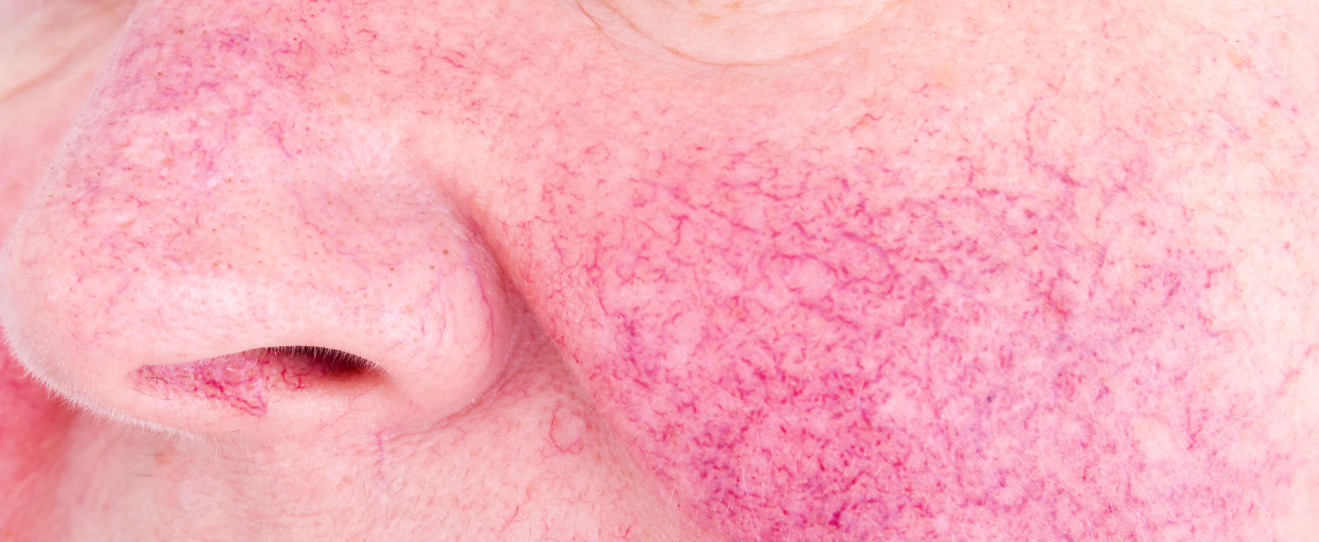
Only when these over-dilated vessels are addressed does it help, in the long run, to stop rosacea from getting worse.
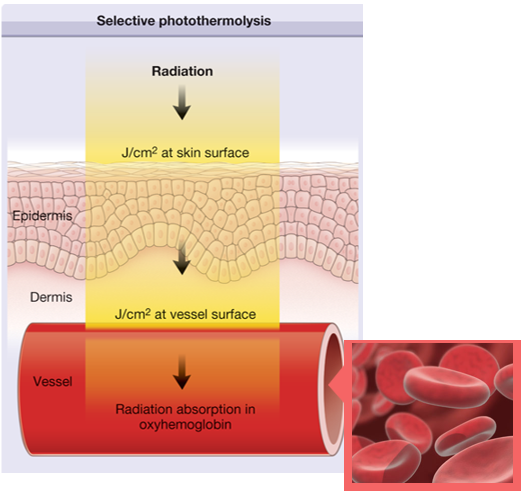
For this, we mainly use lasers that target the hemoglobin inside blood vessels. Hemoglobin absorbs light well between 532 nm and 585 nm,
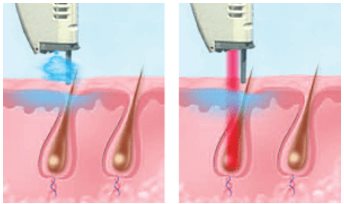
so we use the 532 nm KTP laser and the 585 or 595 nm Dye laser. The dye laser uses cryogen gas to prevent burns to the epidermis, and the laser energy combined with this cooling may irritate the skin. For that reason, for about two to three days after the procedure your face may feel a little redder or puffier, and this varies from person to person.

So when treating rosacea lesions, the laser intensity and cooling (DCD) must be finely adjusted according to each person's skin condition and downtime. In the end, this means that the adjustment is the practitioner's responsibility.
Recently, needle radiofrequency (Needle RF) is sometimes used together with lasers.
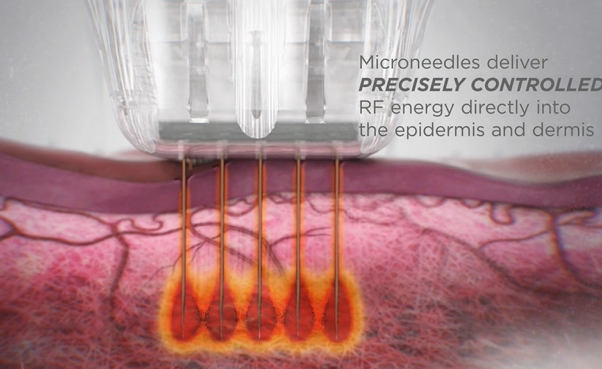
Needle RF produces a remodeling effect that improves the dermal environment and an anti-angiogenesis effect that suppresses the formation of new blood vessels in the dermis.
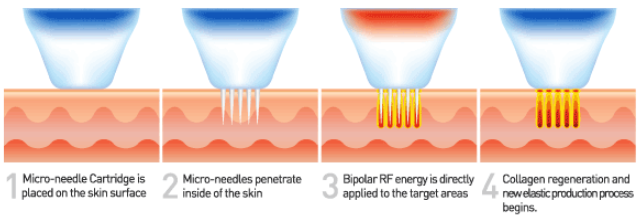
Thanks to this, it has been reported to show some visible change in the treatment of flushing as well. I have written in detail about why I took a fresh look at radiofrequency when vascular lasers such as V-Beam are regarded as the answer in Why I take another look at radiofrequency for rosacea, where V-Beam is seen as the answer. You can also refer to V-Beam Perfecta, a representative device among vascular lasers. Beyond these, there are various other methods such as skin Botox and skin boosters like Rejuran.

Which treatment is used where, at a glance
Grouping what I have discussed so far by axis gives the following.
| Treatment axis | Main methods | How I approach it |
|---|---|---|
| Barrier repair | Lifestyle correction, ultra-low-molecular-weight hyaluronic acid with electrophoresis and ultrasound | First build the foundation of cleansing and moisturizing |
| Inflammation control | Doxycycline and minocycline; topical ivermectin, metronidazole and azelaic acid; antihistamines | Focus on preventing flare-ups with small amounts |
| Vascular regulation | KTP and dye lasers, needle RF | Adjust intensity and cooling while watching downtime |
Why I explain it as control, not a cure
In my experience, it often takes at least two to three months before a noticeable change appears, and this too varies from person to person. It is hard to say that rosacea disappears completely with any single method.
In particular, I recommend taking claims that flushing disappeared with cosmetics alone with caution. That does not mean, however, that dermatological treatment is always necessary or the most effective.
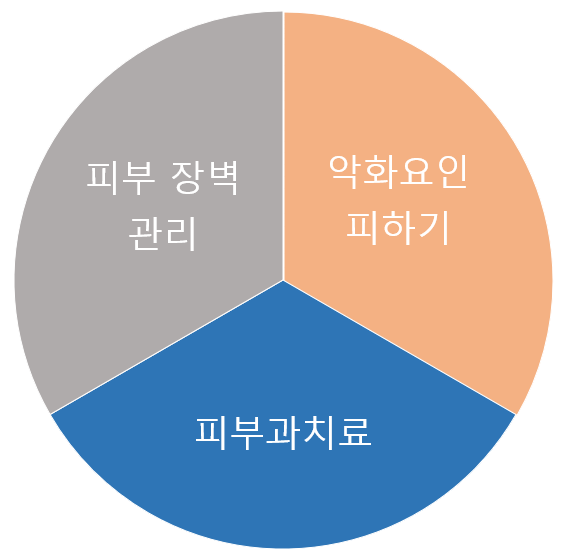
As in the figure above, rosacea is often managed more effectively when the three elements of daily care, medication and procedures are in balance. If you understand rosacea as a condition to be controlled rather than one to be cured, and keep managing it steadily while avoiding aggravating factors, you can move in a good direction.

If you are curious about the earlier parts of this discussion, I recommend also reading The causes of rosacea and Why I recommend subtracting cosmetics rather than adding them. If you would like to look together at which axis your flushing is caught on, please press Consult via chat to get in touch. Costs are explained after the consultation.
References
-
Two, Aimee M., et al. "Rosacea: part II. Topical and systemic therapies in the treatment of rosacea." Journal of the American Academy of Dermatology 72.5 (2015): 761-770.
-
Ash, Caerwyn, et al. "Effect of wavelength and beam width on penetration in light-tissue interaction using computational methods." Lasers in medical science 32 (2017): 1909-1918.
-
Jung, You Jin, et al. "Therapeutic effects of a new invasive pulsed-type bipolar radiofrequency for facial erythema associated with acne vulgaris and rosacea." Journal of Cosmetic and Laser Therapy 22.4-5 (2020): 205-209.
Author: Dr. Cho Mingyeol, Medical Director (board-certified dermatologist; Master Certification in Pigmentation, Acne, Rosacea and Hair from the Korean Dermatologists Association). You can find the full profile on the Medical Team page. First published 2023-03-17 / Last reviewed 2026-07-09
This article is intended for general information only; the appropriate treatment and outcomes may vary depending on each individual's condition.