

I often hear people say about the redness left where acne has settled, "It will go away if you just leave it." In fact it often fades over time, but in the clinic I quite often meet people who change course because the color does not fade well. I have previously summarized when red marks can be left alone and when they should be actively treated in my post examining whether red marks resolve with time, and today I would like to go one step further and talk about how these red marks are actually cleared.
Why do we target blood vessels to clear red marks?
What post-acne red marks really are is blood vessels that remain dilated where the inflammation has passed. That is why most lasers that treat this color use wavelengths highly absorbed by red blood cells, namely the 530-595nm range. The light energy is selectively absorbed by red blood cells within the vessels, clearing the dilated vessels while affecting surrounding tissue less.
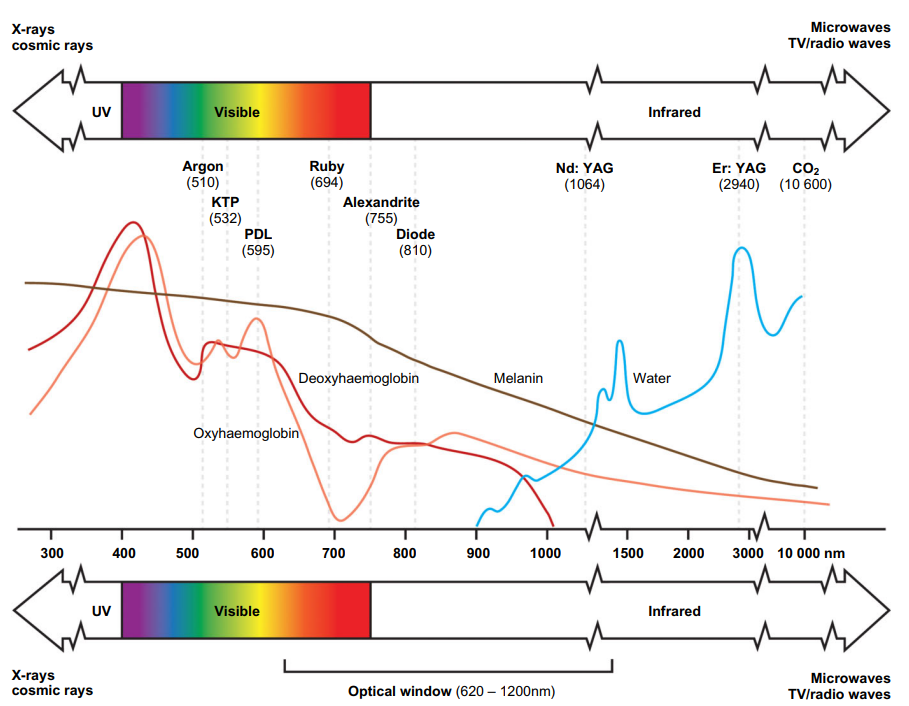
In textbooks, the lasers known to target blood vessels are KTP (532nm), PDL (595nm), alexandrite (755nm) and Nd:YAG (1064nm).
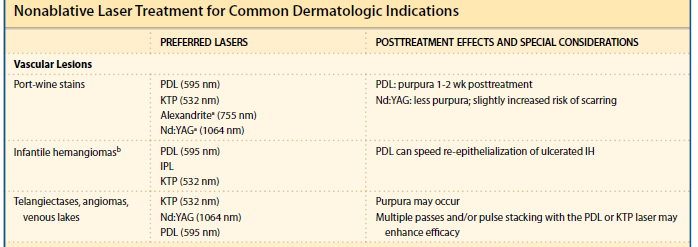
However, not all of these are used equally for acne erythema. In actual practice, the devices clinicians reach for to treat erythema generally narrow down to the three below.
| Device | Wavelength | Role in acne erythema |
|---|---|---|
| KTP | 532nm | Frequently used; an alternative when cost is a concern |
| PDL | 595nm or 585nm | Reduced inflammation and lasting effect reported |
| IPL | 530-580nm | Use is declining; pigment changes reported |
| alexandrite | 755nm | Textbook vascular target |
| Nd:YAG | 1064nm | Textbook vascular target |
Why is IPL no longer used as often as before?
First, let's look at cases in which IPL was used for acne erythema.
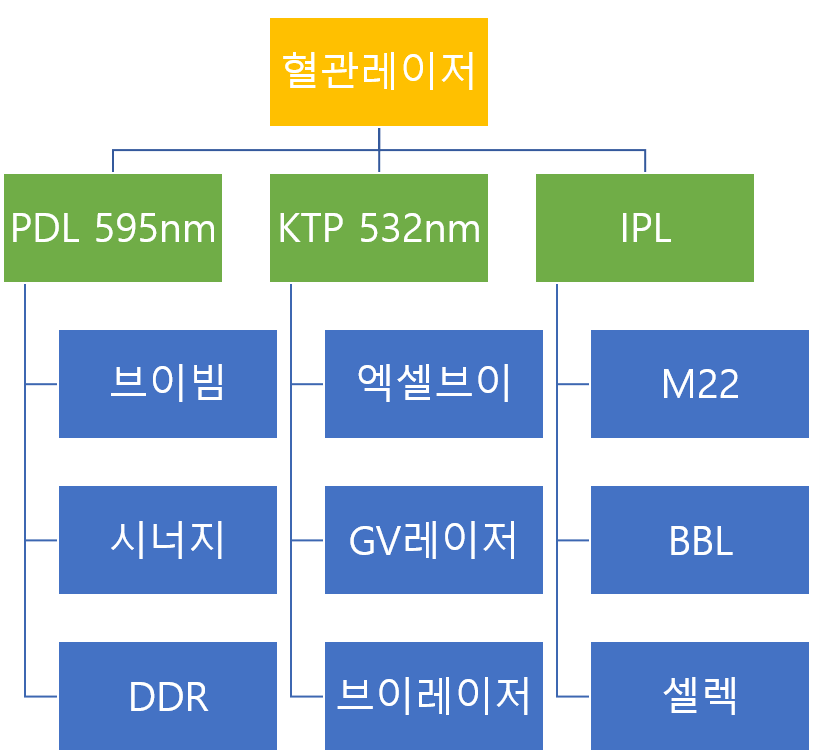
There were certainly cases that responded well. However, related research reported hyperpigmentation in about 15% and hypopigmentation in 12.12%, which is somewhat high for the purpose of treating erythema. Of course, these reactions vary from person to person.
IPL sometimes shows noticeable results, but compared with lasers, the probability of pigment-related reactions is relatively high, so its use has been gradually declining.
The reason lies in IPL's origins. Strictly speaking, IPL is not a laser; rather than emitting a single wavelength, it emits a broad band of light at once. As a result, it can also affect pigment other than the target and occasionally produce unpredictable results. The color left after acne is often a mix of not only red marks but also brownish post-inflammatory hyperpigmentation, and how I tell the two apart is explained in detail in my post on early care for post-inflammatory hyperpigmentation.
A study comparing IPL and PDL head to head
So which device is better suited to treating erythema? There is a study that compared them directly.

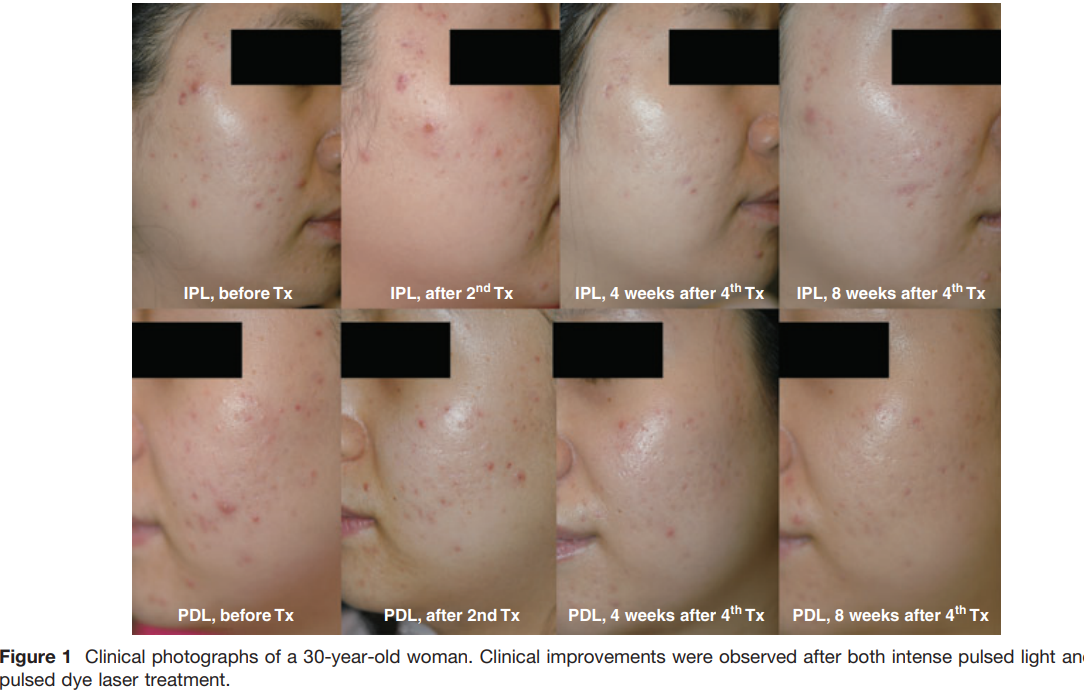
It was a split-face study in which the left and right sides of the face were treated separately, four times at two-week intervals. In the end, both devices showed good responses, but there was a point where they differed.
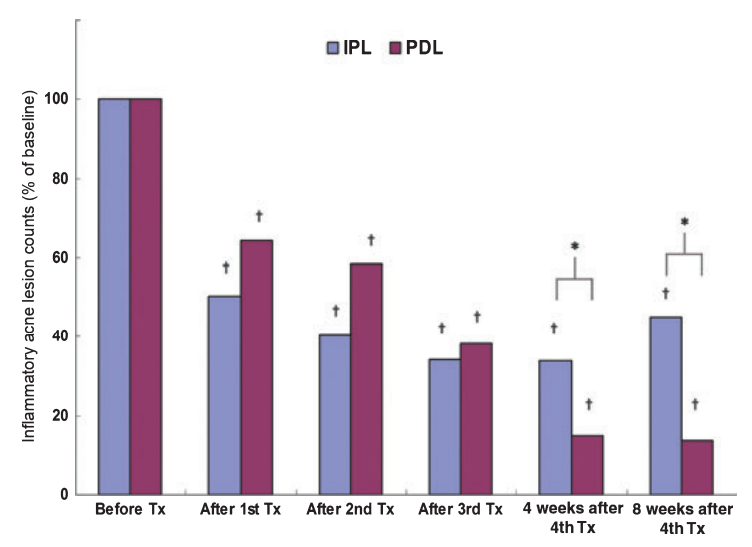
PDL showed better results than IPL in reducing the number of inflammatory acne lesions, and its effect also lasted longer. This is interpreted as being related to PDL's well-known TGF-b-inducing effect. It means PDL does not stop at lightening the redness, but intervenes in the course of the inflammation itself.
Why I think of PDL first in the clinic
Let's look a little more closely at the response to PDL.
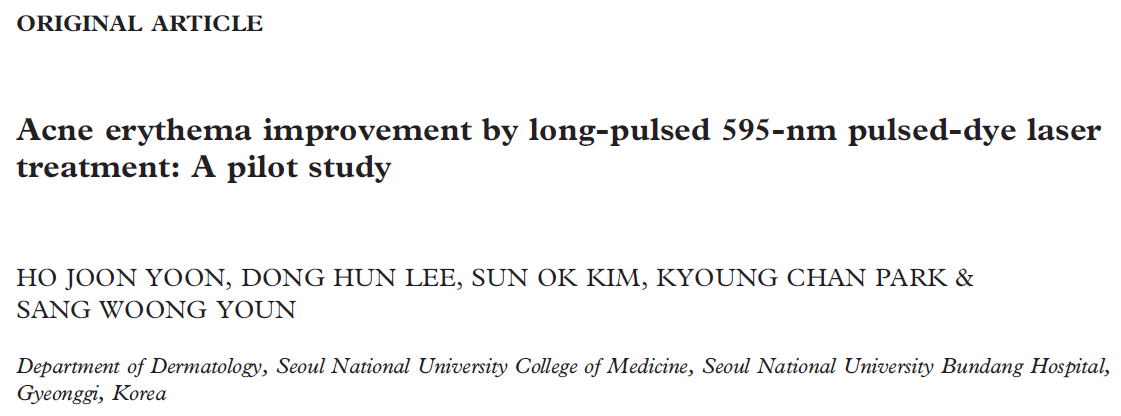
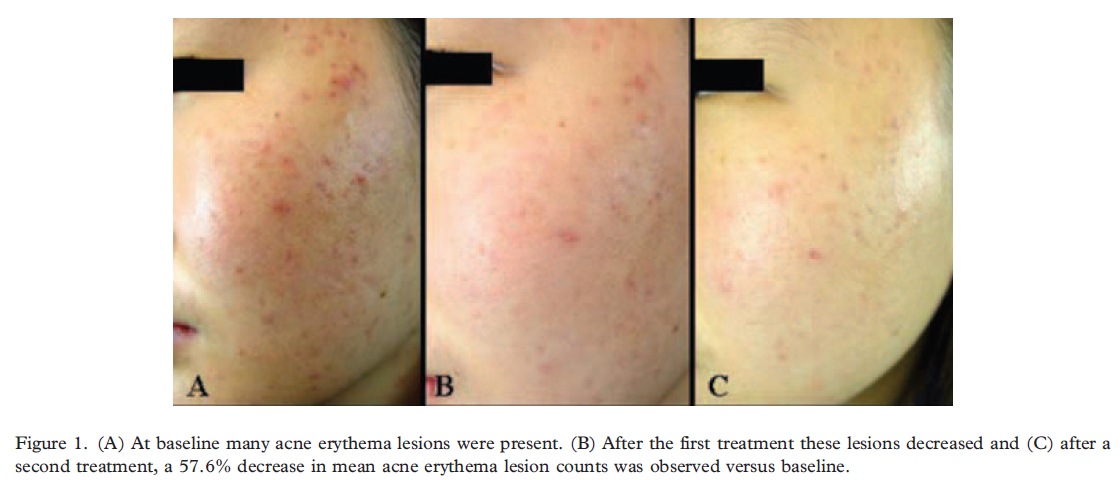
Can you see the change in the clinical photos? One study reported improvement of 50% or more after only two sessions of V-Beam Perfecta at four-week intervals. Not only did the red marks fade, but an accompanying increase in skin elasticity was also notable. However, the extent of such a response differs from person to person.
Here is a summary of why I think of PDL first when facing red marks.
- It works not only to lighten the color but also to reduce the inflammatory lesions themselves
- Its effect is reported to last relatively long
- The burden of pigment-related reactions tends to be lower than with IPL
Of course, this judgment depends on the skin condition and the nature of the remaining lesions. When post-acne red marks come together with enlarged pores and flushing, the axis of the approach changes, and I have covered those criteria separately in why I look at microneedle radiofrequency first when pores and redness coexist. If red marks are tangled up with recurring adult acne, the perspective of examining the sebaceous glands before the inflammation is also worth consulting.
The course with V-Beam Perfecta and its realistic limits
Good results do not mean there are no drawbacks. The Vbeam family has high maintenance costs, so the realistic limitation is that the treatment cost is not light. Specific costs vary with your condition and the number of sessions, so I explain them after a consultation; if cost is a burden, KTP 532nm is also a good alternative. If you would like to understand each device's characteristics and the recovery process in advance, you can also look at the V-Beam Perfecta treatment guide.
One more note: within PDL, there are lasers that use 585nm and lasers that use 595nm. I use Vbeam, which uses 595nm, and I will explain separately another time what this difference in wavelength means for the actual response.
Criteria for finding your direction when red marks worry you
To summarize: post-acne red marks are approached with lasers that target dilated blood vessels. IPL sometimes responds well, but its use is declining because of the burden of pigment changes, while PDL works in a way that also addresses the inflammation through TGF-b induction. If red marks persist for a long time or keep recurring, I recommend consulting a nearby dermatologist and considering Pulsed dye laser treatment.
If you cannot tell whether your red marks are the kind you can wait out or the kind that should be treated now, please feel free to contact us below.
Consult via chat[References]
-
Mathew, Minu L., et al. "Intense pulsed light therapy for acne-induced post-inflammatory erythema." Indian dermatology online journal 9.3 (2018): 159.
-
Pei, Susan, et al. "Light-based therapies in acne treatment." Indian dermatology online journal 6.3 (2015): 145.
-
Forbat, Emily, and Firas Al-Niaimi. "Nonvascular uses of pulsed dye laser in clinical dermatology." Journal of Cosmetic Dermatology 18.5 (2019): 1186-1201.
-
Yoon, Ho Joon, et al. "Acne erythema improvement by long-pulsed 595-nm pulsed-dye laser treatment: A pilot study." Journal of dermatological treatment 19.1 (2008): 38-44.
-
Seaton, E. D., et al. "Investigation of the mechanism of action of nonablative pulsed-dye laser therapy in photorejuvenation and inflammatory acne vulgaris." British Journal of Dermatology 155.4 (2006): 748-755.
Author: Dr. Cho Mingyeol, Medical Director (board-certified dermatologist; Master Certification in Pigmentation, Acne, Rosacea and Hair from the Korean Dermatologists Association). You can find the full profile on the Medical Team page. First published 2024-02-16 / Last reviewed 2026-07-09
This article is intended for general information only; the appropriate treatment and outcomes may vary depending on each individual's condition.