

In acne consultations, I hear one question particularly often: "I've taken medication and had them extracted, so why do they keep coming back in the same spot?" The more diligently someone has been treated, the more frustrating this repetition feels. Today, from a clinical perspective, I would like to sort out where this cycle of recurrence should be broken, and on what principle Gold PTT, which targets the sebaceous glands directly, works.
The starting point of acne is ultimately sebum
The direction of acne treatment is simpler than you might think. The key is reducing the amount of sebum secreted. Acne follows a course in which the sebaceous glands become overactive and secrete a lot of sebum, which clogs the pores, allows bacteria to multiply and leads to inflammation.
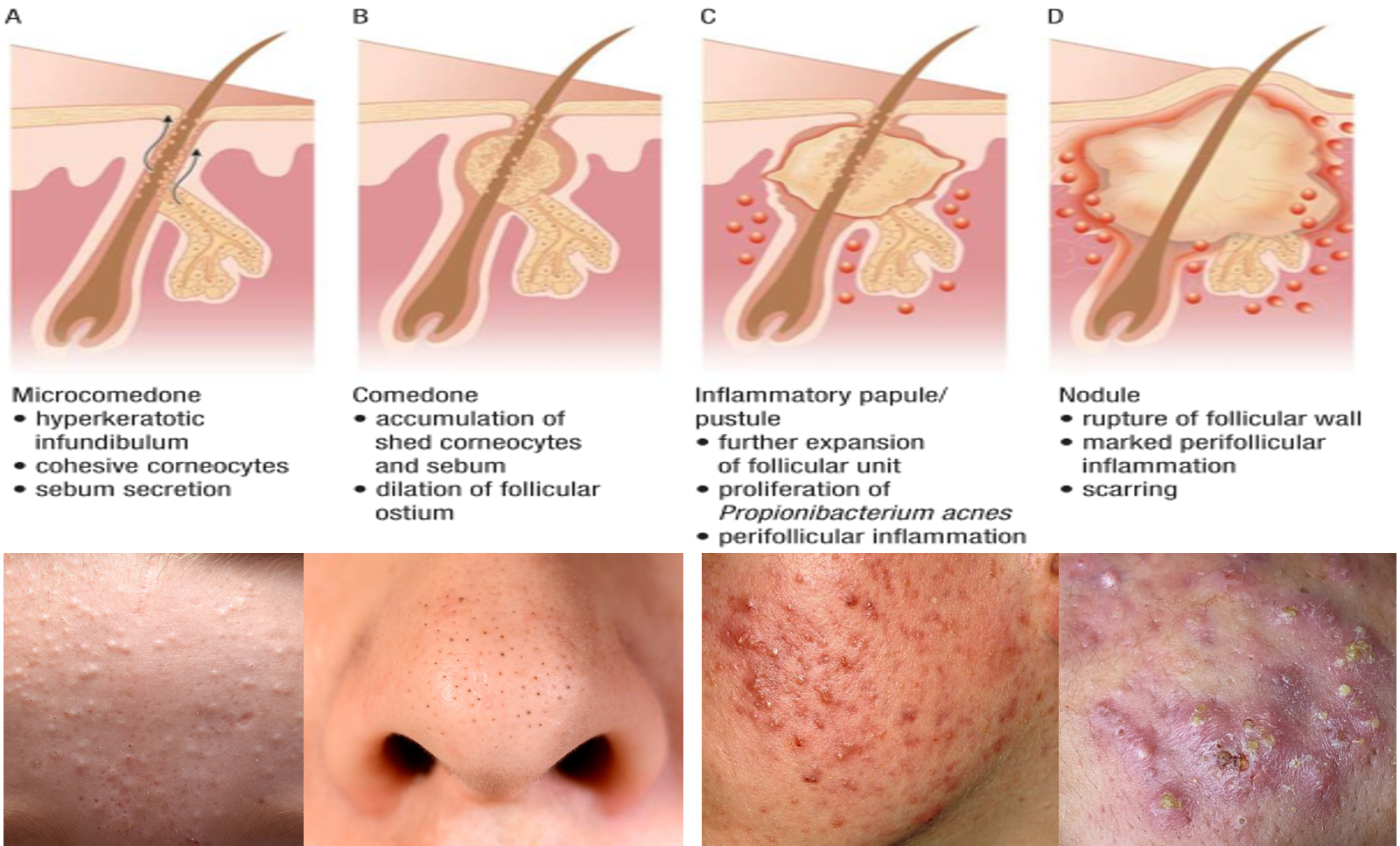
The red, inflamed acne you see on the surface is merely the result of this process. If you are curious about the basic principles of why acne forms, reading the post explaining the root causes of acne alongside this one will make it much easier to understand.
Why does it come back if you only calm the inflammation?
Methods that target the inflammation itself, such as antibiotics or extraction, help reduce the lesions you can see now. However, if the cause, the overactivity of the sebaceous glands, remains as it is, sebum tends to build up again in the same spot over time.
So with acne that recurs frequently, I pull the perspective one step forward. Rather than chasing the inflammation, the aim shifts toward regulating the sebaceous glands that produce the sebum. Gold PTT is a treatment aimed precisely at this point.
How does Gold PTT target the sebaceous glands?
Gold PTT stands for Gold Photothermal Therapy. It works on the principle of applying gold nanoparticles to the skin, letting them penetrate deep into the sebaceous glands, and then heating those particles with a laser to selectively reduce the sebaceous glands.
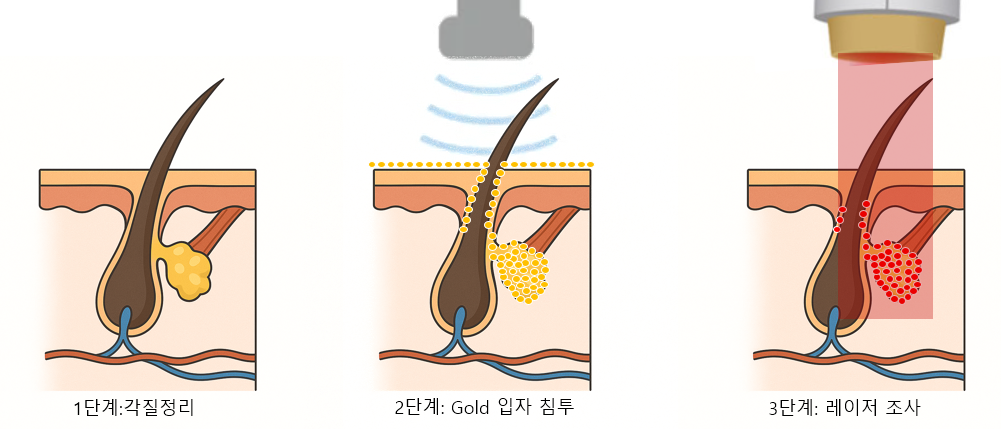
The procedure proceeds in three main steps.
- Prepare the skin surface to create an environment in which the nanoparticles are absorbed well.
- Apply the gold nanoparticles and allow time for them to be absorbed into the sebaceous glands.
- Wipe off the particles remaining on the skin surface, then irradiate with the laser only the particles that have reached the sebaceous glands.
The advantage of this method is that it delivers heat only to the targeted sebaceous glands without burning or shaving the epidermis. You can understand it as a relatively low-burden approach that targets the sebaceous glands while minimizing surface damage.
What changes when sebum decreases?
When sebaceous gland function is suppressed and the amount of sebum decreases, the very soil from which acne grows becomes shallower. And as oiliness decreases, skin texture and the appearance of pores also tend to become more refined as a secondary effect.
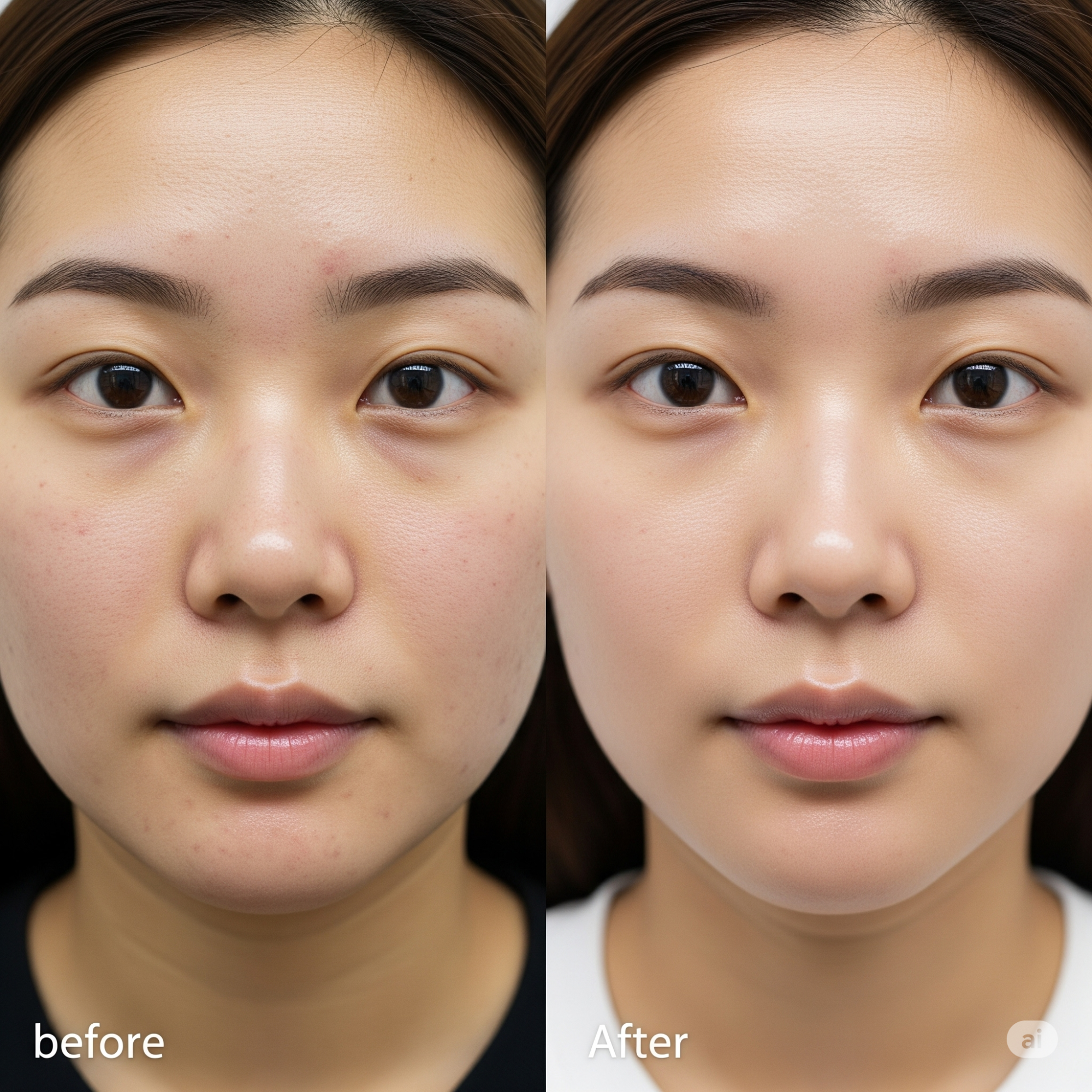
This is especially meaningful in situations where it is difficult to use medication for a long time. It can be an option that does not depend on medication for teenagers, for whom sebum suppressants such as isotretinoin must be used cautiously because they are still growing, and for adult acne where long-term use is burdensome. If you are troubled by pores and redness overlapping with acne, the post summarizing my approach when looking at acne, pores and redness together is also a useful reference.
What course has been reported in the literature?
Cases have been reported in which people feel their oiliness decreased relatively soon after the procedure, though how much it is felt varies from person to person. Small case reports in the academic literature describe changes observed even in adult acne that had not responded well to existing treatments.
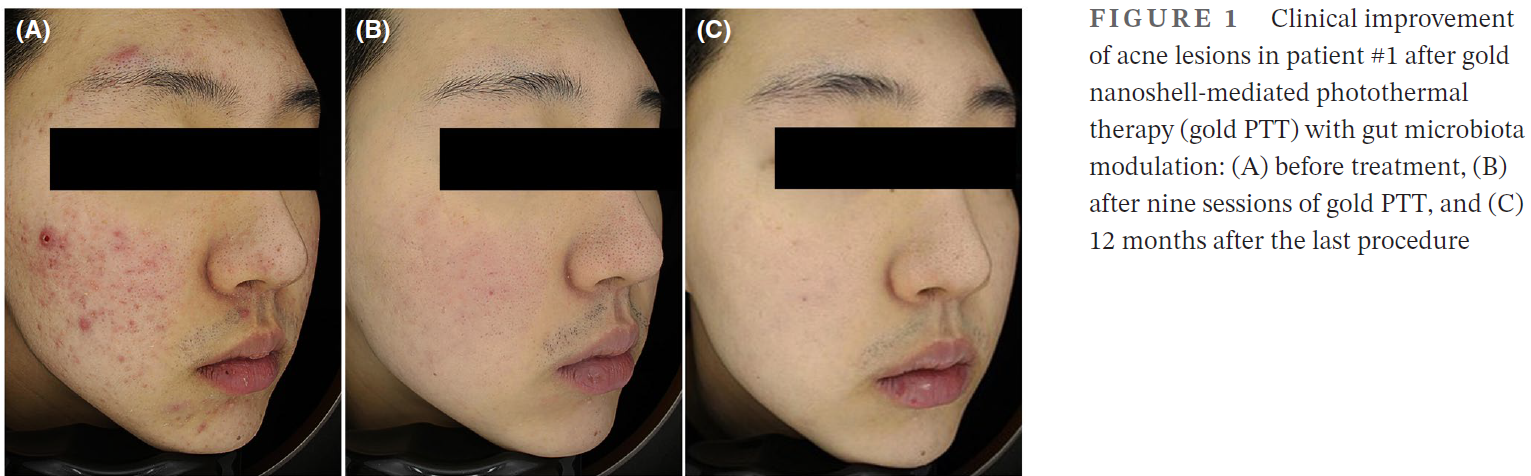
In a small case report, inflammatory lesions decreased markedly after about 6 to 9 sessions, and a course was described in which the condition was maintained without recurrence for more than 14 months after the end of treatment. It was also noted that the condition was maintained even after oral antibiotics were stopped. However, because the number of cases in the report is small, actual responses and how long results last may differ from person to person.
How many sessions until you feel a change?
In my experience, some people feel their oiliness has decreased even after a single session. However, this is a subjective impression and varies from person to person. If acne is on the severe side, I generally plan along the following lines.
| Condition | Approximate treatment course | Expected direction |
|---|---|---|
| Mainly oiliness and early acne | A small number of sessions at intervals | Relief of oiliness |
| Recurring inflammatory acne | 3-4 sessions at 1-2 week intervals | Refinement of lesions, sebum, texture and pores |
| Long-term care goal | 4-5 sessions or more | Long-term improvement expected |
The numbers are only a reference for setting a direction. Because the number of sessions and intervals vary with skin condition and lifestyle, it is better to adjust the actual plan together in the clinic.
Who do I tend to recommend it to first?
Because Gold PTT delivers heat to the sebaceous glands without touching the epidermis, relatively few cases of side effects such as erythema, hyperpigmentation or burns have been reported. Of course, responses vary from person to person. In the clinic, the cases in which I consider this procedure first are generally these.
- Oily skin troubled by shine, greasiness and enlarged-looking pores together
- Cases where inflammatory acne keeps recurring or comes back quickly
- Adult female acne where taking antibiotics or birth control pills is difficult
- Early management of adolescent acne in which excess sebum stands out
- Cases that need maintenance care after reducing or stopping medication
If acne that keeps recurring in a particular area such as the jaw is your concern, I recommend continuing with the post on why jaw acne develops and how to manage it, and if you are curious about the influence of diet and lifestyle, the post summarizing foods it is better to avoid when you have acne.
In closing
In the face of recurring acne, the criterion for changing direction ultimately comes down to one thing: not stopping at chasing the inflammation, but considering how to deal with the sebaceous glands that produce the sebum. Gold PTT is one of those options, and that does not mean it is the answer for every case of acne. If you are wondering whether your current treatment suits you well or whether it is time to change direction, I will guide you after we look at your condition together.

Author: Dr. Cho Mingyeol, Medical Director (board-certified dermatologist; Master Certification in Pigmentation, Acne, Rosacea and Hair from the Korean Dermatologists Association). You can find the full profile on the Medical Team page. First published 2025-06-28 / Last reviewed 2026-07-09
This article is intended for general information only; the appropriate treatment and outcomes may vary depending on each individual's condition.