

Adult acne has many intertwined causes, such as hormonal changes, stress and irregular sleep. But when I ask in the clinic where the acne appears, some people answer that it keeps coming up only along the jawline, the outer cheeks, the upper chest and the back. When I see this kind of distribution, I ask about the hair products they use every day before asking about skincare. This is because the way shampoo, treatment and hair oil come into contact with the skin changes the course of acne more often than you might think.
Acne ultimately begins with clogged pores
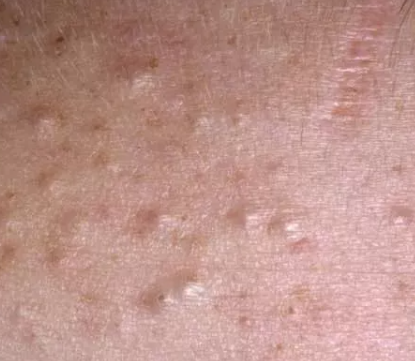
Acne develops when pores are clogged by excessive sebum secretion, or when products applied from outside cover the pore openings. In puberty, sebum secretion itself is high, so acne breaks out easily; in adults, sebum decreases, but the share caused by external factors grows.
So when I look at adult acne, I also consider "what is covering the pores." In particular, if breakouts are concentrated along the jawline, the connection with hair products should definitely be checked at least once.

If acne spreads along the jawline rather than the center of the face, as in the photo above, it is worth suspecting that it may be where products applied to the hair have run down, rather than cosmetics. I have described my approach of looking at the sebaceous glands first in a little more detail in Why I look at the sebaceous glands before inflammation in recurring adult acne.
Why can simply changing the order of washing reduce jawline acne?
The order of washing may seem trivial, but it makes quite a big difference to breakouts. If you rinse out your shampoo and treatment and then wash your face and body last, you can reduce the treatment that runs down during rinsing from remaining on your face and back. It is actually common for treatment to run down the back of the neck, the back and the chin, creating back acne and jawline acne.
- Rinse out shampoo and treatment first
- Then wash your face with a cleansing foam
- Wash your back and the back of your neck last with body wash
- If you used hair oil, lightly rinse your chin and back once more
Why hair essence is better in the morning than at night
The main purpose of hair essence containing silicone oil is to reduce physical friction on the hair. So there is little reason to apply it before bed. On the contrary, if you apply treatment or essence in the evening and then sleep, the ingredients may rub onto your chin, the back of your neck and your back overnight and cause comedones.
So I tend to recommend using it in the morning rather than in the evening. During the day, it also helps to keep your hair tied up as much as possible so that it does not touch your chin and neck.
I am not telling you to stop using these products, but suggesting that you adjust your habits to reduce the time and areas in which they touch your skin.
If managing acne feels overwhelming, it is quicker to look at your condition together than to wrestle with ingredient lists on your own. Consult via chat now
Each oil ingredient clogs pores to a different degree
Oils are excellent for moisturizing and protecting the skin, but on acne-prone or oily skin they can cover pores and create comedones. The indicator I refer to here is the comedogenic rating. You can understand it as: the higher the rating, the higher the likelihood of comedones forming. The oils frequently used in hair products, together with their ratings, are summarized below.
| Ingredient | Comedogenic rating | Products where it is mainly used |
|---|---|---|
| Silicone oil (Dimethicone, Cyclopentasiloxane) | 1~2 | Treatment, hair oil, rinse |
| Coconut oil (Coconut Oil) | 4 | Hair treatment, hair mask |
| Lanolin (Lanolin) | 4 | Hair cream, styling products |
| Mineral oil (Mineral Oil) | 2 | Hair oil, rinse, body products |
Silicone oil has a relatively low rating but can cause problems with long-term exposure, and mineral oil forms an oil film on the skin surface that prevents moisture evaporation but can cover pores. Ingredients with a rating as high as 4, such as coconut oil and lanolin, deserve particular attention if you have acne-prone skin.
If you check the full ingredient lists of hair products on the market in an app, you can see that various oils are included together, as shown below.



Cleansing oil is also worth checking once
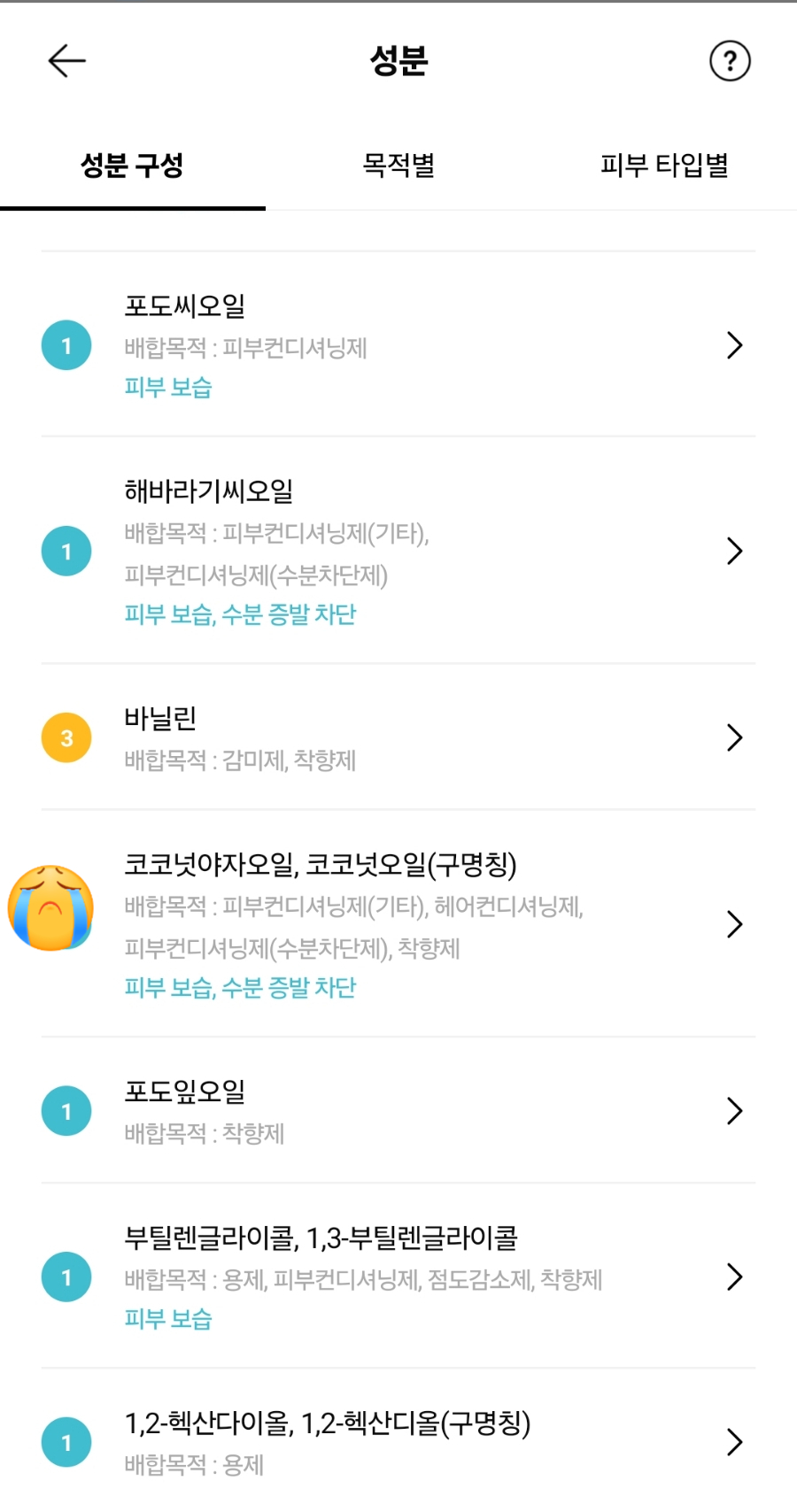
Surprisingly, cleansing oil is easy to overlook. Cleansing oils often contain large amounts of oil ingredients like those above, so if acne keeps recurring, I recommend switching to a cleansing lotion or cleansing milk.
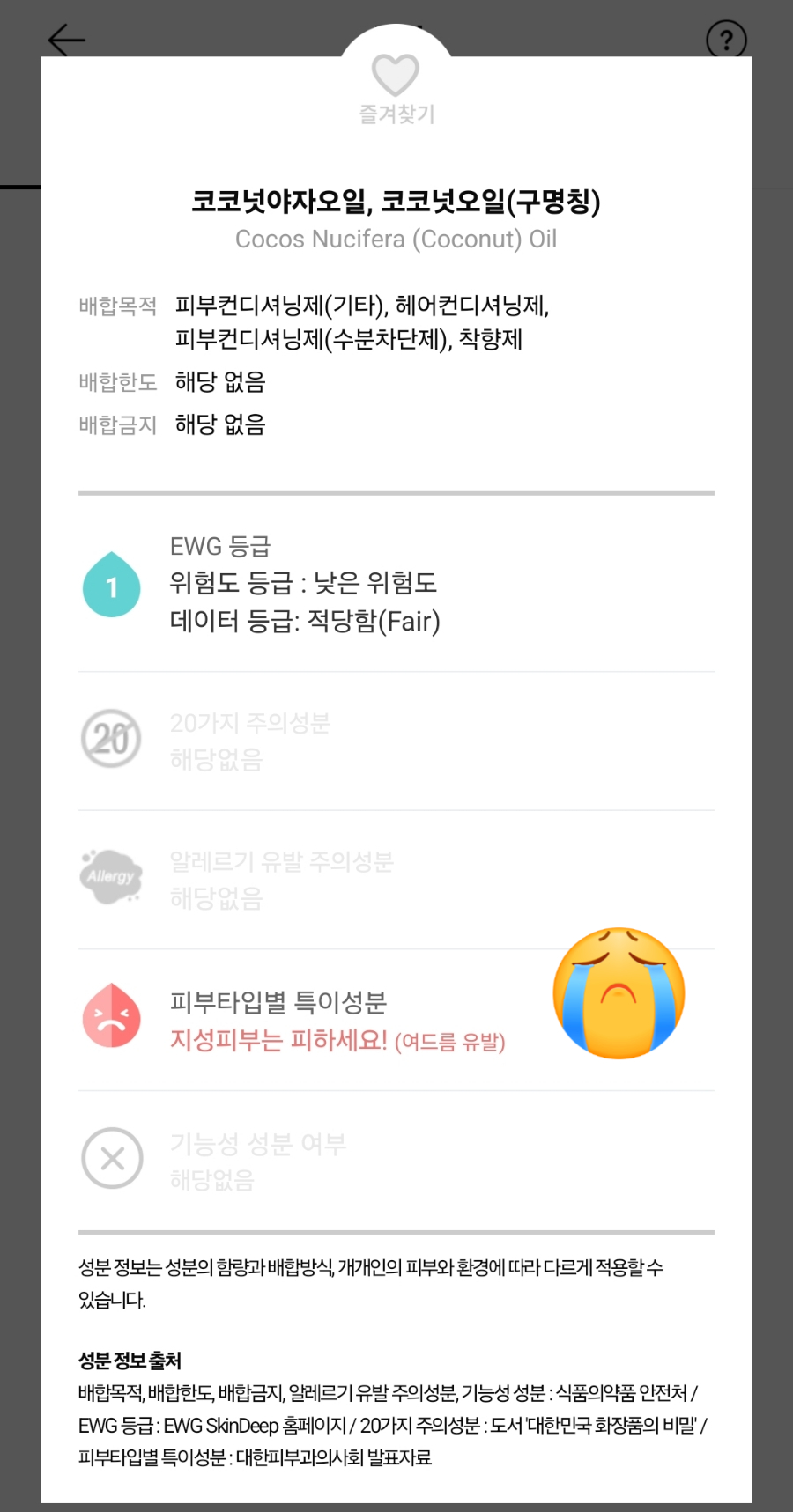
For acne-prone skin, it is safer to choose products labeled non-comedogenic first. With a product you are using for the first time, apply only a small amount to check your skin's reaction first, and during periods of severe breakouts, choosing oil-free products reduces the burden. However, reactions vary between individuals, so if things do not improve even after switching, there may be a cause other than the ingredients.
If it still recurs, I reset the direction
If jawline acne continues even after sorting out hair products and the order of washing, I need to look at the activity of the sebaceous glands, the degree of inflammation and even lifestyle habits together. Acne is often not explained by a single cause, so it is good to look at its relationship with food and other skin troubles as well. I have covered this further in If you have acne, be sure to avoid these foods, Why does acne happen in the first place? and Can acne, pores and redness be addressed at once?.
If you have grown tired of poring over ingredient lists on your own, I recommend that we first check together where and how your current breakouts are appearing.
Consult via chatAuthor: Dr. Cho Mingyeol, Medical Director (board-certified dermatologist; Master Certification in Pigmentation, Acne, Rosacea and Hair from the Korean Dermatologists Association). You can find the full profile on the Medical Team page. First published 2025-01-07 / Last reviewed 2026-07-09
This article is intended for general information only; the appropriate treatment and outcomes may vary depending on each individual's condition.