

Hello, I am a board-certified dermatologist at OARO Dermatology. When consulting about pigmentation in the clinic, there are many cases where, rather than how to erase color that has already darkened, I first need to address why that color remained in the first place. Today I would like to talk about the dark traces left after inflammation, so-called post-inflammatory hyperpigmentation: how it forms and where its course diverges.
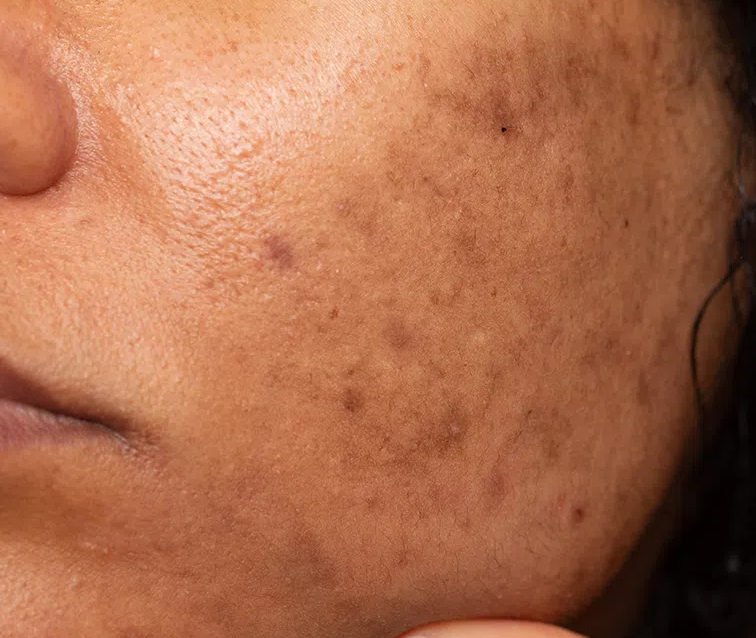
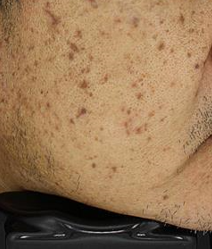
Everyone has probably had the experience of blotchy color remaining here and there on the face. The problem is that once this color darkens, it takes a long time to reverse. That is why I end up repeating the same thing in consultations: when it comes to pigmentation, habits that keep it from forming come before techniques for erasing it.
Why, and for what, is melanin produced?
The skin produces a pigment called melanin in response to external stimuli or inflammation. Melanin itself is not a bad substance; it is a defense mechanism that tries to protect the skin from UV light and irritation. However, when this defense works excessively, the skin becomes blotchy, and that is when it starts to bother you.
Strong stimuli such as lasers or trauma, UV light and repeated friction are typical triggers. When such stimuli are repeated, the skin produces more pigment to protect itself, and the result remains as post-inflammatory hyperpigmentation.
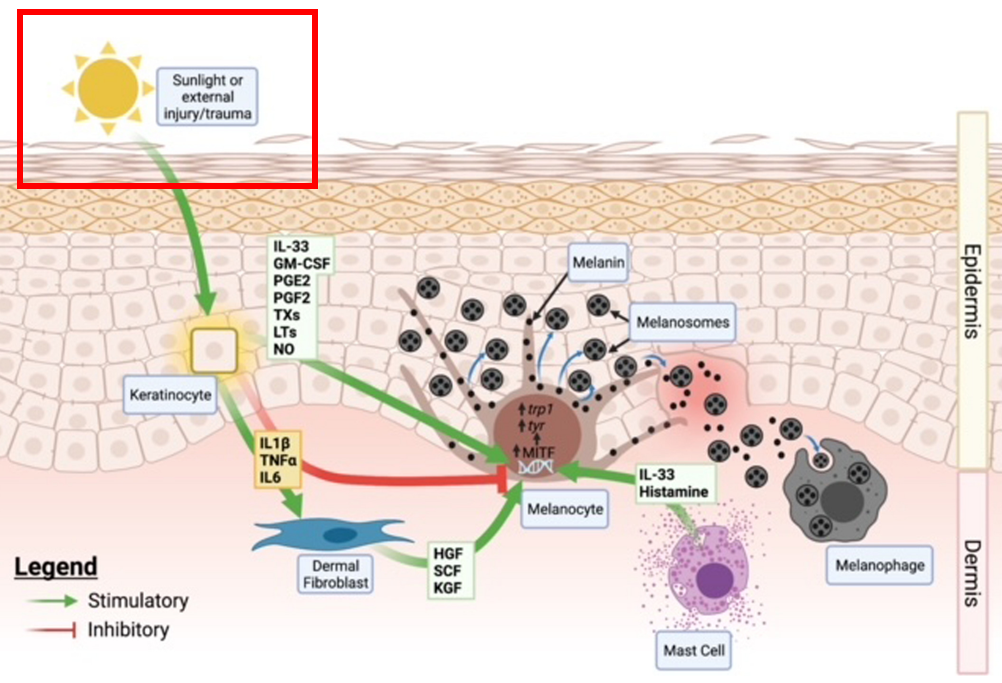
The sequence inside the body until pigment remains
The process by which pigment settles generally follows the order below.
- Inflammatory response occurs — Inflammation develops in the skin due to acne, wounds, friction, irritation after laser procedures and the like.
- Melanocytes are stimulated — Inflammatory cytokines (IL-1, TNF-α, etc.) are released at the inflamed site, and these substances stimulate melanocytes.
- Melanin is overproduced — The stimulated melanocytes produce excessive pigment in an effort to protect the damaged area.
- Melanin accumulates — The overproduced melanin spreads to the surrounding area and, over time, rises to the skin surface, leaving dark traces.

In summary, inflammation is the trigger, cytokines are the signal and melanocytes are the executors. Reducing irritation at any point in this flow makes the remaining color lighter. This is why, even with the same acne, the outcome differs between a spot where the pimple was squeezed and the inflammation grew and a spot that was left alone and allowed to calm down. If you are curious about the red or dark marks left after acne, my post summarizing the direction of treatment for red acne marks is also worth reading.
Why does the degree of remaining pigment differ from person to person?
Even with the same irritation, in some people it fades within a few days, while in others it lasts for months. Two background factors are at work here.
The first is skin color. Post-inflammatory hyperpigmentation generally tends to appear more distinctly in people with darker skin. So if your skin tone is on the darker side, you need to pay a little more attention in daily life so that pigment does not remain.
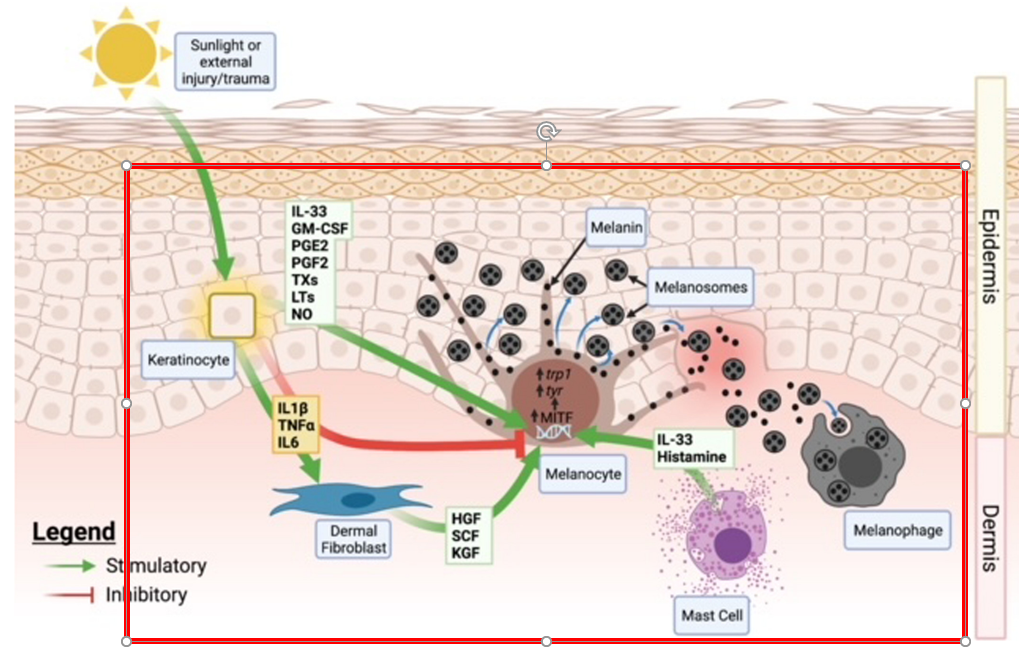
The second is how deep the pigment has gone. The intensity of the color varies with the degree and duration of inflammation; if the pigment stays only in the epidermis, it improves relatively quickly, but if the dermis is also affected, treatment is tricky and takes longer. That is why early care matters more than anything. I covered in more detail why, when looking at pigment, you need to examine not just the surface but the depth beneath it in the background of pigment that comes back even after removing only the epidermal melanin.
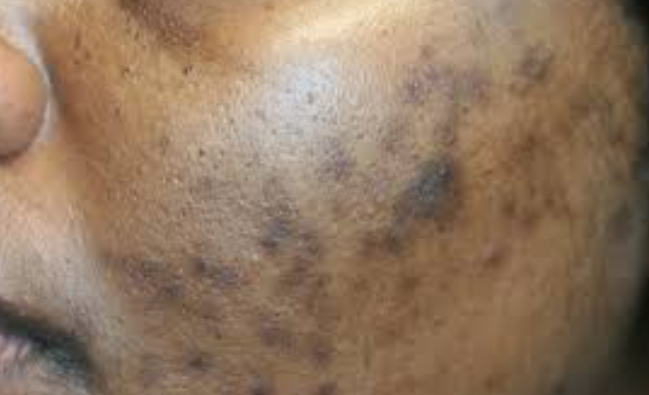
It is far easier to help the skin make less color before it darkens than to erase it after it has darkened. This is also the principle I emphasize most in the clinic.
If the color that has already remained bothers you, I recommend checking your condition first rather than worrying about it alone. Consult via chat now
Early care decides the color
Appropriate care in the early stage, just after inflammation develops, can lower the likelihood of pigment remaining. Above all, you should avoid squeezing pimples or scratching wounds. The moment you add irritation, the melanocytes work all the harder.
In some cases, along with briefly using a steroid ointment, ingredients that help with calming and recovery can help reduce pigmentation. Commonly used ones include ingredients such as Centella asiatica and aloe vera. However, whether to use an ointment and for how long is safer to decide through a consultation than by your own judgment.
Sun protection: the most basic thing, and the most often missed
Because UV light further stimulates melanin production, the starting point of pigmentation prevention is always sunscreen. Here are the practical points.
- Protection factor — Choose a product with SPF 30 or higher and PA++ or higher.
- Reapplication — Reapply at least two or three times a day to maintain the effect. If you apply it once in the morning and stop there, protection drops by the afternoon.
- Indoor care — UVA coming through windows also affects pigmentation, so it is better to use it even on days when you stay indoors for a long time.
If you are curious about the relationship between the timing of pigmentation treatment and UV light, reading When you are unsure about pigmentation treatment in summer as well will help you set a direction.
Lifestyle habits that reduce skin damage
More often than elaborate care, small daily habits determine pigmentation. These are the things I often recommend in the clinic.
- Reduce friction — Cut down on habits such as rubbing the skin hard or touching it frequently.
- Gentle cleansing — Cleanse gently with your hands, and pat off moisture with a soft towel instead of a rough one.
- Avoid irritating cosmetics — It is better to avoid products such as skins and toners that contain alcohol or artificial fragrance. When there is inflammation in the skin, it is also safer to take a short break from functional cosmetics.
Moisturize to the point that it feels like too much
Moisturizing is key to restoring a skin barrier damaged by inflammation. Products containing ceramides, hyaluronic acid and panthenol help rebuild the barrier.
But as important as the ingredients is the frequency. Two or three times a day is the baseline, and if dryness is severe, you can apply it much more often than that. When moisture is sufficient, the movement of melanin is limited, which may help pigment fade. Apply moisturizer often, as generously as if you were almost wasting it.
In summary, with post-inflammatory hyperpigmentation, habits that make less of it come before techniques that erase it. Reducing irritation early, blocking UV light and replenishing moisture: these three things ultimately change your skin color several months later. However, if pigment has already settled into the dermis or the marks are old, lifestyle care alone has its limits, so it is good to look together at an approach suited to your condition. The degree of improvement varies between individuals, and specific treatment and costs are explained after consultation.
Consult via chatAuthor: Dr. Cho Mingyeol, Medical Director (board-certified dermatologist; Master Certification in Pigmentation, Acne, Rosacea and Hair from the Korean Dermatologists Association). You can find the full profile on the Medical Team page. First published 2025-02-04 / Last reviewed 2026-07-09
This article is intended for general information only; the appropriate treatment and outcomes may vary depending on each individual's condition.