

There is something people who have long struggled with melasma often say in the clinic: "When I get laser treatment, it fades for a while and then quickly comes back." There is a reason for this repetition. Melasma is a pigment that does not resolve well if you approach it by looking only at the melanin in the epidermis.
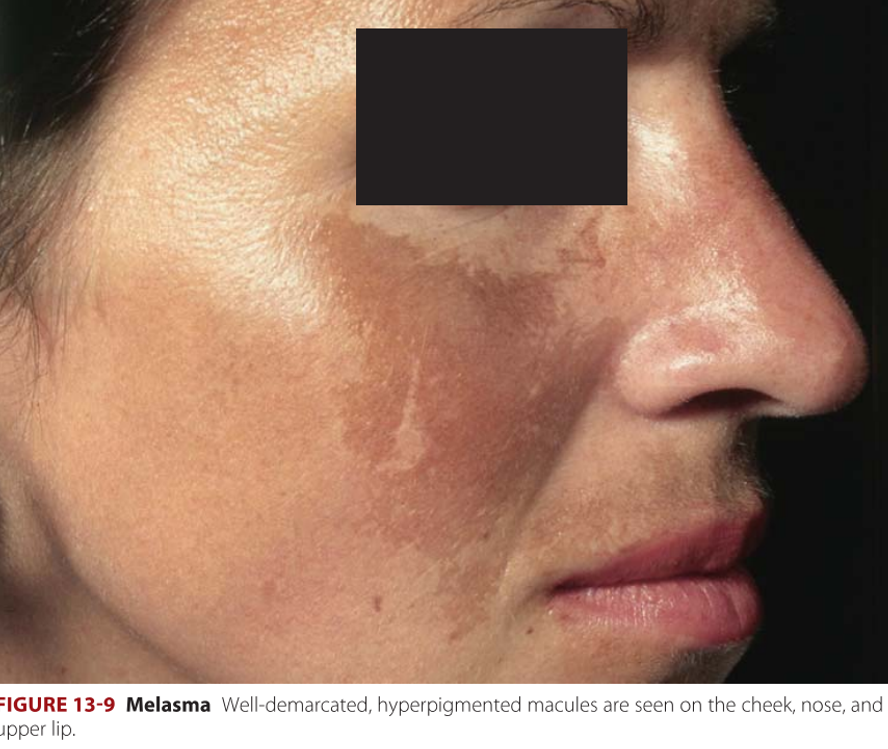
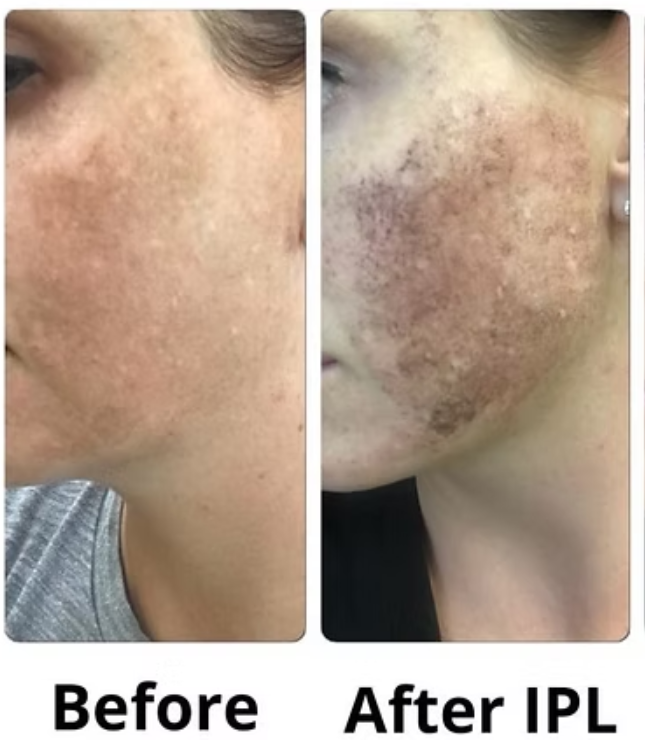
Treating melasma the way you would blast ordinary blemishes with strong IPL can sometimes make it worse. This is a sign that melasma is not a simple pigmentary condition.
There is not just one cause
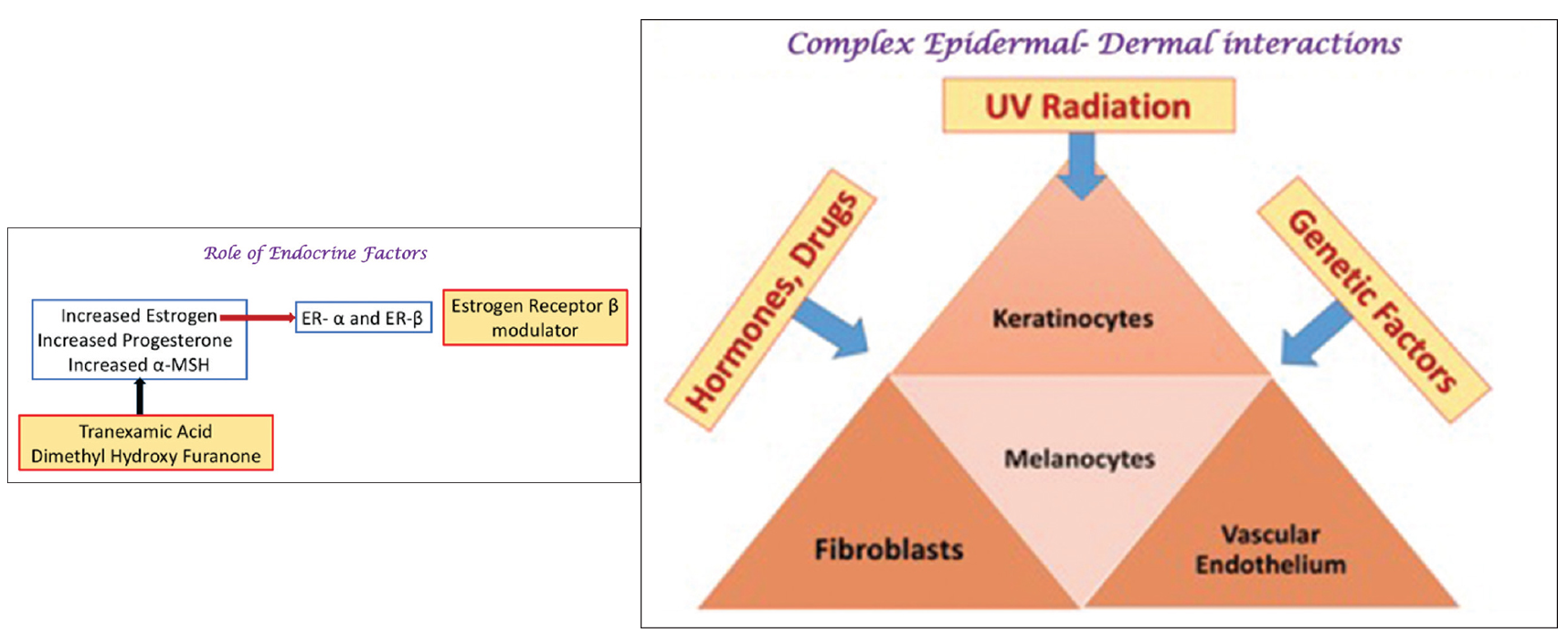
Melasma, which affects women from their 30s onward and is also called the "mask of pregnancy" because it often darkens after childbirth, arises from a variety of backgrounds. The three commonly known factors are genetics, UV light and hormones. However, these alone do not explain everything.
Why does it tend to appear around the eyes and on the cheekbones?
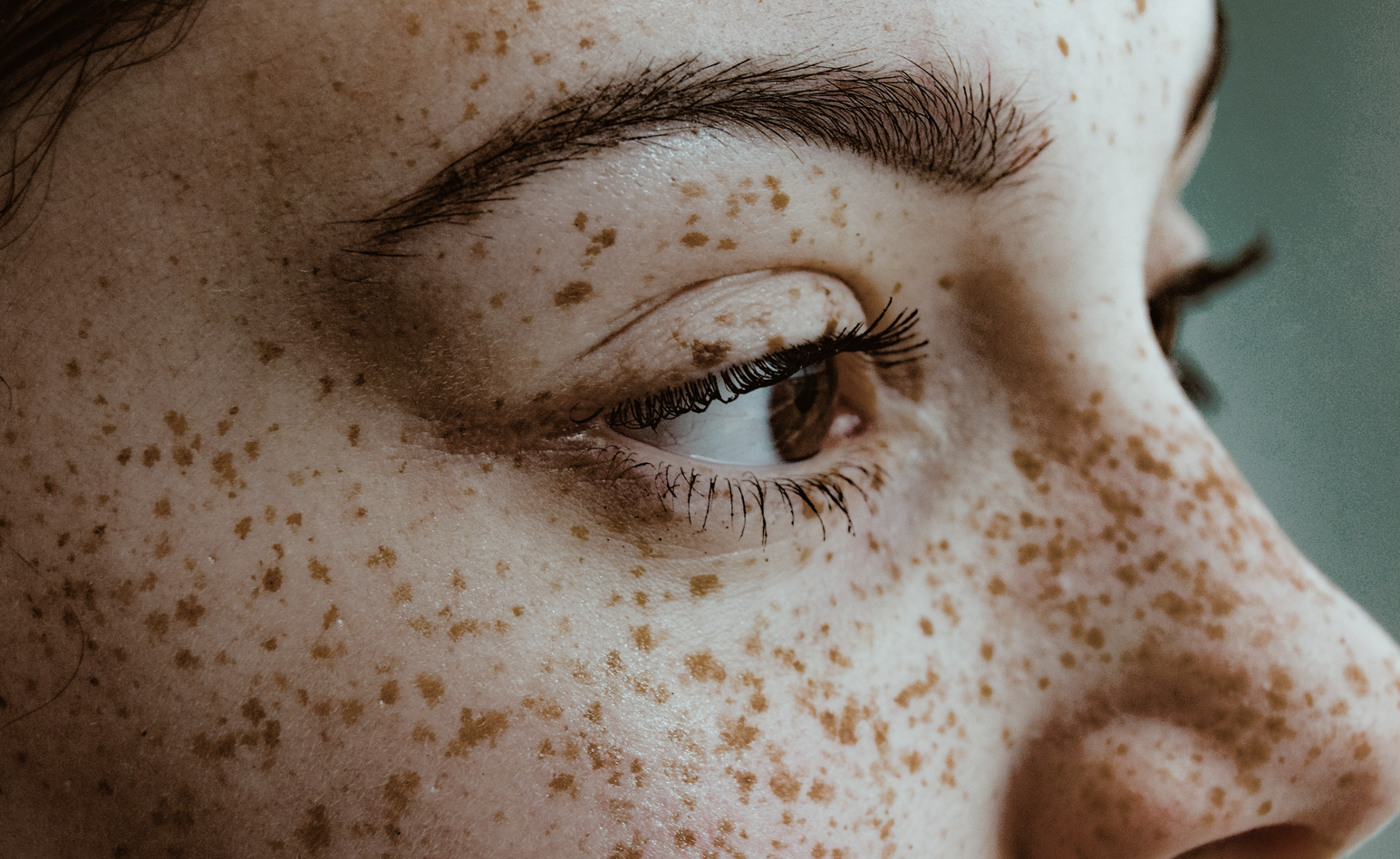
Skin thickness differs from area to area. The eyelids are among the thinnest skin on the body, and the area extending from both cheeks to the eyes and cheekbones is where refractory melasma tends to settle.
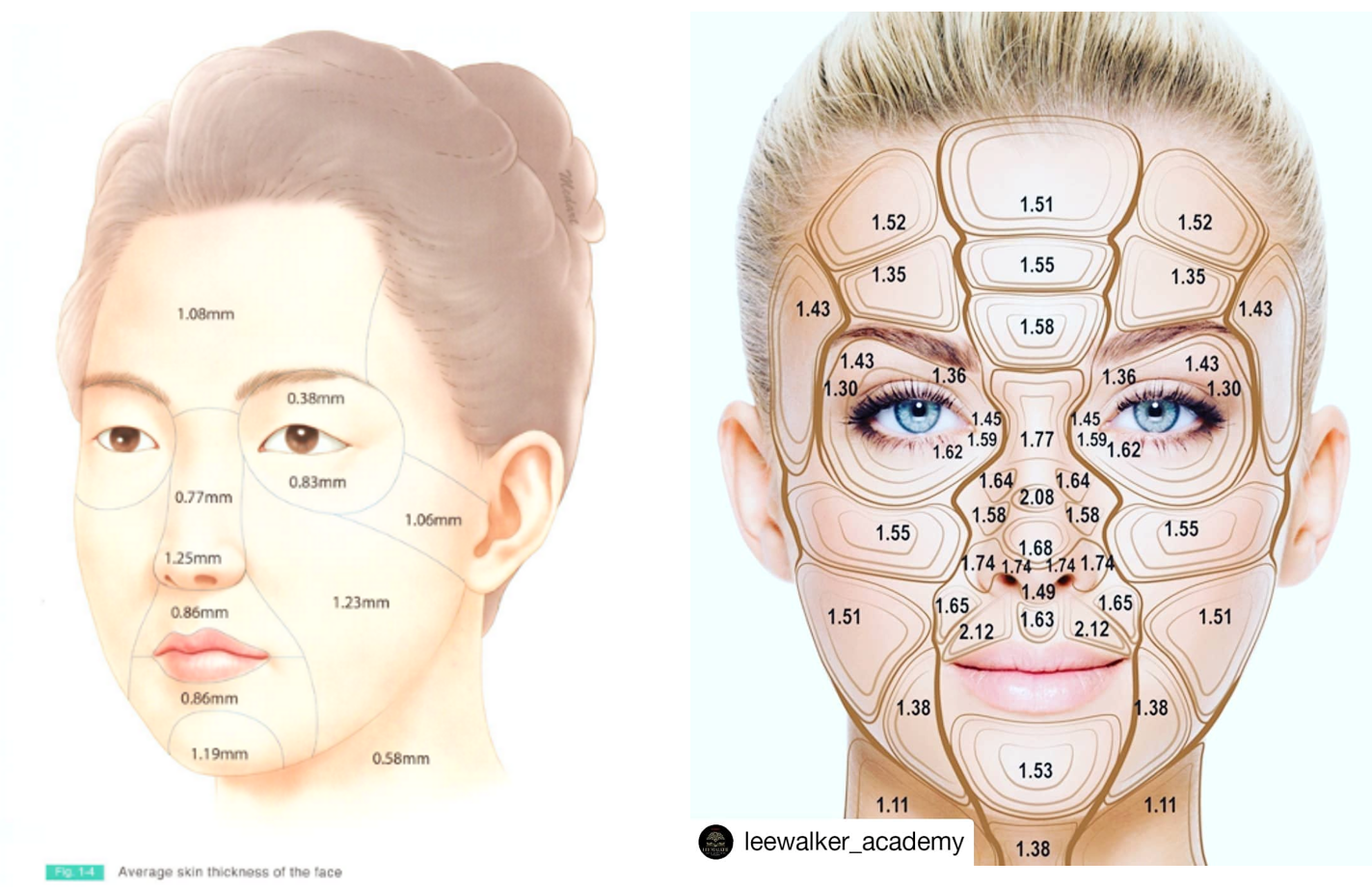
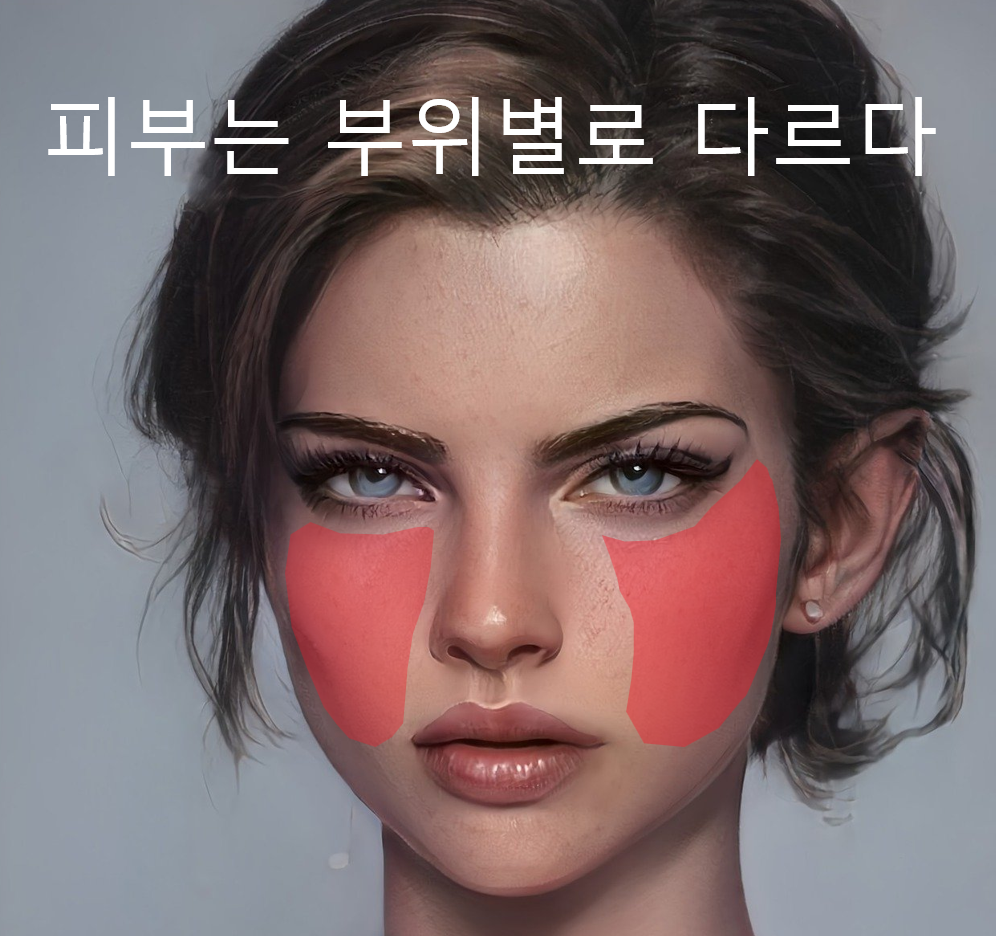
Although the exact mechanism has not been fully clarified, the fact that this area is relatively thin and exposed to sunlight for a long time is presumed to be part of the background.
It is not just a problem of melanocytes
Melanocytes are located in the basal layer at the very bottom of the epidermis. They exist at a ratio of roughly one for every ten basal cells, and they send the pigment they make up toward the upper epidermis.
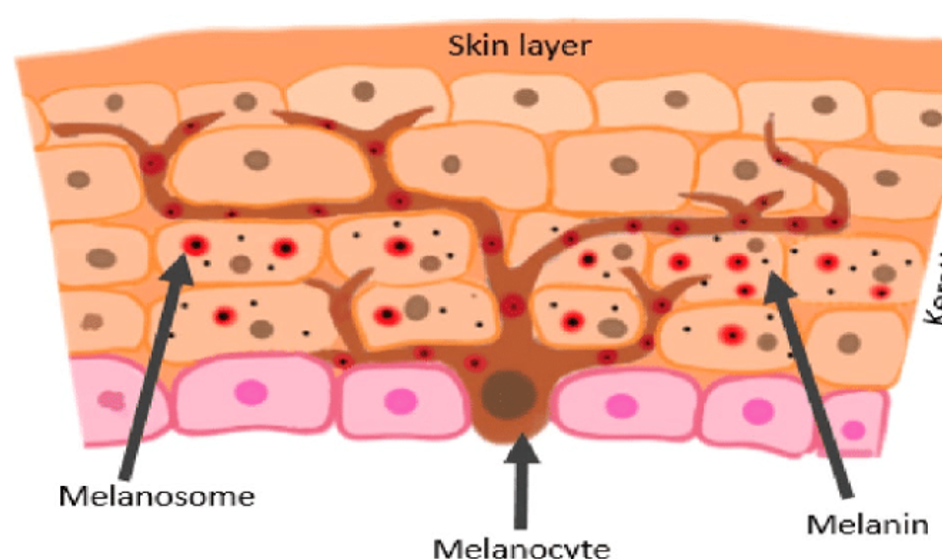
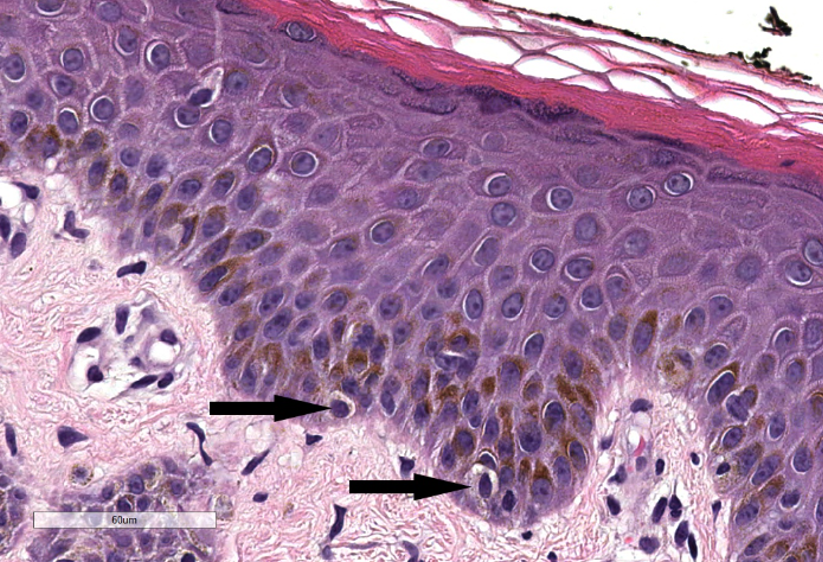
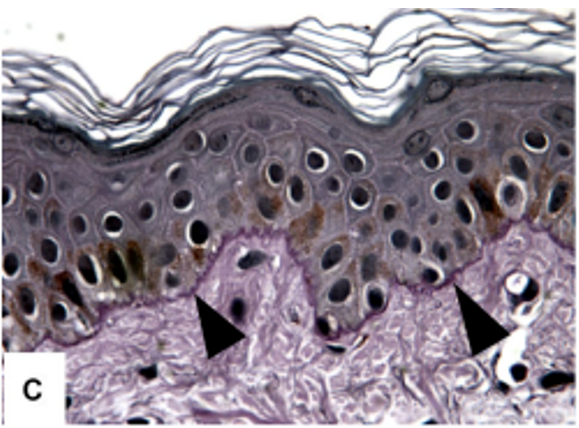
In normal skin, the boundary between the epidermis and the dermis is distinct, so pigment moves only upward within the epidermis.
When the basement membrane breaks down, pigment drops into the dermis
The problem arises when MMPs (protein-degrading enzymes) are activated by aging, UV light and chronic inflammation. When this boundary membrane (the basement membrane) is damaged, pigment made in the epidermis settles down toward the dermis.
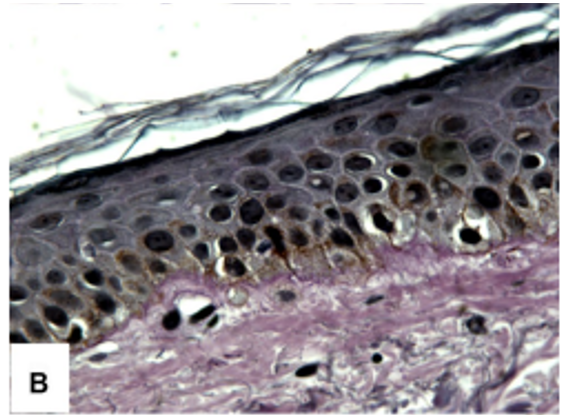
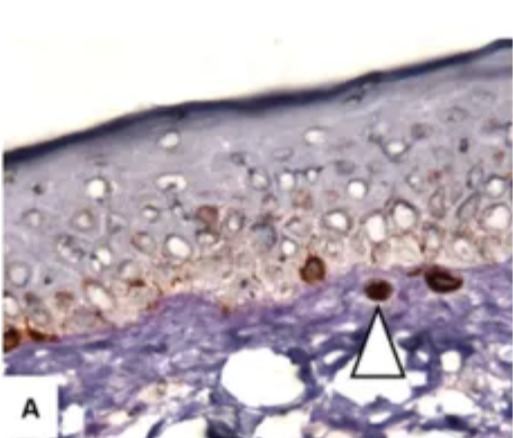
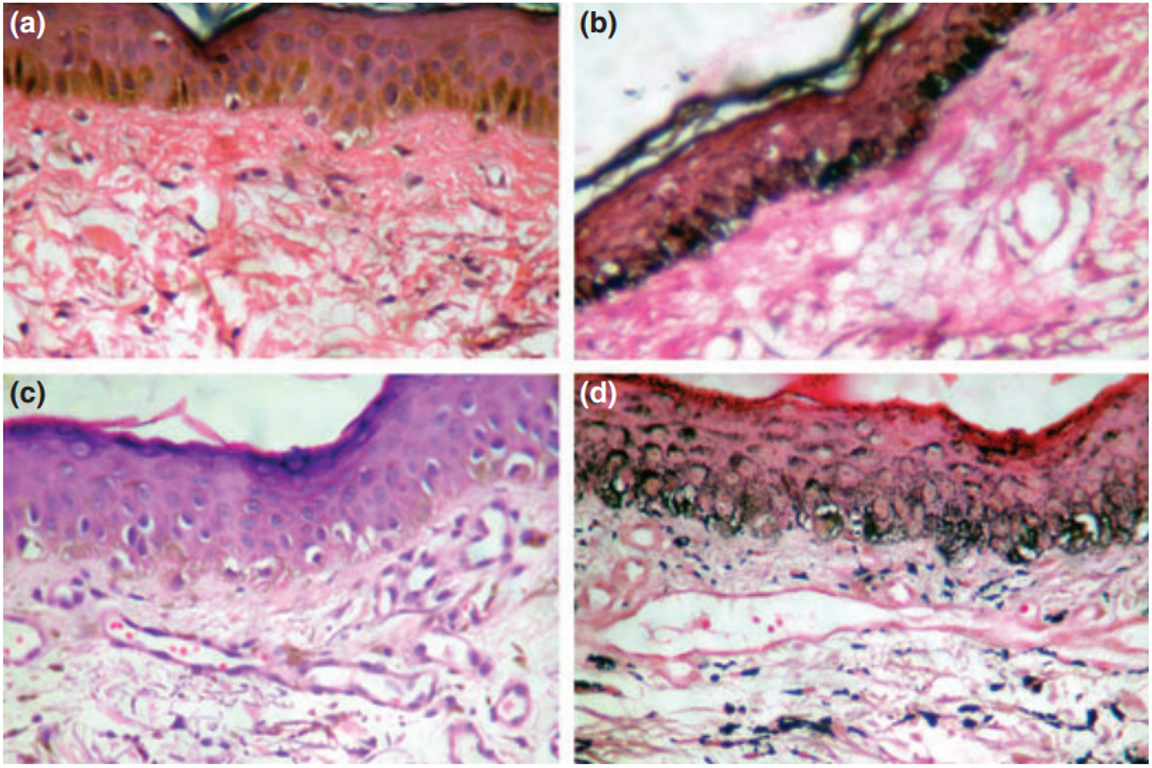
Before the 30s, it is usually an epidermal pattern that stays in the epidermis, but over time pigment spreads across both the epidermis and dermis, forming a blotchy pattern.
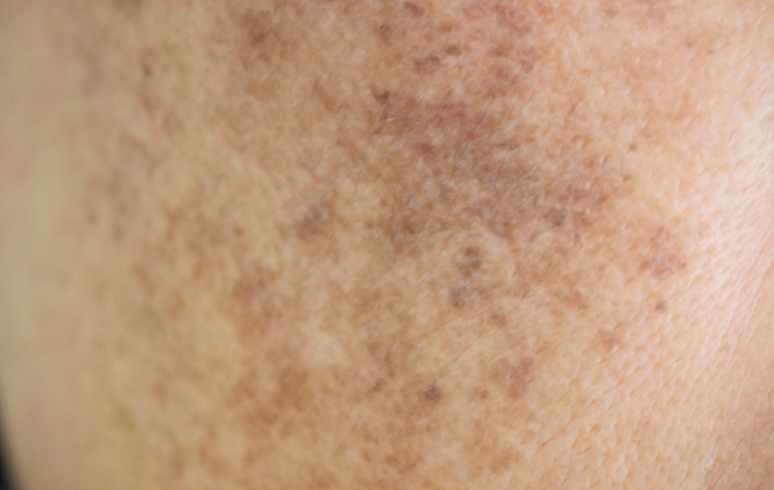
| Category | Epidermal pigment (early) | Melasma (progressed) |
|---|---|---|
| Location of pigment | Within the epidermis | Spanning the epidermis and dermis |
| Borders | Relatively clear | Blotchy |
| Response to laser | Relatively fast | Often fades briefly, then recurs |
The real background lies in the dermis
The key reason melasma is hard to treat is that it is strongly intertwined with the aging process. Reducing only the epidermal melanin may make it look better for a while, but if the cause that pushes the pigment back up remains, it recurs. The important cells here are the fibroblasts of the dermis.
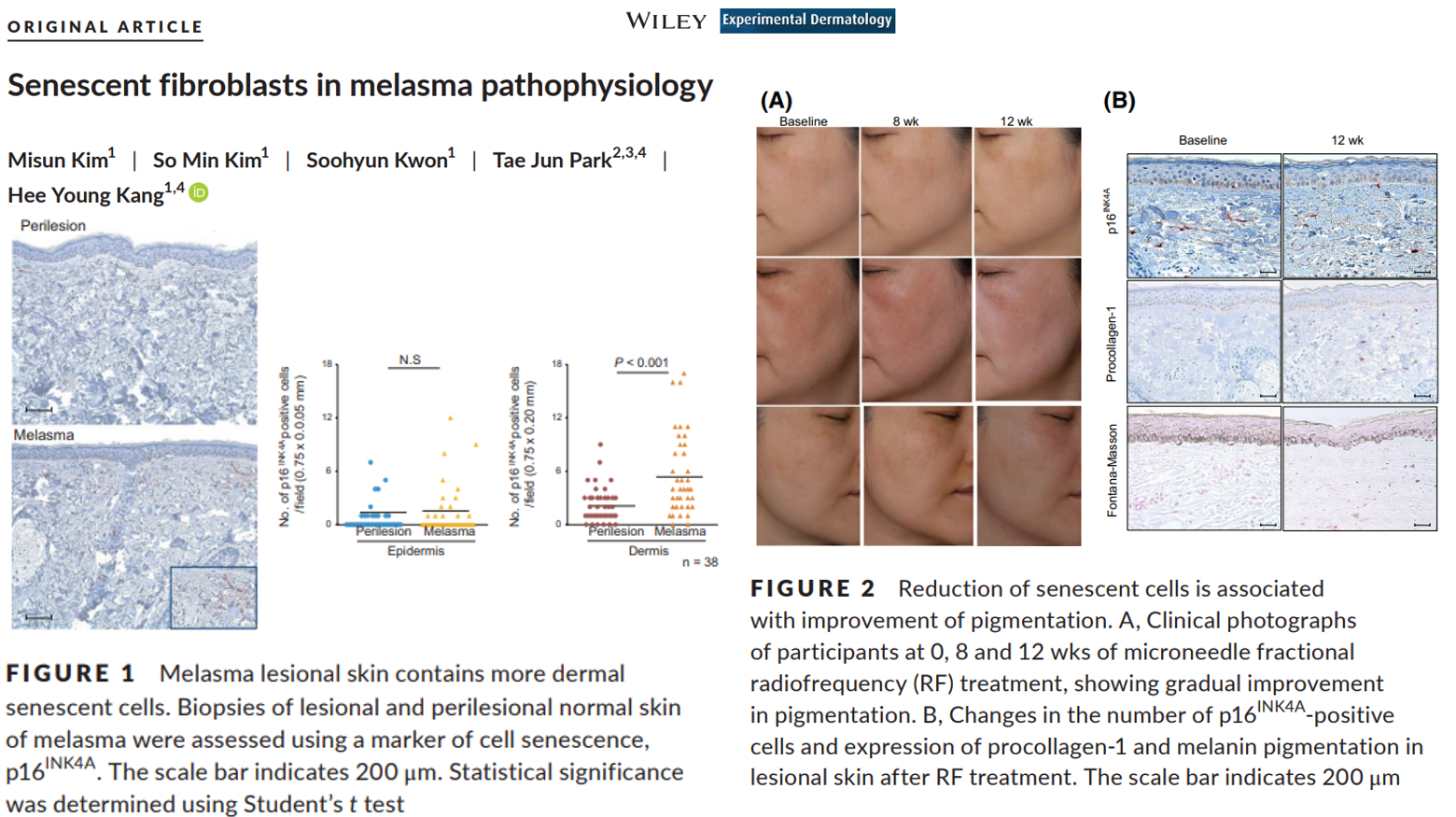
Aged fibroblasts continuously release signaling substances such as cytokines, chemokines, growth factors and MMPs in a form called SASP (senescence-associated secretory phenotype).
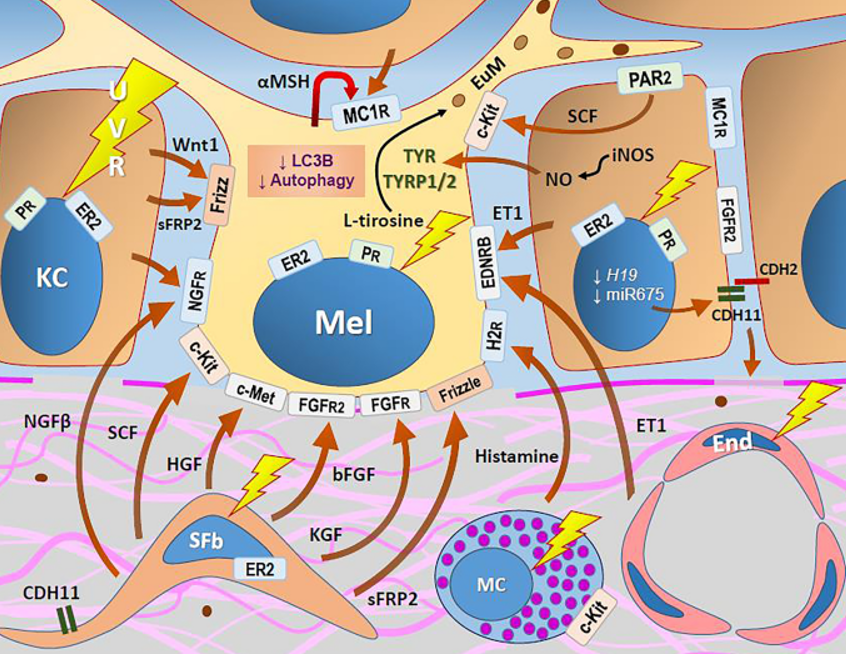
- These cells act like a "loudspeaker" that repeatedly sends signals to the skin
- Those signals flow in a direction that stimulates melanocytes again
- So if you treat only the epidermis, the background noise of the dermis remains
If you see melasma as a problem of pigment alone, it is easy to miss this background. That is why, with melasma, the direction becomes clear only when you also look at the limits of approaching stubborn melasma with pico toning alone and lifestyle factors that worsen melasma. If you are wondering whether your melasma is epidermal or has reached down into the dermis, start by checking your pigment condition via chat
I will continue with the direction of treatment in the next post. Before that, reading everyday care to prevent hyperpigmentation and precautions for pigmentation treatment in summer will help you build the basics for reducing recurrence first. If you have any questions, feel free to reach out via Consult about melasma via chat now.

Author: Dr. Cho Mingyeol, Medical Director (board-certified dermatologist; Master Certification in Pigmentation, Acne, Rosacea and Hair from the Korean Dermatologists Association). You can find the full profile on the Medical Team page. First published 2026-02-07 / Last reviewed 2026-07-09
This article is intended for general information only; the appropriate treatment and outcomes may vary depending on each individual's skin condition.