

When I see people who have struggled with melasma for a long time in the consulting room at OARO Dermatology, there is something I end up asking about before bringing up any procedure: their daily, repeated lifestyle habits. Melasma is not simple pigment that is gone once it is removed; it is a pigmentary condition that tends to darken gradually as inflammation and irritation of the skin repeat. That is why, in the clinic, I not infrequently see it come back even after a laser with a good response if the underlying habits stay the same.
A good device and a good procedure are only the starting line. Whether melasma darkens again often depends on how you spend each day after the procedure.
I have covered separately how I approach stubborn melasma that does not clear easily in my post on how I use pico toning for recurring melasma. Today, before procedures, I would like to go over five lifestyle habits that actually eat away at the effects of treatment.
First, I look again at the habit of rubbing the face
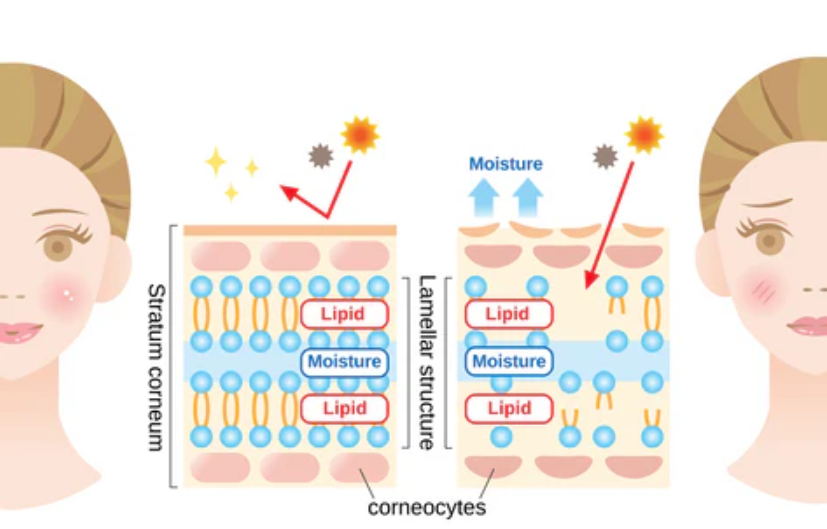
Cleansing wipes, wipe-off toners, rubbing with a towel after washing your face. These motions put repeated friction on the skin and can stimulate melanocytes, making melasma darker. Melasma is a pigmentary condition sensitive to external stimuli, so it is good to remember that the act of rubbing itself can lead to adverse effects.
The directions worth trying instead can be summarized as follows.
- Use an absorbing toner instead of a wipe-off toner (and keep toner itself to a minimum where possible)
- Use a gentle cleansing milk instead of cleansing wipes
- After washing, do not rub with a towel; gently press to remove moisture

Will sunscreen applied once in the morning protect you into the afternoon?
Many people think that applying sunscreen in the morning protects them all day, but its protective effect decreases after 3 to 4 hours. In particular, noon to 2 p.m. is when UV is strongest, so if you stop at one morning application, there may be little protection left by the afternoon.
If you set an order for reapplying, you are less likely to miss it.
- Apply it 30 minutes before going out
- Reapply every 3 to 4 hours
- Use a mist or cushion type to reapply over makeup
In addition, the habit of washing your face too vigorously to remove sunscreen can also damage the skin barrier, so it is better to wash it off gently. I have explained in more detail the perspective of also looking at the background behind why pigment comes back even after the surface pigment is removed in Why melasma comes back even when only epidermal melanin is removed.

Can sunscreen alone block all UV?
Unfortunately, it is difficult to block all UV with sunscreen alone. The surest method is to physically cover up so that UV does not reach the skin in the first place.
- Actively use wide-brimmed hats, sunglasses and parasols
- Avoid direct sunlight and use the shade
- When shielding your face, use the palm of your hand, not the back of your hand
In particular, it is better to avoid the habit of shielding your face with the back of your hand. The back of the hand is an area where pigment deposits easily, so pigment may end up remaining on the back of your hand instead of on the face you meant to cover. I have also included everyday care to reduce hyperpigmentation in advance in my post summarizing habits that prevent hyperpigmentation, so you may find it a useful reference. If you are curious whether your melasma is mainly on the surface or whether a deeper background needs to be looked at, feel free to ask through Consult via chat now.
Heat stimulation, surprisingly easy to overlook
Melasma reacts sensitively not only to UV but also to heat. When the skin is stimulated in a high-temperature environment, melanin production increases, and existing melasma can become darker.
- Reduce visits to saunas and jjimjilbang (Korean bathhouses)
- Do not use a hair dryer close to your face for long periods
- Do not stand in front of a hot stove for long when cooking
If the heat of a hair dryer keeps reaching the face, the skin dries out, which can lead to hyperpigmentation, so when you use one, please keep it as far from your face as possible. If you are curious about how to time pigment treatment according to the season, I also recommend reading Why it may be better to postpone pigment treatment in summer.

The marks that sleep and stress leave on melasma
Stress and lack of sleep are representative internal factors that worsen melasma. When you do not get enough sleep, the skin's ability to regenerate declines, and alpha-MSH (α-MSH), a hormone that stimulates melanin production, increases, which can make hyperpigmentation worse.
When stress continues for a long time, cortisol secretion increases, and this in turn can promote melanin production. The internal causes can be changed like this.
- Maintain 7 to 8 hours of sufficient sleep a day
- Reduce smartphone use and TV watching before bed
- Manage stress with meditation, yoga and light exercise
Looking at a smartphone for a long time before bed can let blue light interfere with the secretion of melatonin, the sleep hormone, so I recommend putting screens down 30 minutes to an hour before you go to sleep.
The five habits summarized at a glance
Gathering what I have discussed so far into a table gives the following.
| Habit that worsens it | Direction to try instead |
|---|---|
| Rubbing with wipes, wipe-off toner or a towel | Absorbing toner, cleansing milk, pressing to remove moisture |
| Sunscreen applied just once in the morning | Reapply every 3 to 4 hours and apply before going out |
| Relying on sunscreen alone | Combine with physical blocking by hats, sunglasses and parasols |
| Heat exposure such as saunas or hair dryers | Reduce heat stimulation and lower facial temperature |
| Lack of sleep and chronic stress | Improve internal causes with 7 to 8 hours of sleep and stress management |
In the end, procedures and habits go together
Melasma is not simple pigment but a condition deeply intertwined with skin condition and lifestyle habits. However well you respond to treatment, if habits like the ones above stay the same, it can easily darken and recur. If there are habits you have been repeating without thinking, I recommend changing them one at a time starting today. The more small practices accumulate, the more room there is for your skin to stabilize. However, the pattern of melasma and the appropriate direction of care vary from person to person, so if you are curious about the direction that suits your condition, please get in touch through Consult via chat now.
Author: Dr. Cho Mingyeol, Medical Director (board-certified dermatologist; Master Certification in Pigmentation, Acne, Rosacea and Hair from the Korean Dermatologists Association). You can find the full profile on the Medical Team page. First published 2025-03-11 / Last reviewed 2026-07-09
This article is intended for general information only; the appropriate treatment and outcomes may vary depending on each individual's condition.