

When I consult with patients about stubborn melasma in the clinic, I often meet people who are disappointed because the color has stayed the same even after several sessions of pico toning. My answer in such cases is usually similar. It is not that toning is bad; rather, it is quite likely that the melasma was not the kind that resolves with toning alone. In an earlier post, I briefly mentioned the principle while introducing a case of melasma caused by side effects that I treated with combination therapy, and today I would like to explain those tools one by one in a little more detail.
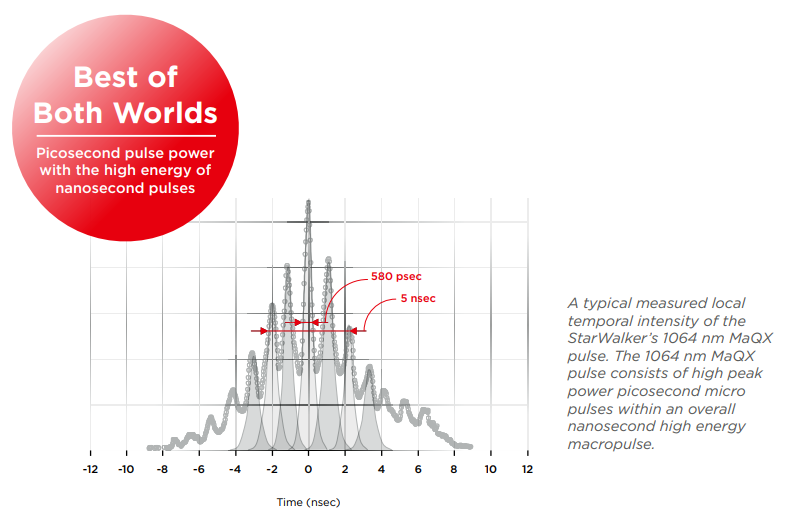
Pico toning is not everything in pigment treatment
Recently, as the term "pico toning" has spread like a trend, it is sometimes regarded as if this one treatment could clear every kind of pigment. However, the basic pillar of pigment treatment is still the nanosecond laser, the Q-switched Nd:YAG. Pico lasers and nano lasers are closer to complementing each other than competing.
The StarWalker we use at OARO has the MaQX mode, a hybrid pico-and-nano pulse that creates a nanosecond pulse by grouping several picosecond pulses together. Whereas the previous version, the Fotona QX MAX, had powerful output with a somewhat rough feel, the MaQX mode is reported to have the advantages of being a little gentler and causing less epidermal irritation after treatment. Put simply, it is a mode designed to break up pigment without over-stimulating melasma.
There is one principle I always emphasize in pigment treatment: the power to clear epidermal pigment and the power to manage the dermal background come from different tools. That is why, the more stubborn the melasma, the less I stake everything on a single method.
Pico fractional treatment, which changes the dermal background
The DOE method, one of the pico fractional methods, delivers strong energy deep into the skin to create microscopic injuries in the dermis. These injuries in turn stimulate collagen production, and in the process the dermal environment changes in a positive direction.
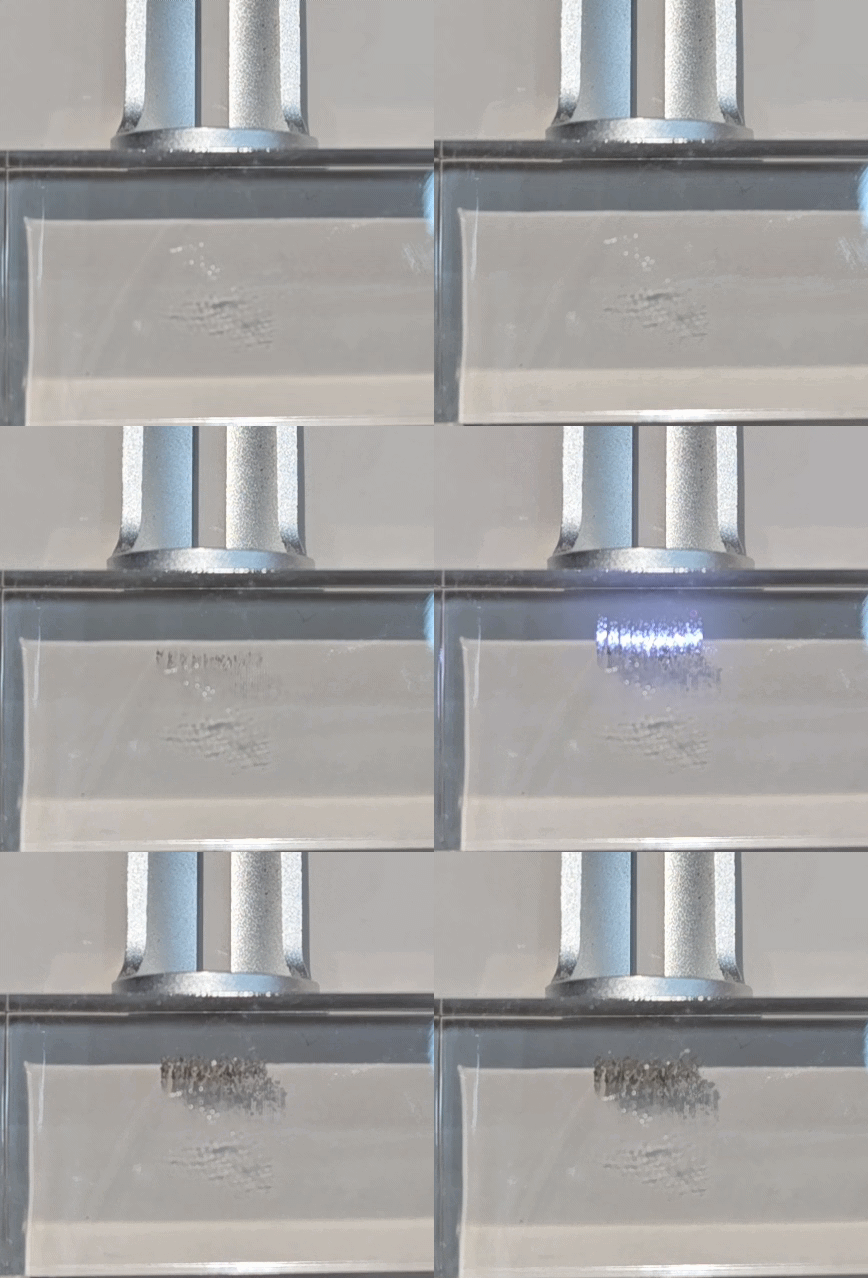
What happens when a pico laser with strong peak power is delivered in a fractional pattern?
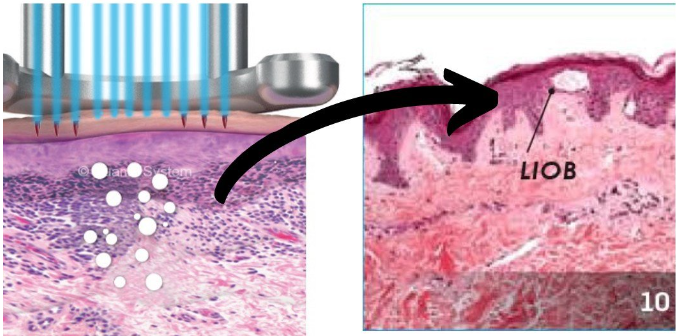
Microscopic holes form in the dermal tissue, and as new collagen fills those spots, the aged dermis is regenerated. This is the principle by which the dermal environment itself improves. You can see the result in the data below.
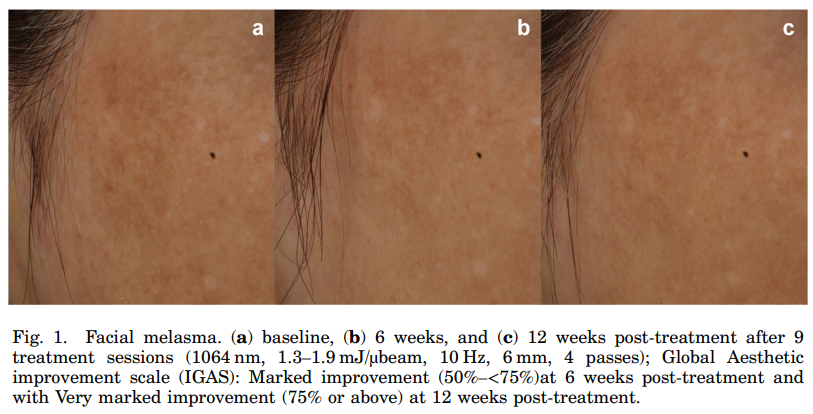
Academic data also report a tendency for pigmentation to improve,
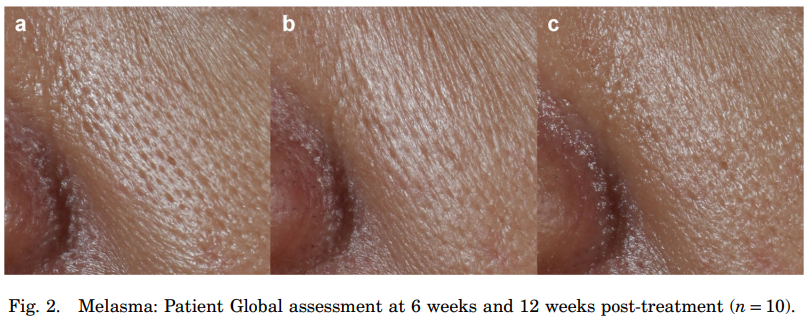
and a trend is observed in which not only pigmentation but also skin texture and fine lines improve together. I have explained in more detail why the dermal background must be considered as well, rather than only clearing the color of the epidermis, in Why melasma comes back even after clearing epidermal melanin.
If you are wondering why the toning you are currently receiving is responding slowly, feel free to ask via Consult via chat now.
What role does microneedle radiofrequency play?
Microneedle radiofrequency is another tool that can be used in melasma treatment. It delivers energy deep into the skin through fine needles to induce regeneration of the dermis. Its working principle can be summarized as follows.
- Delivers heat to the dermis while causing only minimal injury to the epidermis
- Promotes collagen production through thermal stimulation of the dermis
- Improves damaged skin structure and lowers the activity of melanocytes
There is, however, a precondition: it must be performed only at an appropriate energy level. Excessive energy can actually stimulate pigment, so the intensity setting determines the result.
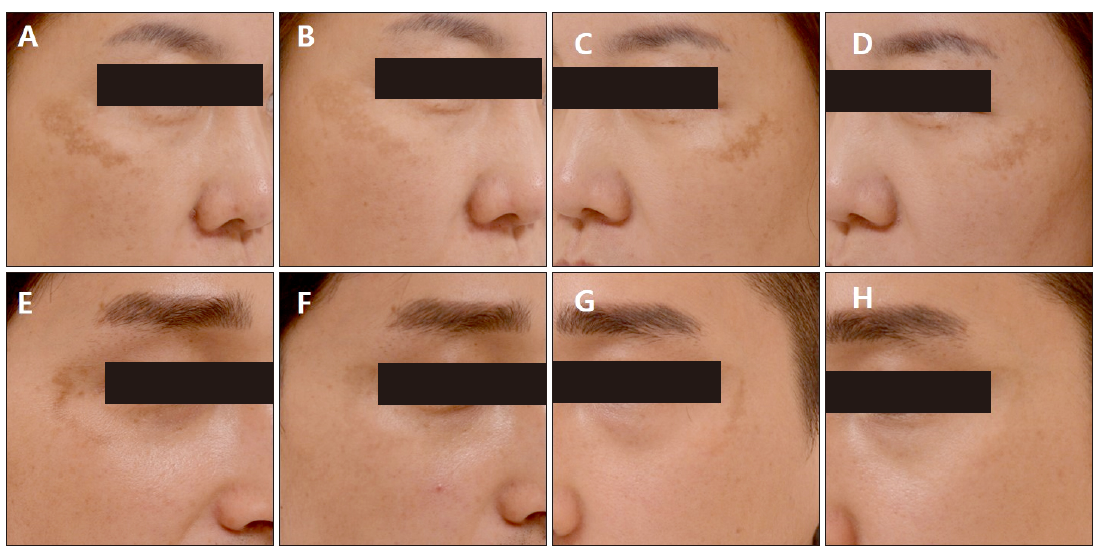
In the data above, the right side, where microneedle radiofrequency was performed, shows a more distinct improvement in melasma than the left side, where it was not. There are individual differences.
Genesis, dual toning, and melasma accompanied by redness
The Genesis technique supports skin regeneration and melasma treatment in three broad ways: skin regeneration, reduction of inflammation, and promotion of collagen production.
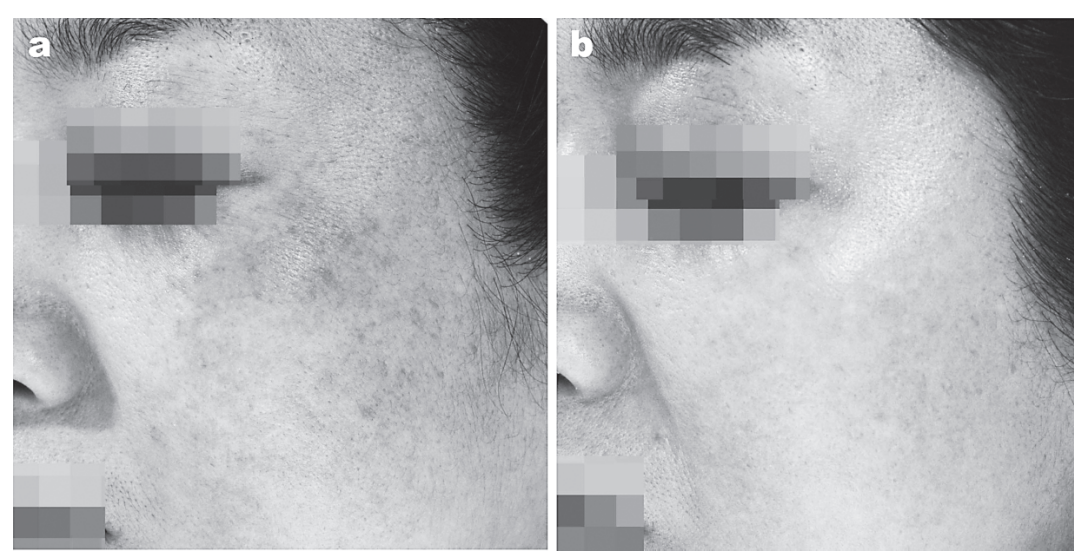
Academic data have also reported results in which dual toning, that is, applying Q-switched Nd:YAG and Genesis together, improved melasma.
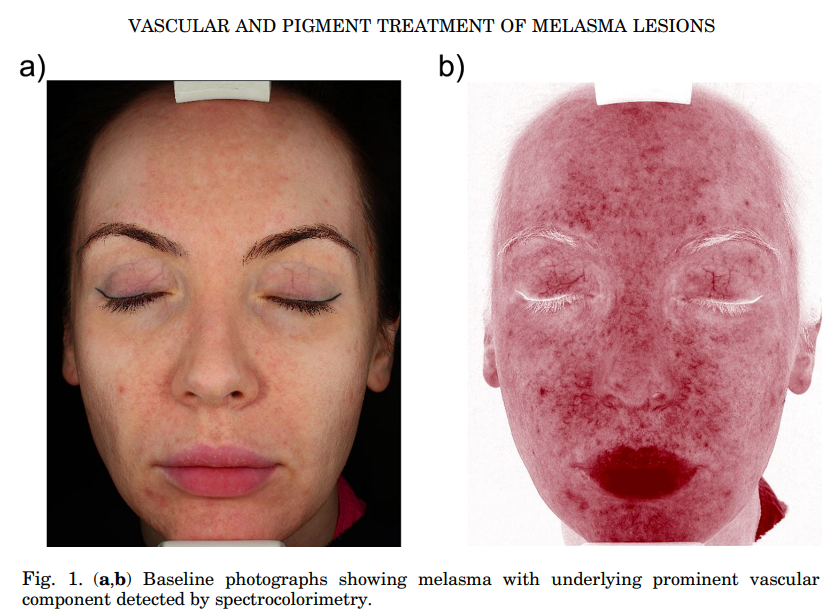
There is one point to note here. It is known that in many, though not all, melasma patients, vascular proliferation is significantly increased.
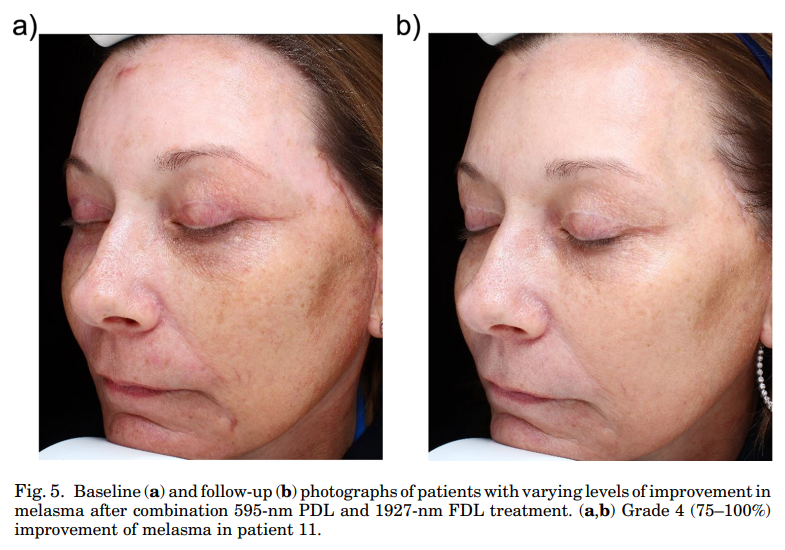
So for melasma accompanied by redness, I approach it by combining vessel-targeting toning with the V-Beam 595nm. It is a strategy that aims to improve melasma while managing facial redness at the same time. However, because of the nature of long-pulse lasers, excessive application can actually worsen melasma, so here too, controlling the intensity is key.
If you are curious about the character of each device, you can also refer to the introductions to V-Beam Perfecta and StarWalker.
How oral and topical medications are added
There are also many cases where I do not stop at lasers and radiofrequency alone. To manage the pigment background as well, I sometimes combine the following ingredients.
| Category | Ingredient | Role |
|---|---|---|
| Oral medication | Tranexamic acid | Helps manage the pigment background |
| Topical agent | Retinoids | Helps epidermal turnover and pigment improvement |
Depending on skin sensitivity, some people feel irritation, so there are individual differences. That is why these medications must be prescribed and used only after a detailed consultation. If you keep seeing the color darken again even after receiving good treatments, I recommend also reading What I ask in the clinic of people whose melasma darkens again even after good treatments.
Why you do not have to give up on stubborn melasma
Here is an overview of the tools I have summarized so far.
- The pillar that breaks up epidermal pigment — nano and pico toning
- The pillar that regenerates the dermal background — pico fractional, microneedle radiofrequency, Genesis
- The pillar that manages the vascular component — vessel-targeting toning combined with V-Beam
- The pillar that manages the background from within — oral and topical medications
With stubborn melasma, the direction changes when these pillars are combined to fit the person's pigment condition. Of course, 100% improvement is difficult. Still, there is clearly room for it to get better, so I hope you will never give up. If you have wondered why toning alone was not enough, Why your laser toning did not work may also help.
If you would like to pinpoint which pillar your melasma is caught on, you can comfortably start a consultation below.
Consult via chat
Author: Dr. Cho Mingyeol, Medical Director (board-certified dermatologist; Master Certification in Pigmentation, Acne, Rosacea and Hair from the Korean Dermatologists Association). You can find the full profile on the Medical Team page. First published 2024-08-03 / Last reviewed 2026-07-09
This article is intended for general information only; the appropriate treatment and outcomes may vary depending on each individual's condition.