

In the clinic, I fairly often meet people who say that even after receiving melasma toning for a long time, the color not only failed to fade but actually grew darker. Today, through the clinical record of a female patient in her 40s who came to us after going through such a path, I would like to explain why, for the same melasma, some treatments lighten the color while others end up darkening it.
A patient came in saying it got darker the more laser she had
She had been receiving melasma toning regularly at another clinic without any notable improvement, then additionally underwent IPL, after which she came to us with the pigmentation worsened. I remember that, exhausted from going through several clinics, she came in feeling almost resigned.
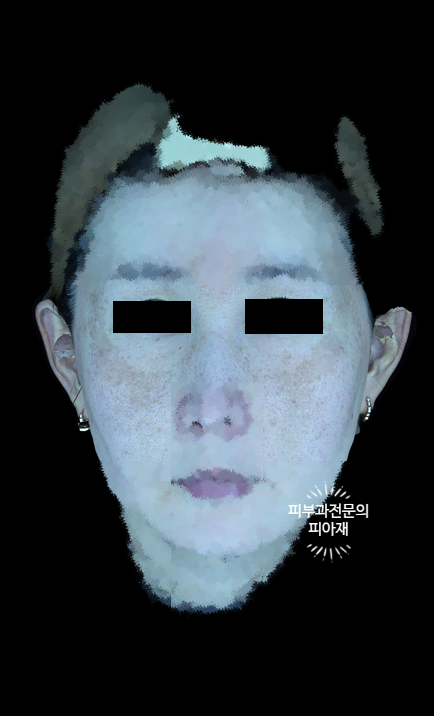
These are the photos taken at her first visit. A pattern in which the pigment became more distinct rather than fading after laser treatment can be observed fairly clearly.
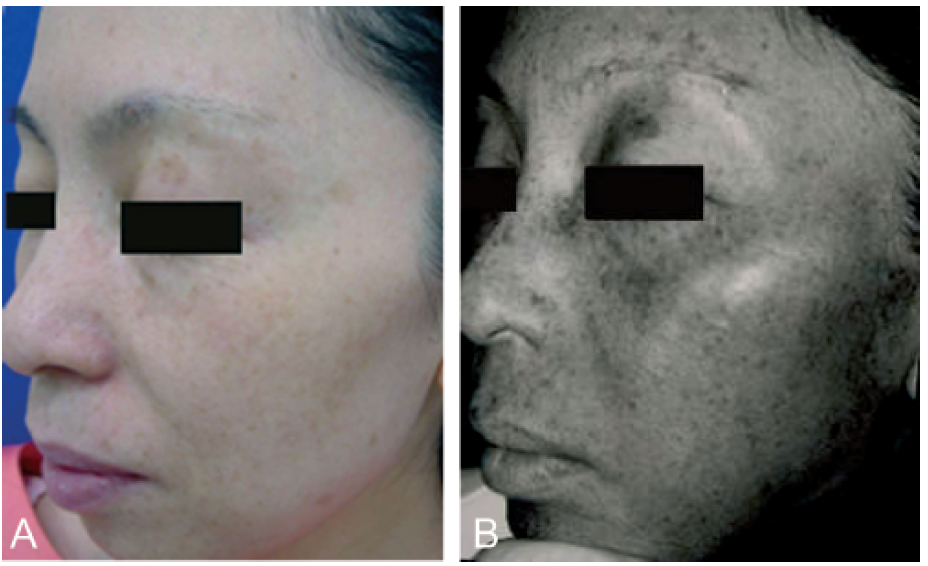
In dermatology practice, there is a pattern you come to confirm repeatedly through experience. When strong IPL is applied to skin that has a subtle underlying tendency toward melasma, not readily visible on the surface, the pigment may be stimulated and darken rather than clear.
Melasma is a pigmentary condition that is sensitive to heat and light stimulation. Greater force in breaking up the color is not necessarily better; what matters far more is whether that force suits this skin right now.
For this reason, the process of first reading the nature of the pigment must always come first, and that is why, for pigmented lesions in particular, I recommend setting the direction of treatment under the judgment of a board-certified dermatologist. In the same context, it is also helpful to read Why melasma comes back even after removing only the epidermal melanin and Why your laser toning didn't work.
If you are unsure what kind of melasma you have right now, feel free to ask via Consult via chat now.
After two months of treatment, how far had things changed?
These are the photos after we changed direction and continued treatment at our clinic for about two months.
Treatment has not yet been completed, so the melasma has not disappeared entirely. However, the color has now faded to a level that can be naturally covered with makeup. Let me say first that the degree and speed of improvement vary between individuals.
Looking at before and after side by side
Let me compare before and after treatment from the same angle.
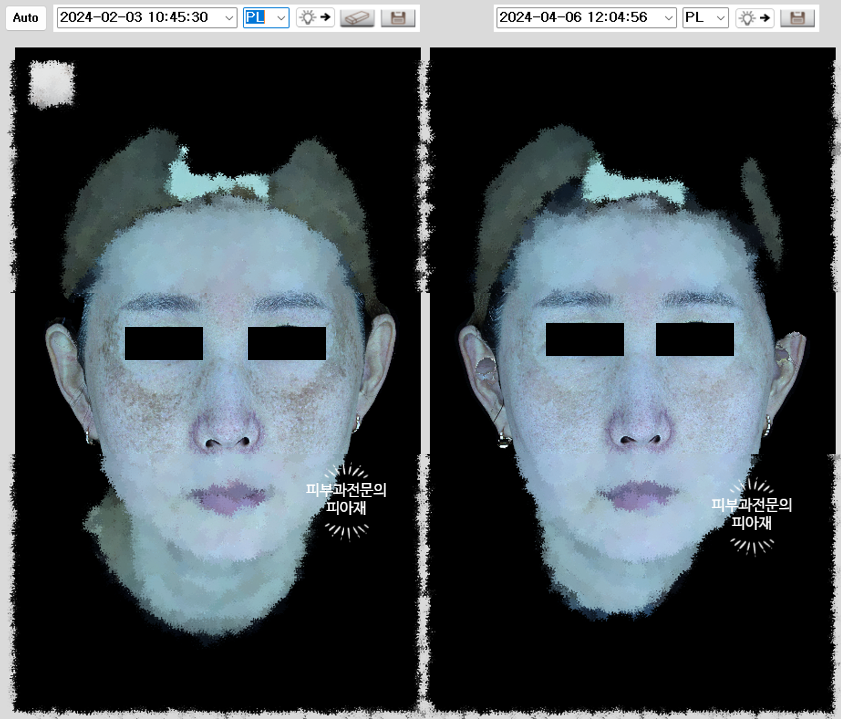
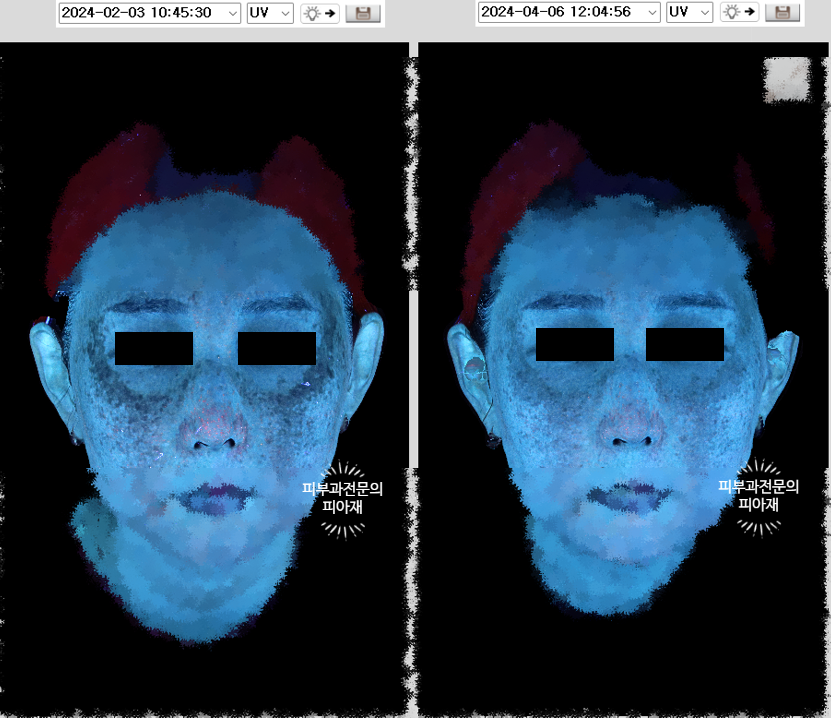
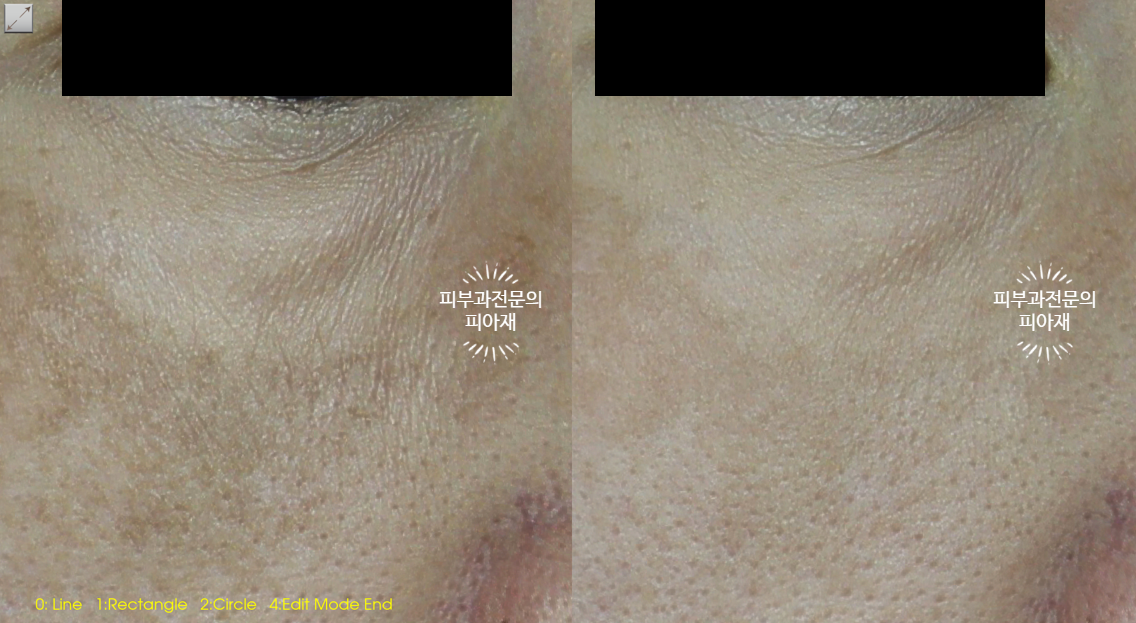
Can you see that along with the pigment fading, the fine lines under the eyes and the skin texture have also become more refined?
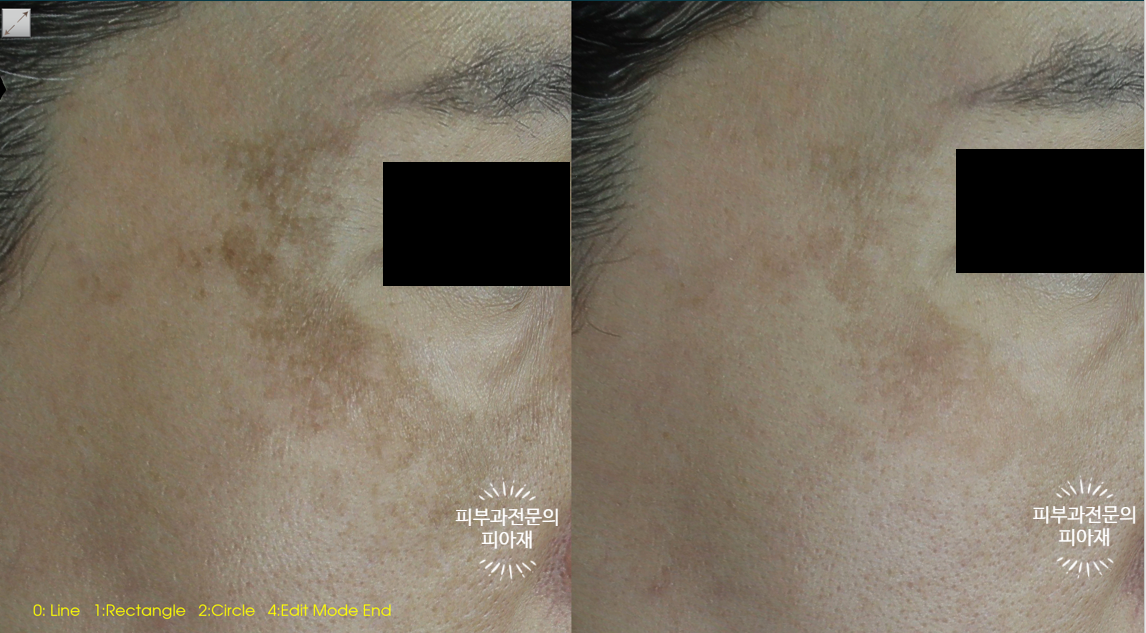
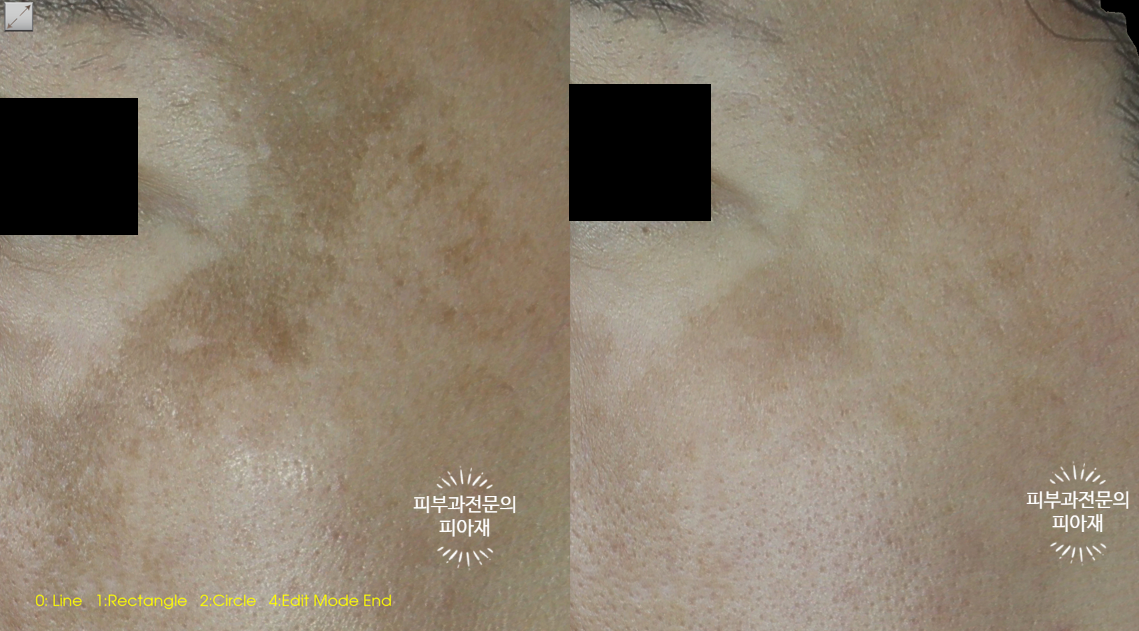
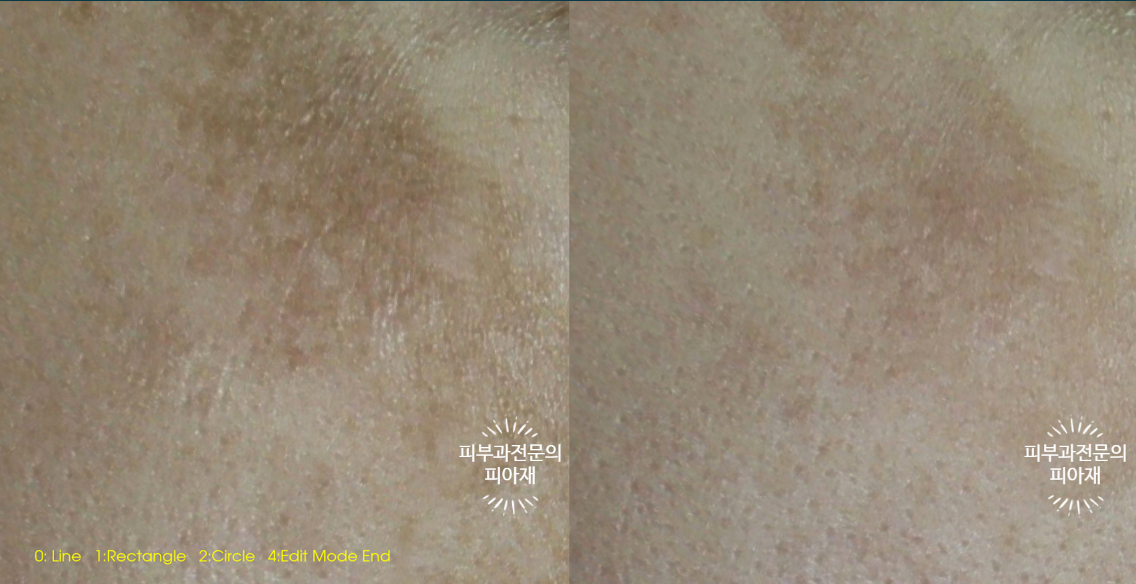
Around the eyes as well, fewer fine lines and improved skin texture can be observed. She says that it can now be covered with makeup and that people around her tell her it has improved a lot, and when a patient tells me that, I too feel a great sense of reward in my work.
Melasma is not simple hyperpigmentation
There is one thing I would like to point out here: melasma is a pigmentary disorder that arises from several overlapping causes.
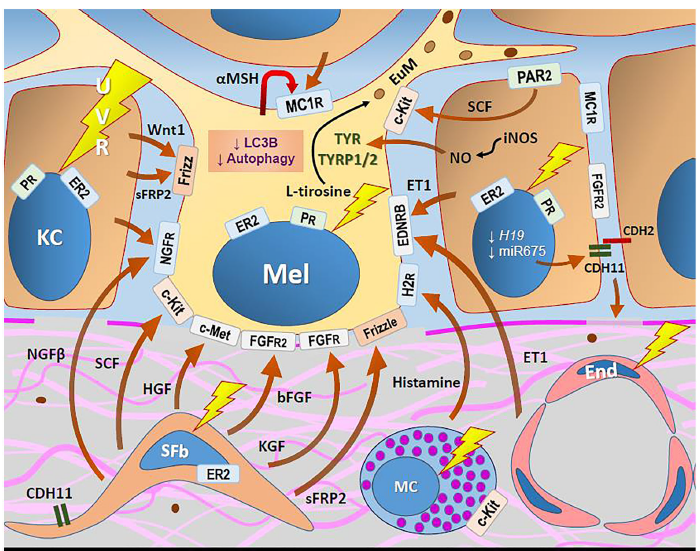
As shown in the figure above, melasma has a fairly complex mechanism. Broadly speaking, the following factors are intertwined.
- Increased melanin production due to light stimulation, including UV
- The influence of hormonal changes, including female hormones
- Changes in which the boundary between the epidermis and dermis weakens and pigment settles down into the dermis
- Problems in the dermal environment, such as microvessels and chronic inflammation
In other words, understanding melasma as a multifactorial pigmentary disorder spanning the full thickness of the epidermis and dermis, rather than hyperpigmentation that stays only in the epidermis, is closer to actual treatment.
That is why treatment that only breaks up pigment is not enough
Because multiple layers are intertwined like this, it cannot be solved by recklessly shattering only the pigment with strong energy. On the contrary, as in the case above, it can act as a stimulus and come back. Here is a summary of the principles I consider important when treating melasma.
| Perspective | Approach that only breaks up pigment | Approach that also considers the dermal environment |
|---|---|---|
| Goal | Removing visible color | Stabilizing pigment and managing recurrence |
| Energy | Strong and frequent | Adjusted to the skin's response |
| What is examined together | Epidermal pigment | Dermal background and inflammation |

I have explained in more detail the specific way of stabilizing pigment while also improving the dermal environment in Why I do not end stubborn melasma treatment with pico toning alone. If you have had the experience of your color darkening again even after receiving good treatment, I also recommend referring to What I ask in the clinic when melasma darkens again after good treatment.
Which direction should my melasma take now?
Melasma is not a condition that ends with one strong treatment; it is closer to a process of reading which stimuli your skin is sensitive to right now and adjusting the direction accordingly. If you have experienced it getting darker the more laser you had, that may not be a sign that treatment is useless, but a sign that the approach needs to change.
If you are wondering whether your melasma is mainly epidermal or also entangled with the dermal background, and in what order it is safe to approach it at this point, feel free to start a consultation below.
Consult via chatAuthor: Dr. Cho Mingyeol, Medical Director (board-certified dermatologist; Master Certification in Pigmentation, Acne, Rosacea and Hair from the Korean Dermatologists Association). You can find the full profile on the Medical Team page. First published 2024-07-29 / Last reviewed 2026-07-09
This article is intended for general information only; the appropriate treatment and outcomes may vary depending on each individual's condition.