

Quite a few people come to the clinic saying their lentigo is still there even after several toning sessions. Faced with the question, "I definitely had a pigment laser, so why won't it fade?", before the number of sessions I first look back at the depth of the lesion and the wavelength of the laser that was used. I summarized the histological character of lentigo in my previous post on the histology of lentigo treatment, so this time I would like to talk about how to choose a laser based on that character.
Lentigo is ultimately a matter of melanin
As with other pigmentary disorders, lentigo is a state in which the pigment melanin has increased. That is why pigment lasers with wavelengths that target melanin are used for treatment.
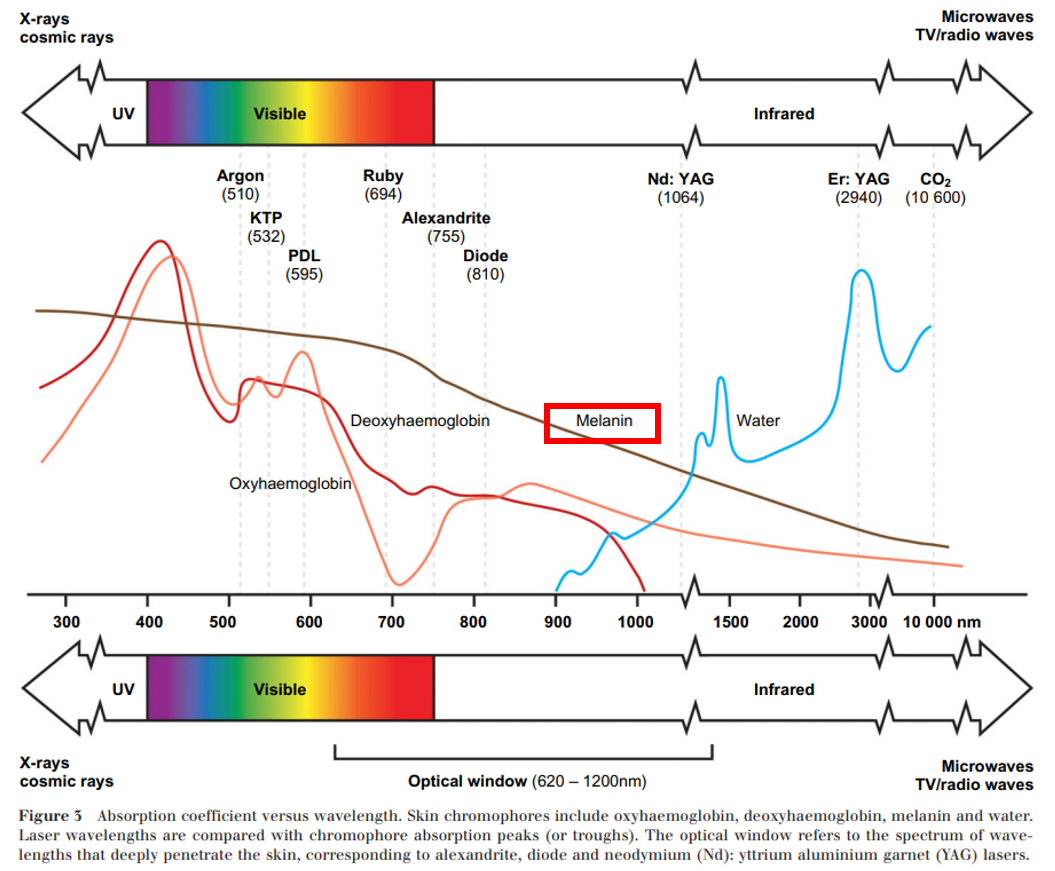
The wavelengths commonly mentioned in clinical practice can be summarized as follows.
| Wavelength | Representative laser | Characteristics |
|---|---|---|
| 532nm | KTP | Tends to have the highest melanin absorption |
| 694nm | Ruby | Good selectivity for pigment |
| 755nm | Alexandrite | Relatively deep penetration |
| 1064nm | Nd-YAG | Deepest penetration, used for toning |
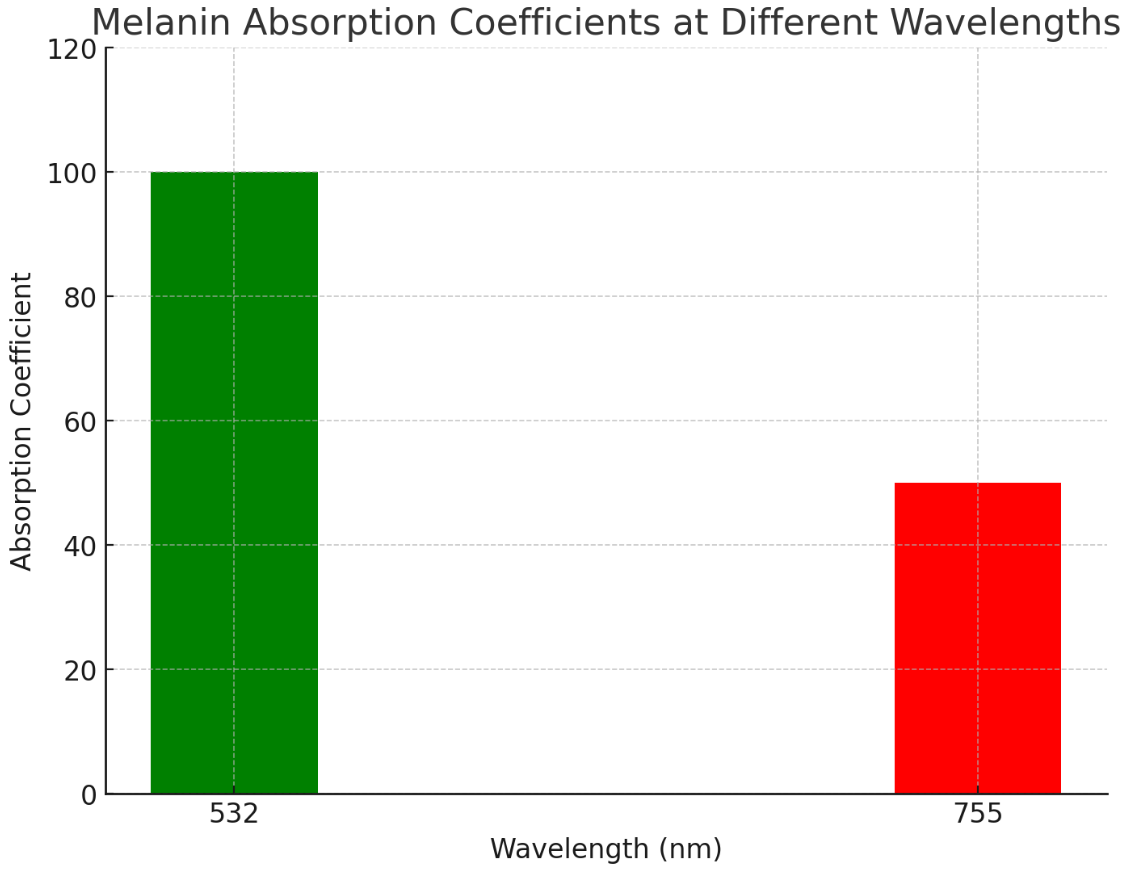
Of these, the wavelength with the highest absorption by melanin is 532nm. It is known to be roughly 2 to 2.5 times that of 755nm. Of course, the wavelength alone does not determine everything, but it is good to keep this much in mind for now.
Toning alone has difficulty changing the epidermal structure
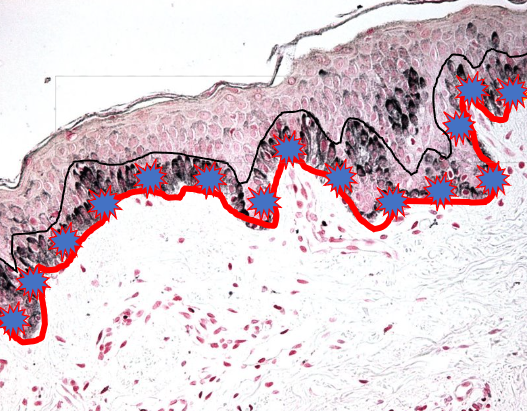
In my previous post, I explained that in areas of lentigo, abnormal proliferation of the keratinocytes that make up the epidermis appears. Some lentigines do not show such changes clearly, and in those cases a certain degree of improvement can be expected even with somewhat strong toning at 1064nm.
The problem is the cases where that is not so. Lentigo usually comes with surface changes, and in such cases it is not easy to bring about structural changes in the epidermal layer with toning split over many sessions alone. This is why I consider fundamental improvement difficult. If you are curious about the principle of toning itself, I recommend reading What is good to know before laser toning as well.
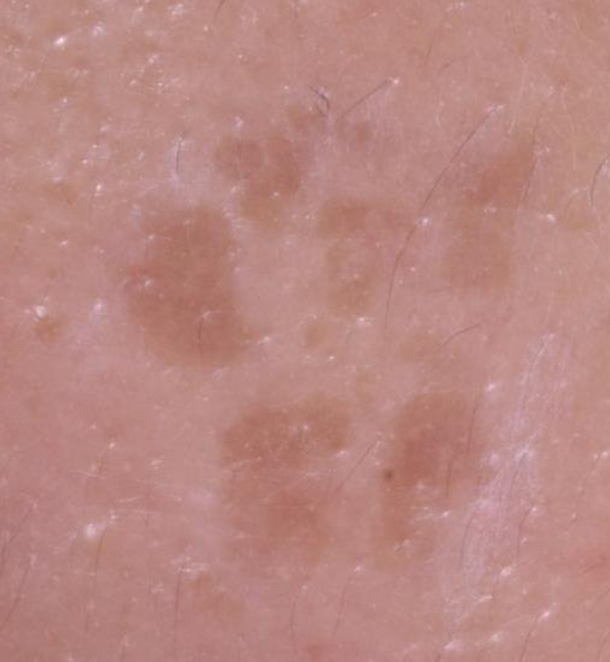
It is an epidermal lesion, so why consider depth?
Basically, lentigo is an epidermal lesion.
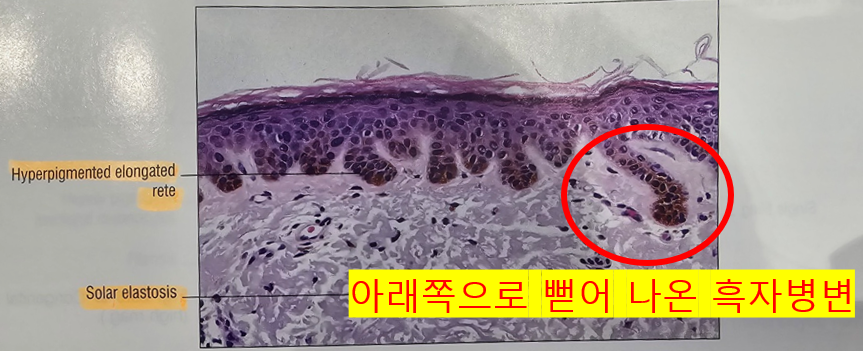
However, there are cases where the rete ridges extend downward so that it settles deeper, into the upper dermis.
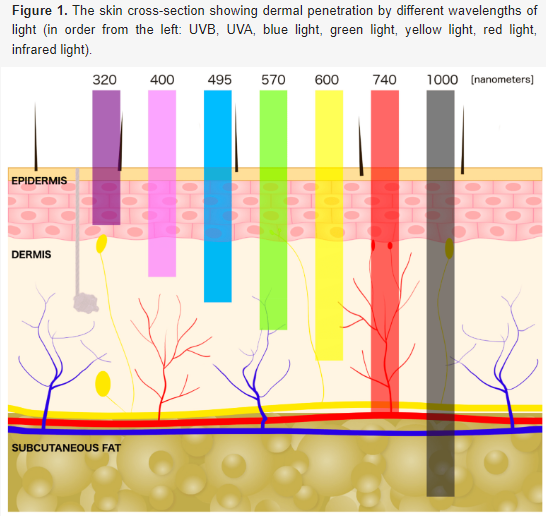
To reduce recurrence, a long-wavelength laser that can penetrate deep into the skin is advantageous for dealing even with deep lentigo lesions. However, wavelength is not the only factor that determines penetration depth.
- Wavelength — generally, the longer it is, the deeper it reaches
- Pulse duration — the time the energy remains in the tissue
- Fluence — the energy delivered per unit area
These three factors combine to produce the actual depth reached.
So is the longest wavelength the answer?
Not necessarily. The key to lentigo treatment that is effective yet low in burden is to treat exactly the desired depth without going deeper than necessary. That is why it is necessary to look at the actual thickness of lentigo lesions.
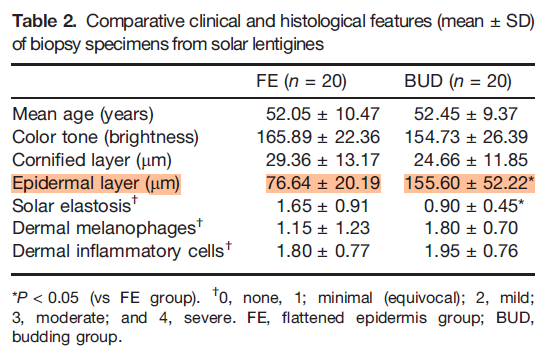
In the reported data, the thinnest lentigo lesion was about 0.05645 mm and the thickest about 0.20782 mm. Some claim that this depth can be controlled by hand feel alone, but I do not see it that way. If we look at it together with the penetration depth by wavelength,
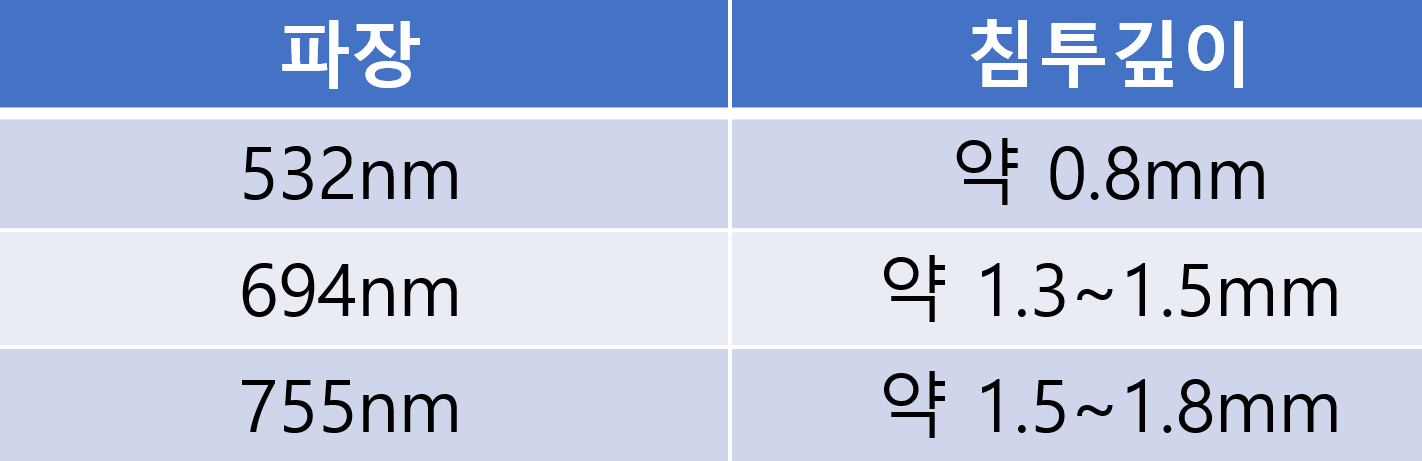
532nm alone covers this thickness with room to spare. In addition, it can selectively target only the melanin pigment, which has the advantage of reducing the burden on the surrounding tissue.
When choosing a wavelength, blood vessels must be considered too
Lentigo generally also shows findings of proliferated blood vessels. So if you blast away the epidermis all at once with strong energy in order to eliminate the epidermal changes, the likelihood of damaging not only the epidermal cells but also the blood vessels increases.
Vascular damage can lead directly to post-inflammatory hyperpigmentation or worsening of melasma. In trying to remove pigment, you end up creating a new pigment problem.
For this reason, treating lentigo with a CO2 laser or Er:YAG laser, which non-specifically burns away the epidermis and upper dermis, should be viewed with considerable caution. If you are curious about how to distinguish lentigo from seborrheic keratosis, About pigmentary conditions easily confused with seborrheic keratosis is also a useful reference.
Then it would be best to precisely remove only the melanin without touching the blood vessels. I said earlier that 532nm is the most efficient, but it has a drawback that needs to be pointed out.
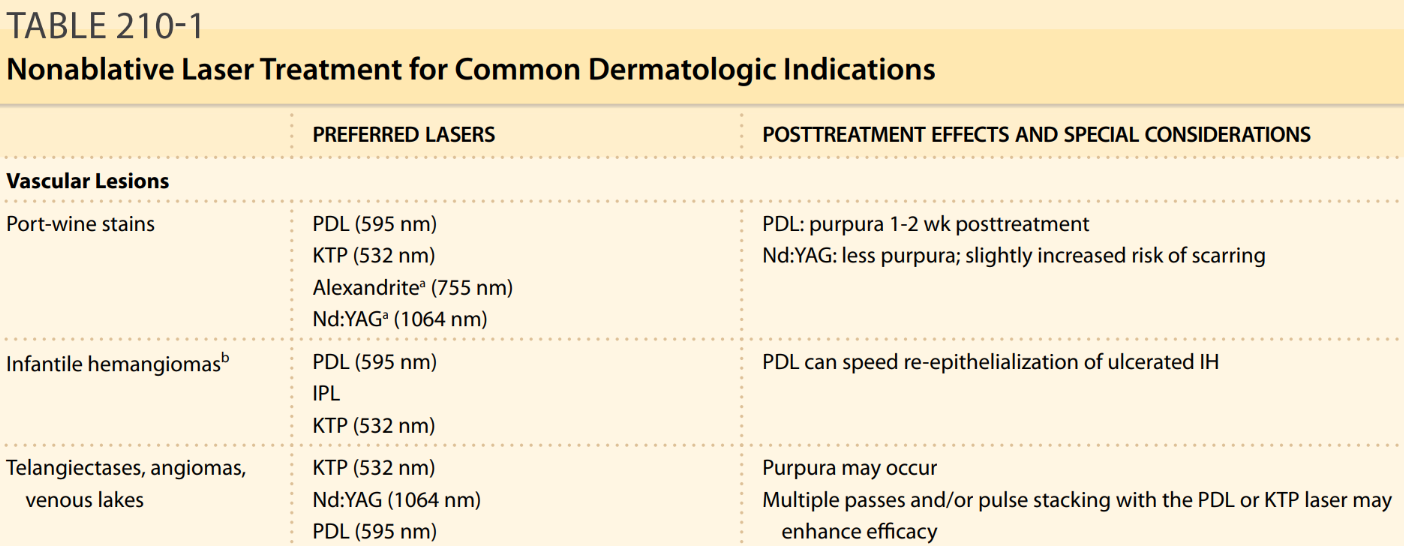
Compared with 694nm or 755nm, 532nm has a very high absorption by hemoglobin. In fact, it is even used for vascular treatment. In other words, treating lentigo with 532nm can affect not only melanin but also blood vessels.
Then is the ruby laser the answer?
Looking only at the fact that it touches blood vessels less, the 694nm ruby laser may seem the most suitable. But the ruby laser also has a weakness that needs to be pointed out.
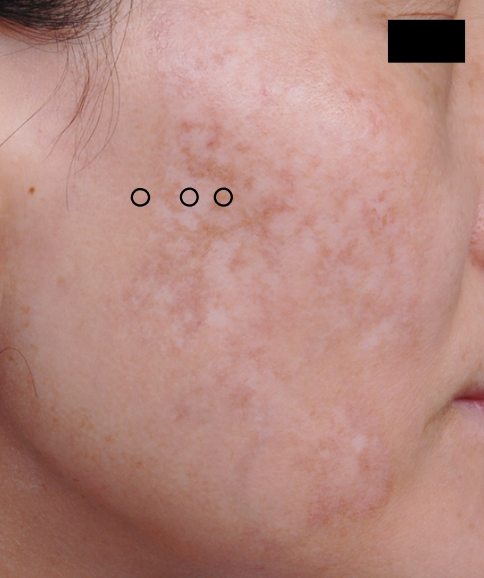
Although the likelihood is not high, it can leave permanent hypopigmented patches. To summarize what has been discussed so far:
- 1064nm toning — limited for lentigo with marked epidermal structural changes
- CO2 and Er:YAG — require caution because of the risk of vascular damage and hyperpigmentation
- 532nm — high melanin efficiency, but hemoglobin absorption is also high
- 694nm ruby — less burden on blood vessels, but a concern for hypopigmented patches
In the end, it is difficult for any single wavelength to be the answer for every lentigo. So I choose the wavelength by considering the depth of the lesion, the vascular condition and the degree of epidermal change together. Because individual differences are large, the direction can differ even for the same lentigo. How I resolve this problem is covered, together with the Reepot laser, in the next part of the laser story. The approach of the Reepot laser that OARO Dermatology actually uses to treat lentigo follows the same line of thinking.
If you are wondering why your lentigo did not clear with toning, the first step is to look together at the character of the lesion rather than adding more sessions.
Consult via chatAuthor: Dr. Cho Mingyeol, Medical Director (board-certified dermatologist; Master Certification in Pigmentation, Acne, Rosacea and Hair from the Korean Dermatologists Association). You can find the full profile on the Medical Team page. First published 2024-08-12 / Last reviewed 2026-07-09
This article is intended for general information only; the appropriate treatment and outcomes may vary depending on each individual's condition.