

I am Cho Mingyeol, a board-certified dermatologist. This is the second post in my series on lasers for lentigo. In Why I consider wavelength first when choosing a laser for lentigo, I summarized the various lasers used to treat lentigo and the pros and cons of the 532 nm wavelength. Today, continuing from there, I would like to go one step further.
I do not think there is a single right answer in treating lentigo. Whether it is the wavelength or the device, in the end, all that remains is the result that shows on the skin.
The key question was this. Can this 532 nm laser, which seems well suited to lentigo, be used as is without worrying about side effects? Or do we need to find another way?
Why 532 nm suits lentigo well yet is tricky
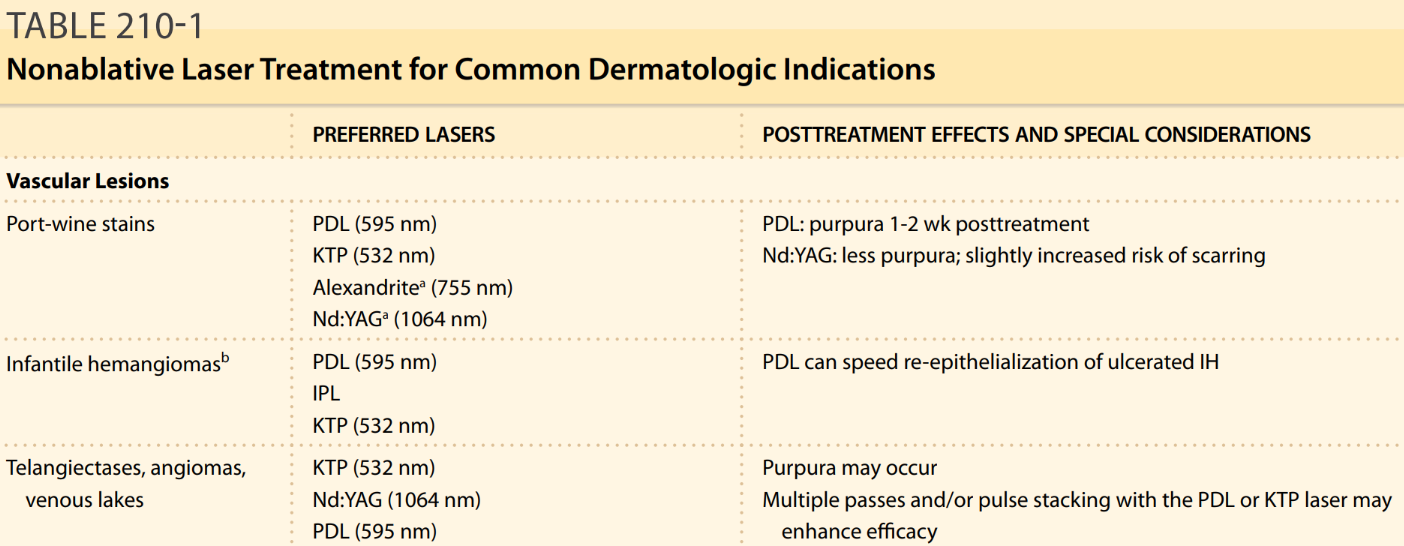
The 532 nm wavelength has been regarded as a good match for treating lentigo. However, as I pointed out in the previous post, this wavelength is very highly absorbed not only by melanin but also by hemoglobin. If the light aimed at the lentigo is also strongly absorbed by the hemoglobin in the blood vessels under the skin, the vessels are damaged and the likelihood that post-inflammatory hyperpigmentation (PIH) follows increases.
This means that to treat lentigo effectively while reducing side effects, this weakness has to be overcome. I have covered separately, from a histological perspective, why lentigo does not clear well with simple toning alone in Why lentigo does not clear with simple toning, so reading it together will make this much easier to follow.
What happens when you freeze the skin instantly
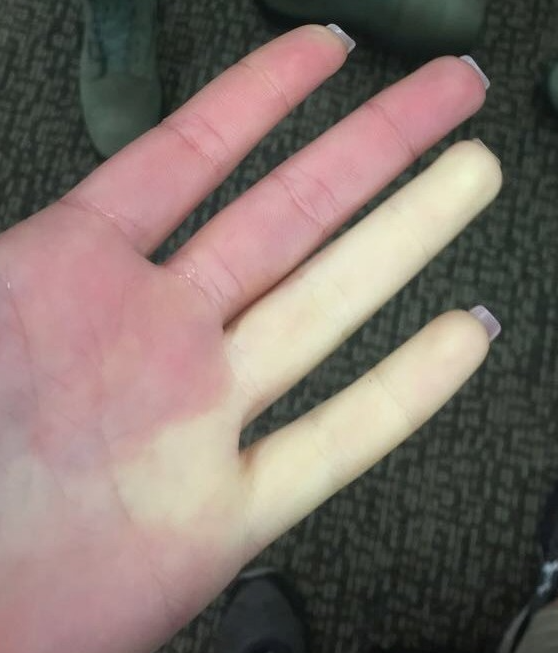
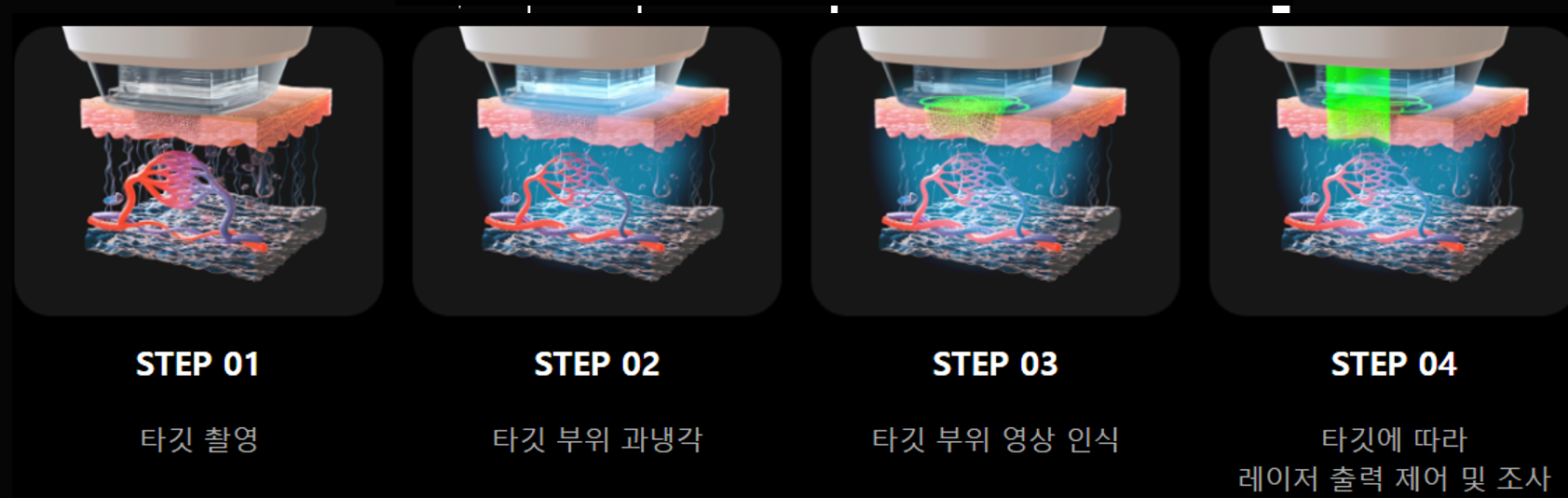
The hint for a solution lay in temperature. If the skin surface is instantly frozen to around minus 2 to minus 10 degrees Celsius at the moment the laser is fired, the following sequence is created.
- As the surface cools rapidly, the blood vessels beneath it temporarily constrict.
- In the constricted vessels, there is relatively less hemoglobin for the 532 nm light to destroy.
- As a result, the likelihood of side effects stemming from vascular damage can be lowered.
In other words, the targeted lentigo pigment is left in place, and only the vascular response that is the starting point of side effects is briefly held down.
How different are tissues with and without cooling
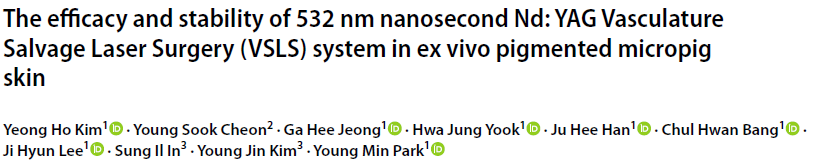
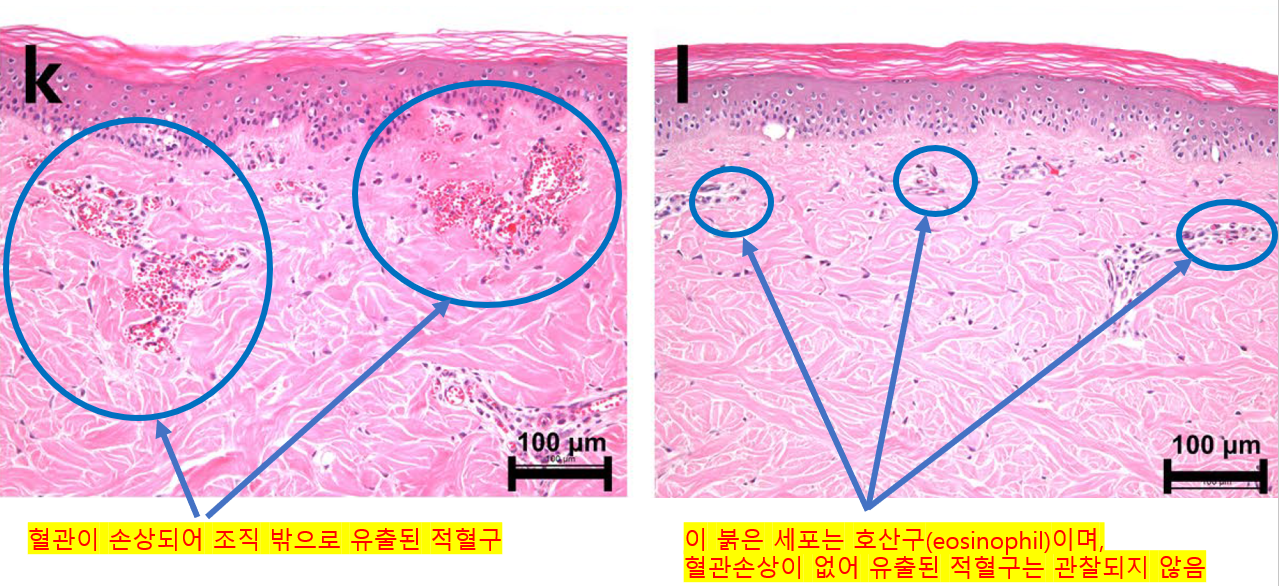
There is a paper that supports this principle. It shows how the tissue response differs depending on whether a cooling system called VSLS is applied. On the left is tissue without cooling, and on the right is tissue with cooling applied.
- In the tissue without cooling, extravasation is observed, in which blood vessels burst and red blood cells leak extensively out of the vessels.
- In the tissue with cooling applied, this phenomenon is barely seen.
| Category | Without cooling | With cooling (VSLS) |
|---|---|---|
| Vascular response | Vessel rupture observed | No clear signs of rupture |
| Red blood cell leakage | Extensive extravasation | Barely observed |
| Side-effect perspective | Higher risk of pigmentation | Reported to reduce risk |
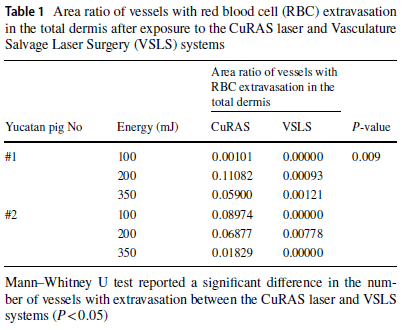
The statistics also confirm a pattern of almost no red blood cell leakage on the cooled side. The tissue findings seen with the eye and the numbers point in the same direction.
If you have any questions, feel free to ask. Consult via chat now
As a result, energy can be used a little more boldly
When blood vessels are protected by instant cooling in this way, there is room to use the energy that lentigo requires relatively boldly while worrying less about vascular damage. In fact, there were attempts in the past to create this kind of condition.
I have heard that there was once a doctor who treated patients while pressing the skin with a glass slide to compress the blood vessels. But I was also told that the light reflected off the glass and injured the doctor's eyes.
The condition that used to be created by physical pressure can now be reproduced more safely with cooling technology.
What it really means to say the Reepot laser is specialized for lentigo
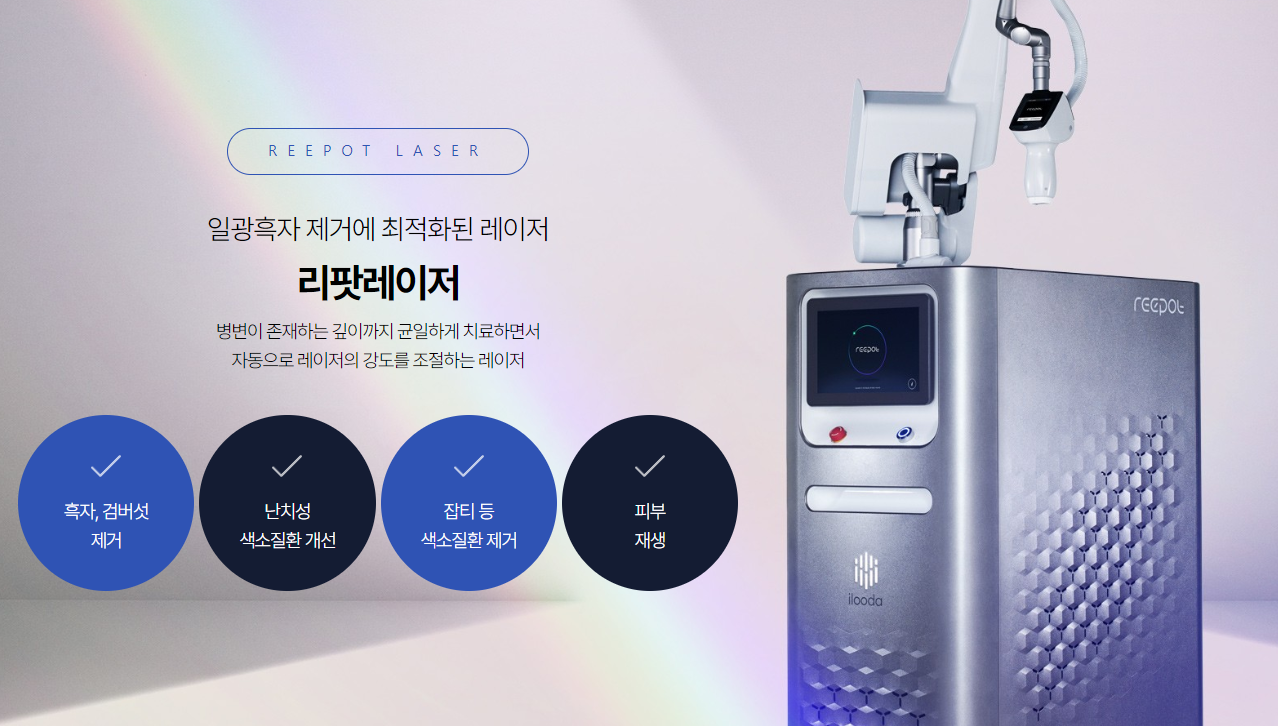
The device that incorporates this VSLS cooling technology is the Reepot laser. It is a laser designed to target lentigo, built to treat pigment while holding down the factors behind side effects through cooling.
However, there is no perfect device in the world. The Reepot laser has so far been reported as a design specialized for lentigo, but it is not a device that erases every lentigo without a single trace. Response and recovery vary between individuals, and I believe it will be difficult for such a perfect device to appear in the future as well. Knowing both the strengths and limits of a device helps you understand the results of treatment.
Why it does not end with the device: care before and after

What the device cannot cover is filled in by care before and after the procedure. In particular, the final result often depends on how early the post-inflammatory hyperpigmentation that remains after a laser is managed, and I have covered this in detail in Post-inflammatory hyperpigmentation that I often see in the clinic. How I manage the process of the wound healing after lentigo is removed continues in The four stages of wound healing after removing lentigo with a laser.
In summary, treating lentigo is not a story that ends with a single wavelength. Results remain stable when the strengths and side effects created by the wavelength, the cooling that holds those side effects down, and the care before and after all mesh together.
If you are curious which direction suits your lentigo, Consult via chat
Author: Dr. Cho Mingyeol, Medical Director (board-certified dermatologist; Master Certification in Pigmentation, Acne, Rosacea and Hair from the Korean Dermatologists Association). You can find the full profile on the Medical Team page. First published 2024-07-15 / Last reviewed 2026-07-09
This article is intended for general information only; the appropriate treatment and outcomes may vary depending on each individual's condition.