

Once lentigo has been removed with a laser, it may look as though treatment is over, but I see it rather as the point where half of the management begins. Treating lentigo with the Reepot laser is ultimately a process of deliberately damaging the tissue where the pigment has settled. So depending on how the wound right after treatment is handled, melasma may flare up, or post-inflammatory erythema or hyperpigmentation may remain. Conversely, when the recovery process is well supported at each stage, I often see in the clinic that the area where the lentigo used to be clears up cleanly.
In the previous post, I covered how the Reepot laser itself treats lentigo. If you are curious about that, you may want to first read my post summarizing the principle of treating lentigo with the Reepot laser. Today, I would like to talk about the after-treatment care once the laser is finished, in other words, wound management.
Real management begins once the laser is over
To achieve the best results in lentigo treatment, it is extremely important to stay close by and help the tissue recover without major trouble. In some ways, I sometimes feel that the care afterward shapes the result more than the moment the laser is fired. It may sound a little difficult, but once you know how a wound heals, you will understand why I emphasize aftercare. Whatever device is used, for any treatment that leaves a reaction in the tissue, like the Reepot laser, the principles of recovery care apply in exactly the same way.
What stages does a wound go through as it heals
The following is a figure from the Fitzpatrick textbook, which dermatologists consult and study most.
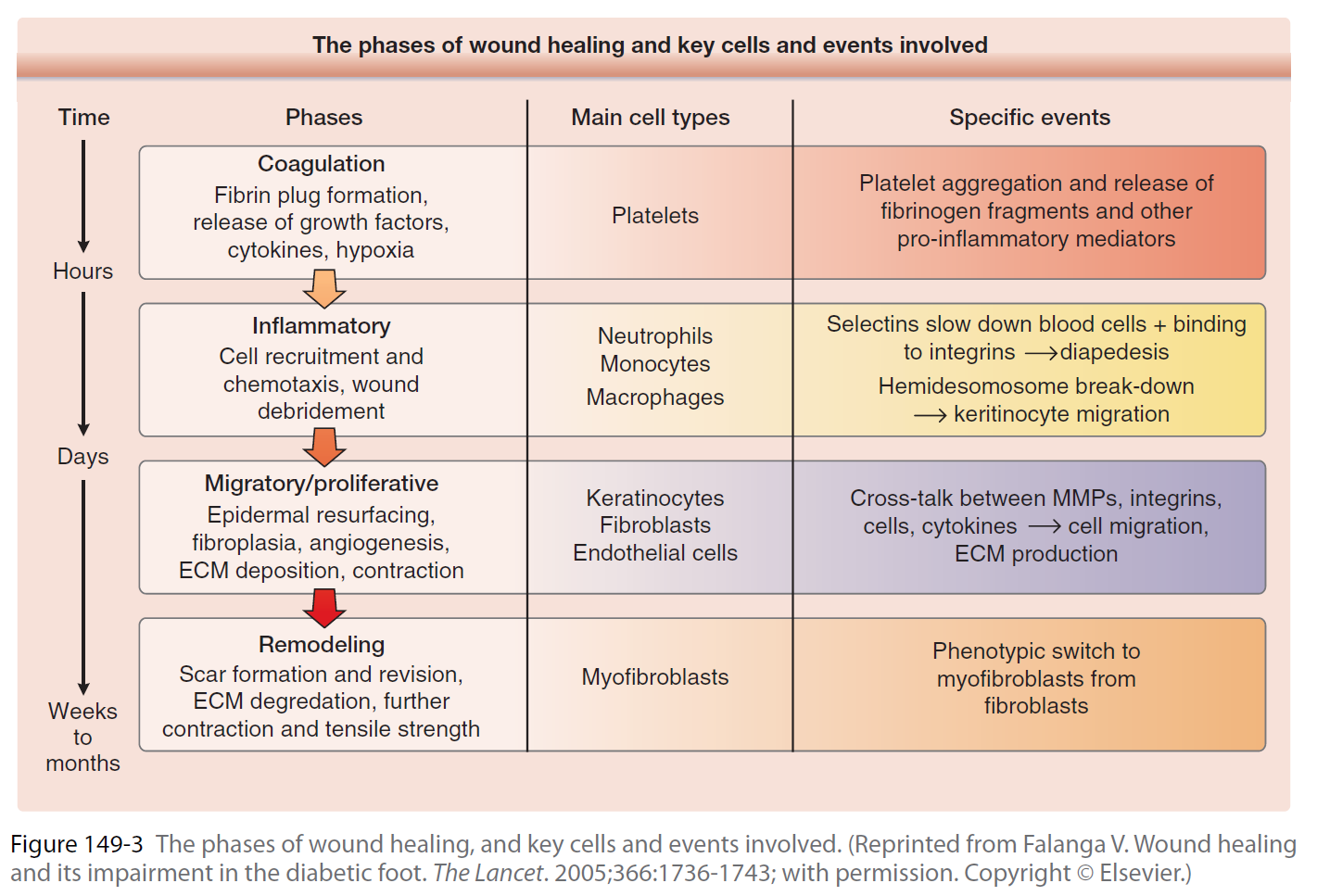
Wound healing is broadly divided into four stages. If you know what happens inside the skin at each stage and where to intervene, the direction of aftercare becomes clear.
| Stage | Approximate timing | What happens inside the skin |
|---|---|---|
| Hemostasis | Right after treatment | Platelets gather to stop bleeding |
| Inflammation | From right after treatment for several days | Immune cells such as neutrophils, monocytes and macrophages are activated and remove damaged tissue, with some swelling |
| Proliferation | Several days to several weeks | New skin cells form, connective tissue fills in, blood vessels regenerate and re-epithelialization occurs |
| Remodeling | Several weeks to several months | Tissue is rearranged, mainly by myofibroblasts |
Hemostasis and inflammation: the most important period right after treatment
Because this stage begins right after lentigo treatment, it can be considered the most important.
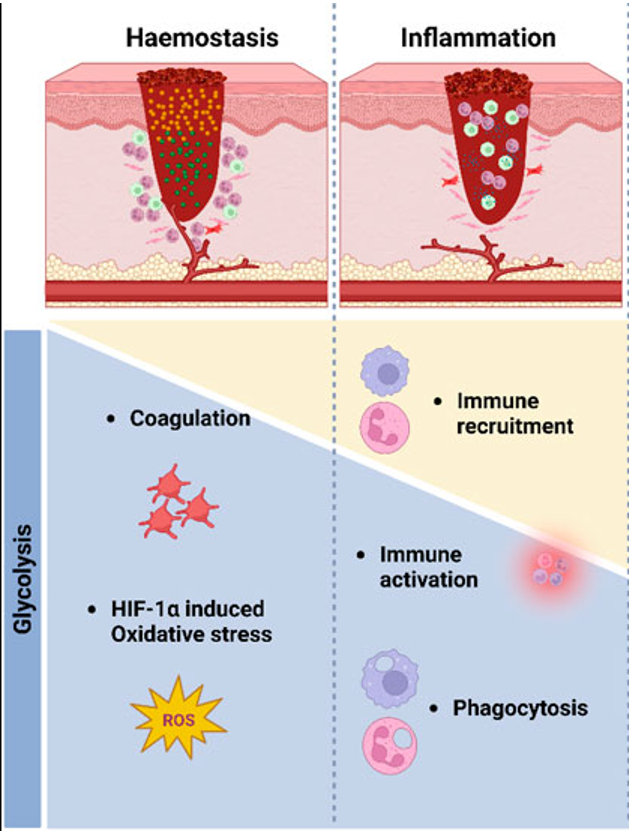
From right after treatment and over the following few days, immune cells such as platelets, neutrophils, monocytes and macrophages are activated to remove damaged tissue and prevent infection. During this period, some swelling may occur in the skin, and because of it, some people feel a throbbing sensation for an hour or two. This reaction varies from person to person.
If care is not properly provided during the inflammatory stage, the inflammation worsens, recovery is delayed, and the risk of hyperpigmentation rises. Interestingly, the oxidative stress in this stage plays its own role in wound healing.
Rather than completely suppressing oxidative stress, it is preferable to keep it at an appropriate level, leaving as much as is needed for recovery.
So I intervene a little more actively at this stage. Alongside treatment, I inject a blend of ingredients optimized for wound healing and inflammation control, including hyaluronic acid, directly into the treated lentigo areas.
Why I intervene directly at this stage
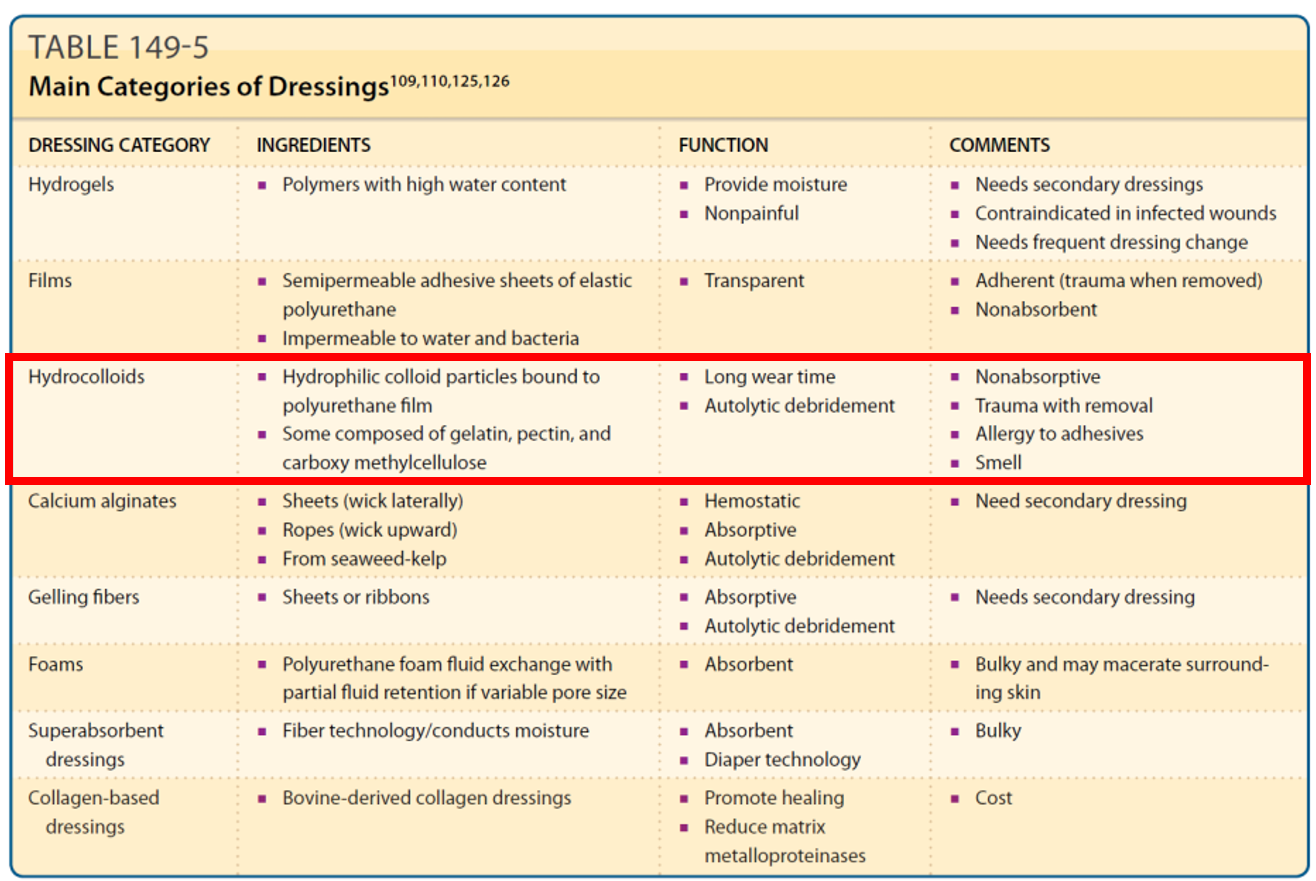
After treatment, I carefully apply DuoDERM, a hydrocolloid dressing like the one shown above. Right after treatment there is almost no exudate, so DuoDERM alone is sufficient. From firing the laser to the finishing step of applying DuoDERM, I do everything myself rather than handing it off to someone else. This is because I want to check the condition of the wound with my own fingertips and take care of it to the very end.
With this kind of care, in most cases people go on with their daily lives without much worry about recurrence or side effects. Of course, recurrence is occasionally reported, and in such cases I take responsibility and perform a touch-up myself. Results vary from person to person, so if you are curious about your own skin condition, feel free to ask through Consult via chat now.
The proliferation stage, when new skin fills in
After the inflammatory stage, over several days to several weeks, new skin cells are made, connective tissue fills in the wound area, and blood vessels grow back.
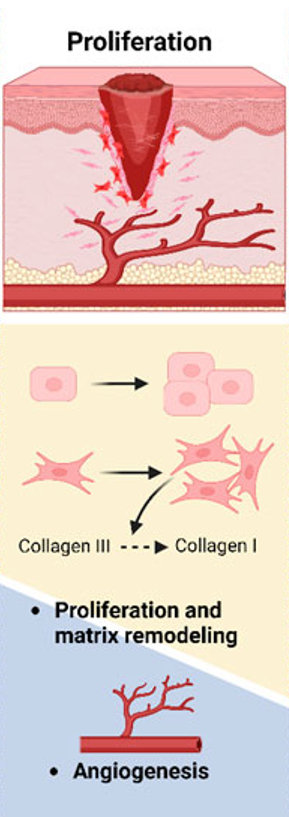
During this period, re-epithelialization takes place and the wound heals in earnest. It is also a time when sufficient moisturizing and promotion of regeneration are needed so that new tissue grows well. Depending on the patient, additional care for skin regeneration is sometimes given about a week after the laser treatment, but usually keeping DuoDERM on is enough.
Criteria for changing direction when erythema lasts long
People who have facial flushing to begin with, or who are often in situations that heat up the face, such as saunas, jjimjilbang (Korean bathhouses), intense exercise or drinking, may have erythema that lasts longer than expected. In such cases, I change the direction of recovery a little. Using V-Beam Perfecta, a vascular laser, together can help the remaining erythema recover faster.
For reference, rosacea, a common background of facial flushing, is also an area I treat regularly. If flushing keeps recurring, my post summarizing how I treat rosacea may help.
The remodeling stage, completed over several months
After the proliferation stage, remodeling of the skin tissue proceeds over several weeks to several months, mainly through myofibroblasts.
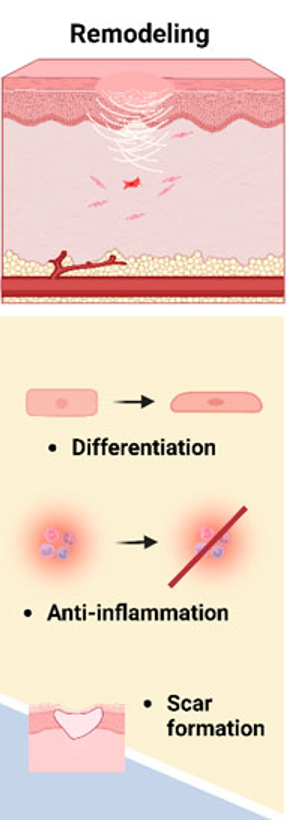
Care that is good to keep up at home during this stage is as follows.
- Consistently applying a regenerating cream containing Centella asiatica or EGF
- Applying plenty of moisturizer to protect the skin barrier
- Using sunscreen every day to prevent pigment from coming back
Moisturizer and sunscreen are the basics of pigment care not only after treatment but in everyday life as well.
Wound care is the domain of the dermatologist
As you have seen, in lentigo treatment with the Reepot laser, the wound-healing process greatly determines the result. Interventions suited to each stage can support skin regeneration and reduce unwanted traces such as post-inflammatory hyperpigmentation. If you are curious why early care makes the difference in color, I recommend also reading my post on early care for post-inflammatory hyperpigmentation and my post on the recovery period after lentigo removal.
This kind of wound care is an area that dermatologists specialize in. That is why I say that, whatever laser is used, it is safer to have lentigo treated by a dermatologist as well. Any questions about lentigo treatment, recovery care or costs will be explained in detail after a consultation, so please feel free to get in touch.
Consult via chatAuthor: Dr. Cho Mingyeol, Medical Director (board-certified dermatologist; Master Certification in Pigmentation, Acne, Rosacea and Hair from the Korean Dermatologists Association). You can find the full profile on the Medical Team page.
First published 2024-07-23 / Last reviewed 2026-07-09
This article is intended for general information only; the appropriate treatment and outcomes may vary depending on each individual's condition.