

I am Cho Mingyeol, a dermatologist at OARO Dermatology. In my previous post, I summarized in five points the histological characteristics of lentigo as a lesion. That discussion is in Part one on the histological characteristics of lentigo, so reading it alongside will help you follow along. In this post, I would like to talk about how each of those characteristics is addressed with lasers. In the clinic I am often asked, "What laser do you use to remove lentigo?", and I always begin my answer with "which wavelength you choose, and why."
Lentigo, too, is ultimately a melanin problem
Like other pigmentary disorders, lentigo is a lesion in which epidermal melanin has increased. So the starting point of treatment becomes deciding on a wavelength that selectively targets this melanin.
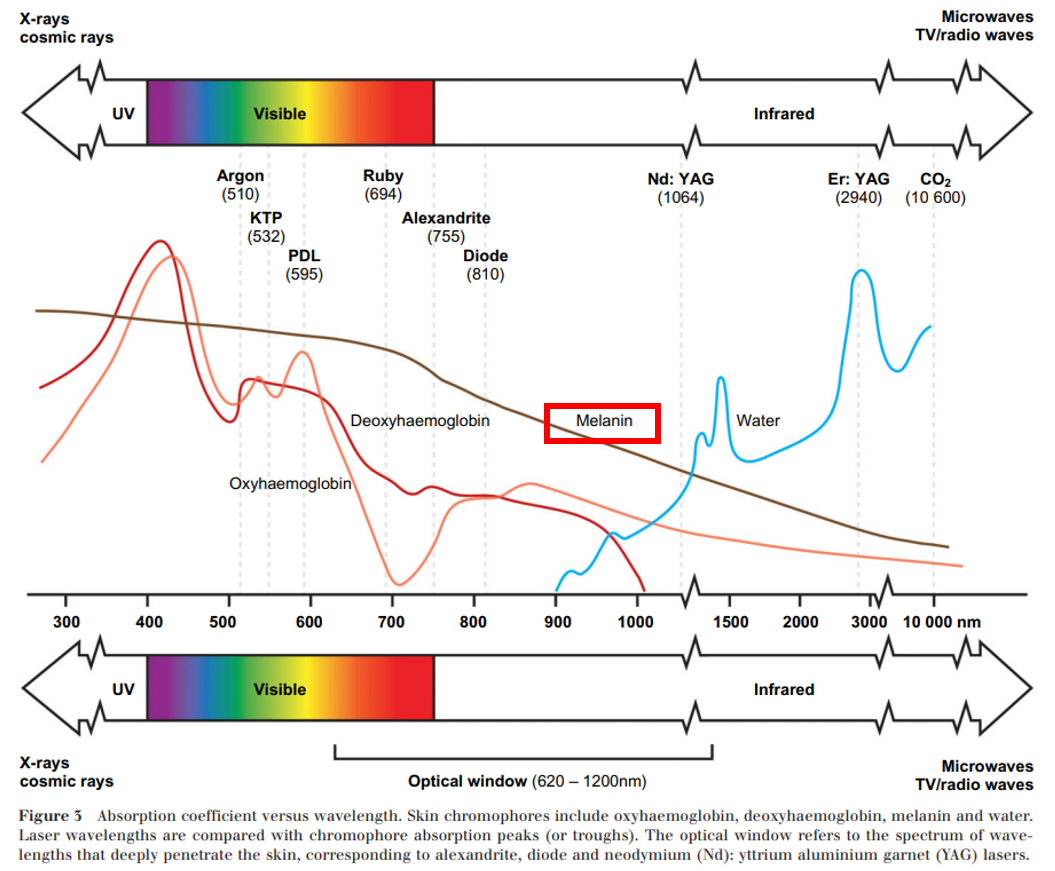
The representative pigment laser wavelengths that are absorbed by melanin are as follows.
- 532nm KTP
- 694nm ruby
- 755nm alexandrite
- 1064nm Nd YAG
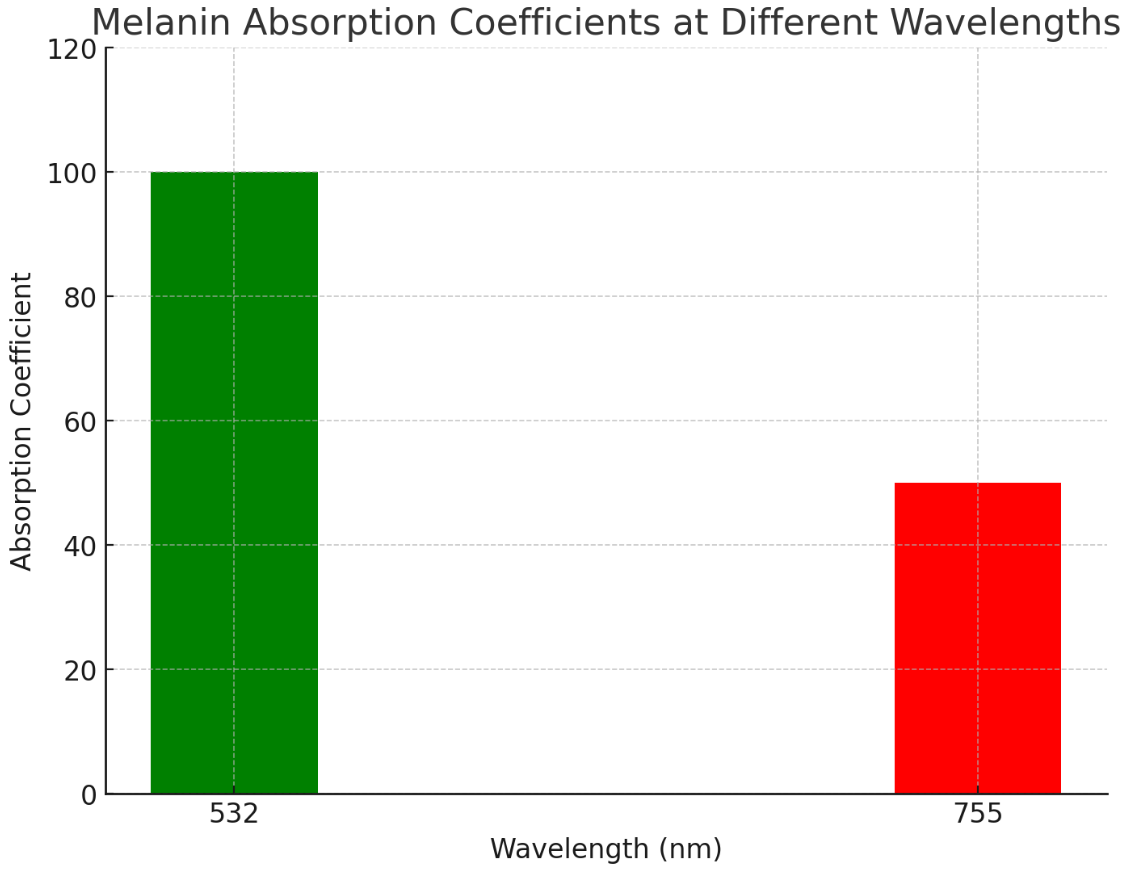
Each wavelength has a distinctly different character. Summarizing them as below shows why there is no single answer.
| Wavelength | Melanin absorption | Vascular stimulation | Characteristics |
|---|---|---|---|
| 532nm KTP | Very high | High | Shallow, strong absorption |
| 694nm ruby | High | Low | Possibility of hypopigmentation reported |
| 755nm alexandrite | Moderate | Low | Balance of absorption and penetration |
| 1064nm Nd YAG | Low | Low | Deep-penetrating, toning type |
In terms of melanin absorption alone, 532nm is the highest, at roughly 2 to 2.5 times the level of 755nm. Of course, treatment is not determined by wavelength alone, but it is worth knowing that, in terms of absorption efficiency alone, shorter wavelengths come out ahead.
In my previous post, I explained that lentigo shows abnormal proliferation of keratinocytes, the cells that make up the epidermis. For lentigo in which this change is not prominent, some response can be seen even with a method of toning somewhat strongly at 1064nm.
However, lentigo usually comes with structural changes at the surface. In such cases, I believe a method of only repeating toning many times can hardly change the structure of the epidermal layer itself, so a fundamental resolution is not easy.
If it is an epidermal lesion, why consider depth?
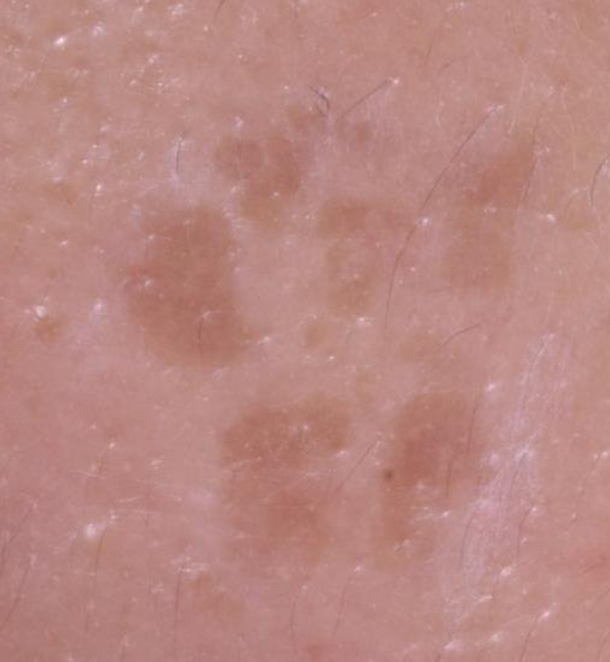
Lentigo is basically an epidermal lesion.
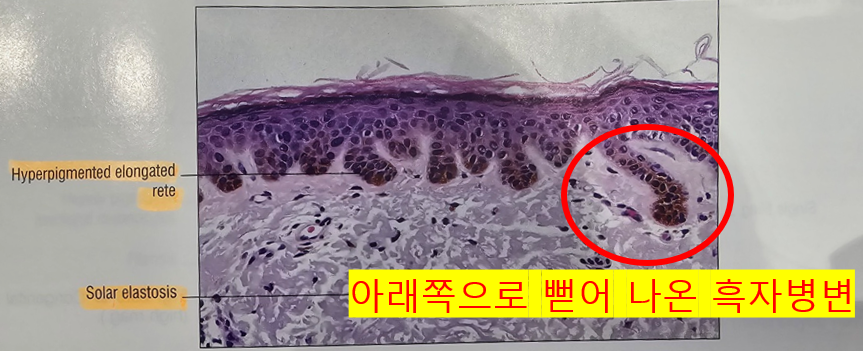
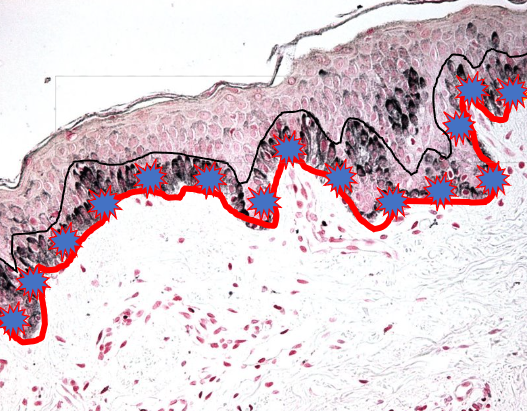
However, there are cases in which the rete ridges sag downward and settle into the upper dermis. In effect, it sits deeper than it appears.
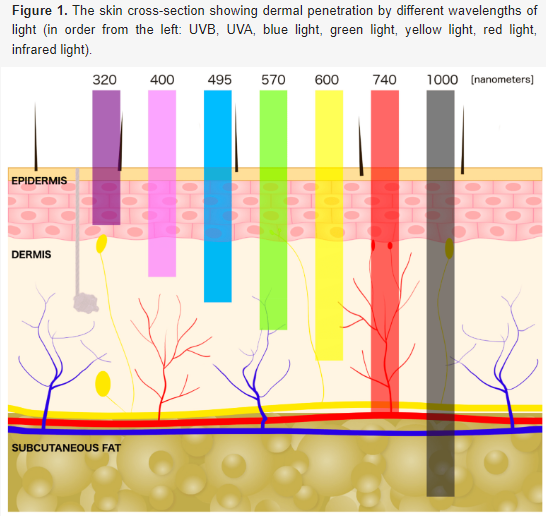
So, to reduce recurrence, a long wavelength that can reach deep lesions appears advantageous. Penetration depth is intertwined not only with wavelength but also with factors such as pulse duration and fluence. Then is the longest wavelength the best for lentigo? Again, it is not.
Only the desired depth, exactly that much
This is because, to lower the possibility of side effects, only the necessary depth should be treated precisely. So I first check the actual thickness of the lentigo lesion.
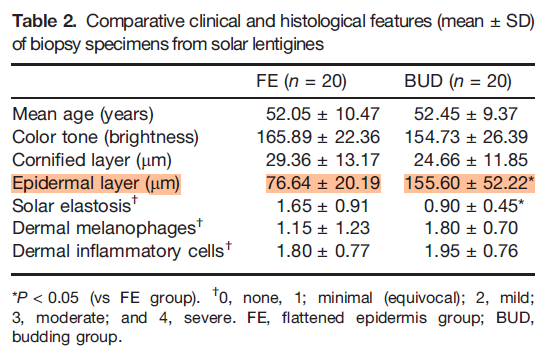
According to the observed data, the thinnest lentigo lesion was about 0.056 mm and the thickest about 0.208 mm. I have heard it said that a depth like this can be controlled by hand feel alone, but I view that with caution.
Looking at penetration depth by wavelength makes the answer a little clearer.
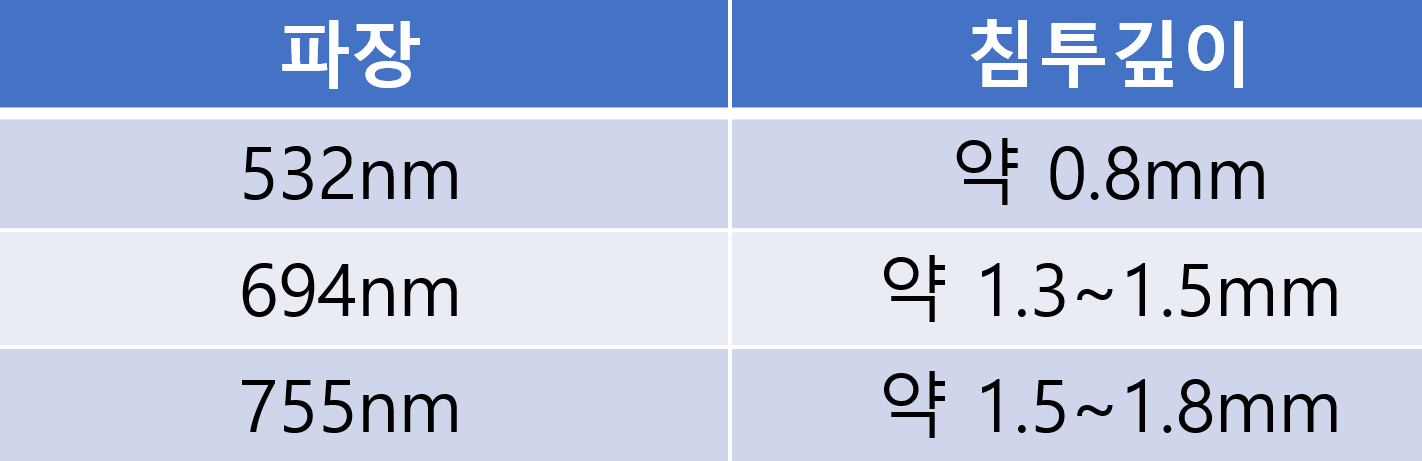
532nm alone is more than enough to cover this range of thickness. Moreover, because it can selectively target only melanin, the possibility of damage to the surrounding area is reduced as well, which gives it a major advantage in terms of efficiency.
If you are curious why the choice of wavelength has to be this precise, feel free to ask through consult via chat now.
Touching the blood vessels changes the story
Lentigo usually shows findings of blood vessels proliferating along with it. If strong energy is used to remove the epidermal changes all at once, both the epidermal cells and the blood vessels can be damaged.
Vascular damage raises the likelihood of post-inflammatory hyperpigmentation or worsening of melasma. I have explained this part a little more in my post on early care for post-inflammatory hyperpigmentation. That is why I believe treating lentigo with a CO2 laser or Er YAG laser, which nonspecifically burns away the epidermis and upper dermis, carries a large risk.
It would then be ideal to leave the blood vessels alone and clear only the melanin, and this is exactly where the weakness of 532nm shows.
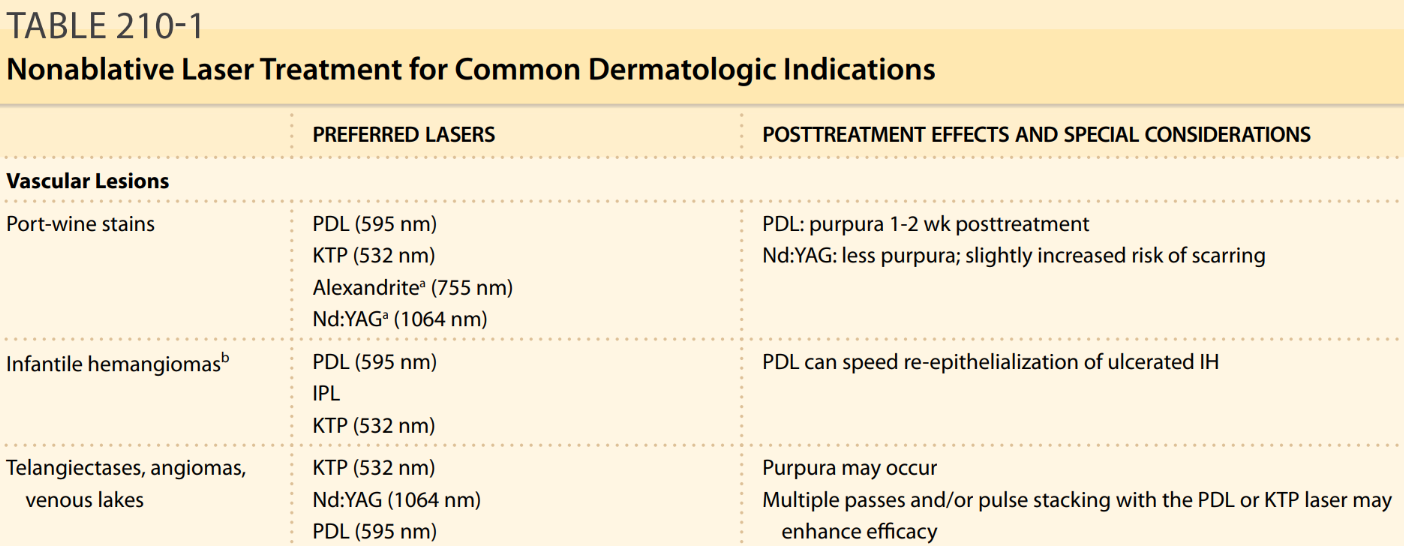
Compared with 694nm or 755nm, 532nm has a very high absorption by hemoglobin, high enough to be used for vascular treatment. The strength of good absorption efficiency becomes, as it is, a weakness. When lentigo is treated with 532nm, the likelihood of stimulating not only melanin but also blood vessels rises as well.
So would a ruby laser do?
In that it touches blood vessels less, the 694nm ruby laser might seem the most suitable. But the ruby laser also has a weakness that is hard to ignore.
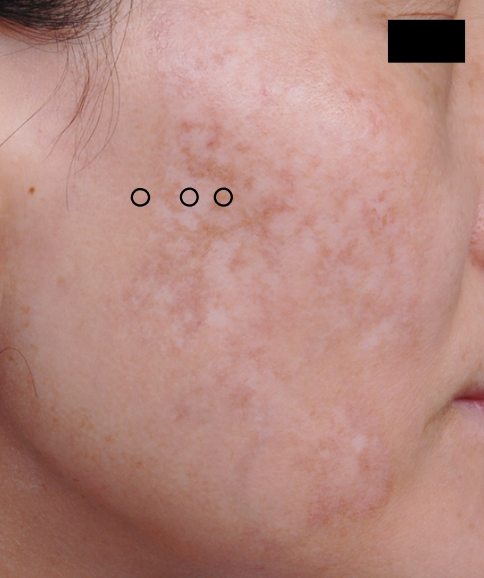
Though not common, the possibility of leaving permanent hypopigmented patches has been reported. Because it is a reaction that varies between individuals, the burden is that it is not easy to predict in advance.
In summary, it is about finding a balance point
In the end, a laser for lentigo is not a matter of choosing the strongest or the longest wavelength. It is closer to finding the balance point in between: firmly targeting melanin while protecting blood vessels and normal epidermis as much as possible.
- Short wavelengths are advantageous for melanin absorption, but vascular stimulation grows with them.
- Long wavelengths reach deep lesions, but going deeper than necessary actually becomes a burden.
- That is why I combine wavelengths after looking at both the thickness of the lesion and the degree of accompanying blood vessels.
How this balance is struck in actual treatment, I will continue in the next part, which carries on the story of the Reepot laser and the part on recovery care after the laser. It may also be helpful to refer to the introduction to the Reepot laser device that we often use for lentigo. If you are curious about a case in which we changed direction because toning alone could not clear it, a record of changing the approach to lentigo on the front of the cheek may also help.
If you have any questions, please feel free to contact us via Consult via chat.
Author: Dr. Cho Mingyeol, Medical Director (board-certified dermatologist; Master Certification in Pigmentation, Acne, Rosacea and Hair from the Korean Dermatologists Association). You can find the full profile on the Medical Team page. First published 2024-07-08 / Last reviewed 2026-07-09
This article is intended for general information only; the appropriate treatment and outcomes may vary depending on each individual's condition.