

Because facial flushing and rosacea do not come down to a single cause, they are conditions whose treatments also branch off in many directions. So rather than declaring "this device is the best," it is more important to choose what to add first according to each patient's presentation. Today I would like to explain, from a clinical perspective and based on an actual paper, what results come from applying radiofrequency to rosacea.
Why does Vbeam come to mind first for flushing?
In dermatology, the most basic device for treating flushing is the pulsed dye laser (PDL) with a wavelength of 585nm or 595nm. Among these, it has long been the accepted view that Candela's Vbeam responds well for flushing. If you are curious about this device's principles and other approaches to redness, reading why I look at PDL before IPL for post-acne red marks alongside this post will help you follow the thread.
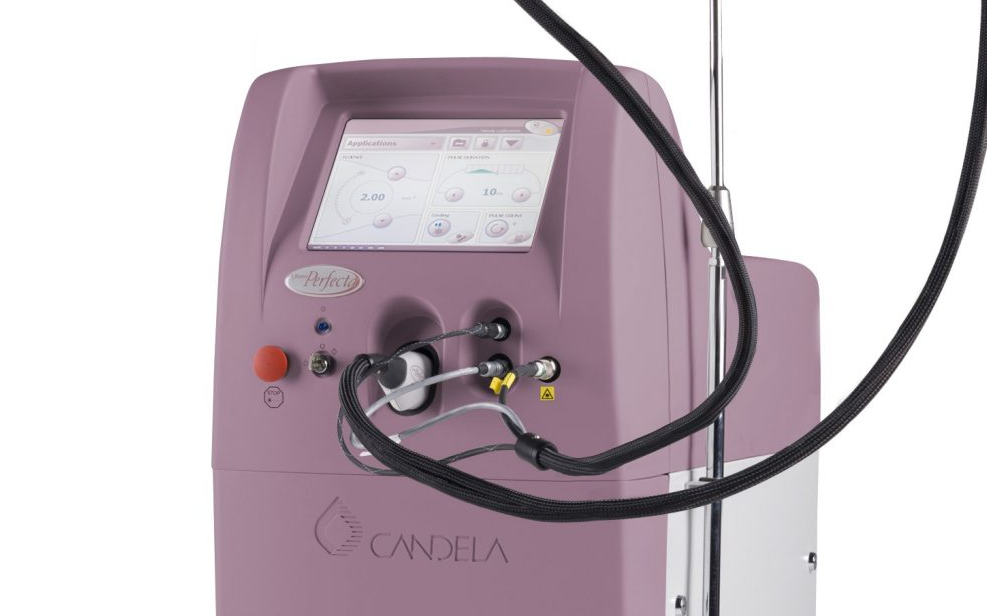
As a result, even in clinical practice, people often talk as if "flushing = Vbeam" were a formula. But if you ask whether Vbeam alone solves all flushing, that is not the case either.

The gap that Vbeam alone does not fill
As I mentioned earlier, rosacea has diverse causes and mechanisms, and accordingly many treatments are tried. As one of these efforts, the question "What happens if we use radiofrequency for rosacea?" arose, and there is actually a study that compared this. If you are new to rosacea, reading my summary of the stages of rosacea treatment, which covers everything from causes to treatment, first will make today's post easier to follow.
A study comparing the two sides of the face
This study was conducted as a split-face study, treating one side of the face with radiofrequency and the other with V-Beam Perfecta. The conditions were set as follows.
- The left and right sides of the same person's face were divided, with one side treated with RF and the other with PDL
- Each was performed three times at four-week intervals
- Responses were observed separately for erythema and for papules and pustules
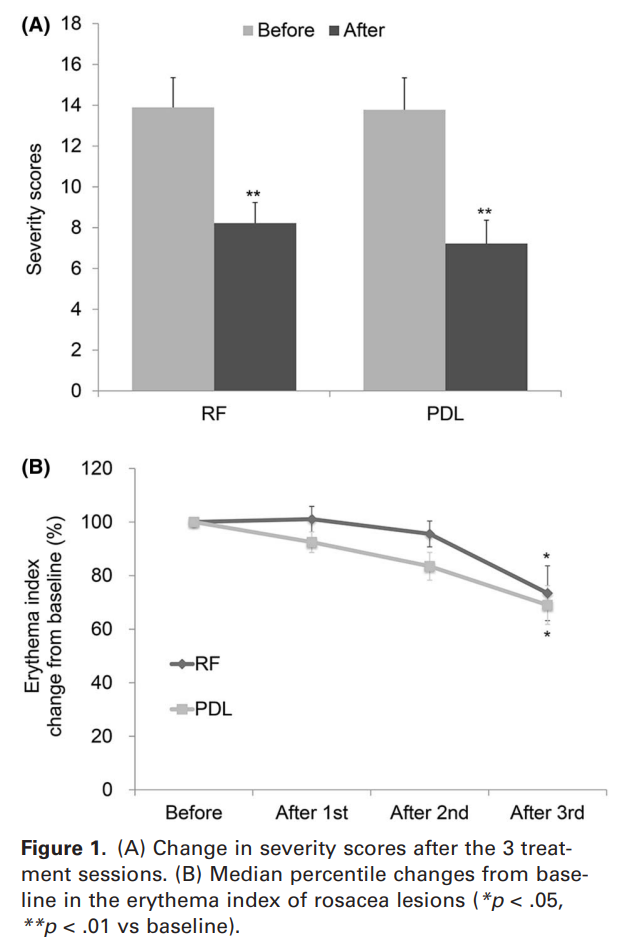
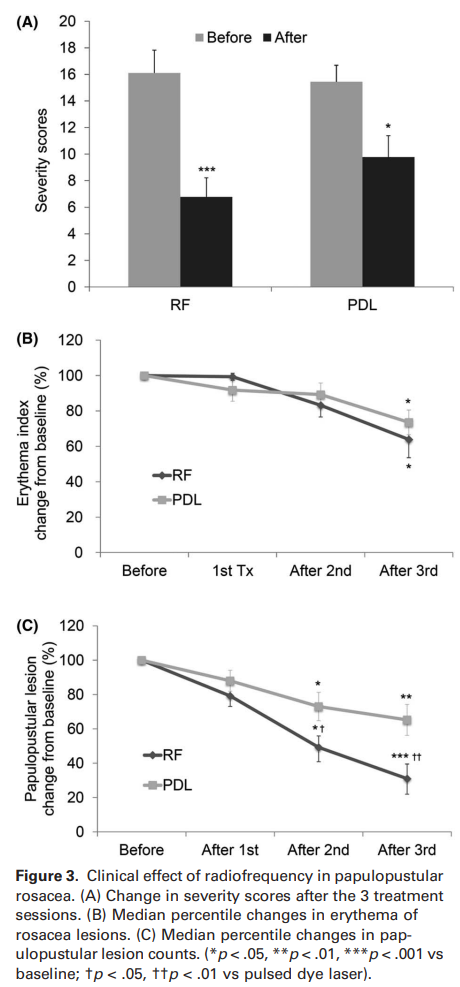
Looking at the results, flushing improved significantly on both sides, and the side treated with Vbeam showed slightly greater improvement.
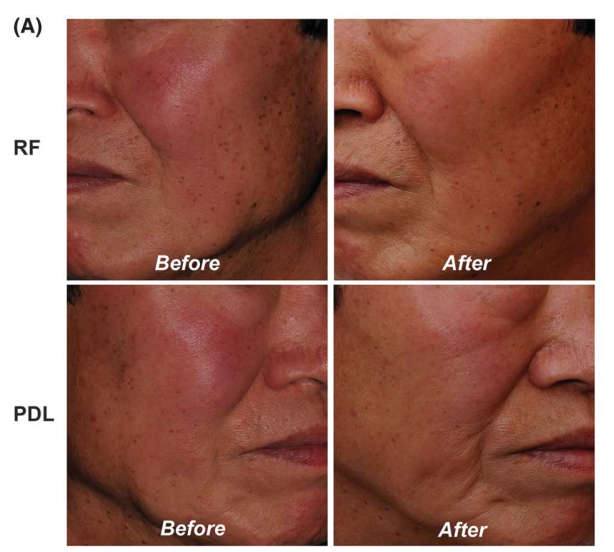
Clear improvement can also be seen in the clinical photos.
Erythema versus papules and pustules: where the results diverged
The interesting part starts here. Within the same study, in patients with papulopustular rosacea (PPR), the side treated with radiofrequency actually improved significantly more. The direction of the two measures can be summarized as follows.
| Measure | Vbeam (PDL) | Radiofrequency (RF) |
|---|---|---|
| Overall erythema | Both improved, PDL slightly ahead | Significantly improved |
| Papules and pustules (PPR) | Improved | Significantly better |
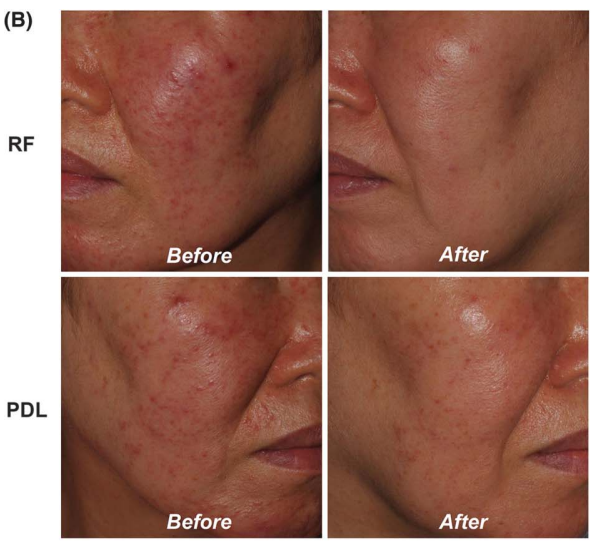
In the clinical photos as well, the side treated with RF (top photo) shows papules and pustules that have settled more than on the side treated with PDL (bottom photo). The authors tried to explain this difference by the anti-inflammatory effect of radiofrequency.
If you have questions or find it hard to judge which side your case is closer to, feel free to ask through Consult via chat now.
Why did radiofrequency come out ahead in the papulopustular type?
Let's take a brief look at the paper the authors used as their basis.
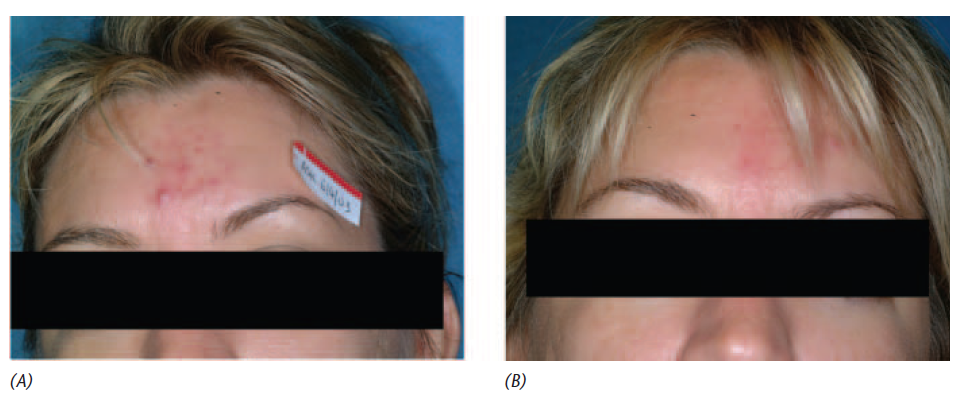
Of course, radiofrequency was not used alone in this study. However, clinical improvement was observed after radiofrequency treatment,
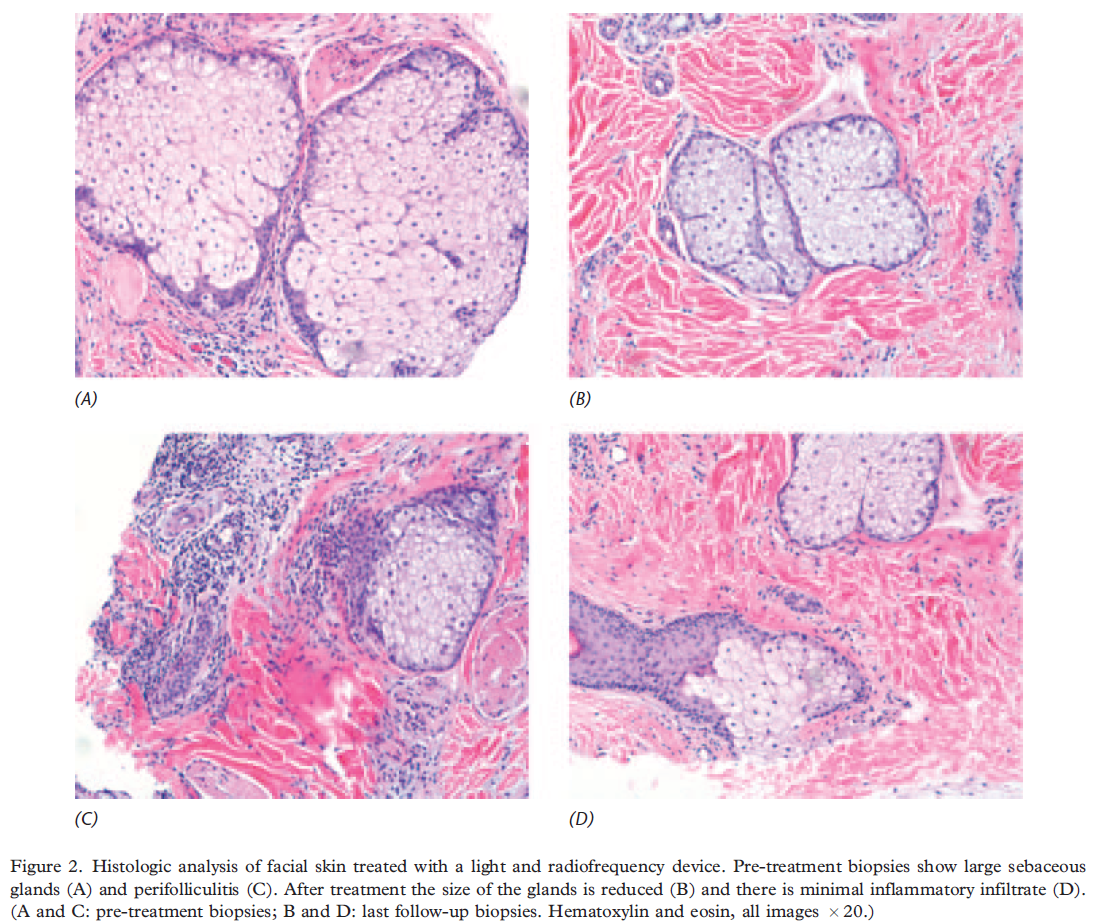
and histologically, a clear reduction of inflammatory cells near the sebaceous glands was also confirmed.
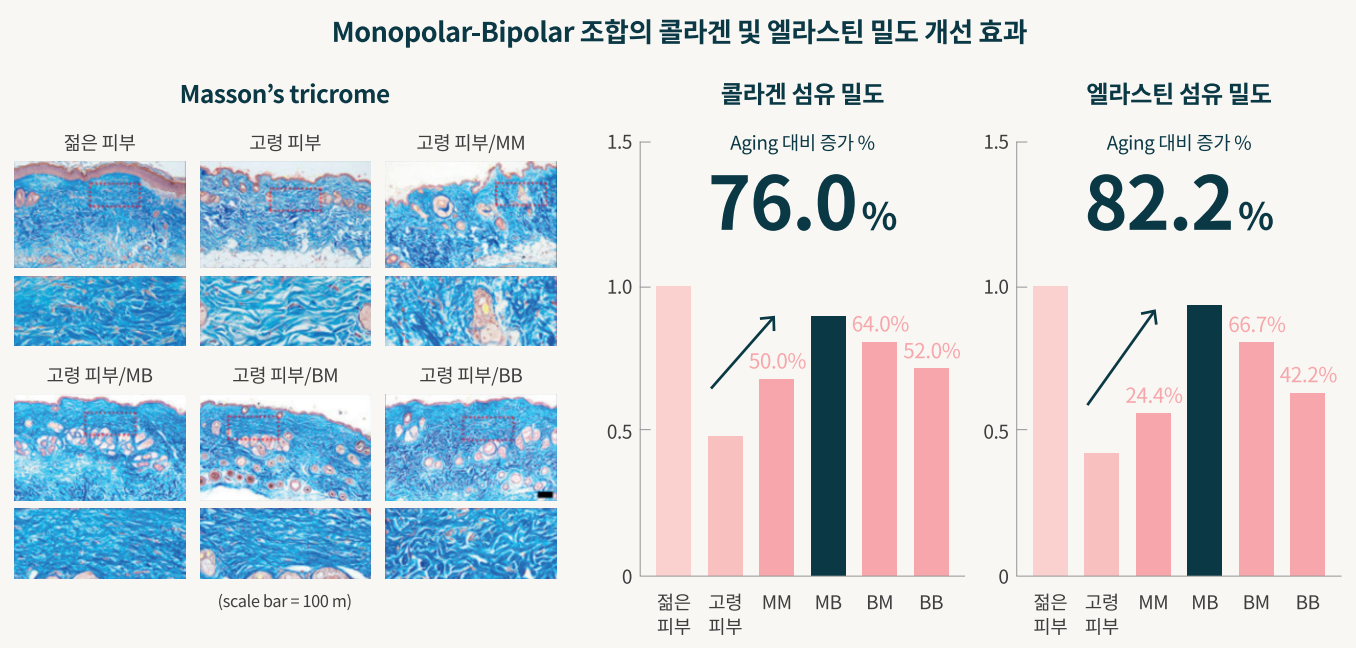
In addition, there is the effect of improving the dermal environment through the regeneration of collagen and elastic fibers (dermal remodeling), which is radiofrequency's inherent strength. The authors speculated that this process suppressed excessive sebaceous gland activity, leading to better results in papulopustular rosacea.
In other words, Vbeam helps with clearing the erythema itself, while in rosacea accompanied by papules and pustules, the anti-inflammatory and dermal-improving effects of radiofrequency help in a different place. It is less that one replaces the other and more a perspective of choosing according to the structure of the problem.
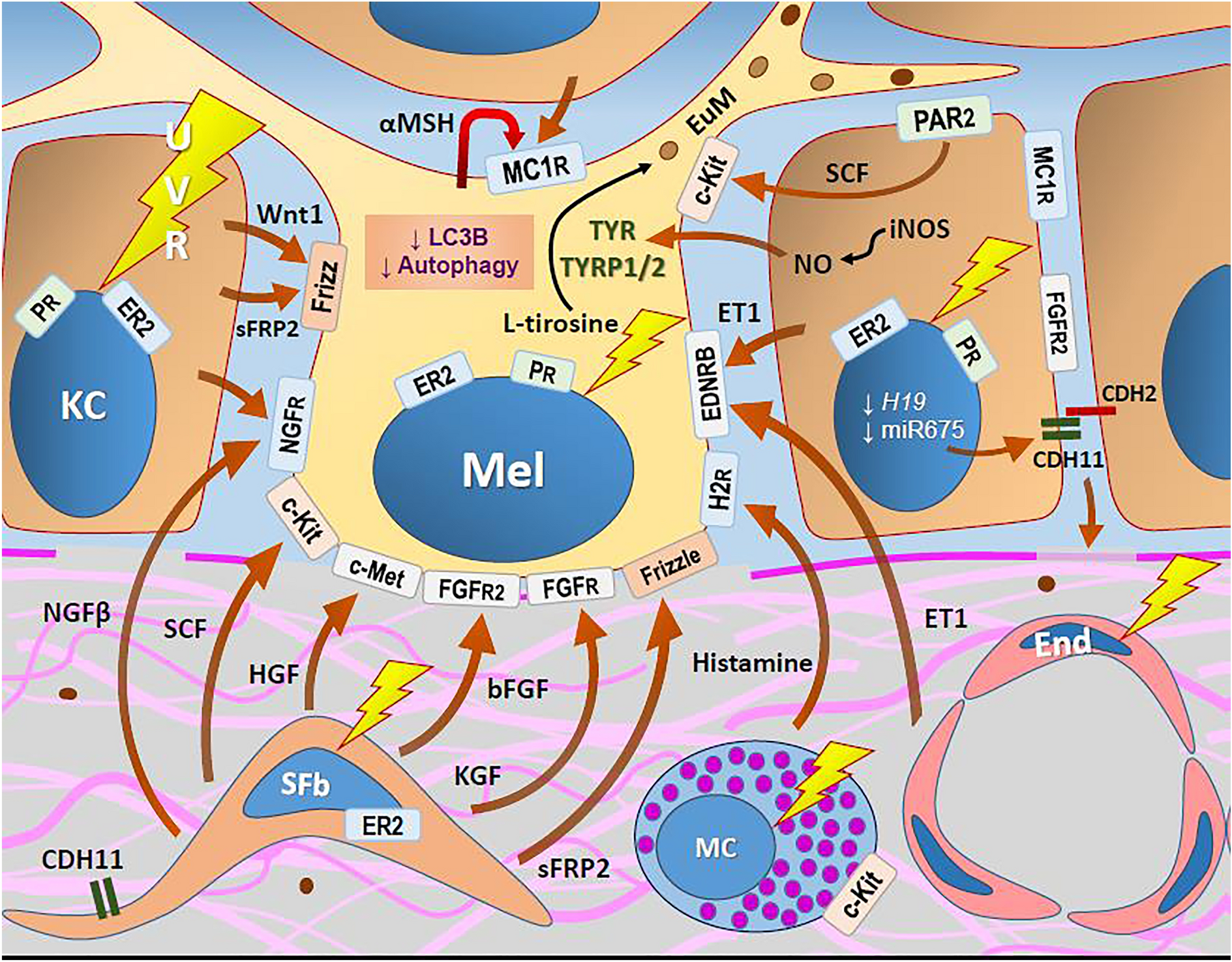
One trend: improving the dermal environment
Recently, dermatology's attention has been converging on improving the dermal environment (dermal remodeling) not only in anti-aging but also in acne, flushing, and pigmentary conditions such as melasma. The direction is not to stop at treating epidermal lesions, but to also work on the dermal background beneath them. How this perspective is applied in actual practice is covered more concretely in why I look at microneedle radiofrequency first when acne, pores and redness overlap. If you are curious about the principles of radiofrequency devices themselves, the principles of radiofrequency seen through Thermage and Density may also help.

Related devices we use in our clinic include V-Beam Perfecta for flushing, Potenza from the microneedle radiofrequency family, and Density for dermal remodeling.
How I view radiofrequency in the clinic
To sum up: the basic axis of flushing treatment is still a pulsed dye laser such as Vbeam, but evidence is accumulating that, in rosacea with papules and pustules, radiofrequency can help through a different pathway of anti-inflammatory action and dermal improvement. Of course, responses vary between individuals, and even with the same rosacea, priorities differ depending on whether erythema or papules and pustules predominate.
Personally, I hope that, in the long term, radiofrequency treatment can become a broad tool that encompasses various skin problems. However, which side your skin is closer to can only be determined by checking your condition directly, so if you are curious about everyday care, please refer to how to manage rosacea over the long term, and if you need an individual consultation, feel free to contact us below.
Consult via chatReferences
- Kim, Sue-Jeong, et al. "Comparative efficacy of radiofrequency and pulsed dye laser in the treatment of rosacea." Dermatologic Surgery 43.2 (2017): 204-209.
- Prieto, Victor G., Peter S. Zhang, and Neil S. Sadick. "Evaluation of pulsed light and radiofrequency combined for the treatment of acne vulgaris with histologic analysis of facial skin biopsies." Journal of cosmetic and laser therapy 7.2 (2005): 63-68.
- Espósito, Ana Cláudia C., et al. "Update on Melasma—Part I: Pathogenesis." Dermatology and Therapy 12.9 (2022): 1967-1988.
Author: Dr. Cho Mingyeol, Medical Director (board-certified dermatologist; Master Certification in Pigmentation, Acne, Rosacea and Hair from the Korean Dermatologists Association). You can find the full profile on the Medical Team page. First published 2024-01-30 / Last reviewed 2026-07-09
This article is intended for general information only; the appropriate treatment and outcomes may vary depending on each individual's condition.