

Hello. I am a board-certified dermatologist at OARO Dermatology. I have loved physics since my school days, and that interest has stayed with me as a habit of digging into the engineering principles behind treatment devices. When I consult on Thermage or Density in the clinic, rather than bringing up the device name first, I tend to begin by explaining what the machine actually does inside the skin. Once you understand the principles, it naturally becomes clear why some devices inspire trust and others do not.
Today I would like to explain, in the language of physics, the working principles of radiofrequency devices that have recently drawn a lot of interest, such as Thermage, Tentherma, Oligio and Density.

What does radiofrequency do in the skin?
The devices mentioned above all deliver radiofrequency electrical energy to the skin. The changes this energy produces can be broadly summarized in two ways.
- Immediate tightening through contraction of fibrous tissue
- Gradual recovery of elasticity through increased collagen synthesis in the dermis
As these two processes interlock, the skin shows a response that seems to naturally turn back the direction of aging. However, the degree and speed of the response vary between individuals. So let's look one by one at how this happens.

How do you push a current that wants to flow only along the surface into the skin?
Here the first physical hurdle appears. In general, the higher the frequency of an alternating current, the more it tends to flow only along the surface. This is called the skin effect. It means that if radiofrequency is simply passed through, it stimulates only the outer surface of the skin and does not reach well into the deep dermis, where elasticity actually needs to be built.
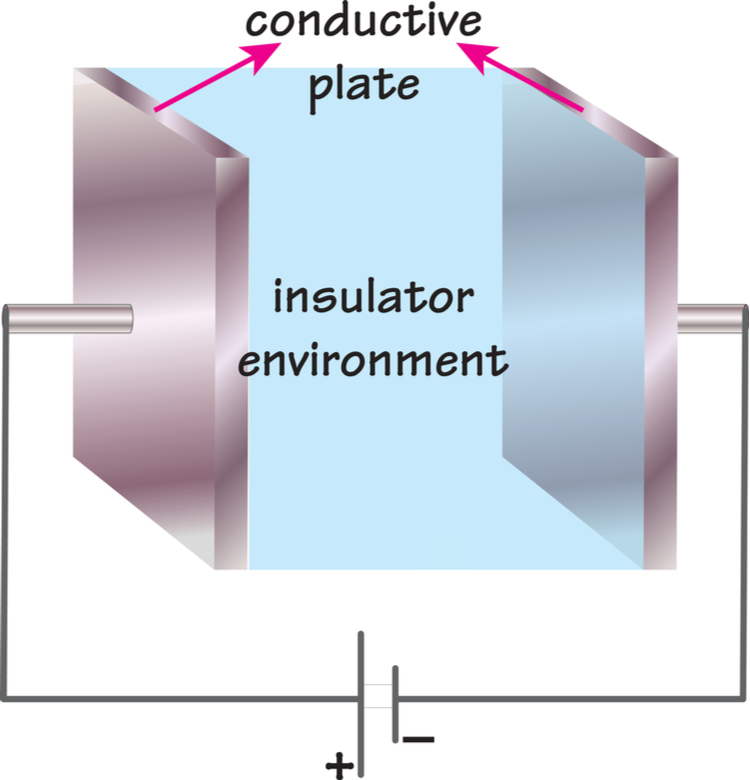
The device that solves this problem is a film-type barrier. When a membrane with dielectric properties, through which the electrode does not conduct directly, is placed in between, the current cannot flow straight into the skin; instead, heat energy is generated through the dipole moment induced by the alternating current. As a result, heat is not concentrated on the surface but is delivered evenly and in bulk into the skin. This is what is called volumetric heating.
The same principle as a microwave oven: the dipole moment
So what is a dipole moment? It is easy to understand if you think of the water molecules that make up most of our body.
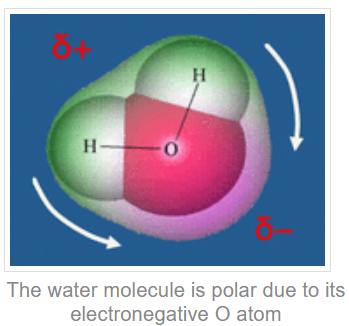
As in the illustration above, the water molecule has an asymmetric structure. Because of this asymmetry, it has a dipole moment, and it is precisely this property that allows a microwave oven to heat food.
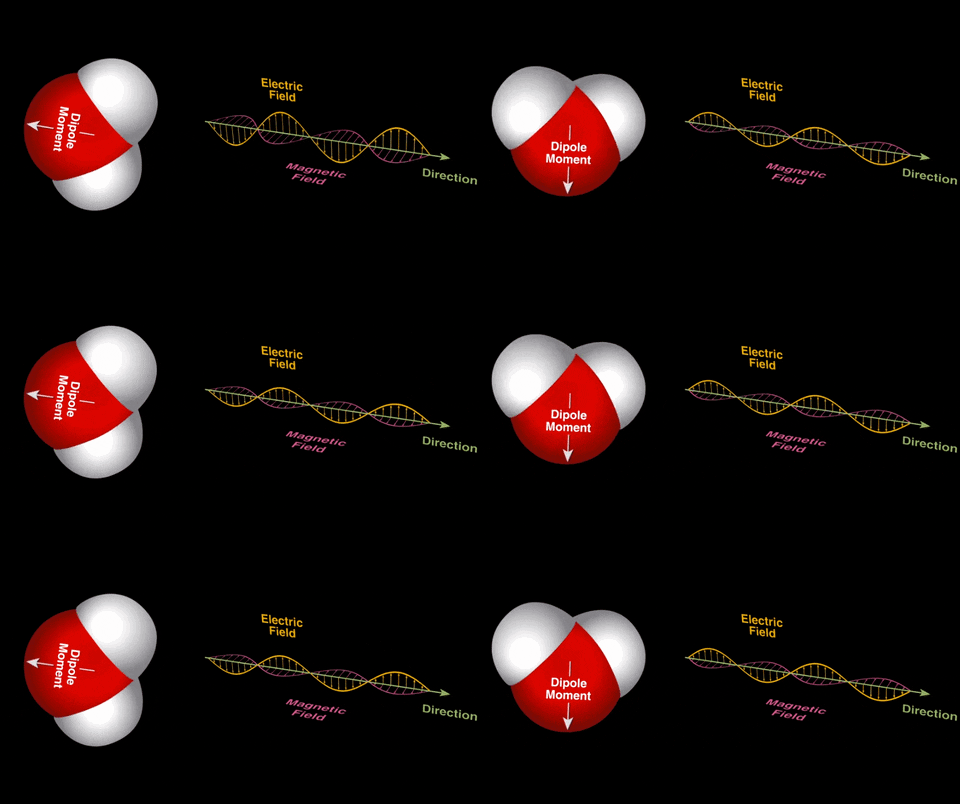
When you run a microwave oven, the asymmetric water molecules vibrate in step with the changes in polarity, generating heat. Considering that household microwave ovens use 2.45GHz, at which the polarity changes about 2.4 billion times per second, the recent stream of lifting devices that use microwaves can be understood in the same context. Radiofrequency devices also generate heat in tissue in a similar way.
In summary, microwave ovens and radiofrequency devices differ in the speed at which polarity switches.
| Category | Polarity switching frequency | Switches per second |
|---|---|---|
| Household microwave oven | 2.45GHz | About 2.4 billion |
| Thermage, Density, Oligio | 6.78MHz | About 6.78 million |
How 6.78MHz rebuilds collagen
Thermage, Density and Oligio all use radiofrequency in the 6.78MHz band. On top of this, the Joule heating phenomenon, in which heat is continuously conducted through tissue that has resistance, overlaps, so heat spreads deep into the skin.
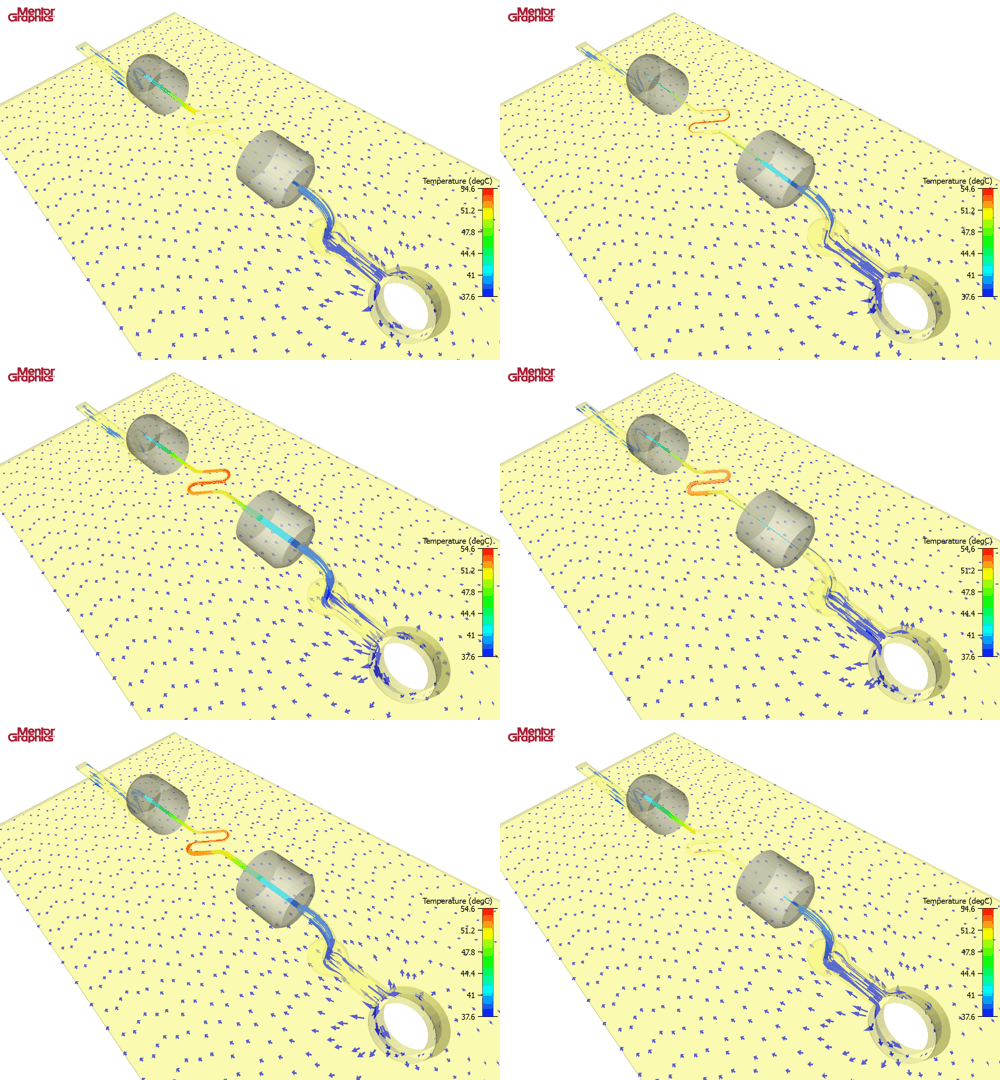
In particular, current flows more readily through fibrous tissues such as collagen and the retaining ligaments, which are hydrophilic and have relatively low impedance. That is exactly where heat concentrates. Following what happens inside the skin step by step:
- Radiofrequency energy passes through the film and is delivered into the skin as volumetric heating.
- Current concentrates in fibrous tissue with low impedance, and heat is generated.
- Dermal collagen is denatured and fibrous tissue contracts, so an initial response appears relatively early. This is the tightening response, in which the skin firms up.
- The denatured collagen then regenerates, and collagen density throughout the dermis increases.
- Over roughly 1-6 months, dermal thickness increases and you feel the elasticity. This course varies between individuals.
A more practical comparison of the differences among radiofrequency devices continues in the criteria I weigh when choosing a lifting device and why I see Density as a competitor to Thermage. If you are curious about the difference between monopolar and bipolar radiofrequency, it is also worth reading how to choose between monopolar and bipolar radiofrequency.
If you have any questions, feel free to ask through Consult via chat now.

Cooling is the brake
So far I have talked only about delivering heat to tissue. But with radiofrequency devices, what I consider most important is cooling. It is the same logic as with a sports car: the ability to stop well matters as much as the ability to go fast.
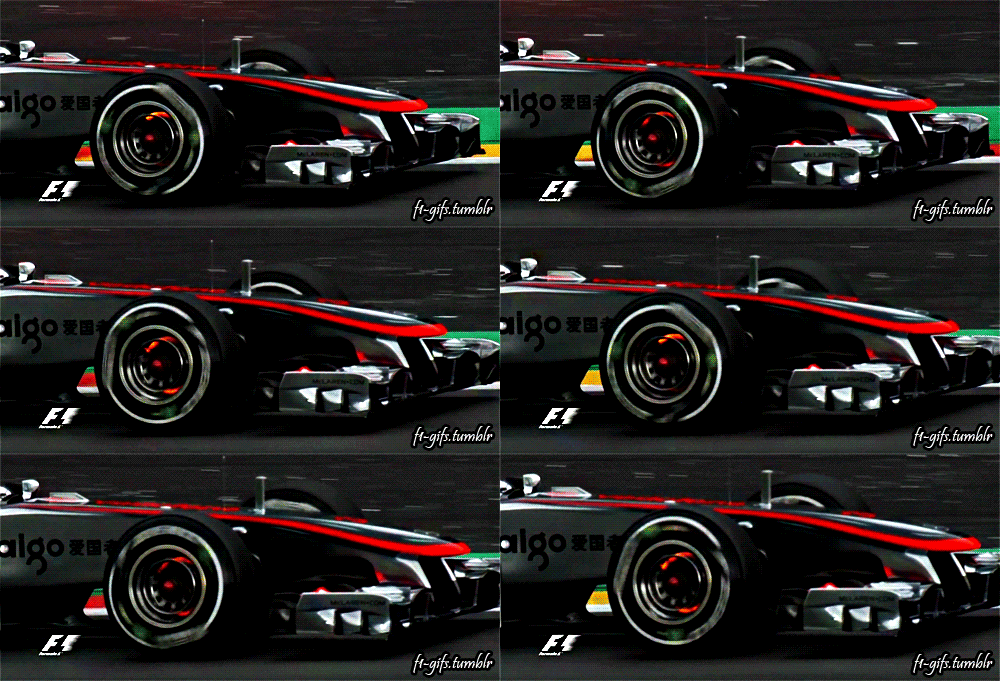
No matter how fast a car can go, if it cannot stop well, it is hard to call it a good car. In radiofrequency, cooling corresponds to the car's brakes. You can probably guess why from what follows: if the temperature rises too high while radiofrequency is heating the skin, burns can occur.
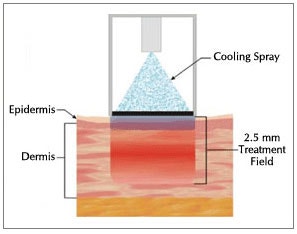
For this reason, Thermage and Density spray a cooling gas behind the film to cool the epidermis. But is this cooling technology only there to protect the epidermis? Not quite.
Reverse thermal gradient: why does cooling help heat go deeper?
Cooling lowers the surface temperature while making deeper areas relatively hotter, forming a reverse thermal gradient. Thanks to this, heat energy can be sent more effectively into deeper layers.
The answer to why a reverse thermal gradient increases penetration depth lies in the temperature dependence of impedance.

Impedance is higher at lower temperatures. So, paradoxically, more current flows in the warmer deep layers than at the cooler surface. This means that the stronger a device's cooling, the deeper it can push heat energy into the skin.
That is why I trust this kind of radiofrequency
By now you can probably understand why I check cooling performance before the device name. Cooling is both the brake that ensures safety and the key that sends heat deep.
That is why I do not place much trust in radiofrequency devices without a cooling system. I believe there is good reason why recently released water-cooled radiofrequency devices have been passed over by many doctors.
In the same vein, I would not, in good conscience, choose a procedure in which monopolar radiofrequency is passed quickly over the skin in a rubbing motion, even if it is justified as reducing pain. Devices with weak or no cooling are likewise hard for me to trust.
Today I explained the principles of monopolar radiofrequency in the language of physics. If you would like to look more specifically at what kind of devices Thermage and Density are, you can refer to the Thermage FLX device guide and the Density device guide. If you are wondering when I recommend Ulthera and Thermage together, the criteria for recommending the two devices together may also help.
If you cannot decide what direction suits your skin, diagnosis is ultimately the job of a clinician who understands the principles. Please feel free to check through a consultation.
Consult via chatAuthor: Dr. Cho Mingyeol, Medical Director (board-certified dermatologist; Master Certification in Pigmentation, Acne, Rosacea and Hair from the Korean Dermatologists Association). You can find the full profile on the Medical Team page. First published 2024-01-18 / Last reviewed 2026-07-09
This article is intended for general information only; the appropriate treatment and outcomes may vary depending on each individual's condition.