

After many years of lifting consultations, it all comes down to the same question: "Which radiofrequency lifting should I get?" There are dozens of device names, but broadly speaking, radiofrequency divides into monopolar and bipolar methods depending on how many electrodes are used. These are not marketing terms; the physical way the energy is delivered to the skin is itself different. Today I would like to summarize the principles of the two methods and which direction I lean toward in the clinic.
The number of electrodes divides the two
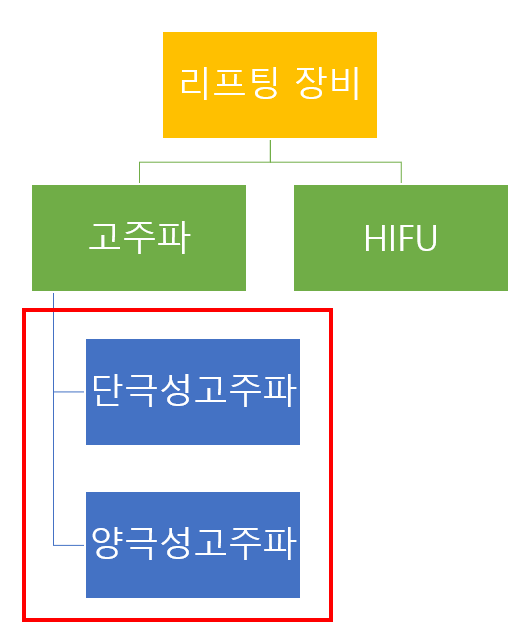
The most fundamental difference is simple. Monopolar RF uses one treatment electrode, while bipolar RF uses two or more (+α). This single structural difference determines the depth and range over which heat spreads.
- Monopolar devices: Thermage, Density, Tentherma, Oligio, Volnewmer
- Bipolar devices: InMode, 3DEEP
I have taken a closer look at how Thermage and Density generate heat in Thermage and Density: revisiting the principles of radiofrequency.
Why does one go deep and the other spread wide?
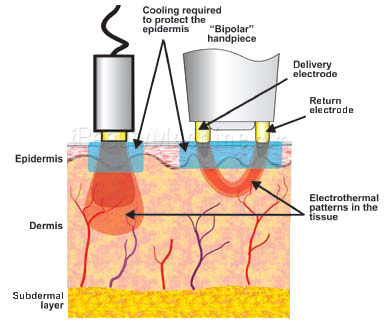
To sum up the character of the two methods in one line: monopolar penetrates relatively in depth, while bipolar spreads relatively in range. Looking at the illustration below, you can understand at a glance how the energy flows.
| Category | Monopolar RF | Bipolar RF |
|---|---|---|
| Treatment electrode | 1 + grounding pad | 2 or more |
| Energy tendency | Depth-oriented | Range-oriented |
| Cooling | Essential | Usually none |
| Pain | Relatively present | Almost none |
| Representative devices | Thermage, Density, Oligio | InMode, 3DEEP |
How monopolar radiofrequency drives heat in
In addition to the treatment electrode, monopolar devices use a grounding pad attached to the back or lower back. Current flows from the treatment electrode toward the grounding electrode, and radiofrequency energy generally penetrates to a depth of about half the size of the treatment electrode.
Because it uses relatively higher output than bipolar, a cooling function to prevent burns is essential. And this cooling does not merely cool the surface; it also affects the actual penetration depth. This is why it is better to understand the principle when choosing devices such as Density or Thermage. If you are curious about the devices themselves, you can also refer to the introductions to Density and Thermage FLX.
If you would like to know more about how I compare and choose among lifting devices overall, I recommend reading my post weighing Ulthera, Thermage, Density and Oligio as well. If you cannot decide which method suits your skin, feel free to ask via Consult via chat now.
The advantages of bipolar radiofrequency, and limits that are easy to miss
In the case of InMode Forma, which uses bipolar energy, the most heat is generated at the surface rather than in the deeper layers. Without a cooling function, there is a structural limit to delivering thermal energy deep into the skin, and its effect is correspondingly limited.
On the other hand, its advantages are clear.
- Changes tend to be felt relatively quickly compared with monopolar (the degree felt varies between individuals)
- No consumable tips, so the cost burden is relatively low
- Almost painless and easy to receive
The output is adjustable, but the general principle is to raise the skin surface temperature to about 43 degrees Celsius to stimulate the synthesis of collagen and elastic fibers.
There is, however, something to be careful about. If the practitioner handles the device poorly, the contact area can shrink so that strong energy concentrates on a small local area, and burns have been reported in such cases. Because of the nature of bipolar energy, these are usually shallow burns that tend to heal within two weeks, but it also means that the practitioner's skill greatly affects the result.
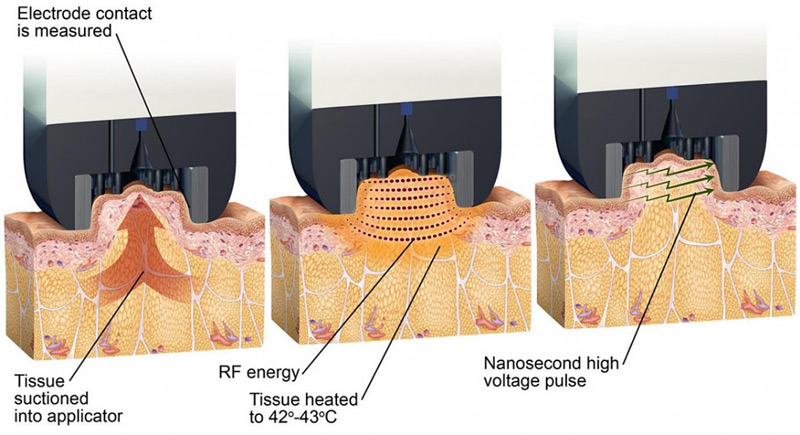
To make up for these limits, InMode added an Fx mode. Much like cupping, it suctions the skin and passes current between the electrodes to deliver energy targeting the deeper fat layer. However, when the skin is thick, the energy may not reach the desired depth and the effect may be reduced, and in the clinic I often see bruising like cupping marks or swelling that improves after one to two weeks. If you are curious about microneedle radiofrequency, which goes in through needles, Why I think of microneedle radiofrequency first when acne, pores and redness overlap is also related.
So how do I set the direction in the clinic?
This is not a question with a single fixed answer. The answer depends on what you consider more important.
If fine lines, loss of elasticity and sagging bother you and you want a somewhat clearer change in one session even if it means accepting a little pain, monopolar radiofrequency. If you want something light and painless at a relatively low cost, the cost-effective bipolar radiofrequency. I recommend setting this baseline first and then choosing a device.
Within monopolar itself, I have written separately about how I weigh Density against Thermage in Why I see Density as a serious rival to Thermage. Skin thickness, the degree of sagging and tolerance for pain differ from person to person, so if you would like me to look at your condition and point out which side suits you, please use Consult via chat.
Author: Dr. Cho Mingyeol, Medical Director (board-certified dermatologist; Master Certification in Pigmentation, Acne, Rosacea and Hair from the Korean Dermatologists Association). You can find the full profile on the Medical Team page. First published 2024-01-23 / Last reviewed 2026-07-09
This article is intended for general information only; the appropriate treatment and outcomes may vary depending on each individual's condition.