

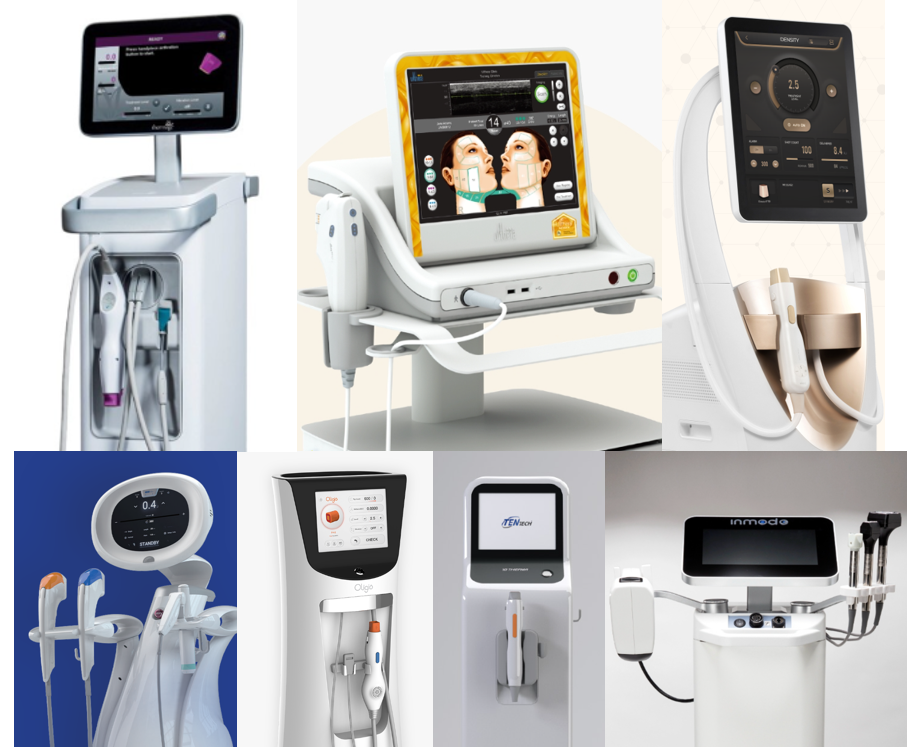
Hello, I am Cho Mingyeol, a board-certified dermatologist at OARO Dermatology. If you have taken an interest in lifting, you have probably heard many device names at least once, such as Thermage, Ulthera, Density, Shurink, Oligio, Tentherma and InMode. Because new types keep pouring out so quickly, I am often asked in the clinic, "What is the difference between all of these?"
Knowing the working principles in detail is my job as the one performing the treatment, but if you come in with at least a sense of which direction suits your sagging, the consultation goes much more smoothly. So today, instead of memorizing device names, I would like to start by sorting out why sagging happens.

If we compare a sagging face to a water balloon
Let me explain the principle with a single water balloon. Imagine there is a balloon filled with water.

Because the balloon is full of water, gravity gradually pulls it downward. There are broadly two ways to reverse this sagging, so please keep these two concepts in mind as you read on. Here, the water corresponds to the superficial fat of our face.
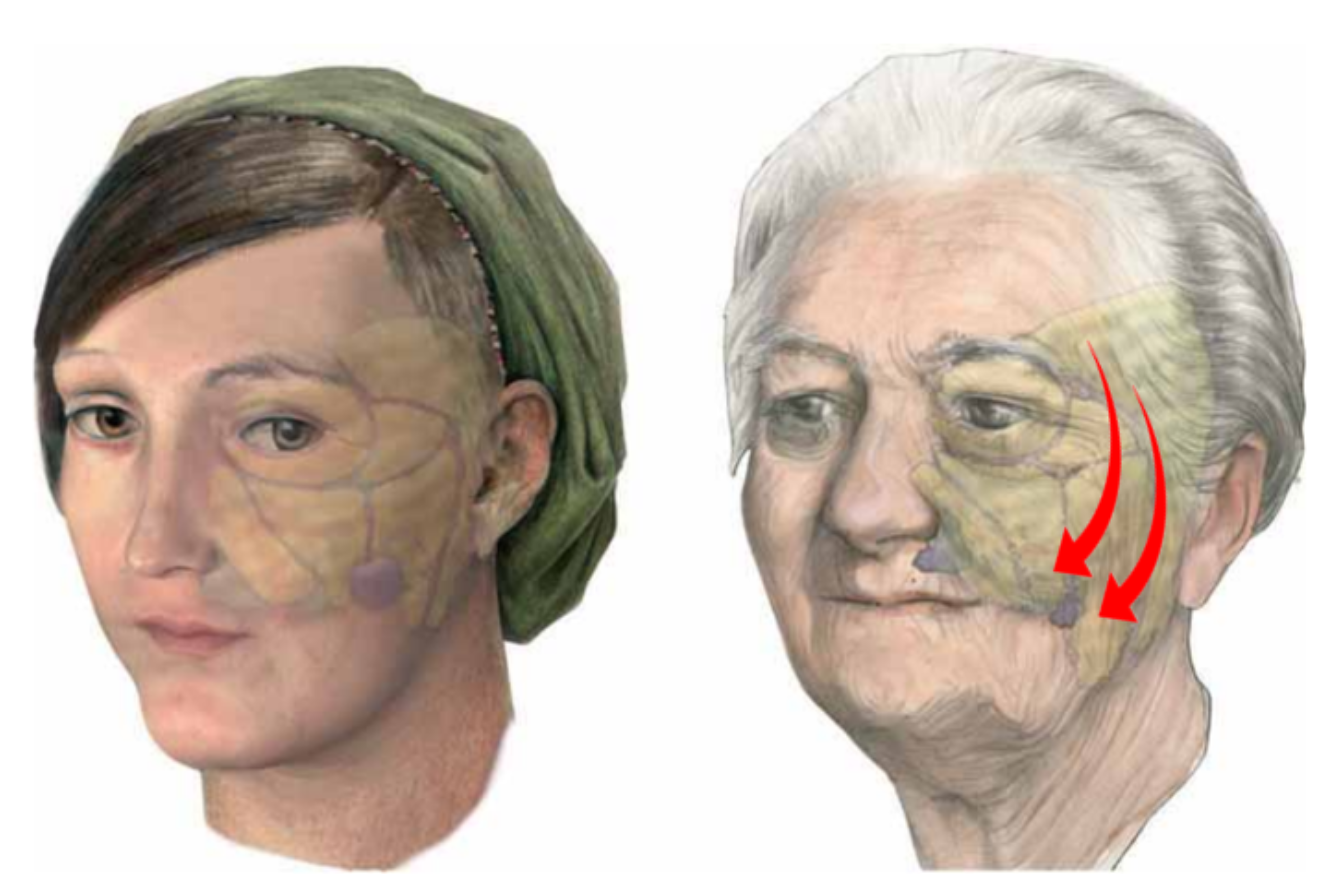
The superficial fat of the face is held up from above by the retaining ligaments. This support, however, does not last forever.
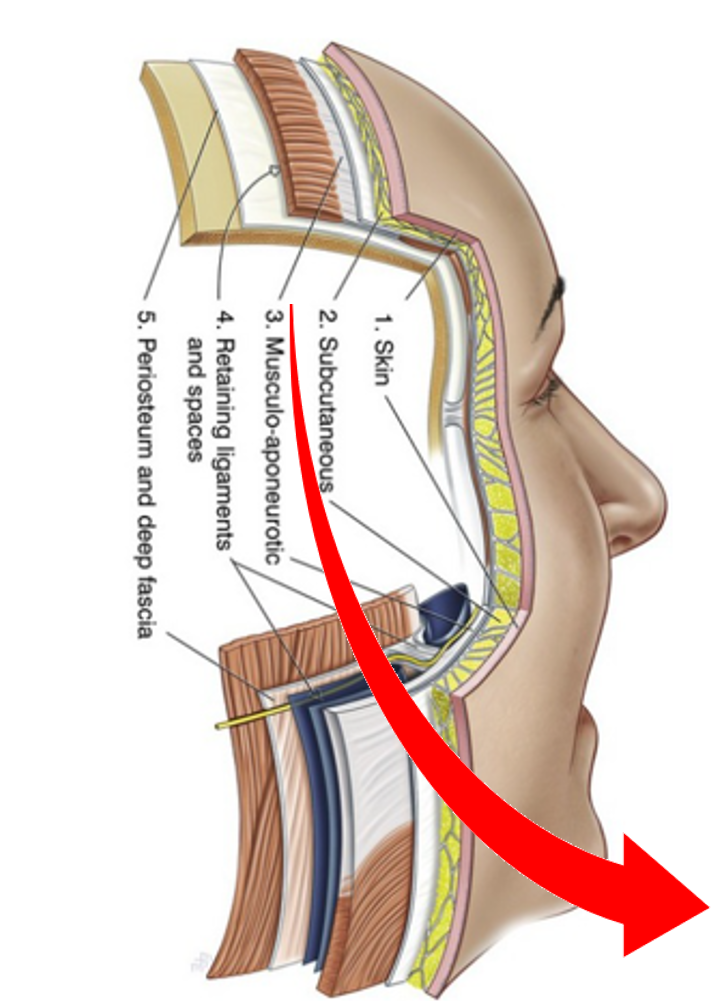
Over time, just as a water balloon stretches, the superficial fat settles downward, and as a result the nasolabial folds and marionette lines deepen. The two ways of reversing sagging can be summarized as follows.
One is to reduce the amount of descended superficial fat itself to lighten the weight; the other is to increase the thickness and elasticity of the balloon so that it holds up and sags less even under the same weight.
When fat has settled and become heavy
The first approach is to reduce the amount of superficial fat that has moved downward. Typical examples are HIFU treatments such as Ulthera (4.5 mm) and fat-dissolving injections.
When you gather sunlight with a magnifying glass, strong heat forms at the focal point. Using the same principle, high-intensity focused ultrasound (HIFU) concentrates ultrasound at a specific depth to create strong thermal energy.
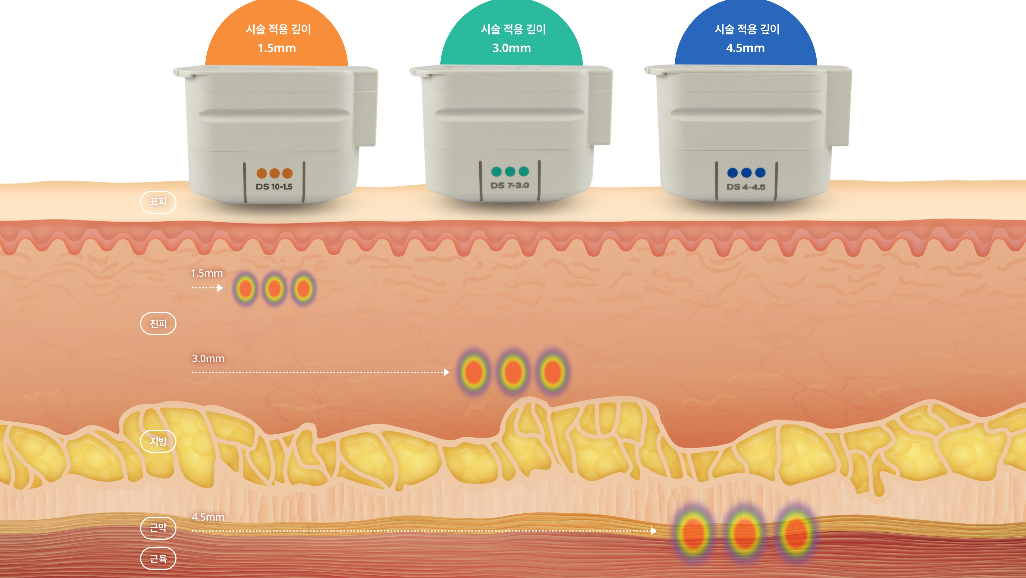
It mainly delivers heat targeting the fat layer and the fascial layer (SMAS), contracting those layers much like meat shrinks when cooked, to achieve a lifting effect. It can also target the dermis, but if the dermis is the goal, I find that radiofrequency (RF) is a better fit than HIFU.
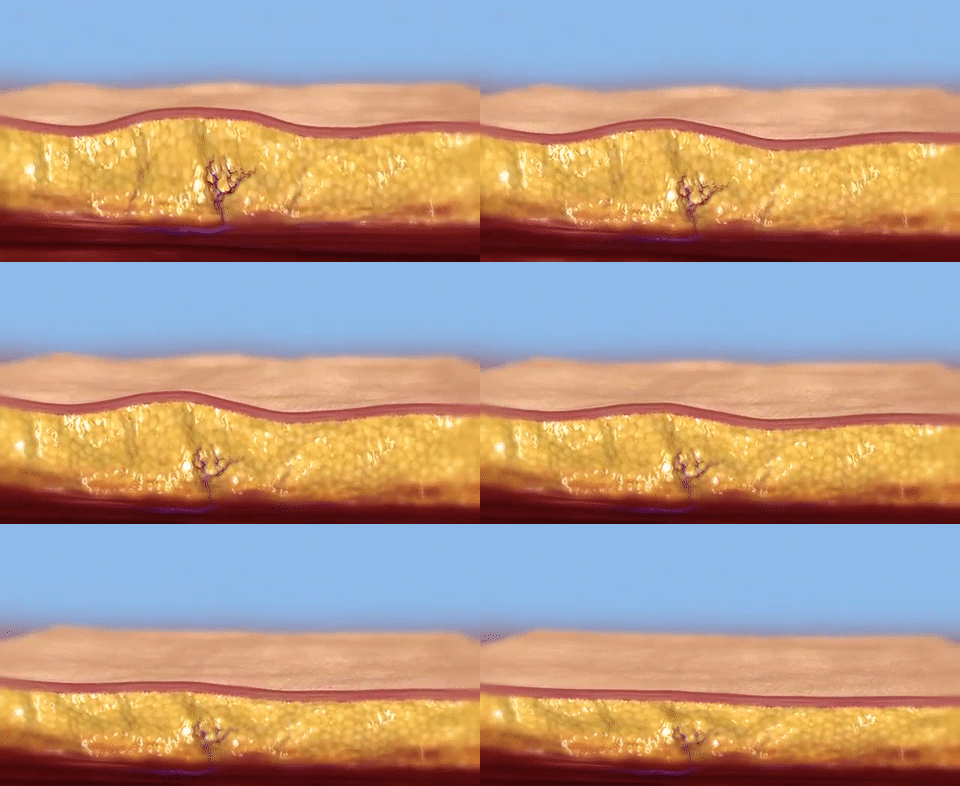
When heated fat contracts, the amount of fat decreases, as shown in the video above.
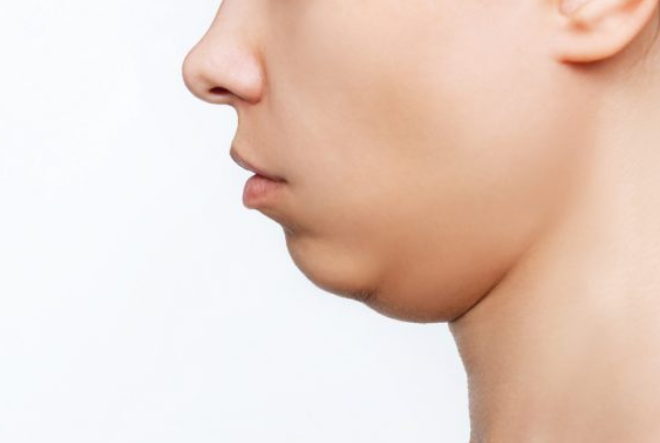
So for a type like the one in the illustration above, with plenty of superficial fat that has settled downward, HIFU treatments such as Ulthera tend to suit the direction well. Combining them with a fat-dissolving injection such as V-olet can sometimes make changes appear a little faster, but this varies from person to person. There is even a saying that weight management affects the facial contour as much as lifting does, so where needed, combining treatment with weight loss can help.
Even with the same device name, the experience can differ considerably depending on cooling and settings; I go into this a little more in Why I look at cooling before the device name in radiofrequency lifting. If it is hard to judge for yourself which type you are, feel free to ask via Consult via chat now.
When the skin is thin and has lost elasticity
Now to the second approach. If you make the balloon firmer and increase its elasticity, it can withstand sagging to a certain extent even with a lot of water. So how do we increase the balloon's elasticity? By increasing the thickness of the balloon.
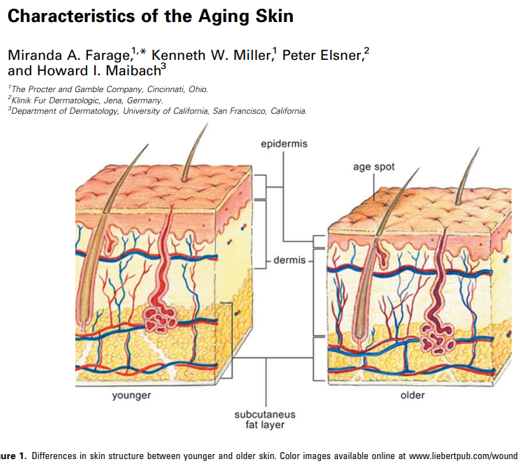
As our skin ages, the thickness and elasticity of the epidermis and dermis decrease together. Radiofrequency devices such as Thermage and Density deliver radiofrequency heat in bulk to the dermis, contracting retaining ligaments that have stretched apart like melted cheese, as shown in the illustration on the right.
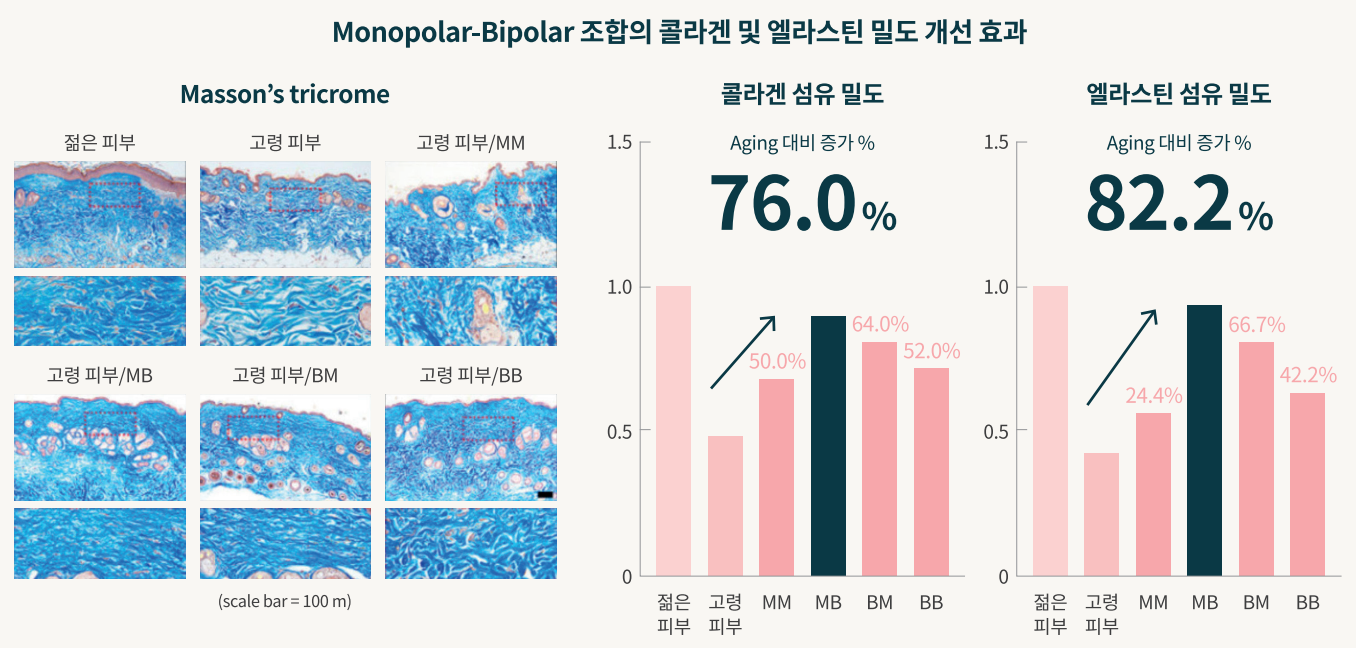
At the same time, they stimulate the synthesis of collagen and elastic fibers to raise the skin's elasticity and thickness. When the skin becomes thicker and gains elasticity, it holds the superficial fat in place to some degree as well, much like tightening a corset.
Even within radiofrequency, monopolar and bipolar devices have different characters, and some devices, such as Density, are vying for Thermage's place. If you are curious about these differences, I recommend reading The criteria I use in the clinic to choose between monopolar and bipolar radiofrequency and Why I see Density as a serious rival to Thermage together.
So what should we look at first?
In summary, it divides like this.
- When the problem is weight, with superficial fat settling downward - I consider HIFU-type treatments first
- When the problem is skin that has thinned and lost elasticity - I consider radiofrequency-type treatments first
- When both factors overlap - I sometimes design a plan that combines both directions
Grouping the devices broadly into two categories gives the following.
| Approach | Main target | Representative devices |
|---|---|---|
| HIFU (focused ultrasound) | Fat layer, fascial layer | Ulthera, Shurink, Doublo, Linearge |
| Radiofrequency (RF) | Dermal elasticity | Thermage, Density, Oligio, Volnewmer |
However different the names and however impressive the numbers, the right order is ultimately to first determine whether "my sagging comes from fat that has descended, or from skin that has lost elasticity." In reality, many people have a mix of both problems, so sometimes a judgment is needed on whether to consider Ulthera and Thermage together or whether one is enough. I have written about this separately in When I recommend Ulthera and Thermage together and when one is enough.
If you are curious about the detailed specifications of each device, you can find them in the guides for Ulthera, Thermage FLX and Density.
Today I left out quite a few parts in order to explain the concepts of lifting devices and the criteria for choosing them as simply as possible. I will continue with the details step by step. If you would like me to look at your face in person and set a direction according to which side it is closer to, please feel free to ask via the chat below.
Consult via chatThank you for reading this long post.

Author: Dr. Cho Mingyeol, Medical Director (board-certified dermatologist; Master Certification in Pigmentation, Acne, Rosacea and Hair from the Korean Dermatologists Association). You can find the full profile on the Medical Team page. First published 2023-12-19 / Last reviewed 2026-07-09
This article is intended for general information only; the appropriate treatment and outcomes may vary depending on each individual's condition.