

The two things people coming in for lifting consultations confuse most often are Ulthera and Thermage. Most have heard the names many times, but they ask what exactly the difference is, whether getting just one of them is enough, or whether they need both. I have put together exactly how I actually explain it in the clinic.
What do Ulthera and Thermage target differently in the first place
It is easier to understand if we start with an analogy. Think of the skin of our face as a leather pouch that holds fat. As we age, this pouch becomes thinner and loses its elasticity.
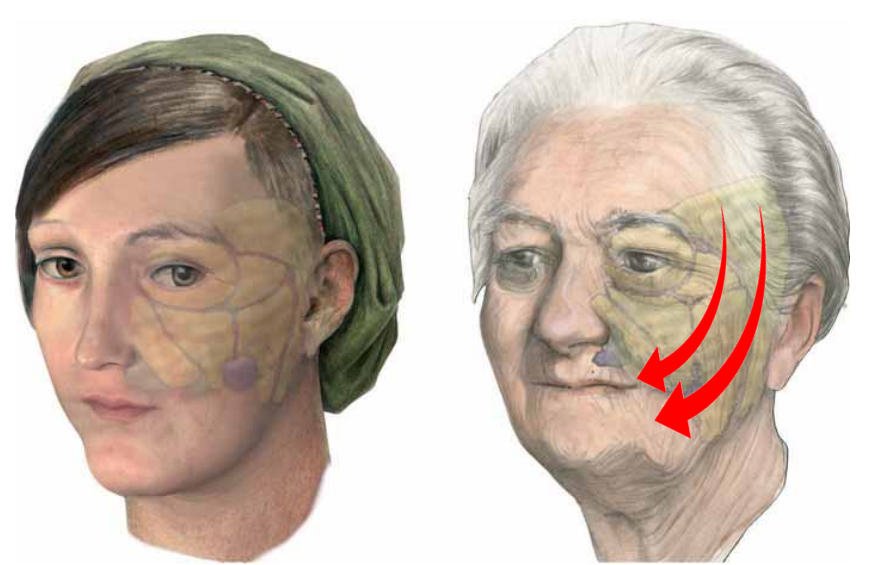
When the pouch becomes thin, it loses the strength to hold the fat inside firmly in place. The fat then slides down in the direction of gravity.
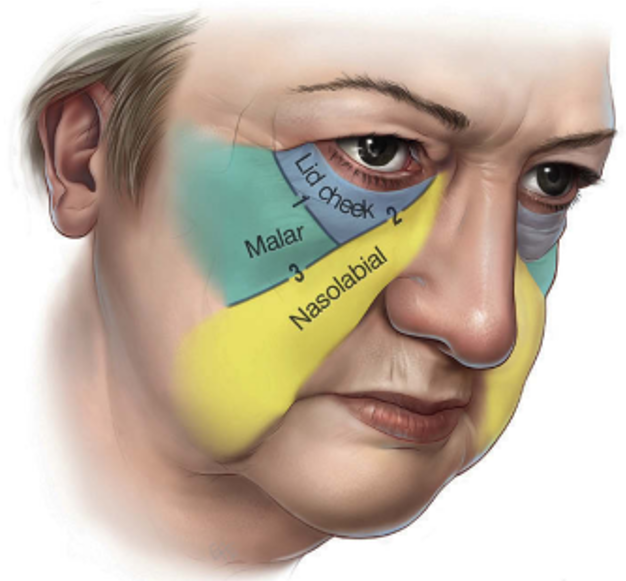
This sagging fat creates nasolabial folds and marionette lines. This is where the two procedures take different approaches. Ulthera uses ultrasound energy to contract the fat layer and the fascial layer, that is, the SMAS layer, lightening the weight of the fat inside the pouch. Thermage uses radiofrequency energy to stimulate collagen production in the dermis, strengthening and firming the pouch itself. One works by lightening the load; the other works by making the pouch sturdier.
Ultrasound and radiofrequency: how the layers they act on differ
When you place the two procedures side by side, the division of roles becomes clear.
| Category | Ulthera | Thermage |
|---|---|---|
| Energy | Ultrasound | Radiofrequency |
| Main layer reached | Fat layer and fascial (SMAS) layer | Dermis |
| Key action | Lifts sagging tissue upward | Tightens the skin by stimulating collagen |
| Analogy | Lightening the weight of the fat inside the pouch | Making the pouch itself firm |
If you are curious about the principle of how radiofrequency stimulates collagen in the dermis, I recommend reading my post explaining how radiofrequency lifting works. If you want to know more about the differences between devices, my post on the criteria I use to choose a lifting device may also help.
Why, the younger you are, Ulthera alone can set the direction
In the clinic, I often see that in people in their 20s and early 30s, Ulthera alone can noticeably refine a double chin. Because this is a period when skin elasticity is good, simply lightening the weight of the fat allows the skin to pull back into place on its own. However, the degree of effect varies from person to person.
Conversely, applying Ulthera excessively, more than needed, can make the cheeks look hollow. Because it is a procedure that lightens the weight of fat, I do not recommend simply increasing the number of shots without looking at the face shape and amount of fat.
With these concerns, I think of lifting first
The typical conditions for which I set a lifting direction in the clinic are as follows.
- When the jawline has broken down and the facial contour has become blurred
- When a double chin or deep sagging bothers you
- When the face as a whole needs lifting
- When the skin has thinned and fine lines have become noticeable
- When pores have widened as firmness has declined
- When you want to smooth and refine skin texture
The more of these overlap, the harder it becomes to set a direction with only one procedure.
How the combination changes by age group
Even with the same lifting, the center of gravity shifts depending on the condition of the skin.
- 20s — Because elasticity is good at this stage, clear changes have been reported with Ulthera alone.
- 30s — As elasticity begins to decline gradually, I tend to recommend using Ulthera as the base with Thermage as a supplementary treatment.
- 40s and older — Because sagging and loss of firmness appear in earnest, using Ulthera and Thermage together to manage from the deep layers to the surface tends to be more effective.
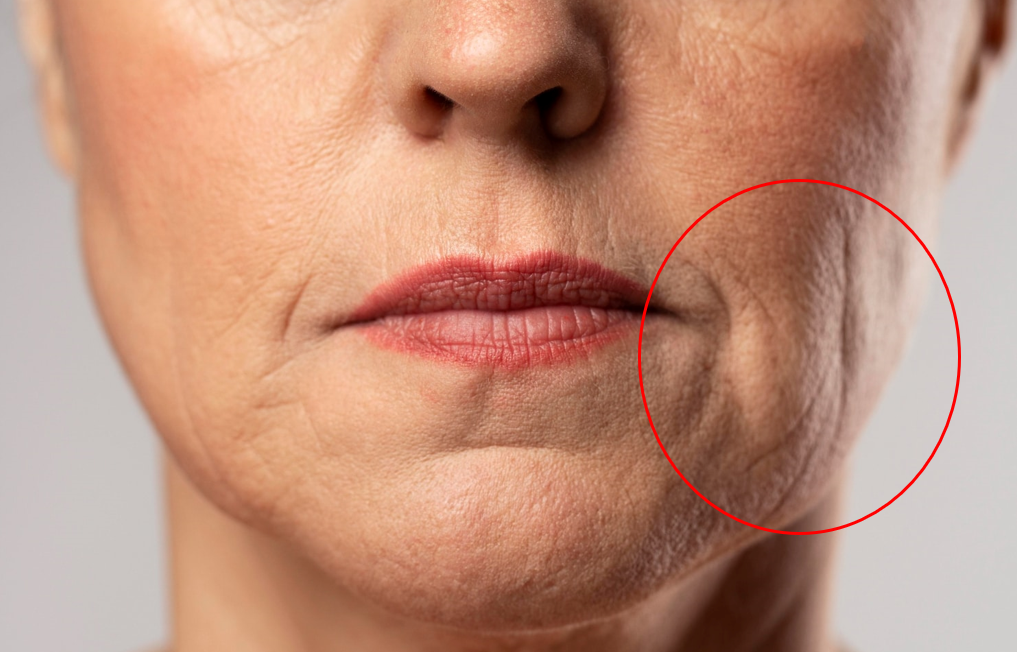
As in the photo above, cases where sagging and loss of firmness appear at the same time are a typical example of needing both procedures. Of course, the combination needed can vary widely depending on face shape and fat distribution. If you are curious about the devices themselves, you can refer to the introductions of Ulthera, Thermage and Density, and I have summarized how I change direction when firmness does not return sufficiently even with Thermage in my post on the criteria for switching to UltraClear.
How is the cost determined
Both procedures are priced by the number of shots. In general, Ulthera is often performed with relatively fewer shots and Thermage with more. However, the number of shots needed depends on face shape and the degree of sagging, so the exact cost is explained after the consultation.
If I point out just one thing before you decide
Ulthera and Thermage are not competitors but closer to complementary treatments that take charge of different layers. Whether to lighten the weight of the fat, tighten the skin, or do both must ultimately be decided by looking directly at your current firmness and sagging. If it is hard to judge on your own, I recommend deciding after consulting a dermatologist near you. If it is hard to gauge which combination suits you, feel free to reach out through Consult via chat now.
Author: Dr. Cho Mingyeol, Medical Director (board-certified dermatologist; Master Certification in Pigmentation, Acne, Rosacea and Hair from the Korean Dermatologists Association). You can find the full profile on the Medical Team page. First published 2024-12-09 / Last reviewed 2026-07-09
This article is intended for general information only; the appropriate treatment and outcomes may vary depending on each individual's condition.