

Hello, I am the board-certified dermatologist in charge of lifting treatments at OARO Dermatology. I have long performed a variety of lifting treatments, such as Ulthera and Thermage, at a large dermatology clinic, and because I have also consistently performed Density, which arrived in Korea relatively recently, I came to serve as a key doctor for this device. So today I want to take up a question I often hear in the clinic: "Can Density really rival Thermage?"

Where does Density sit among devices?
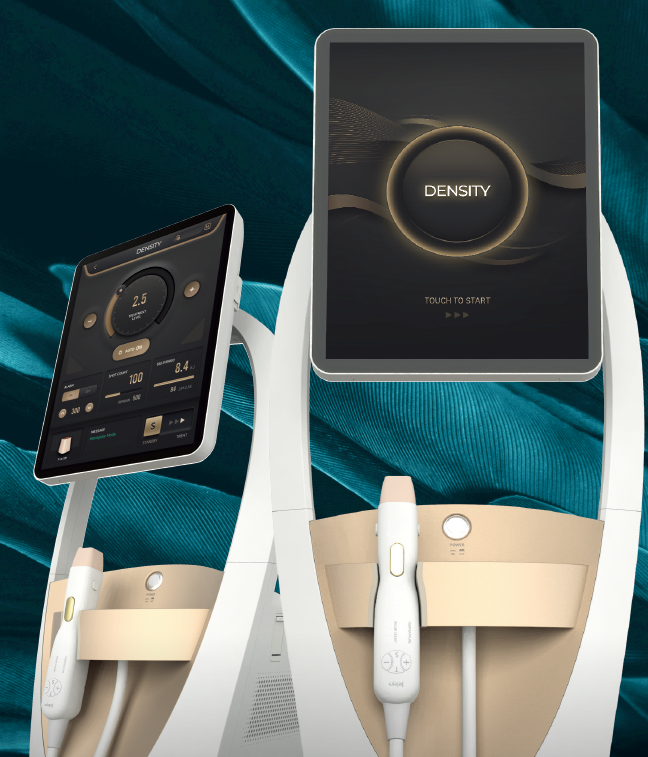
Density is one of the most recently released lifting devices in the monopolar radiofrequency (Monopolar RF) category. From its debut, it was said to have thrown down the gauntlet directly to Thermage, and when you actually take it apart, that description is not merely an exaggeration.
In the lifting market, brand image carries as much weight as device performance. Density, too, is a device whose makers invested heavily in branding, even featuring a well-known actor as its advertising model, which from the outset gives the impression that it is aiming at the position Thermage has long held.
The principle of monopolar radiofrequency devices such as Thermage, Density and Oligio ultimately comes down to one thing: delivering radiofrequency energy to the dermis to stimulate collagen production and, through that response, induce changes in skin elasticity. If you would like to go over how radiofrequency works inside the skin from a more basic level, you may want to read the radiofrequency principles worth knowing before Thermage or Density first.

Why it can only be compared with Thermage
Since Density's target is Thermage, it is hard to avoid looking at the two devices side by side.
Thermage CPT, the previous version of Thermage FLX, determined its energy level by measuring only the initial resistance value. As a result, it fell somewhat short in delivering precise energy to each area. In contrast, Thermage FLX and Density re-read the skin's resistance with a tuning pulse on every shot and adjust output and cooling accordingly. As a result, they can deliver energy more safely and at a uniform depth and intensity.
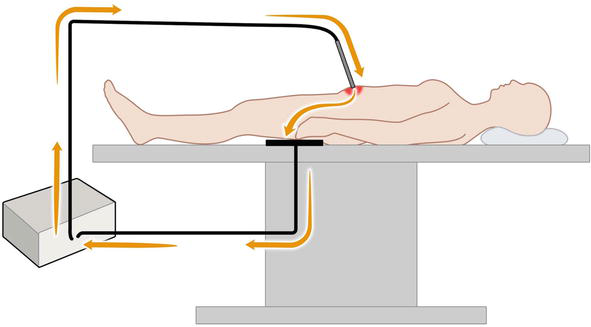
With monopolar radiofrequency, treatment intensity can vary depending on where the grounding pad is attached. That is why, for a precise treatment, receiving impedance feedback on every shot to adjust output and cooling is practically essential.
How similar are the tip size, frequency and output?
Tip size is directly linked to the amount of energy delivered and the depth of penetration. In general, the larger the treatment area, the more widely and deeply the energy reaches. Density's tips use the same dimensions as Thermage FLX.
- Eye tip 0.25cm2
- Face tip 4cm2
In other words, it is designed to deliver similar energy to the same depth over the same area.
Frequency is also worth examining. With radiofrequency, the higher the frequency, the narrower the treatment range, but a relatively more precise treatment becomes possible, acting mainly on shallow layers. Conversely, lower frequencies penetrate deeper layers. The key figures for the two devices are summarized below.
| Item | Thermage FLX | Density |
|---|---|---|
| Type | Monopolar radiofrequency | Based on monopolar radiofrequency |
| Frequency | 6.78MHz | 6.78MHz |
| Maximum output | 400W | 400W |
| Tip specifications | 0.25cm2 / 4cm2 | 0.25cm2 / 4cm2 |
| Cooling levels | 5 levels | 5 levels plus coolant can temperature maintenance |
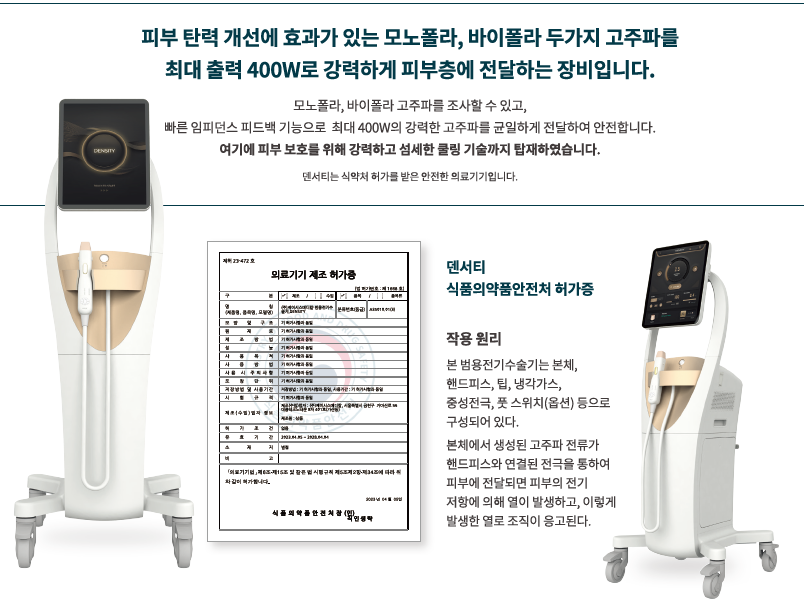
Looking at the numbers alone, you can see that it is a device built squarely to target Thermage. In car terms, maximum output corresponds to engine performance and cooling to braking performance. Stopping well matters as much as going fast. While strong cooling protects the epidermis, the radiofrequency can reach deep layers.
If you are curious about the overall landscape of choosing a lifting device, the lifting selection guide comparing Ulthera, Thermage, Density and Oligio side by side is also worth a look. If you are unsure what suits your current skin condition, you can first get a sense of direction through Consult via chat now.
Cooling: is frost on the tip always a good thing?
As those who have had the treatment know, the Density tip shows cooling strong enough that frost forms on the tip after treatment, just like Thermage. However, frost forming does not automatically mean it is better. For reference, I have never seen this phenomenon with Oligio.
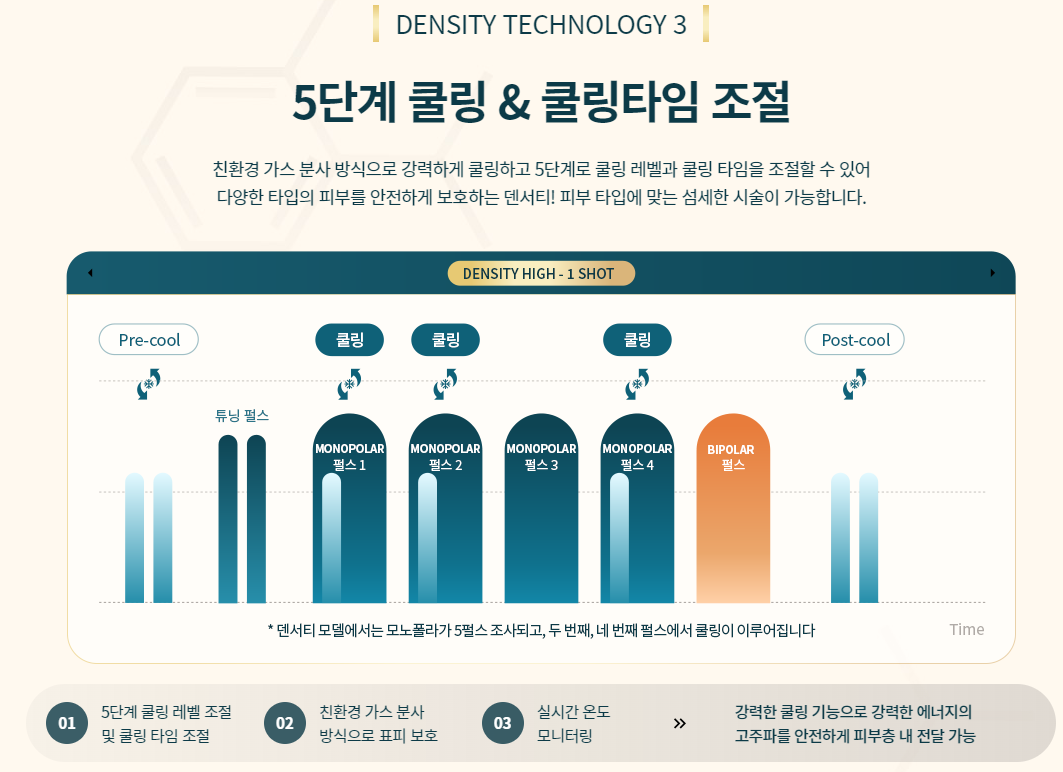
Like Thermage, Density allows five levels of cooling adjustment, but it adds one more thing. It keeps the coolant can at a constant temperature, maintaining consistent cooling capacity regardless of the treatment room temperature, which changes with the seasons. By now you can probably see why I keep bringing up Thermage.
Where Density is one step ahead of Thermage
Up to this point, the story has been "it is very similar to Thermage." But Density has one more card that Thermage does not have.

On top of Thermage-style monopolar radiofrequency, it has added a new tip lineup, the Hi tip, which also uses bipolar radiofrequency (Bipolar RF) like InMode. With this combination, relatively quick responses have been reported, though of course the speed and degree of response vary between individuals.
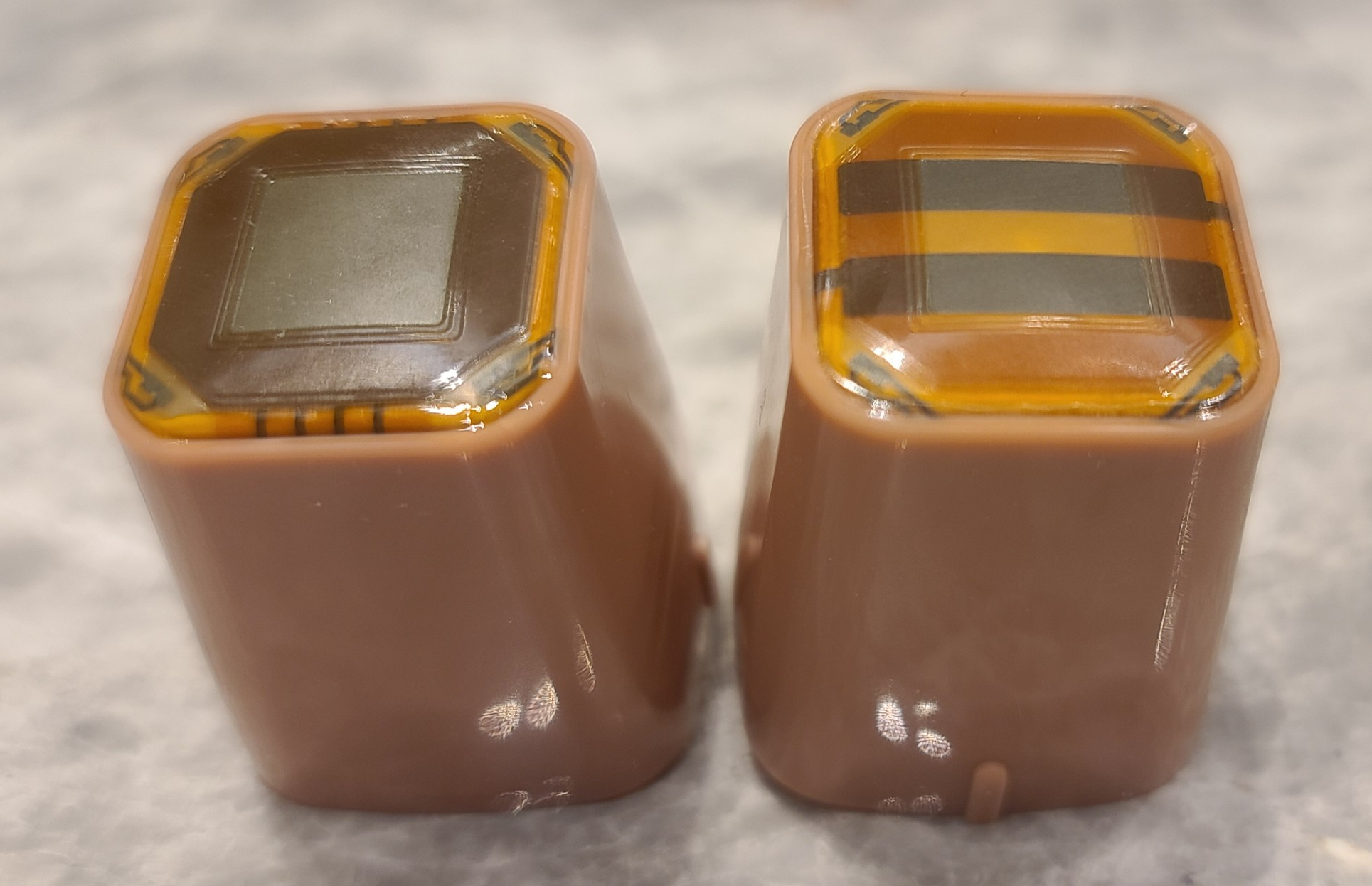
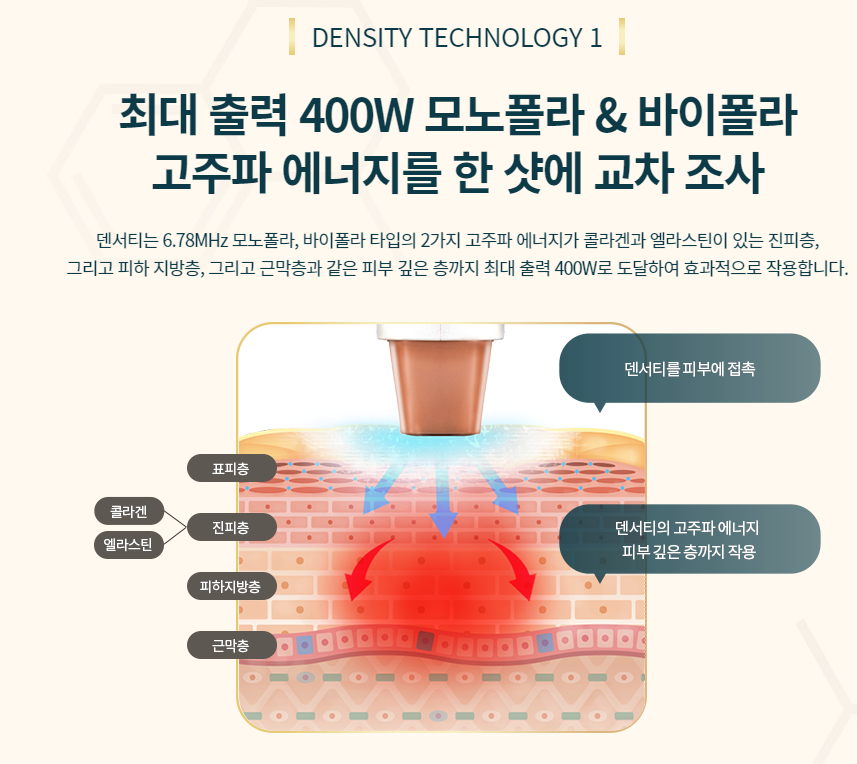
If you are confused about the characteristics of monopolar and bipolar radiofrequency, I have summarized the principles separately in my post on the differences between monopolar and bipolar radiofrequency, and I recommend reading it as well.
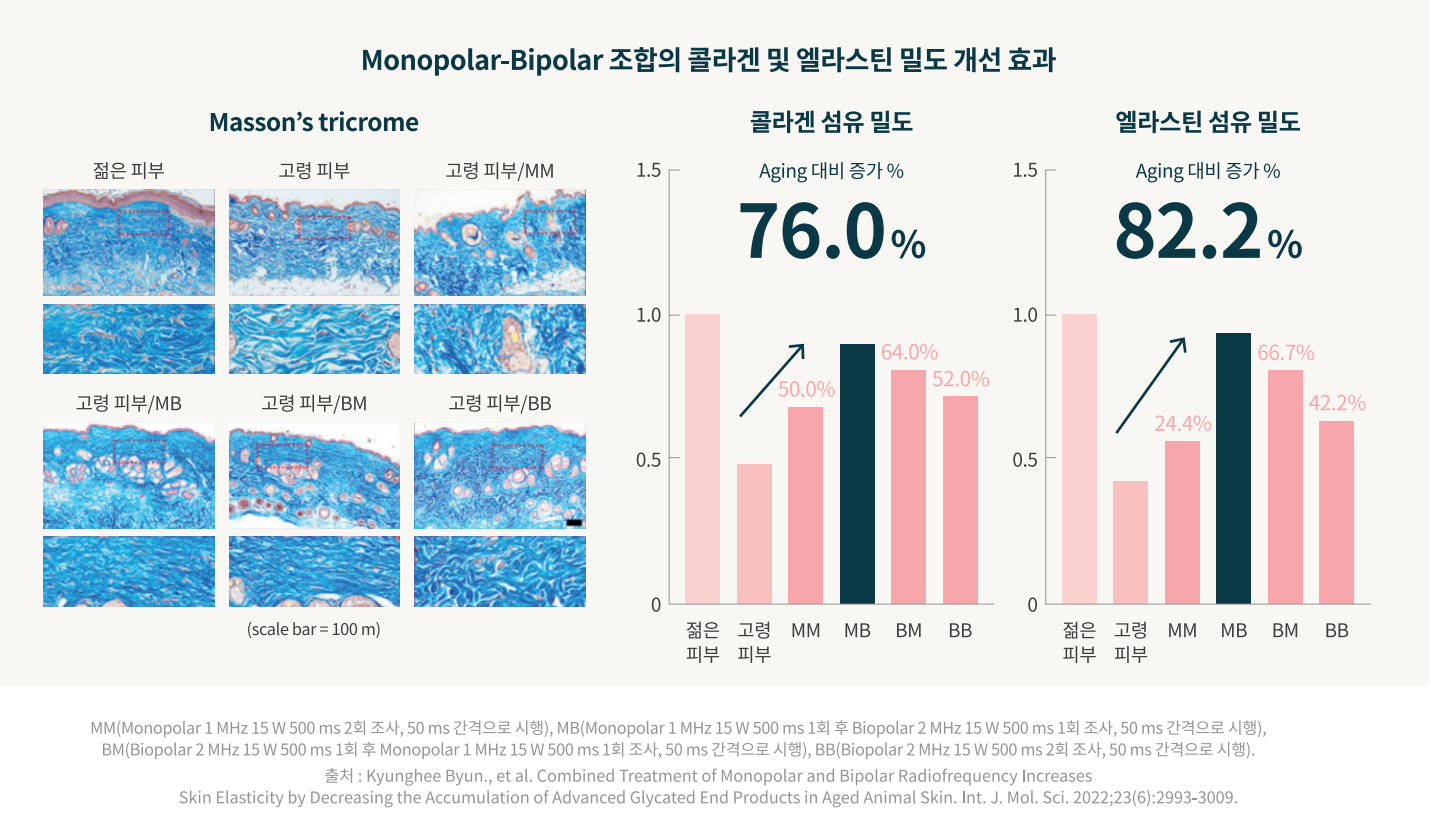
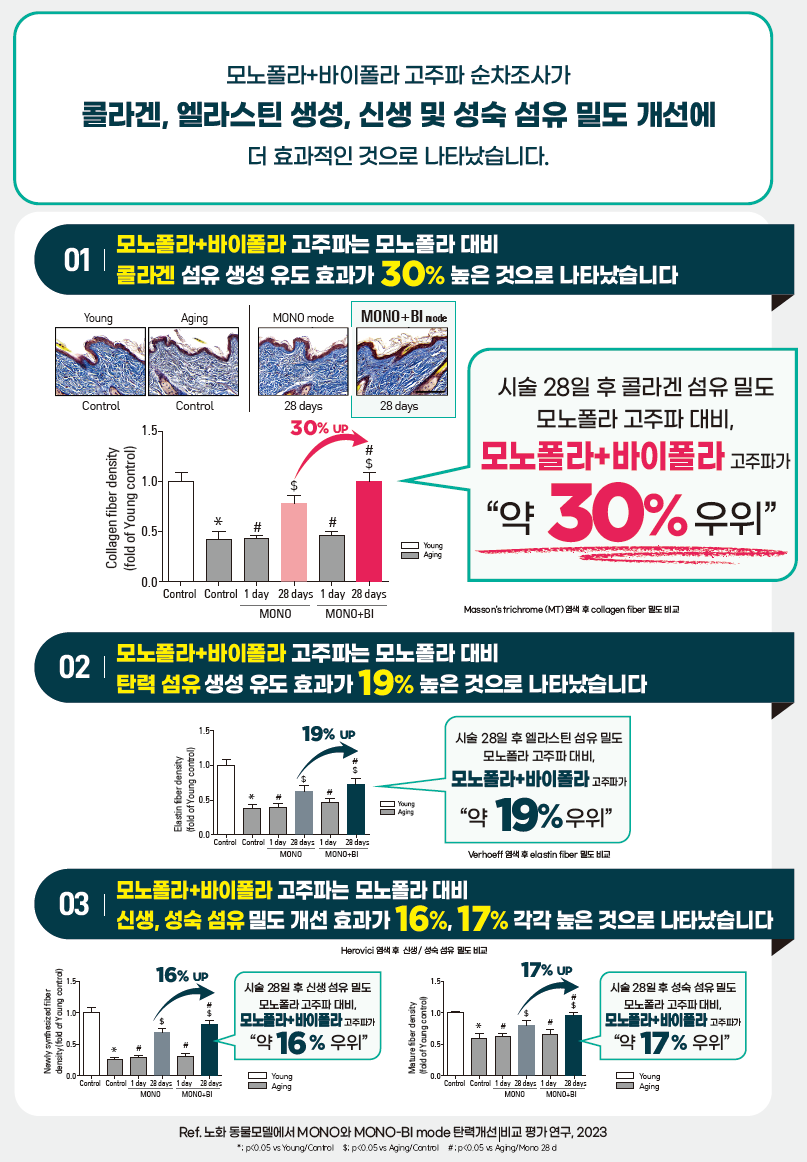
Although the data are still at the animal-study stage, there is a report that when monopolar and bipolar radiofrequency were applied together with a time lag, better results were observed than with monopolar alone. In a sense, this may be seen as a natural direction.
With conventional monopolar radiofrequency, the dipole moment (dipole moment) occurs mainly in the vertical direction. When bipolar radiofrequency is added, dipole moments also arise horizontally, allowing energy to be delivered effectively to somewhat shallower skin layers as well. As a result, benefits can be expected in improving texture, such as skin texture and fine wrinkles. Personally, I see this as the point where Density moves ahead of Thermage.
So what do I look at in the clinic?
To summarize:
- The basic framework, such as frequency, output and tip specifications, is practically at the same level for Thermage and Density.
- Density has added differentiators: coolant can temperature maintenance and the combination with bipolar radiofrequency.
- However, Thermage has a strength that cannot be converted into numbers alone: a long track record of validation.
The dichotomy that a newly released device is always better or that an older device is always safer does not fit well in the clinic. Depending on skin thickness, the pattern of sagging and the desired direction, the device I recommend can differ even for the same person. Thermage, long synonymous with premium lifting, has the value of the validation it has built up, and the friendly competition now that a well-made new monopolar device has appeared beside it is welcome news for practitioners like me as well.
If you are wondering whether Thermage or Density would suit your skin better, the fastest way is to check your condition first and then set the direction. If you are curious about each device's characteristics, you can also refer to the Density treatment guide and the Thermage FLX treatment guide that we go over together in the clinic.
Consult via chatThank you for reading this long post to the end.
Author: Dr. Cho Mingyeol, Medical Director (board-certified dermatologist; Master Certification in Pigmentation, Acne, Rosacea and Hair from the Korean Dermatologists Association). You can find the full profile on the Medical Team page. First published 2024-02-02 / Last reviewed 2026-07-09
This article is intended for general information only; the appropriate treatment and outcomes may vary depending on each individual's condition.