

After seeing patients with rosacea in the clinic for a long time, I have noticed one story that comes up again and again among those who rush in because their face has suddenly flared: "I haven't been sleeping well lately." It may sound like a coincidence, but there is a more tightly woven physiological link between sleep and rosacea than you might think.
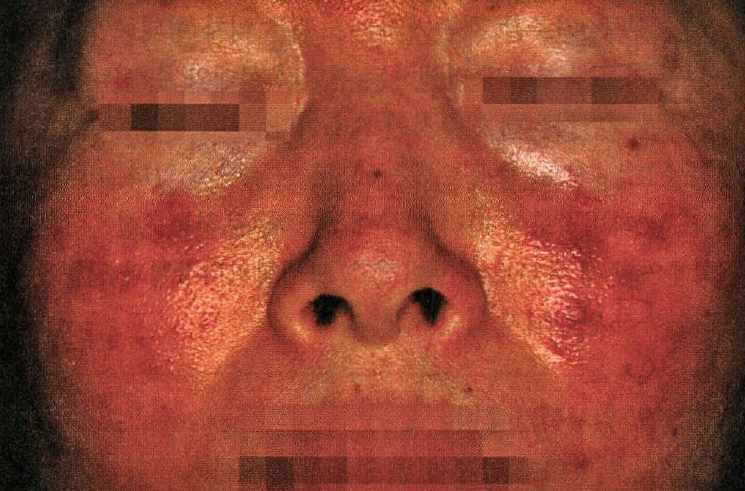
Rosacea is a chronic, recurring inflammatory skin disease. In the process, the skin barrier function often weakens, and especially in the transition into autumn and winter, inner dryness overlaps with it, making redness and burning more pronounced. Today, among the many aggravating factors, I would like to look, based on scientific literature, at one axis that patients surprisingly often overlook: sleep.
Why do a red face and broken sleep keep coming together?
When I ask people whose rosacea has worsened about their recent condition, the same answers come up again and again: a run of late nights at work, or several nights of poor sleep. This pattern, which I often encounter in the clinic, is not mere coincidence but a trend that has also been observed in actual research.
Is sleep quality really linked to rosacea?
There is a study that answers this question. Below is the paper on which today's discussion is based.
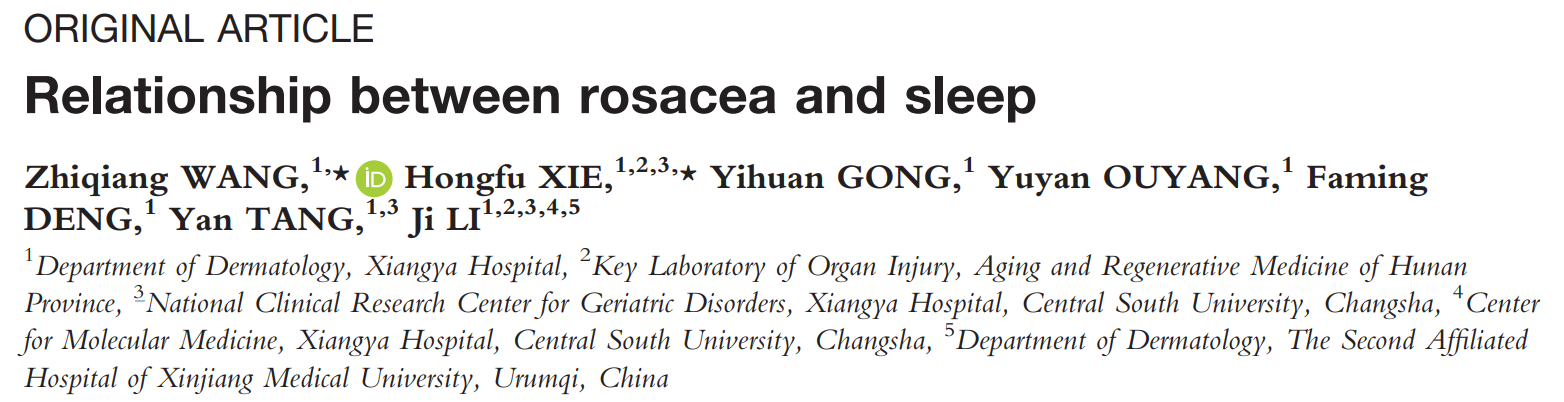
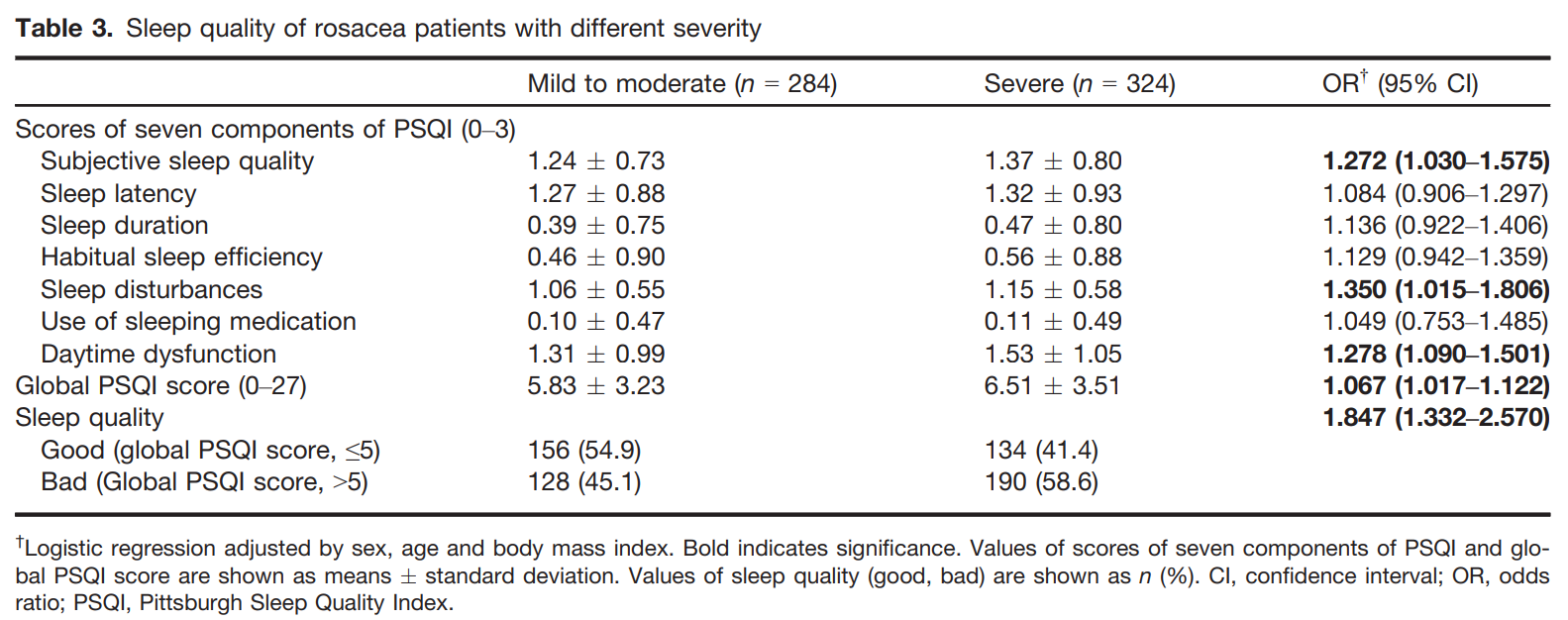
In that study, the sleep of a rosacea patient group and a control group was compared using the Pittsburgh Sleep Quality Index (PSQI). The reported figures can be summarized as follows.
| Category | Rosacea patient group | Control group |
|---|---|---|
| Proportion with poor sleep quality | About 52.3% | About 24% |
| Mean PSQI score | 6.20 | 3.95 |
A higher PSQI score means poorer sleep quality, and the patient group was reported to be clearly higher than the control group. In particular, a tendency was observed for sleep quality to be worse the more severe the rosacea was. However, since these figures are averages for a group, it is good to keep in mind that there are individual differences.
The mechanism shown in mice: what changes when sleep is short?
Numbers alone make it hard to be sure of the direction of causation. So the researchers went one step further with animal experiments.
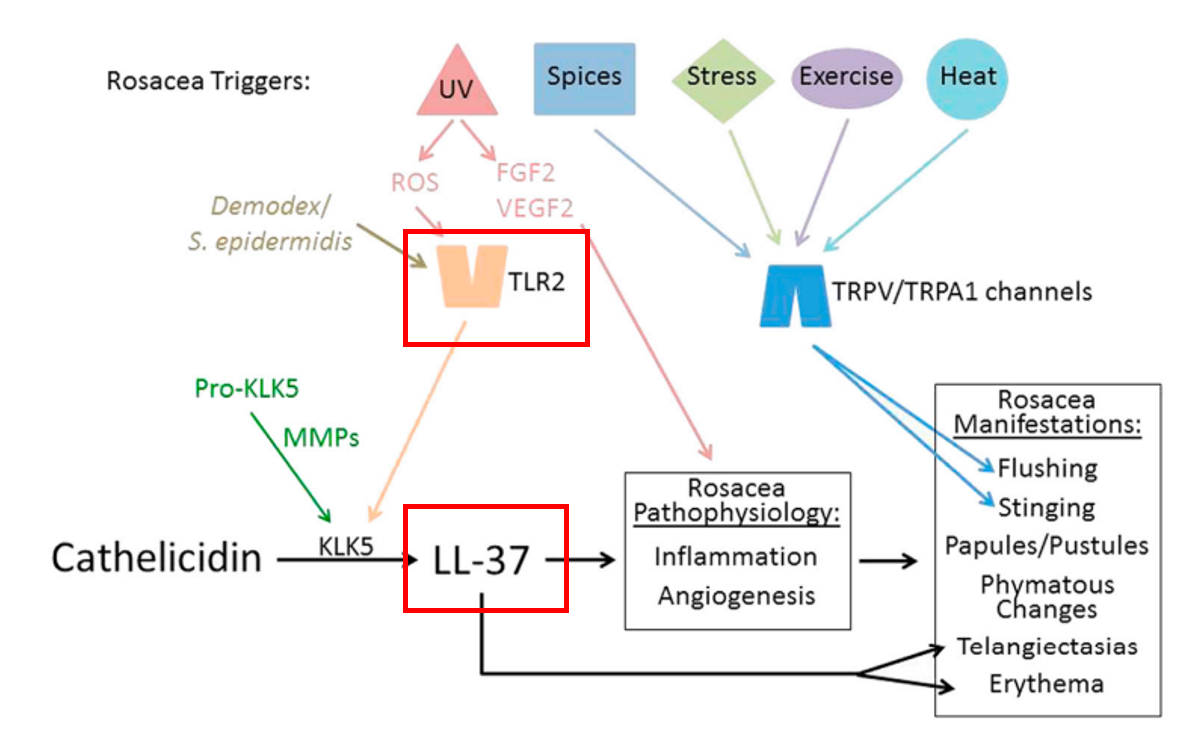
The diagram above shows the well-known mechanism by which rosacea develops. The researchers treated mice with LL-37 to artificially create a rosacea-like state, then deprived them of sleep to observe the relationship between sleep and skin inflammation.
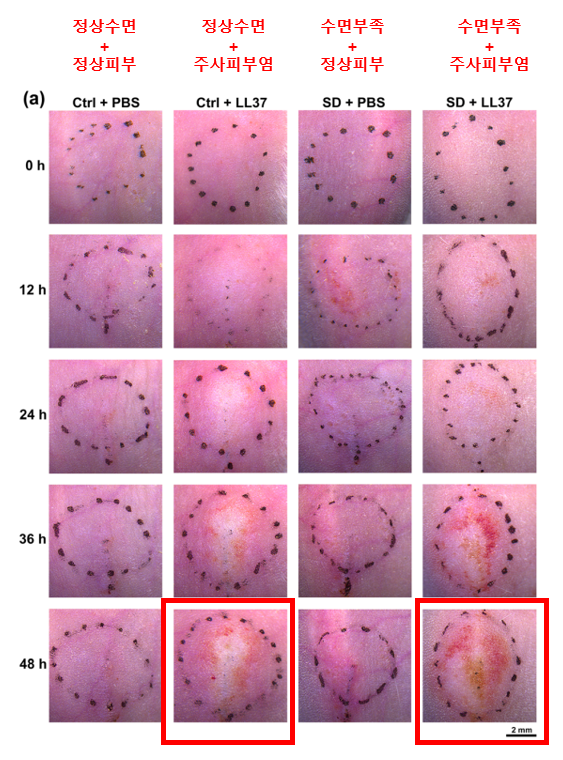
You can see an inflammatory response appearing in the skin of the mice in which rosacea was induced.
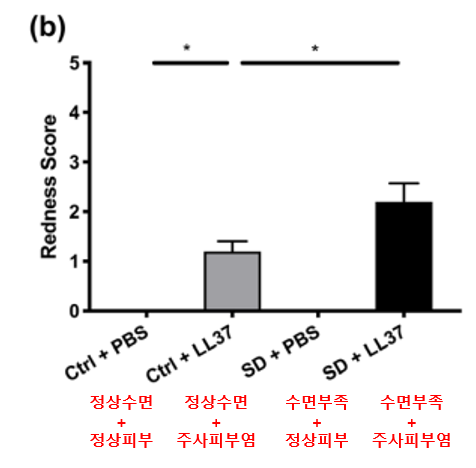
Numerically as well, inflammation worsened most severely in mice with both sleep deprivation and rosacea.
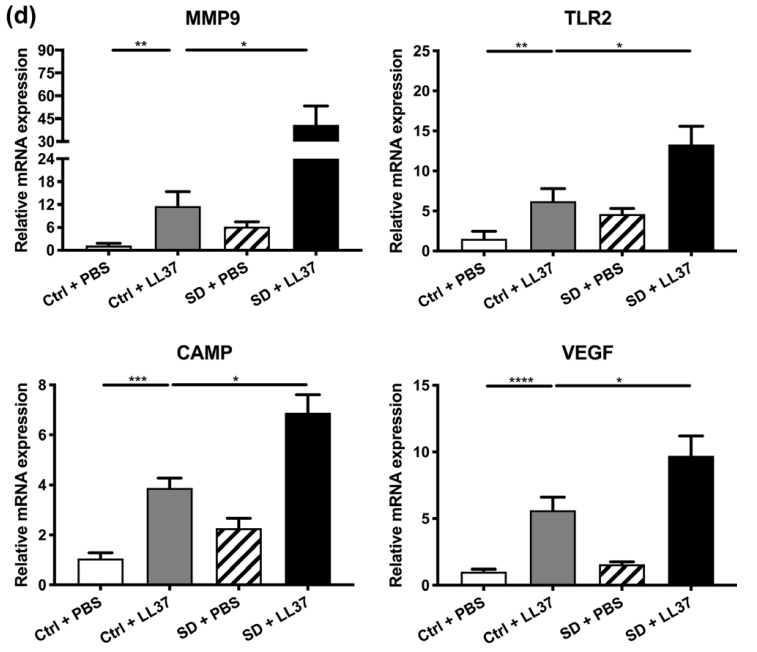
Why sleep deprivation is a problem became clear in the inflammatory markers. When sleep was short, the expression of the following substances increased.
- An increase in enzymes of the MMP family, particularly MMP-9
- Activation of TLRs, innate immune receptors, particularly TLR-2
- Expression of CAMP, the precursor of antimicrobial peptides
When these increase, skin inflammation is promoted, followed by vascular dysregulation and angiogenesis. This means that sleep deprivation can act as a trigger behind the face in rosacea becoming redder and more sensitive.
When your face keeps flaring red, before changing only what you apply, I recommend first looking back at your sleep over the past few days. Half of what happens on the skin sometimes starts outside the skin.
If periods in which your sleep and redness are both unsettled keep recurring, you are welcome to ask about your current condition through consult via chat now.
So how should we protect our sleep?

Basic sleep hygiene, such as temperature, humidity, and using electronic devices before bed, is already widely known. These environmental factors are also connected to skin barrier care, so I recommend paying attention to humidity and your moisturizing habits as well. In addition, there are two methods I further recommend in the clinic.
- Wear a sleep mask to block out light as much as possible
- Use earplugs to reduce even faint noises
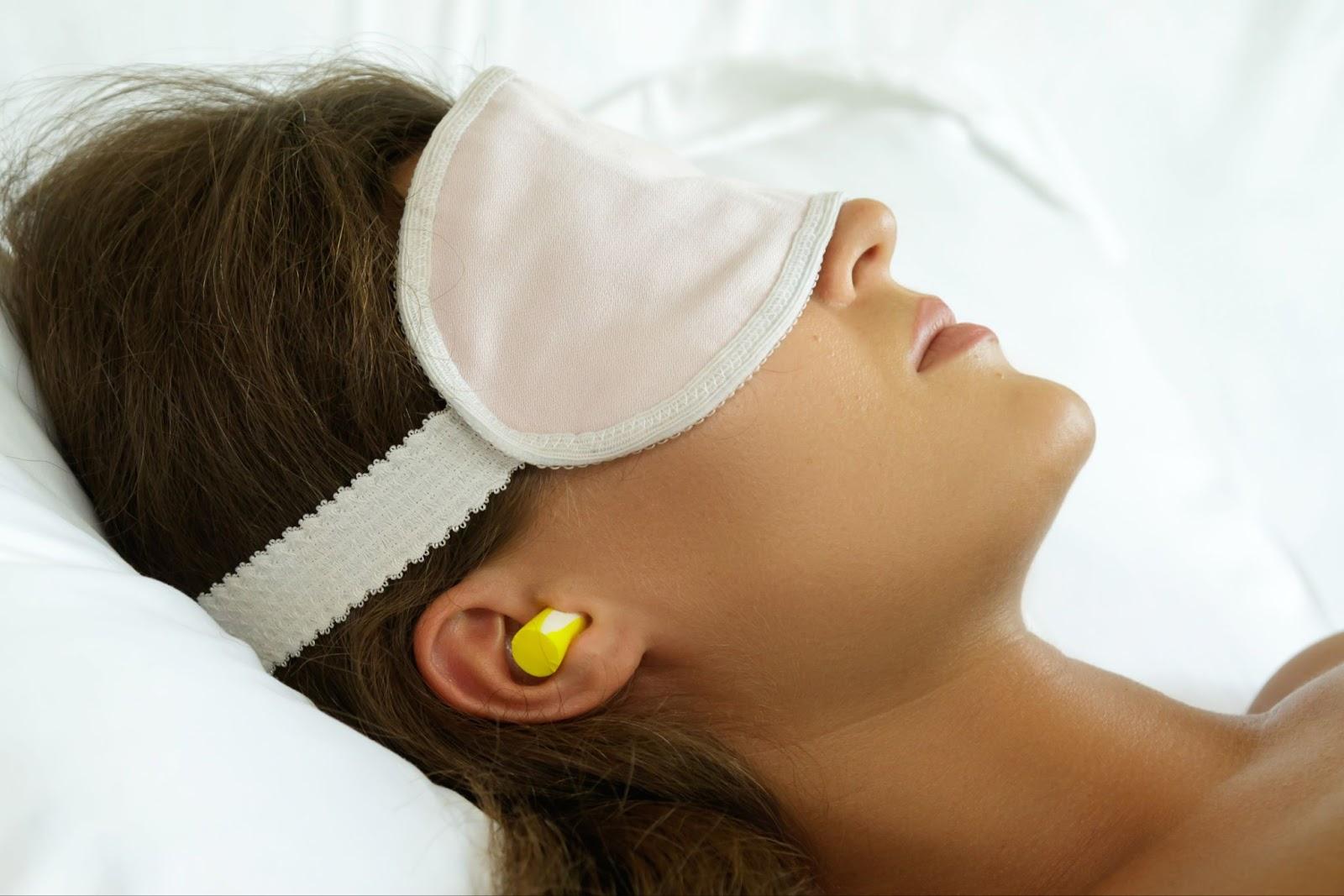
Both are very simple to do, but they are methods for which noticeable benefits have been reported. Their effects vary from person to person, so I hope you will try them for a few days to see whether they suit you. For what it's worth, I too protect my sleep every day with a combination of a sleep mask and earplugs.
The direction I emphasize in the clinic
Managing rosacea is not just a matter of lasers or medication; it is closer to a process of reducing, one by one, the triggers that make your face red. I would like you to be sure to put sleep on that list of triggers. During periods when sleep falls apart, even the best treatment easily becomes like pouring water into a bottomless jar.
If rosacea is new to you, I recommend first reading my post summarizing the symptoms of rosacea and my post on its causes. Reading my post on the skin barrier, which is the background to facial redness, alongside will make today's content clearer. If you are curious about temperature, humidity, and cosmetics, please refer to my post on rosacea and cosmetics, and if you are curious about treatment options, my post summarizing rosacea treatment.
If you have long been troubled by facial flushing and rosacea, looking at your current skin condition together, rather than judging on your own, will help in setting a direction.
Consult via chatAuthor: Dr. Cho Mingyeol, Medical Director (board-certified dermatologist; Master Certification in Pigmentation, Acne, Rosacea and Hair from the Korean Dermatologists Association). You can find the full profile on the Medical Team page. First published 2024-10-14 / Last reviewed 2026-07-09
This article is intended for general information only; the appropriate treatment and outcomes may vary depending on each individual's condition.