

After treating stubborn rosacea for a long time, I meet people for whom looking at the face alone does not quite give the answer. When redness and inflammation keep recurring even though they have faithfully continued topical treatment, I carefully bring up the subject of the gut in the clinic. This is because studies published over the past few years have been gradually changing the way we look at inflammatory skin diseases, including rosacea.

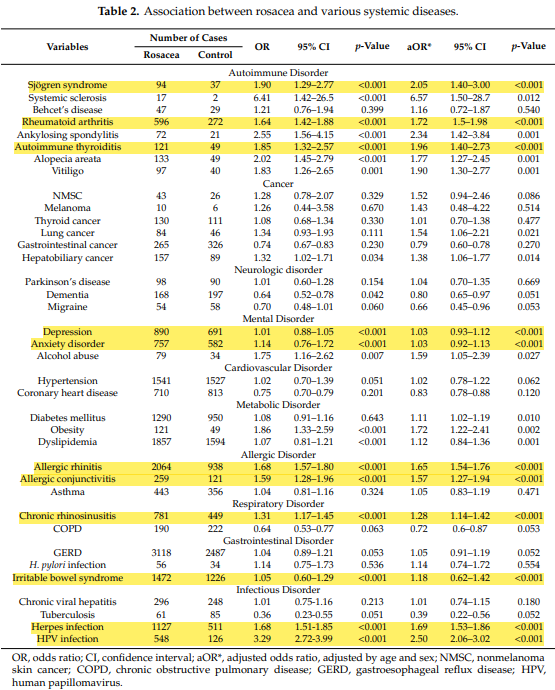
Is rosacea really just a problem of the face?
Taken together, several studies report a pattern in which autoimmune or allergic diseases accompany rosacea relatively more often in people who have it than in those who do not. Of course, there are individual differences, and this does not apply to every patient. Still, as such data accumulate, the argument that rosacea should be understood in a systemic context, rather than simply as a disease confined to the face, is gradually gaining persuasiveness.

This is where a concept that has been drawing a lot of attention lately comes in: the microbiome. Research showing that the microbial communities living in our bodies influence our state of health continues across a range of fields.
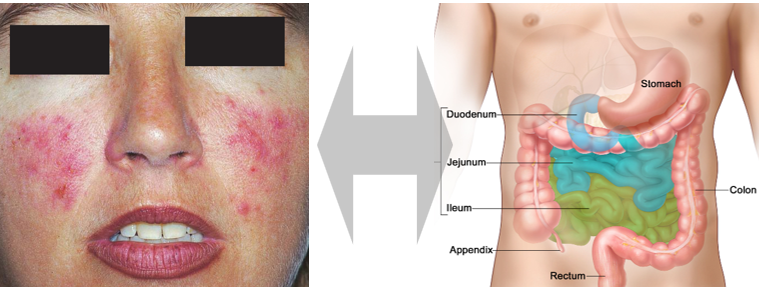
How are gut health and the skin connected?
Microbiome research is active in dermatology as well. Gut health and the state of gut bacteria appear to have a meaningful influence on the development of various skin diseases, and a growing number of researchers believe that an imbalance in gut bacteria (dysbiosis) is likely to have an unfavorable effect on the skin.
The old saying that "when your gut is off, your skin breaks out too" may not have been an idle remark after all.
That does not mean we should forget the factors we have emphasized all along. Aggravating factors and psychological stress remain the basic axes that affect rosacea. In the figure below, I have gathered in one place what I have covered over the six parts so far.
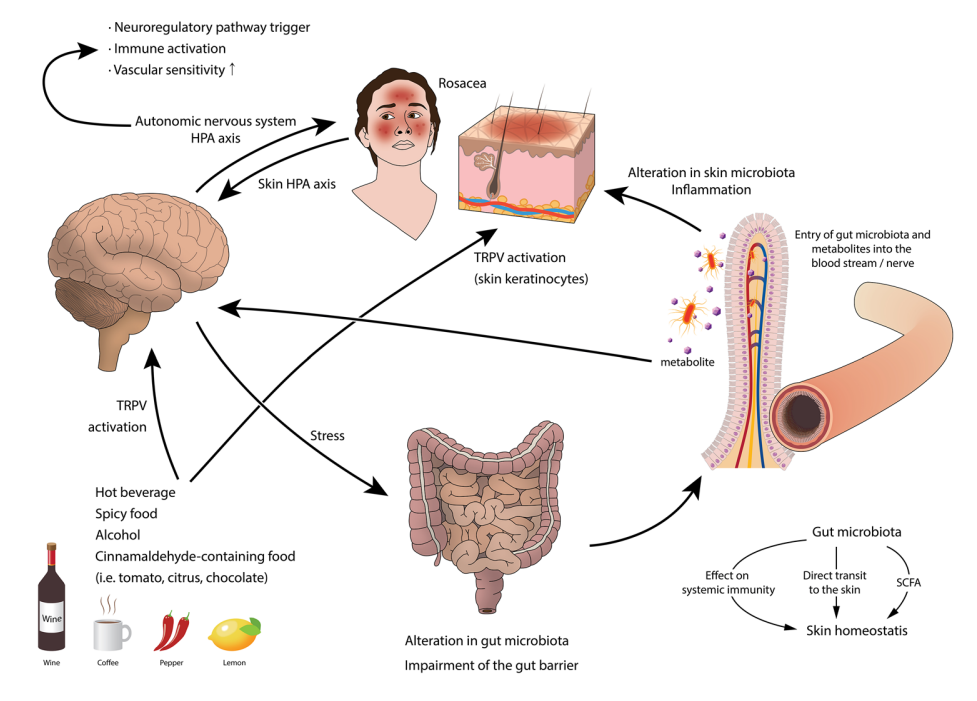
If you have not yet sorted out the symptoms, causes, and lifestyle, reading Part 1 on the symptoms of rosacea and Part 2 on its causes first will make the context of today's post much easier to grasp.
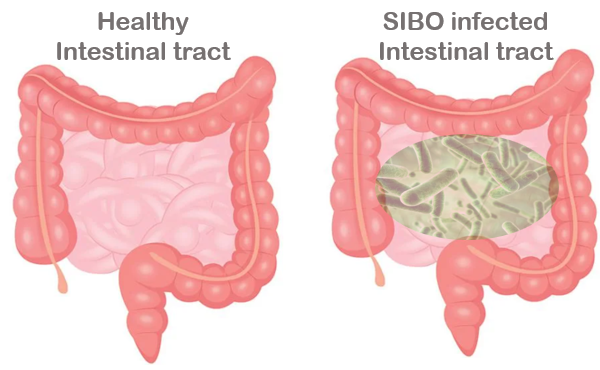
SIBO and leaky gut: what happens?
Among gut problems, one I pay particular attention to is small intestinal bacterial overgrowth, or SIBO (Small Intestinal Bacterial Overgrowth).
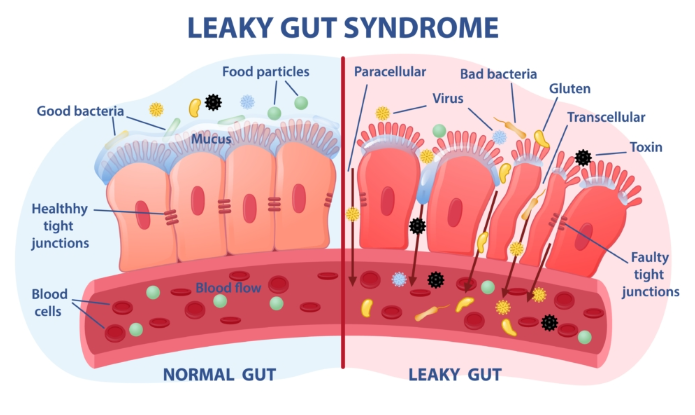
When SIBO develops, an inflammatory reaction occurs in the cell walls of the intestine, and in the process the tight junctions that hold the intestinal barrier cells firmly together become loose. This state, in which the intestinal barrier has loosened, is called leaky gut syndrome, and various toxins and harmful substances seep into the body through the gaps, triggering a systemic inflammatory response.
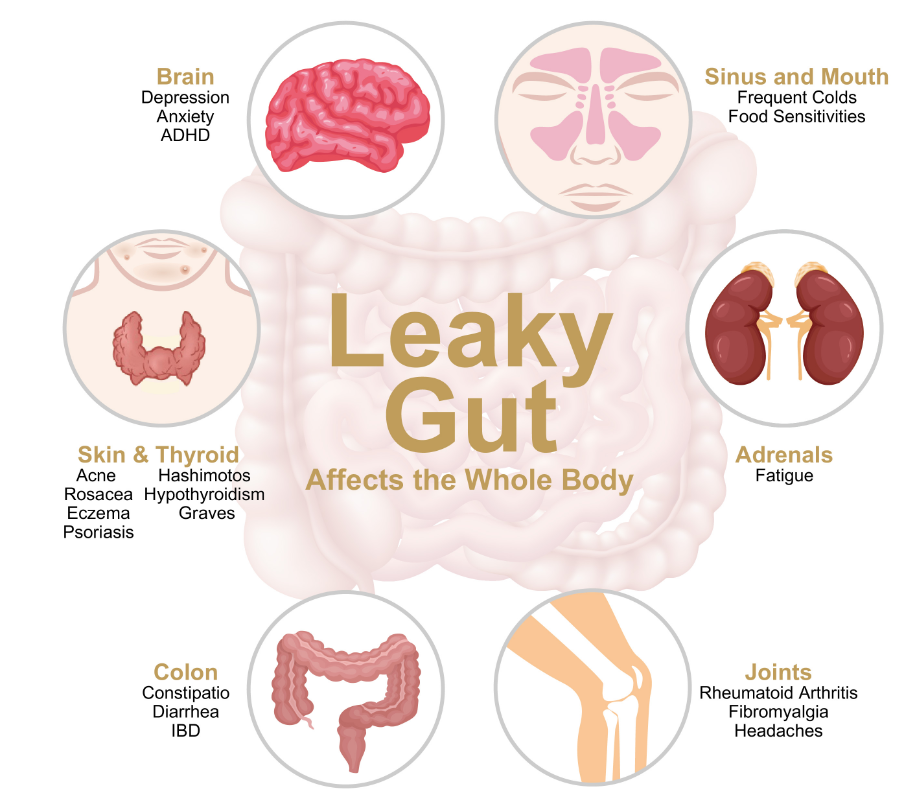
The effects do not stay in the gut. A variety of symptoms can appear throughout the body, from the joints and the nervous system to the skin. In addition, papers continue to be published on advanced glycation end-products (AGEs), which are known to induce systemic inflammation, and on MACs (Microbiota-Accessible Carbohydrates), the carbohydrates that beneficial gut bacteria use as food.
Once the framework of the causes is clear, the direction becomes visible too. By correcting SIBO, leaky gut, and the factors that promote AGEs, we can hope for an improvement in symptoms. If you are worn out by recurring redness, you can consult via chat now and we can work out a direction suited to your current condition together.
Start with lifestyle habits that protect stomach acid
Surprisingly, the starting point is stomach acid. When stomach acid drops too far, the environment of the small intestine is easily disrupted, and the following habits help prevent low stomach acid.
- Chew your food for as long as possible
- Avoid drinking water, as far as possible, for 30 minutes before and after meals
- Do not eat rice soaked in water or soup
- Add a diluted vinegar drink, such as red vinegar diluted in water

For reference, there are reports that the incidence of rosacea rises in people who have taken medications that suppress stomach acid secretion for a long time. If you are taking any medication, I recommend discussing it with your physician rather than stopping it on your own judgment.
What to eat and what to cut back on
The key to diet lies in eating more foods rich in MACs and fewer foods high in AGEs. It is often overlooked that refined carbohydrates contain virtually no MACs for beneficial gut bacteria to use.
| Directions worth increasing | Directions better reduced |
|---|---|
| Whole grains, vegetables, and legumes rich in MACs | Refined carbohydrates such as white rice and wheat flour |
| Dietary fiber that feeds beneficial gut bacteria | Foods cooked at high temperatures that have formed many AGEs |
These directions do not produce results overnight, and they need to be tailored to each person's digestive condition and underlying diseases.
How far do we consider medication and testing?
When small intestinal bacterial overgrowth is suspected, antibiotics such as rifaximin, minocycline, or doxycycline, antifungals such as fluconazole, or antiprotozoals such as metronidazole may be considered at a specialist's discretion. This always presupposes an individual judgment through consultation, and responses vary from person to person.
In addition, low stomach acid or proliferation of Helicobacter pylori sometimes leads to leaky gut. So, if needed, we may perform a Helicobacter test and, if it is confirmed, consider eradication therapy.

There is also a view that betaine HCl may help if your stomach acid tends to be low. However, even though it is available as a health functional food or supplement, it is safer to decide whether to take it after checking the condition of your stomach and intestines and going through a consultation.
Why, in the end, we care for the gut as well
Gut microbes are turning out to play a far larger role than we commonly think. As data accumulate showing that they are intertwined with a wide range of health problems, from the digestive system to mental health, maintaining a healthy gut microbiome is meaningful for the skin as well.
Finally, let me revisit the two things I always emphasize: managing your stress level and getting enough sleep. These, too, have a large effect on the balance of gut microbes. If you are curious about the relationship between sleep and redness, I recommend reading Why rosacea flares when sleep falls apart next, and if you are curious about the skin barrier itself, my post on the skin barrier. I have covered the relationship with food in more detail in Part 3 on rosacea and food.
The functional medicine approach is not yet accepted as mainstream by every dermatologist. Even so, because I believe it has a clear connection with stubborn rosacea, I chose this topic as the last of the six parts. If redness does not settle easily and you would like to reset your direction, please feel free to ask by pressing Consult via chat.
I hope this series has helped, even a little, those who have struggled with rosacea for a long time to find their direction.
References
- Kim, Hei Sung. "Microbiota in rosacea." American Journal of Clinical Dermatology 21.1 (2020): 25-35.
- Daou, Hala, et al. "Rosacea and the microbiome: a systematic review." Dermatology and Therapy 11 (2021): 1-12.
- Woo, Yu Ri, et al. "Updates on the risk of neuropsychiatric and gastrointestinal comorbidities in rosacea and its possible relationship with the gut-brain-skin axis." International Journal of Molecular Sciences 21.22 (2020): 8427.
- O'Sullivan, Julie N., et al. "Protecting the outside: Biological tools to manipulate the skin microbiota." FEMS Microbiology Ecology 96.6 (2020): fiaa085.
Author: Dr. Cho Mingyeol, Medical Director (board-certified dermatologist; Master Certification in Pigmentation, Acne, Rosacea and Hair from the Korean Dermatologists Association). You can find the full profile on the Medical Team page. First published 2023-03-27 / Last reviewed 2026-07-09
This article is intended for general information only; the appropriate treatment and outcomes may vary depending on each individual's condition.