

This is the season when inquiries about pigment treatment noticeably increase. In the clinic, I often hear people say that a round spot of pigment appeared on their face one day, and it bothers them because even concealer does not cover it well. But even if they look like the same brown spot, the future direction of treatment differs greatly depending on whether its name is seborrheic keratosis or lentigo. Today I would like to explain how I tell the two apart in the clinic, and why that distinction becomes the starting point of treatment.
If you ask why I start with the name
The two kinds of pigment look similar on the surface, but they differ in where they sit within the skin and in their nature. Giving a lesion the right name is not simply a matter of classification; it is the process of deciding how it should be handled to lower the risk of recurrence and hyperpigmentation. This connects with the perspective of dividing pigment finely, and I have covered a similar context in Why I divide pigment that patients come in calling age spots into three.
The first thing I do is feel it with my fingertips
The easiest way to tell solar lentigo from seborrheic keratosis is surprisingly simple: whether or not the surface is raised.
- If you feel a bumpy texture when you touch it, it is closer to seborrheic keratosis.
- If your fingertip glides smoothly over it without catching, it is more likely to be lentigo.
Of course, not every case can be divided neatly by touch alone. So after feeling it, I always check other clues as well.
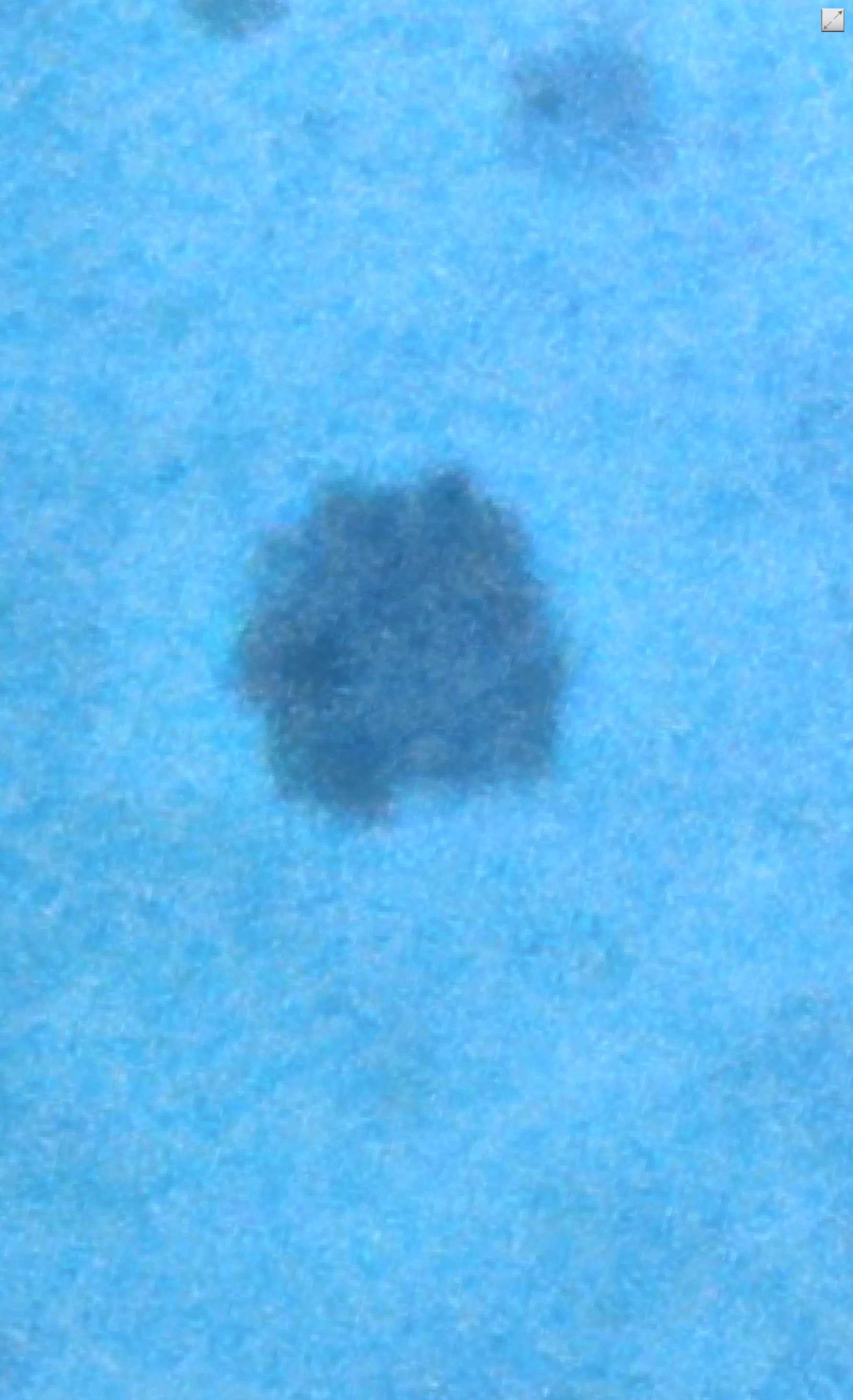
What can be seen under ultraviolet light?
For a more specialized check, I observe the lesion under ultraviolet light at a wavelength of 365 nm. Under this light, lentigo sometimes shows a pattern in which the surrounding area actually glows white, and adding the characteristic texture felt by eye, I judge it to be solar lentigo. This kind of reading does not become familiar overnight; it takes hold only with accumulated experience of seeing many cases over and over. I have explained in more detail how dermatologists read pigment in How a dermatologist assesses pigment.
Seborrheic keratosis and lentigo: what is the difference?
Putting the differences in the nature of the two kinds of pigment side by side, they can be summarized like this.
| Category | Seborrheic keratosis | Lentigo |
|---|---|---|
| Surface texture | Feels bumpy | Smooth |
| Findings under UV light | Not distinct | The surrounding area may glow white |
| Main approach | Removed relatively easily with an Er:YAG laser or similar | Approached carefully, taking wavelength into account |
| Recurrence and hyperpigmentation | Generally not a major concern | Risk varies depending on the method |
Seborrheic keratosis is removed relatively easily with methods such as an Er:YAG laser, and recurrence or hyperpigmentation is generally not a major concern. The problem is lentigo.
What can happen if you simply burn off lentigo
If lentigo is handled with a laser that simply burns it away, things can drift toward not only recurrence and hyperpigmentation but also a worsening of the melasma lying underneath.
Lentigo has a histological background in the epidermal layer that keeps it from being erased by simple toning alone, so the choice of wavelength determines the outcome. I have covered this in more depth in Why lentigo is not erased by simple toning and Why I consider wavelength first when choosing a laser for lentigo. If the area is handled clumsily and ends up worse than it was at first, it can eventually take more time and cost. That is why, for lentigo in particular, I say that diagnosis is half of the treatment.
If you have any questions, feel free to ask through consult via chat now.
How does lentigo change if left alone?
Left as it is, lentigo tends to spread gradually and darken rather than disappear. There are individual differences, but it is known to roughly double in size over about 6 years, and the larger it becomes, the trickier it is to handle. At our clinic, when lentigo is diagnosed, we treat the lesion using the Reepot laser, and the wider the lesion, the more care recovery management requires. I have summarized the course after treatment in How I view the recovery period after removing lentigo, and if you are curious about the device itself, you can refer to the Reepot laser information page. The cost varies depending on the size and condition of the lesion, so we will let you know after a consultation.
If you are wondering whether to postpone because of the season
Some people are bothered by pigment but hesitate, wondering whether they should put off treatment because it is summer. Here, too, rather than postponing unconditionally, I tend to check the wavelength and the state of the lesion first; I have shared my thoughts on this in When you ask whether pigment treatment should be postponed in summer.
To sum up, when you face a round spot of pigment that has appeared on your face, what you need first is not a strong laser but an accurate diagnosis, because the direction changes completely depending on whether it is seborrheic keratosis or lentigo. I believe that reading the feel under the fingertips together with the findings under UV light to name the lesion, and only then discussing treatment, is ultimately the way to reduce the risk of recurrence and hyperpigmentation. If you are wondering whether the pigment on your face is seborrheic keratosis or lentigo, you are welcome to ask first via Consult via chat.
Author: Dr. Cho Mingyeol, Medical Director (board-certified dermatologist; Master Certification in Pigmentation, Acne, Rosacea and Hair from the Korean Dermatologists Association). You can find the full profile on the Medical Team page. First published 2024-11-11 / Last reviewed 2026-07-09
This article is intended for general information only; the appropriate treatment and outcomes may vary depending on each individual's condition.