

When consulting about pigmentation in the clinic, I often meet cases where pigmentation of different natures has settled on a single face at the same time. The female patient in her late 60s I am introducing this time was one such case. On one cheekbone there was a lentigo that had kept recurring for more than 10 years, and on the other side there was overlapping pigmentation left after a procedure she had received elsewhere.
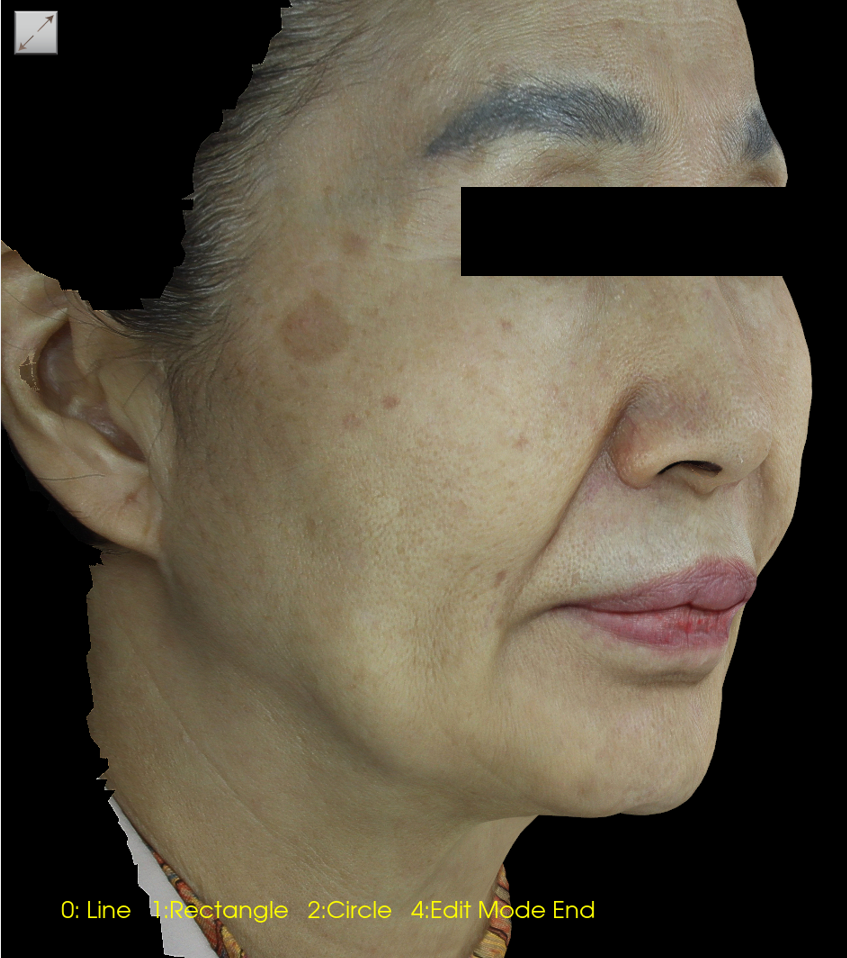
Why did this lentigo keep coming back for 10 years?
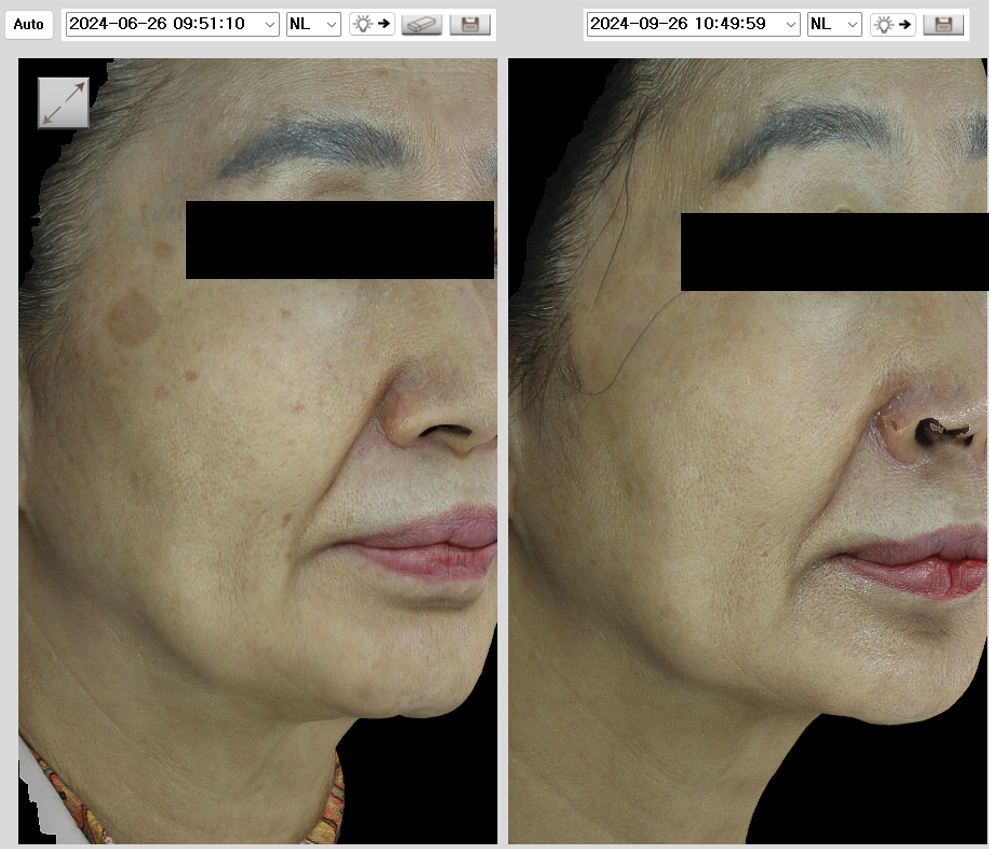
The pigment on the right cheekbone visible in the first photo was a lentigo that had stayed in place and resurfaced despite several treatments elsewhere in the past. A lentigo is pigmentation that forms when melanocytes beneath the epidermis are activated, and in the clinic it is commonly observed that if only the surface is lightly erased, the background remains and the spot darkens again over time.
That is why, when dealing with lentigo, I look at the wavelength before the name of the device. The approach differs depending on whether the pigment stays in the epidermis or extends into the dermal background. I have a post that covers this histologically, so if you are curious why lentigo does not clear well with simple toning alone, you may also want to read a record of looking at lentigo through histology.
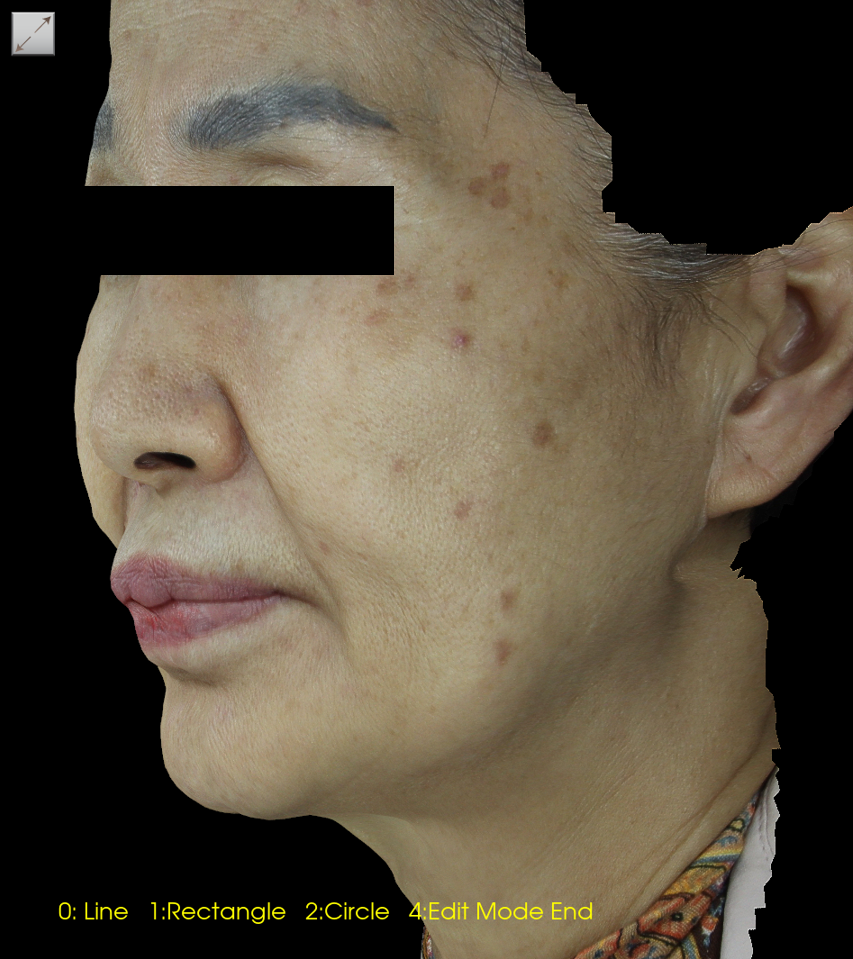
The pigmentation left on the other side was of a different nature
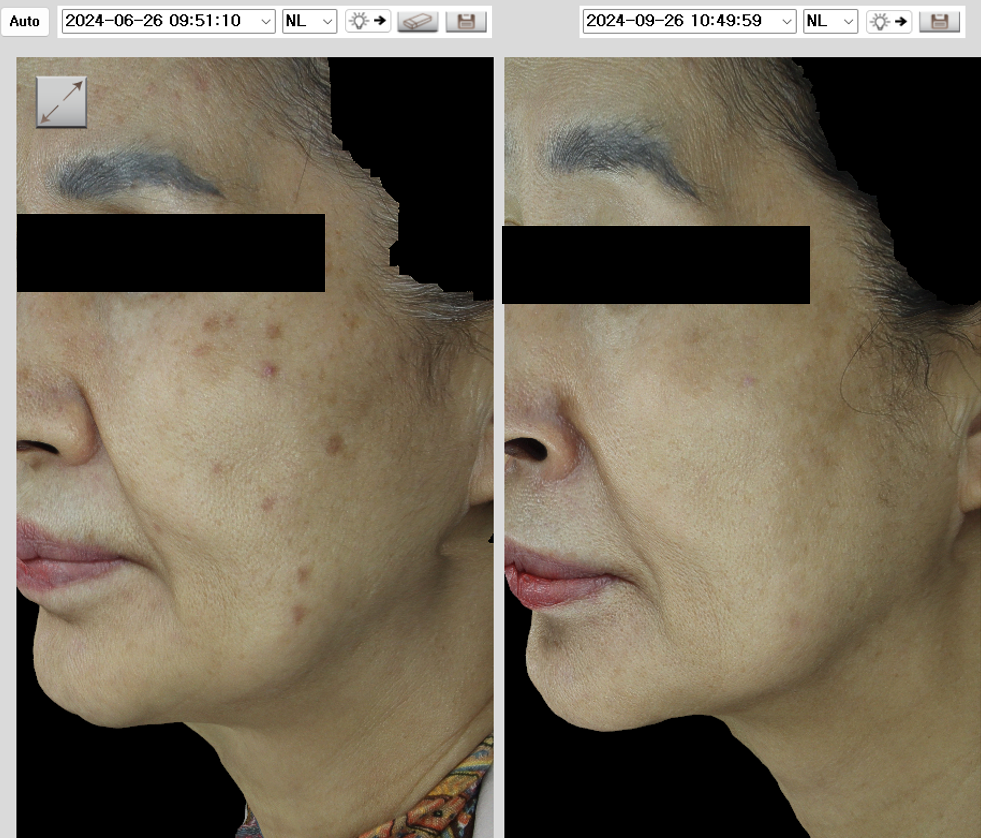
The pigment on the other cheek was different in character from the lentigo. It showed a pattern of post-inflammatory hyperpigmentation, in which pigment settled as the inflammation subsided after she had a milia removal procedure at a general clinic. The patient said she had chosen that procedure at the time because the cost was low, and she was upset, saying she never expected this kind of pigmentation to remain.
Although they were on the same face, the two types of pigment differed both in cause and in the direction they needed to be treated. Here is a summary of the criteria I use in the clinic to distinguish the two.
| Category | Right cheekbone | Opposite cheek |
|---|---|---|
| Nature of pigment | Long-recurring lentigo | Pigmentation left after a procedure |
| Main background | Melanocyte activation | Area where inflammation has passed |
| What I look at in the clinic | Wavelength and depth | Early calming and timing of care |
With post-inflammatory hyperpigmentation, how much color remains often depends on when early care begins. I have written about this in more detail in a record on early care of post-inflammatory hyperpigmentation.
How do I tell lentigo and other pigmentation apart?
Even with the same brown spot, I divide them into several types in the clinic. Since it is often hard to judge by eye alone, I examine brightness, borders and depth together.
- Is it pigment that stays shallow in the epidermis, or pigment that extends down into the dermal background?
- Is the color uniform, or are the edges spreading?
- Is there a history of previous treatment, and how did it respond afterward?
This process of distinguishing pigment is itself what determines the direction of treatment. If you would like to know more about how dermatologists distinguish pigmentation, please refer to my post on how I assess pigmentation in the clinic. If you are wondering which type your pigmentation is closer to right now, feel free to ask via Consult via chat now.
How things changed after treatment
For this treatment, I used the Reepot Laser. I approached the lentigo and the pigmentation separately, adjusting the wavelength and intensity to suit the nature of each, and made adjustments while monitoring the recovery process.
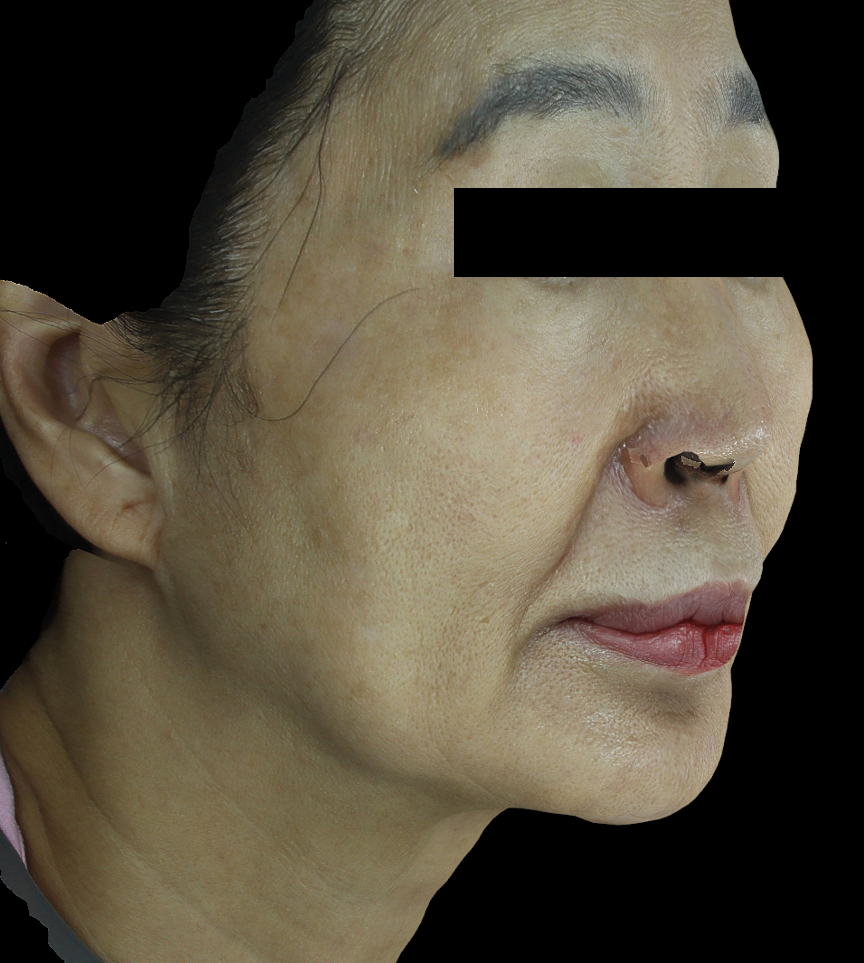
For reference, the photo above was taken with Meta-Vu, which photographs the face and combines the images in 3D, so some slight distortion may occur if there is movement during capture. Please keep that in mind when viewing it. After treatment, the lentigo on the right cheekbone became noticeably lighter.
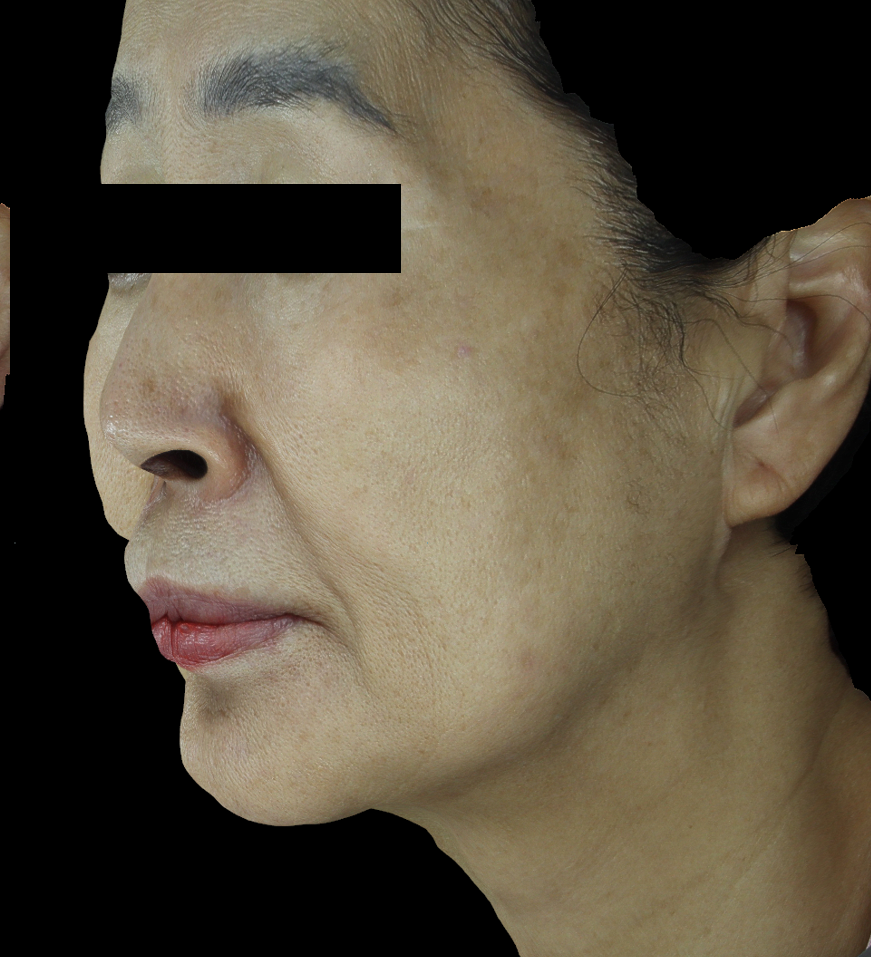
The pigmentation, melasma and blemishes on the other side also showed considerable improvement. However, the speed and degree of recovery vary between individuals, so even with the same treatment, results may differ from person to person. Comparing before and after side by side makes the change easier to see.
A remark I often hear from people who have had pigmentation treatment
There is something I often hear from people who have completed pigmentation treatment.
It's great that the color has faded, but my skin also seems to have gained some firmness.
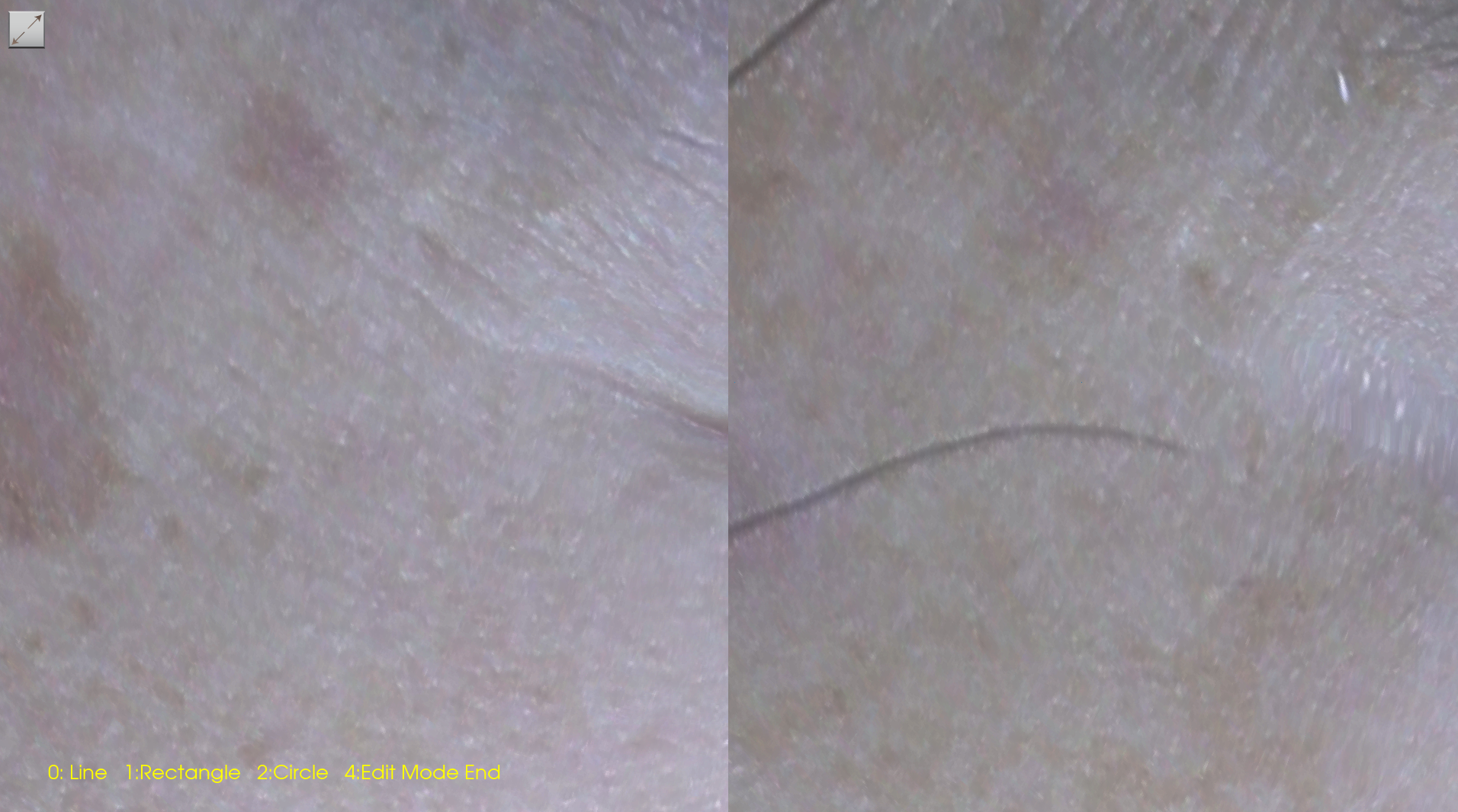
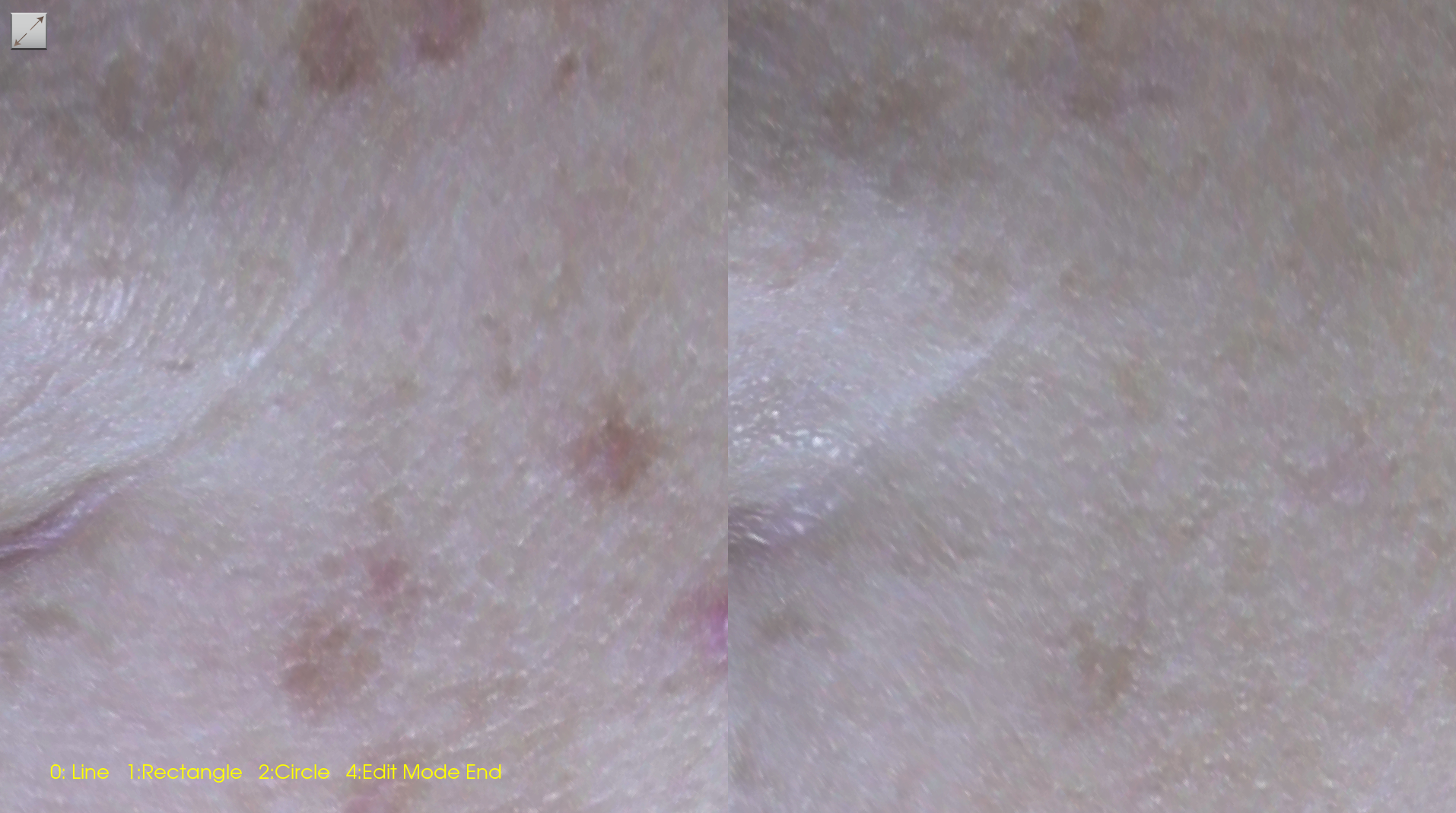
I have separately summarized why changes in skin texture come along with the process of treating pigmentation, and the principle behind it. If you are curious why pigmentation treatment is not simply a matter of removing color, I recommend reading a record of why I do not stop at pico toning alone.
One thing I want to emphasize again
As with this patient, it is not uncommon in the clinic for people to come back after receiving pigmentation procedures elsewhere and being left with problems such as hyperpigmentation. Rather than deciding based on cost alone, I believe starting by distinguishing the nature of the pigment is the way to shorten the long road of recurrence and hyperpigmentation.
Care after removing a lentigo is as important as the result itself. I have covered how I view the recovery period after treatment in a record summarizing the direction of recovery care after lentigo removal. If lentigo or pigmentation has bothered you for a long time, I recommend starting by first examining your current condition.
Consult via chat
The photos used in this post were taken and published with the patient's consent, and unauthorized use is prohibited.
Author: Dr. Cho Mingyeol, Medical Director (board-certified dermatologist; Master Certification in Pigmentation, Acne, Rosacea and Hair from the Korean Dermatologists Association). You can find the full profile on the Medical Team page. First published 2024-10-07 / Last reviewed 2026-07-09
This article is intended for general information only; the appropriate treatment and outcomes may vary depending on each individual's condition.