

A female patient in her early 30s came to the clinic because of pigment scattered across her face. Near her right eye there was a large lentigo that caught the eye at a glance, and a fairly large lentigo was also seen above her right eyebrow. On the left side of her face the color was somewhat lighter, but multiple lentigines were spread across it. She said they were hard to hide even with makeup, and after worrying about them for a long time, she had decided to have them removed.
Multiple lentigines like these are one of the patterns I often meet in the clinic. Today, following this patient's treatment course, I would like to summarize as a case how I look at lentigines and in what order I approach them.
Unlike melasma or faint blemishes, lentigines often have relatively well-defined borders and color clustered densely. Because the melanin sits within the skin rather than as color resting on the surface, the outline often shows through even when you layer on heavy cover makeup.
It is also common for patients to confuse lentigines with seborrheic keratosis or melasma. This is because they are hard to distinguish by visible color alone, and the treatment direction changes depending on the depth and form in which the pigment has settled. I have covered this distinction in more detail in my post summarizing pigmentary conditions easily confused with seborrheic keratosis and my post on what to check first when you have seborrheic keratosis and lentigines.
| What patients commonly confuse | What I mainly examine in the clinic |
|---|---|
| Lentigo and seborrheic keratosis | Borders, thickness, surface texture |
| Lentigo and melasma | Depth and distribution of the pigment |
| Lentigo and freckles | Size, number, history of sun exposure |
Why I use the Reepot laser to treat lentigines
Even for lentigines that have developed in multiple places on the face like this, I use the Reepot laser, which is designed for the purpose of treating lentigines. The Reepot laser rapidly lowers the skin temperature during treatment and is designed to reduce the stimulation of and potential damage to surrounding blood vessels. Accordingly, it is reported to help reduce reactions such as redness. However, the degree of reaction and the speed of recovery vary between individuals.
If you are curious about how the laser acts on lentigines, starting from the histological background, I recommend reading my post on the histology of lentigo treatment together with my post on how the Reepot laser works. If you are curious about the device itself, you can also find information in the Reepot laser introduction.
Treating lentigines is not a job that ends with removing the color. In my view, what determines the result is how the treated area heals and how it is managed afterward so that the pigment does not come back.
Lentigines on the right cheekbone and eyebrow: how did they change after treatment?
Let's look together at how they changed after treatment.
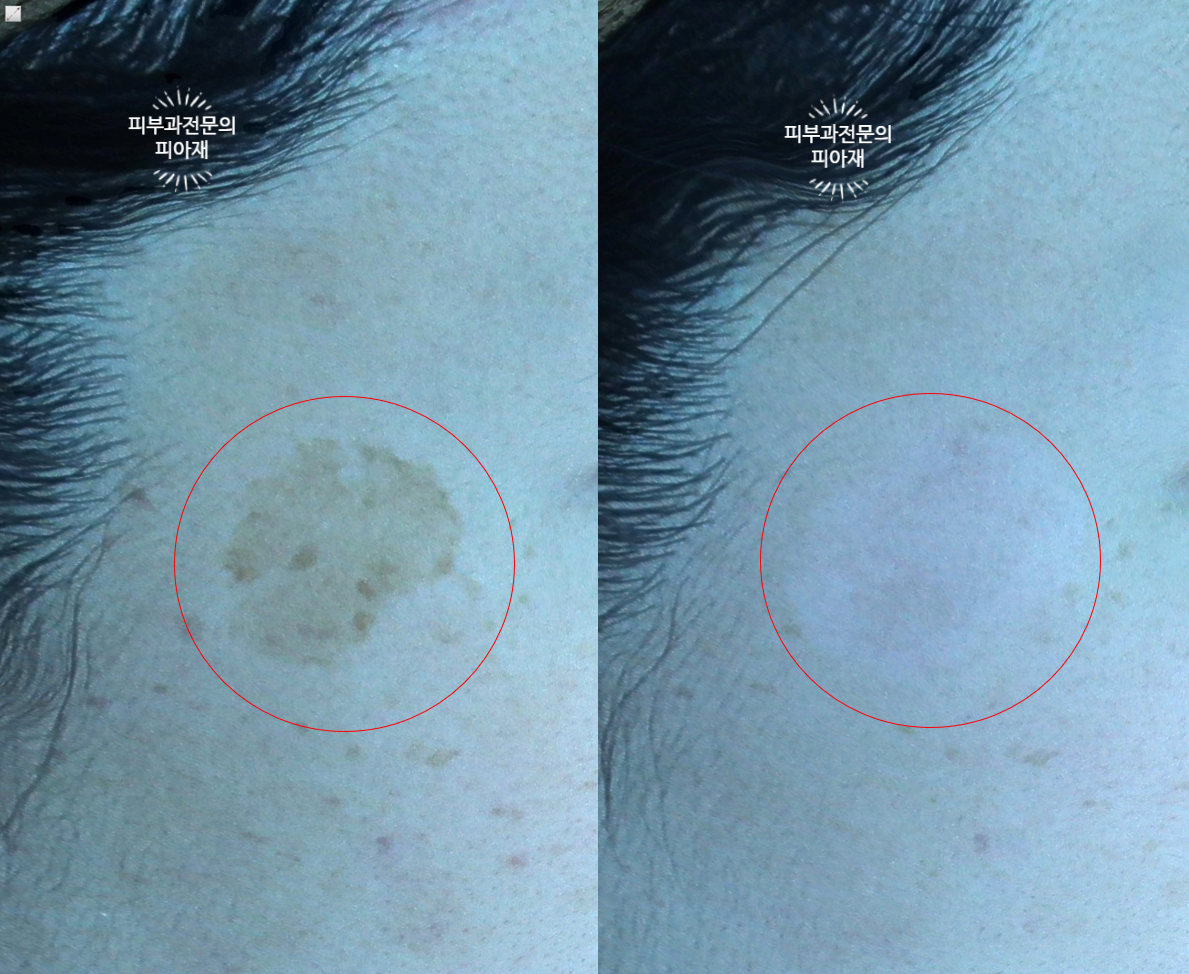
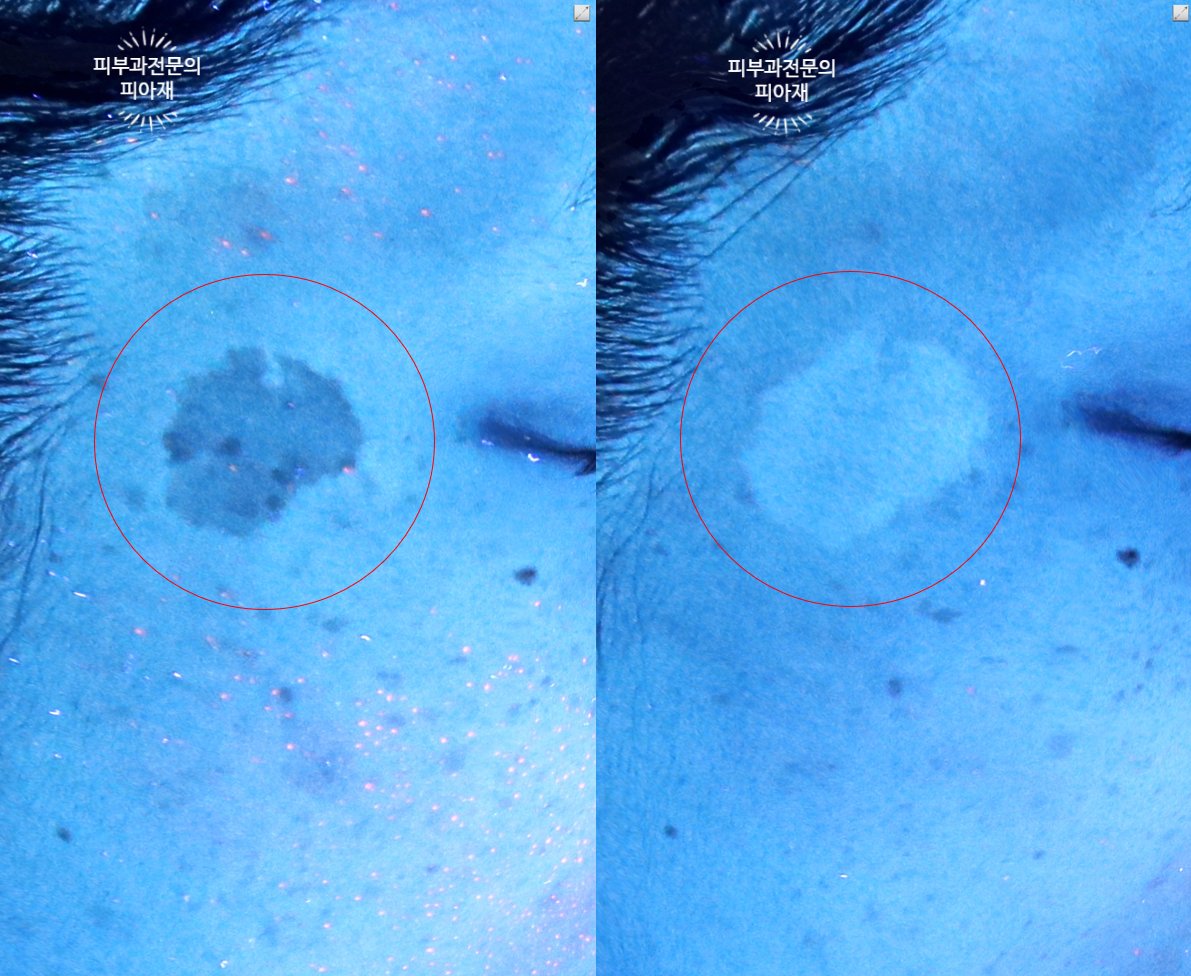
The lentigo on the right cheekbone faded noticeably. The slight redness that remains often settles over time, though this too varies between individuals. When checked under a UV light source, the lentigo area was also observed to have cleared.
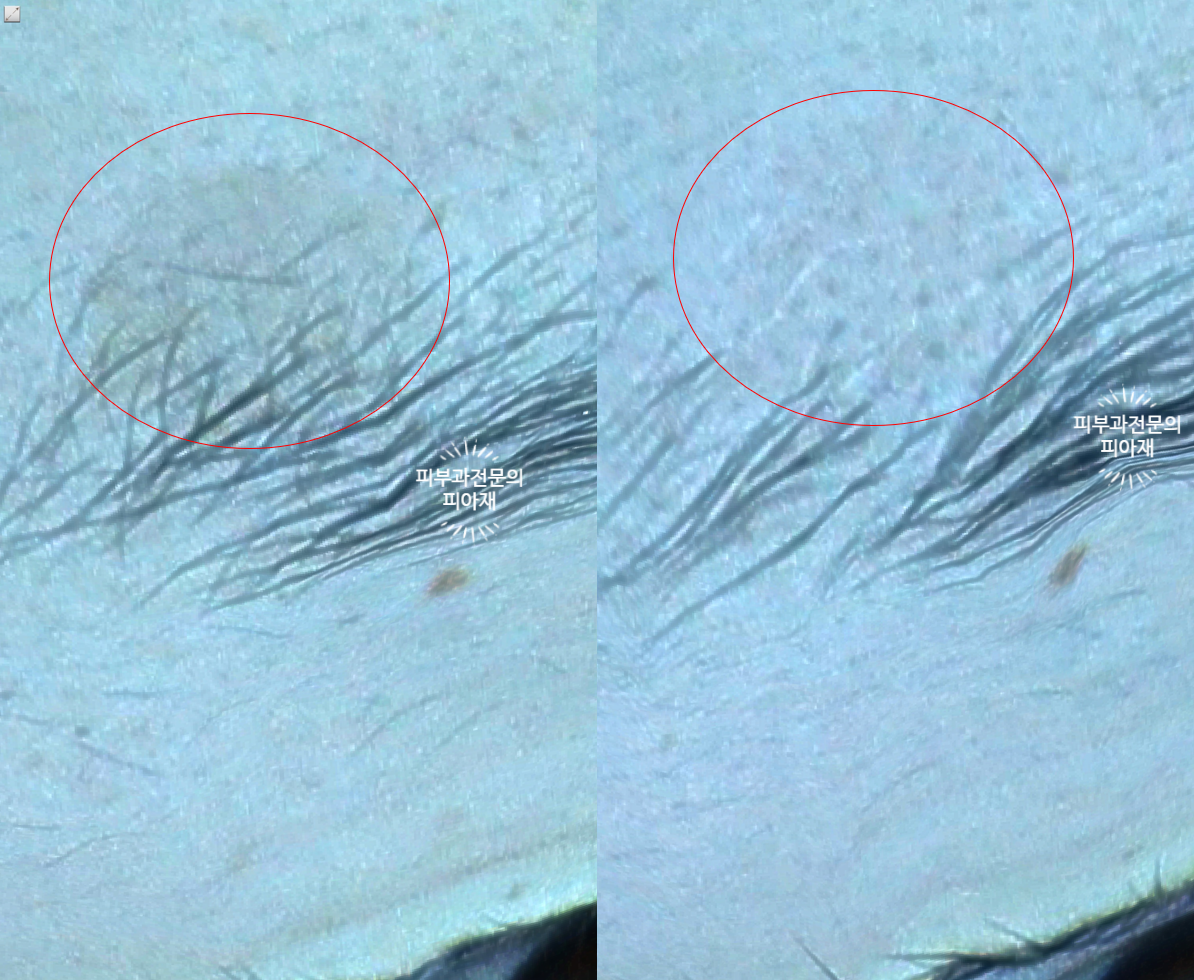
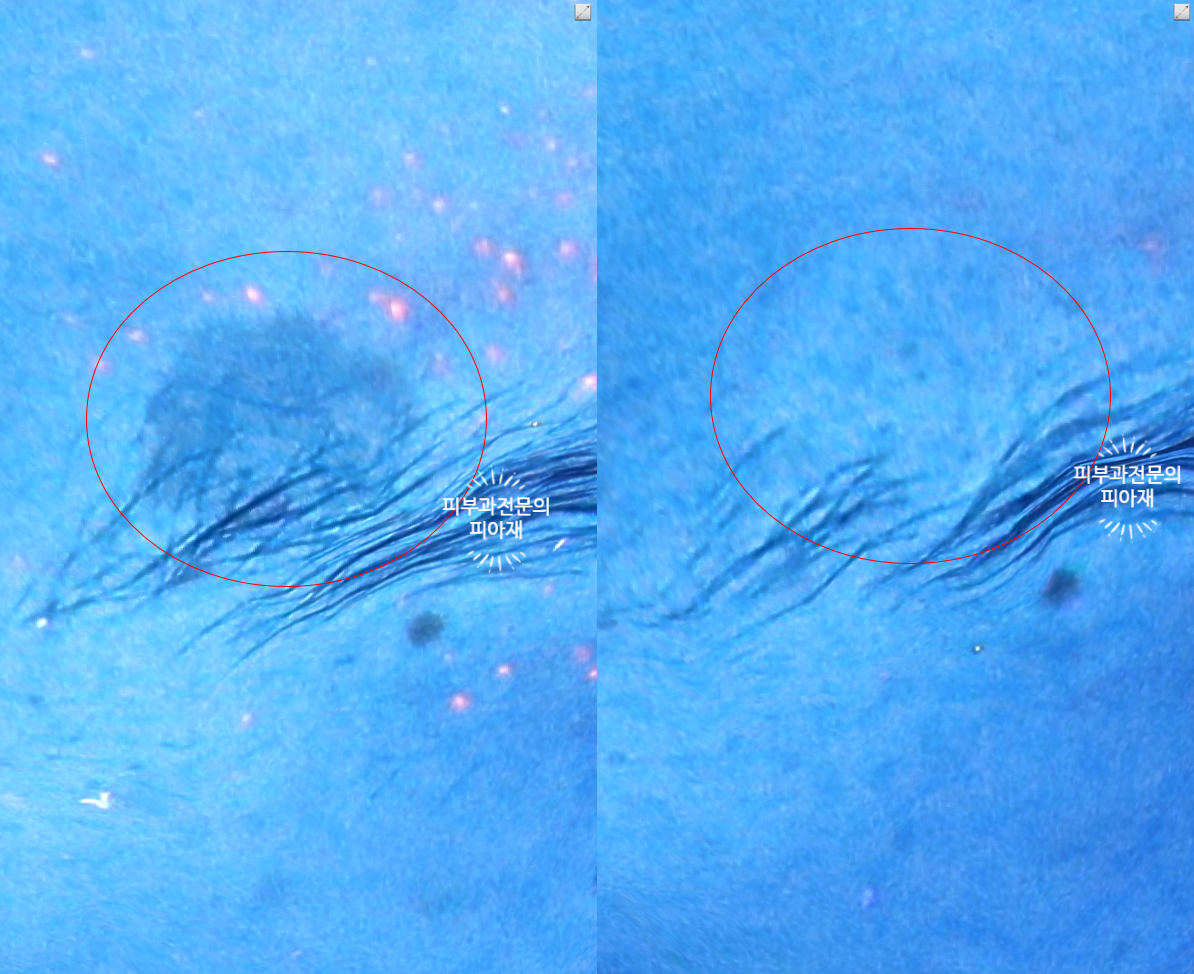
The lentigo in the right eyebrow area also appears noticeably cleared after treatment.
The criteria I follow, in order, when looking at lentigines can be briefly summarized as follows.
- First, I check the depth and borders of the pigment
- If color and thickness differ by area, I assess the response separately
- I explain the recovery process, such as redness or pigment changes, in advance
- I also discuss UV management to reduce recurrence after removal
If you have any questions, feel free to ask through Consult via chat now.
How were the multiple lentigines on the left cheek cleared?
How did the left cheek, where many faint spots were spread out, change?
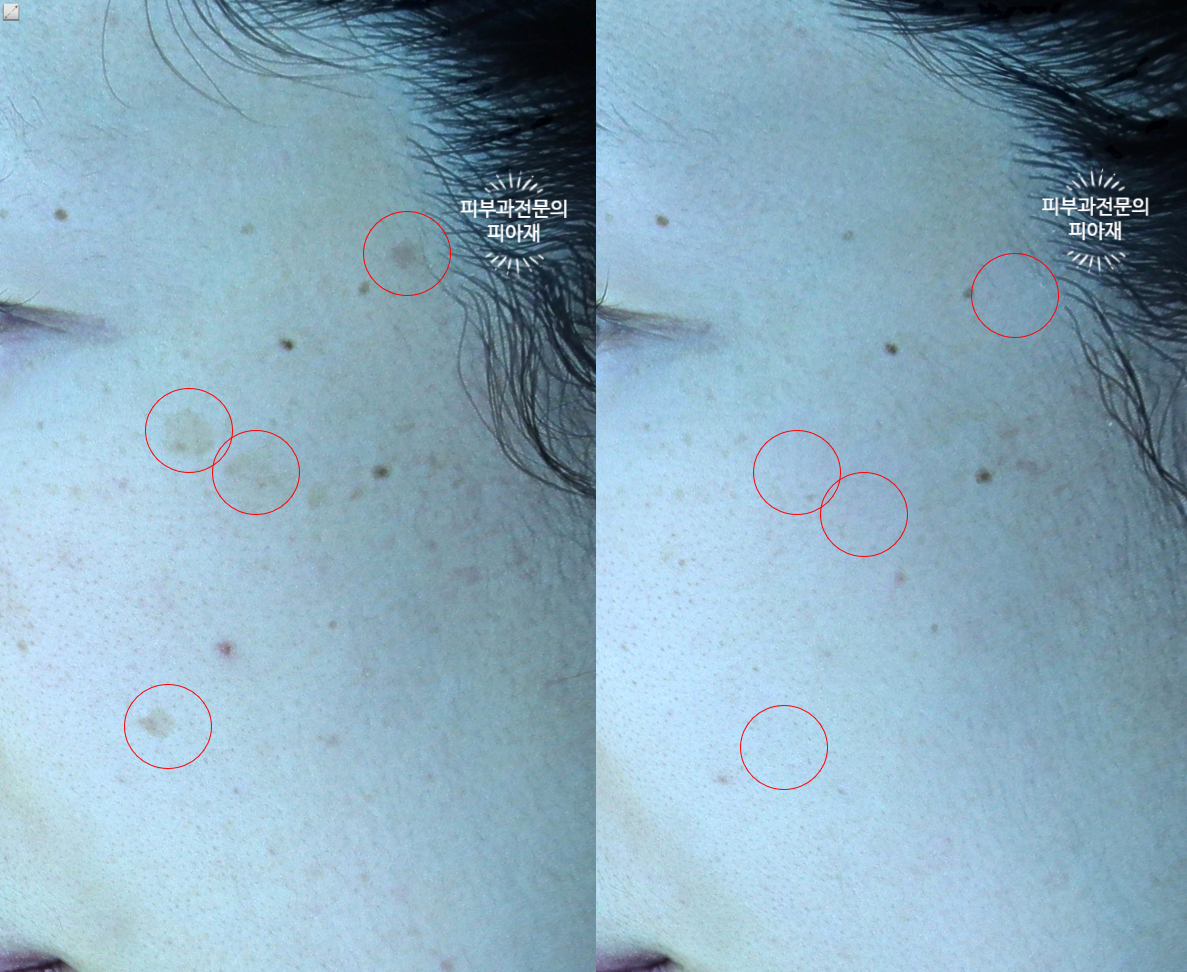
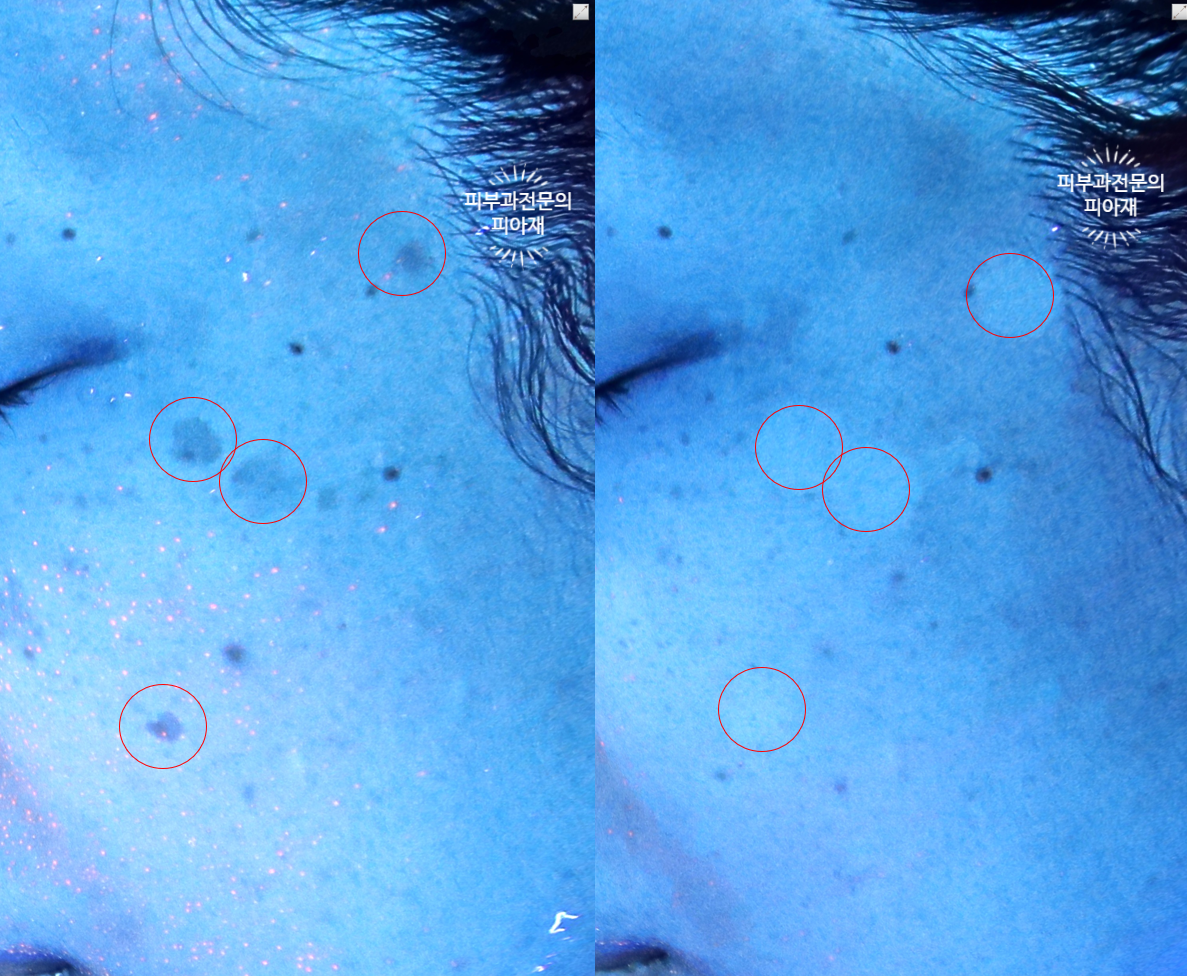
The multiple lentigines scattered on the left cheek were also cleared after treatment to the point where traces are hard to find. In this way, even lentigines spread across several areas of the face can be addressed by approaching each area separately. However, the number of sessions needed and the course differ from person to person depending on the depth and number of pigmented spots and the skin condition.
After removing lentigines: what I ask of patients during recovery
As I mentioned earlier, in lentigo treatment, what comes after matters more than the moment the color is removed. A freshly treated area becomes especially sensitive to UV light, so if care slips during this period, color can come back through reactions such as post-inflammatory hyperpigmentation.

How I view the recovery period and what I ask of patients are explained in more detail in my perspective on the recovery period after removing lentigines. If you are curious about a case in which I took a different clinical approach to a lentigo that toning could not clear, a front-cheek lentigo that toning could not clear, and why I changed direction may also help.
If lentigines concern you
Whether they are multiple lentigines that have appeared across the face or dark lentigines that makeup could not hide, examining them area by area in the clinic makes it possible to set a direction. However, the first step is to accurately determine whether the pigment on your face is a lentigo, seborrheic keratosis or melasma. Because it is often hard to judge by eye alone, I recommend having your actual skin checked before deciding on a direction.
If you are curious about lentigo treatment or need a consultation about what type of pigment you have, please contact us below. Costs will be explained through a consultation after your condition has been assessed.
Consult via chatThe photos used in this post were taken and published with the patient's consent and may not be used without permission.
Author: Dr. Cho Mingyeol, Medical Director (board-certified dermatologist; Master Certification in Pigmentation, Acne, Rosacea and Hair from the Korean Dermatologists Association). You can find the full profile on the Medical Team page. First published 2024-08-26 / Last reviewed 2026-07-09
This article is intended for general information only; the appropriate treatment and outcomes may vary depending on each individual's condition.