

"My face looks dull every time I look in the mirror," "My blemishes stand out more." I hear these concerns really often in the clinic. In those moments, rather than immediately answering which brightening cosmetic is good, I first look together with the person at which stage of the process by which melanin is made and disappears has a problem. This is because each ingredient works at a different point.

Today I would like to explain three representative ingredients that help skin tone, divided by stage. Rather than blindly applying all of them, it is far more efficient to choose after knowing which stage your concern is closest to.
What lies behind dullness is ultimately melanin
The identity of the pigment that darkens skin tone is melanin. It is a familiar name, but the process by which melanin settles in the skin is not simple.
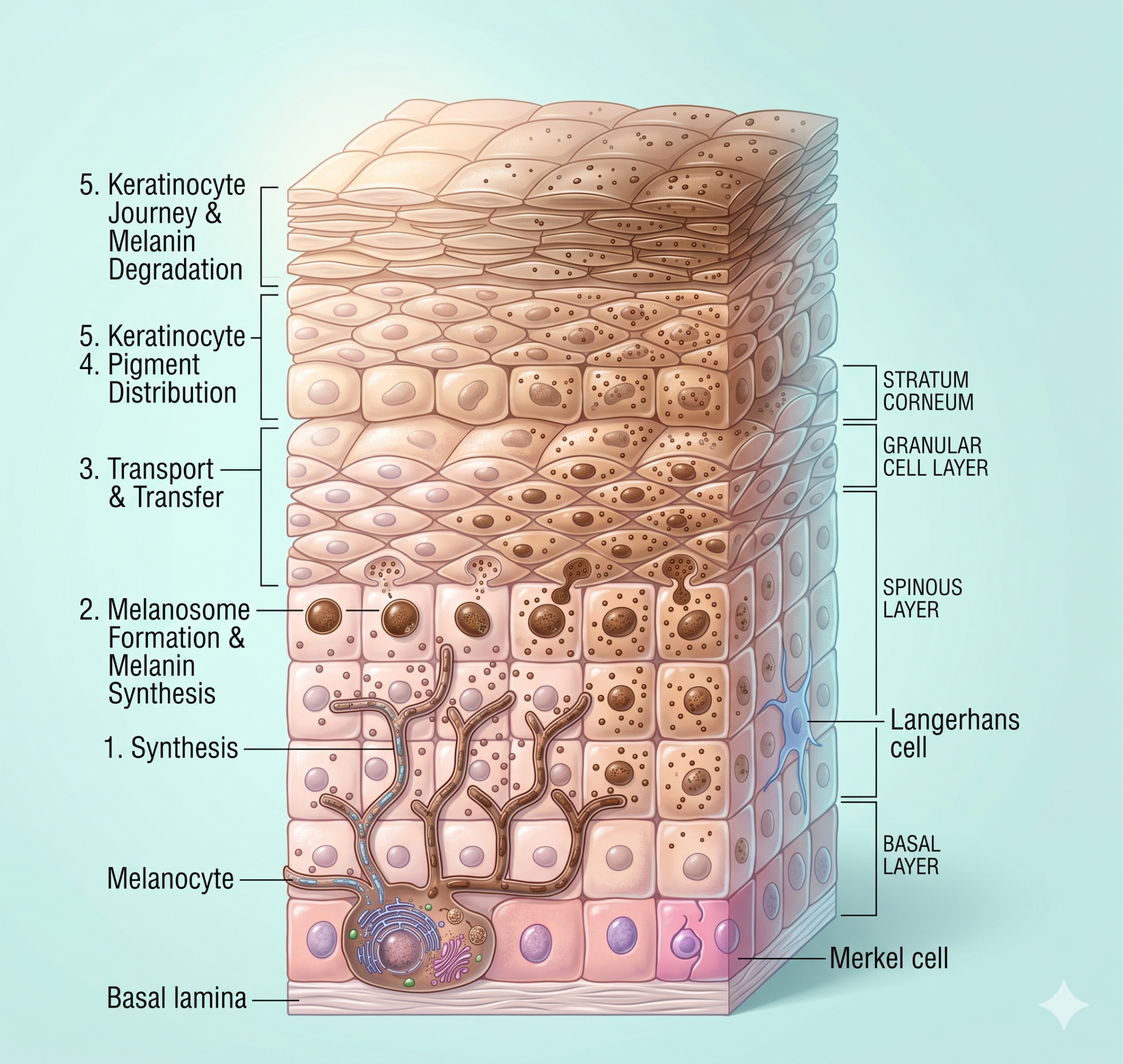
Melanin goes through three broad processes: production, transfer and shedding.
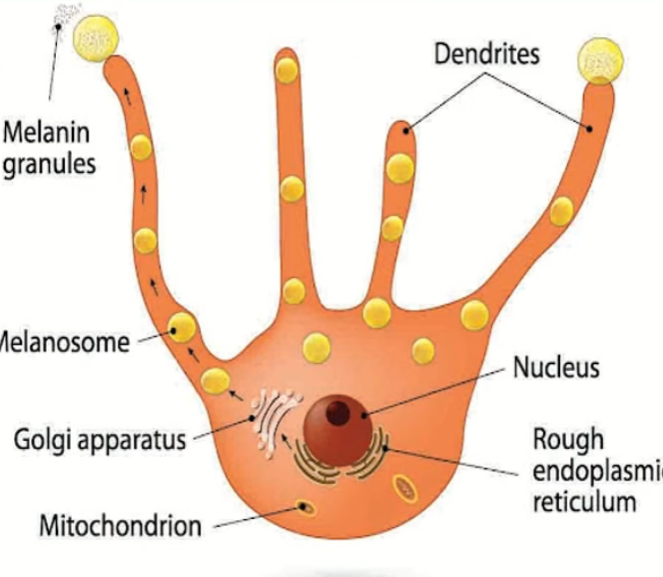
Looking a little more closely, in the basal layer, the lowest layer of the epidermis, melanocytes make pigment, pack it into packaging units called melanosomes, and transfer it to epidermal cells (keratinocytes). In other words, the place where pigment is made and the place where it is visible are different. I have covered this concept of layers a little more in my post on how to look at pigment according to epidermal and dermal depth.
The ingredient that acts at the production stage: vitamin C
Now let us divide production, transfer and shedding and look at which ingredient works at which point. Inside the melanocyte, pigment is made through several steps, including an oxidation process.
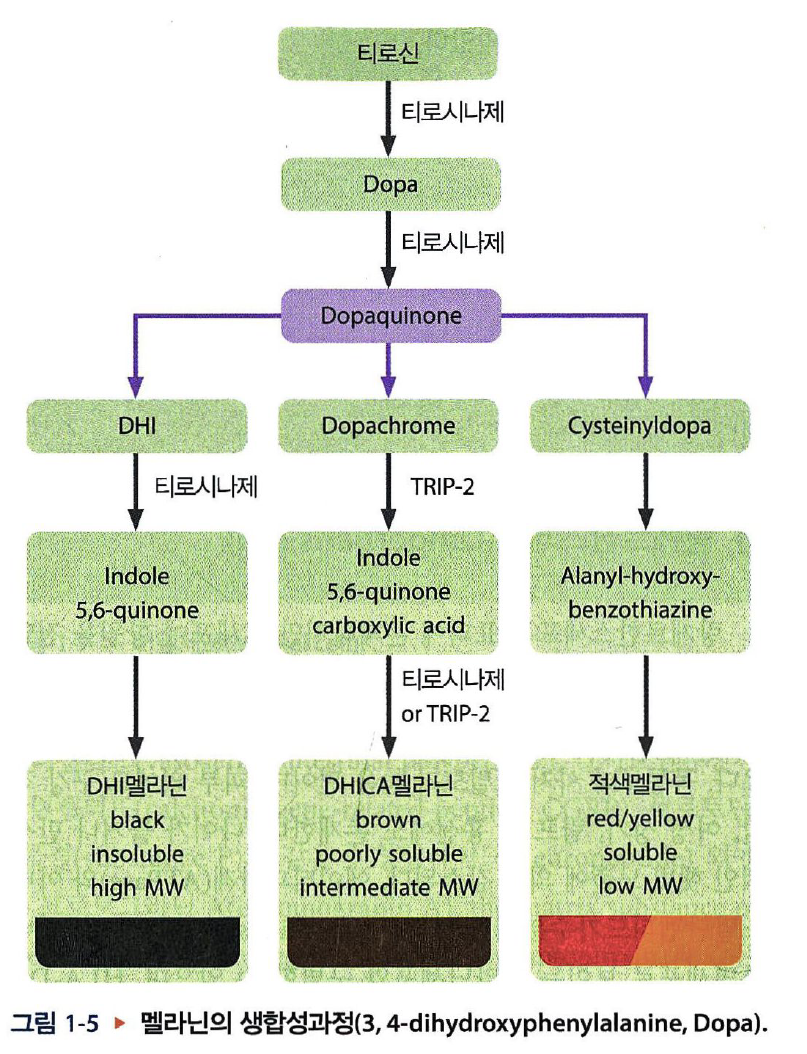
As in the figure above, melanin is synthesized through several pathways. The pathways themselves are complex, but there is just one point for us to remember: this production stage.
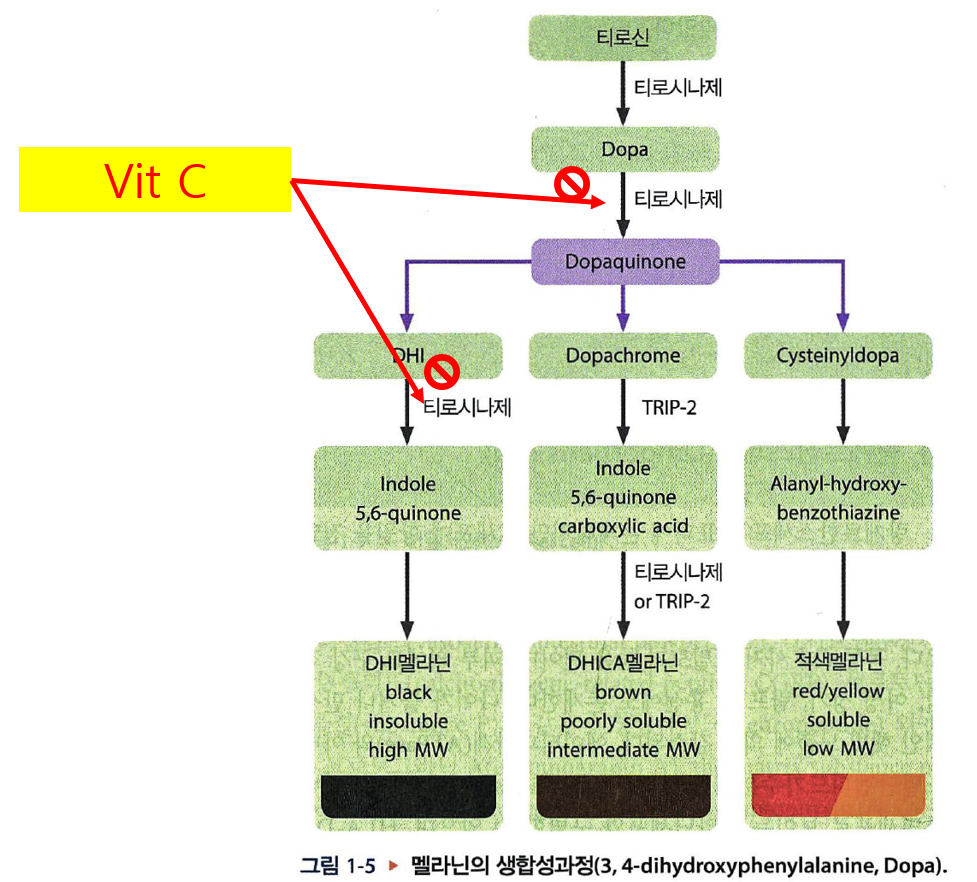
Melanin production takes place inside melanocytes, and the ingredient that helps suppress this process itself so that less pigment is made is vitamin C. It is easy to understand it as catching the point where pigment begins.
The ingredient that blocks the transfer stage: niacinamide
To send the melanin that has been made to its target cells, the keratinocytes, it has to be packed into melanosomes, like packaging a parcel. This pigment is loaded into boxes called melanosomes and transferred toward the epidermis through dendrites.
The ingredient that suppresses the process by which melanosomes are transferred to and taken up by epidermal cells, blocking the route by which pigment rises upward, is niacinamide. Besides skin tone, niacinamide can help in several directions, making it an ingredient that is good to use relatively broadly.
- Helps improve the skin barrier
- Regulates oil balance
- Refines skin texture
The key point is that different ingredients share the work of pigment production and transfer. If you are curious why pigment does not settle down easily, I recommend also reading Everyday care to prevent hyperpigmentation in advance.
Retinoids, which speed up elimination
Melanin pigment arises at the very bottom of the epidermis, is gradually pushed up into the outer stratum corneum, and then sheds off. This process is called the skin's turnover.
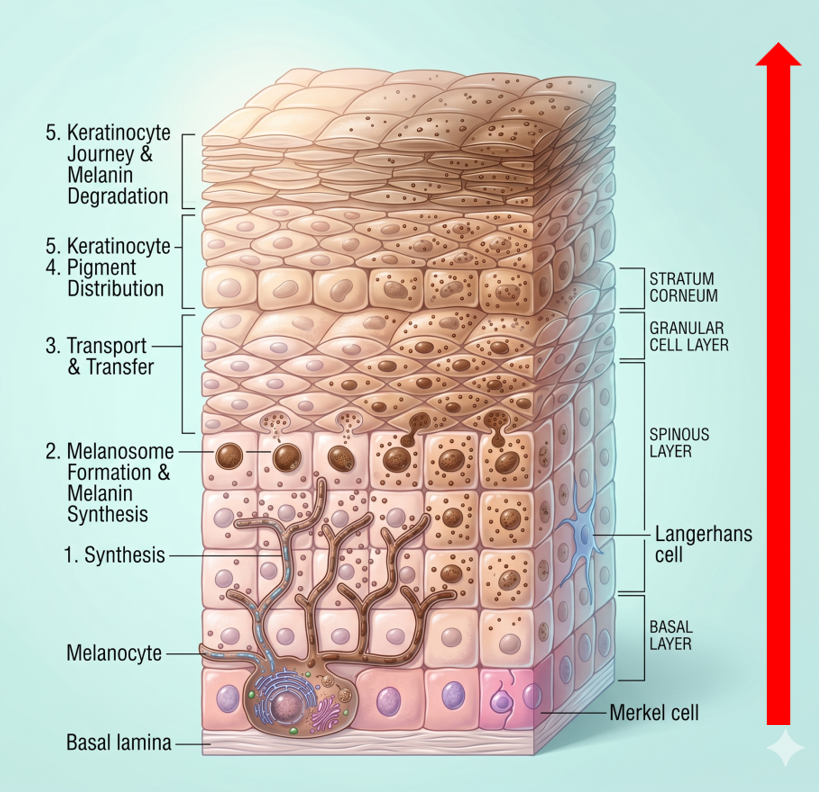
When the turnover rate is increased, the rate at which melanin is eliminated becomes relatively faster than the rate at which it is made, so skin tone looks noticeably clearer. The ingredient involved in this elimination stage is the retinoid. In the long run, retinoids can also be expected to improve skin texture, fine lines and pigment marks.
However, retinoids can be irritating, so particular caution is needed if you have sensitive skin. Also, if you are pregnant or breastfeeding, I strongly recommend consulting a professional before use. Because this varies greatly from person to person, it is safer to check your condition together in the clinic rather than judging on your own.
If there is an ingredient you are curious about, feel free to ask through Consult via chat now.
The three ingredients summarized in one table
Even though they are grouped together as brightening ingredients, the points at which they work differ.
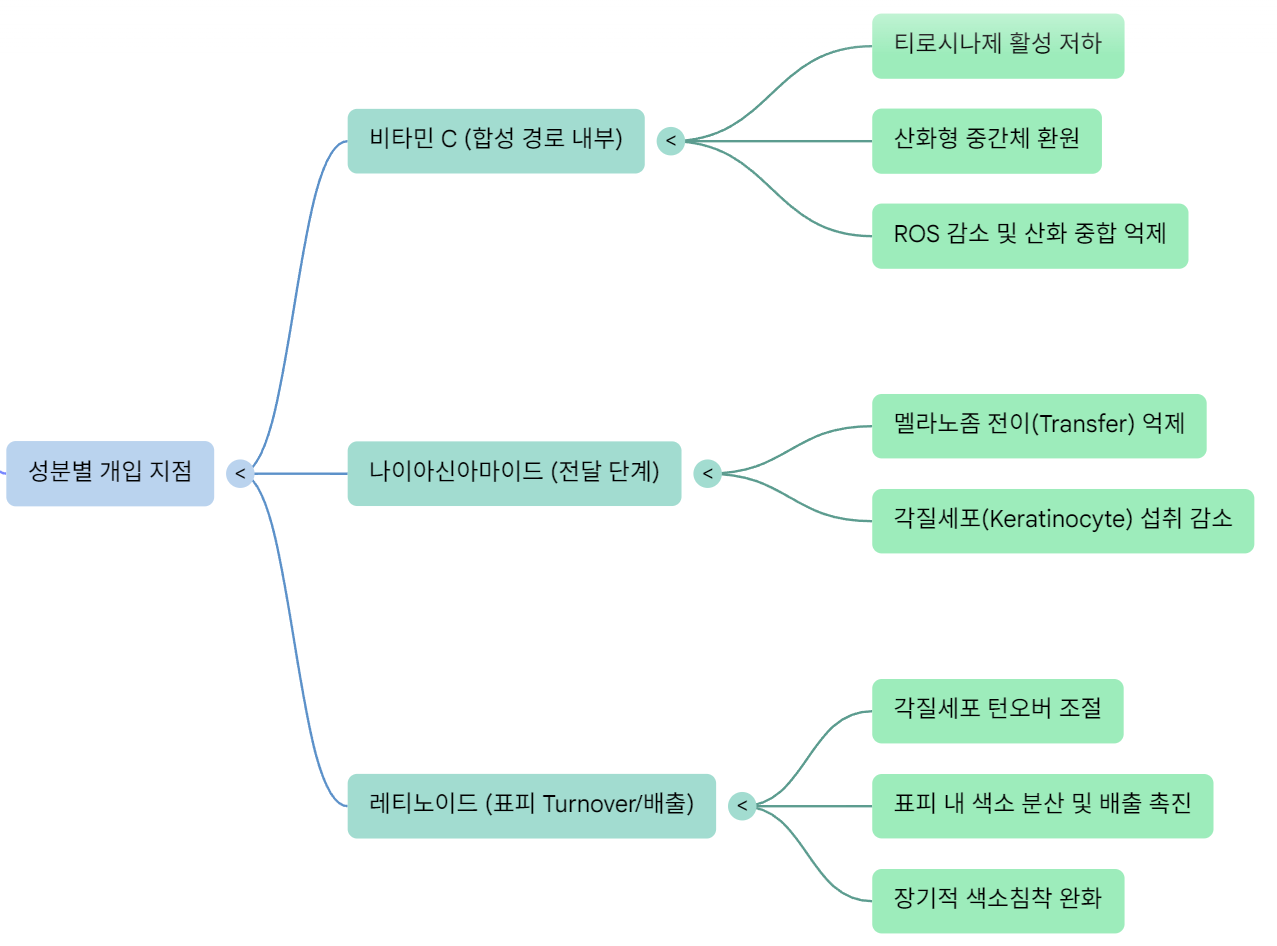
| Ingredient | Stage where it works | Key role |
|---|---|---|
| Vitamin C | Production | Suppresses the process by which melanin is made |
| Niacinamide | Transfer | Suppresses the transfer of melanosomes to epidermal cells |
| Retinoid | Elimination | Promotes turnover to help eliminate pigment |
Dividing them this way lets you set priorities according to which stage your skin concern is closer to. The perspective of understanding pigment by stage continues in my post explaining how pigment is distinguished in dermatology.
How is it best to combine them
Once you know the ingredients, what remains is how to actually apply them. Vitamin C and retinol can cause a stinging sensation, so it is better to start with low concentrations and low frequency. The basic framework I often recommend in the clinic is as follows.
- Use niacinamide every day.
- Alternate retinol and vitamin C about three times a week. Do not apply the two ingredients on the same day.
- On the remaining four days of the week, use niacinamide alone.
What matters here is letting go of impatience.
Changes in skin tone are usually noticeable only after at least 6 to 8 weeks or more of consistent use. Rather than hastily switching products often, maintaining a routine that suits your skin turns out better in the end.
UV is also the biggest variable that undoes all of these efforts. I recommend combining ingredient care with everyday sun protection habits. If combining ingredients is confusing or you cannot tell which stage your skin is at, please use Consult via chat.

Understanding the flow by which pigment is produced, transferred and eliminated comes before memorizing the names of ingredients. If you place the three ingredients on that flow, you will waver far less when choosing cosmetics. Costs are explained after the consultation, and the direction may vary depending on each individual's skin condition.
Author: Dr. Cho Mingyeol, Medical Director (board-certified dermatologist; Master Certification in Pigmentation, Acne, Rosacea and Hair from the Korean Dermatologists Association). You can find the full profile on the Medical Team page. First published 2026-04-15 / Last reviewed 2026-07-09
This article is intended for general information only; the appropriate treatment and outcomes may vary depending on each individual's condition.