

Acne is common. Since it is a skin condition that most people go through at least once, to varying degrees, the things I hear most often in the clinic are similar too: "Doesn't treatment only help for a while?" or "Won't it get better on its own with time?" It is perfectly understandable to think that way. But I would like to offer a slightly different perspective.
Does acne really get better on its own?
There are certainly cases where a single mild pimple disappears without a trace. The problem is that not all acne passes that way. Some acne leaves behind traces that are hard to reverse. So today I would like to lay out the reasons why acne should be addressed rather than put off.
Acne is not just a skin problem
Many studies and academic society materials do not regard acne as a problem confined to the skin. It also affects the mental realm, and it is reported to be associated in particular with a higher likelihood of experiencing depressed mood or anxiety. Of course, the degree varies from person to person.
Comfortably accepting oneself is the foundation of mental health, and acne that lingers on the face often becomes something that shakes that feeling. I, too, remember feeling so withdrawn during my school years because of a face full of acne that I hated looking in the mirror. I often see my younger self again in the expressions of the people I meet in the clinic.

If you are curious about the background of why acne keeps recurring, you may want to first read my post on how acne forms and my post on how diet affects acne.
If the acne on your face is now weighing on your mind as well, I recommend checking your condition first through Consult via chat now rather than judging on your own.
Like a typhoon, what remains where it has passed?
I like to rephrase the saying "acne gets better with time" like this.
A typhoon also passes with time. But it leaves aftereffects where it has passed.
Acne is the same. The problem is not that it passes; the key is what damage it leaves on the skin while it rages. So just as you prepare firmly before a typhoon hits, it is better to deal with acne before it deepens.

Which acne leads to scars?
Not all acne leaves scars. However, when inflammation penetrates deeply, as in pus-filled inflammatory papules, pustules and nodular acne, the dermis is damaged in the process and may not be able to recover to its original state. Where the dermis has collapsed, a permanent acne scar remains.
Depending on the form of acne, the likelihood of it leading to scars generally breaks down as follows.
| Form of acne | Main features | Likelihood of leading to scars |
|---|---|---|
| Comedones (whiteheads and blackheads) | Clogged pores, mild inflammation | Relatively low |
| Inflammatory papules and pustules | Red, swollen and filled with pus | Moderate or higher, depending on care |
| Nodular and cystic acne | Deep, firm and painful | Relatively high, with possible dermal damage |
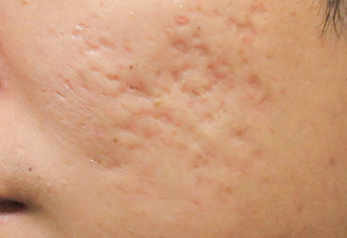
The further down the table you go, that is, the deeper the inflammation, the more important it becomes to calm it early.
Why early treatment ultimately saves time and cost
Acne scars can be treated. When managed well, there are cases where they improve noticeably. Of course, the degree of recovery varies between individuals. But reversing scars that have already formed takes several to dozens of times more time and effort than preventing and treating acne early when it appears.
Here is a summary of why it is advantageous to act early.
- Calming inflammation before it penetrates the dermis can reduce the risk of scarring
- Breaking the cycle of repeated recurrence early can shorten the period of care
- There is room to manage secondary traces such as hyperpigmentation or red marks in advance
- The condition can be stabilized before the emotional burden drags on
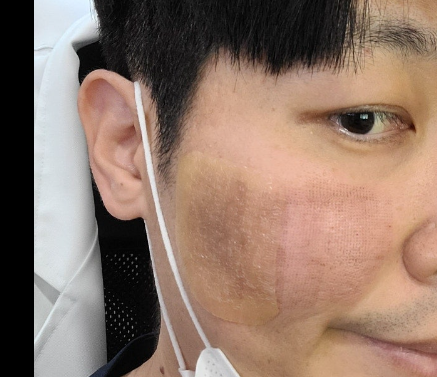
To be honest, I myself am still treating, now and then, the scars left because my acne was not properly treated in the past. I sincerely hope you do not have to walk the same path I did.
What if scars have already formed?
Even if marks have already been left, that does not mean there is nothing to be done. Depressed scars and red marks are approached differently, so the first step is to distinguish your condition. I have explained this in a little more detail in my perspective on treating depressed acne scars and my post on fading red marks left after acne, so I recommend reading them together if you are interested.
The key point is one thing: acne is not a condition to wait for time to resolve, but one that is better addressed in many ways before it deepens. If you cannot tell what stage your condition is at right now, you might first check through Consult via chat. Costs are explained after consultation.
Author: Dr. Cho Mingyeol, Medical Director (board-certified dermatologist; Master Certification in Pigmentation, Acne, Rosacea and Hair from the Korean Dermatologists Association). You can find the full profile on the Medical Team page. First published 2023-08-29 / Last reviewed 2026-07-09
This article is intended for general information only; the appropriate treatment and outcomes may vary depending on each individual's condition.