

People often come to the clinic feeling discouraged every time they look in the mirror or notice the depressed scars on both cheeks in photos. I myself struggled with acne scars for a long time, so I know well what that feels like. Today, as if explaining in the clinic, I would like to go through the principles by which acne scars are treated, and why, among the various options, I tend to bring out CureJet relatively early.
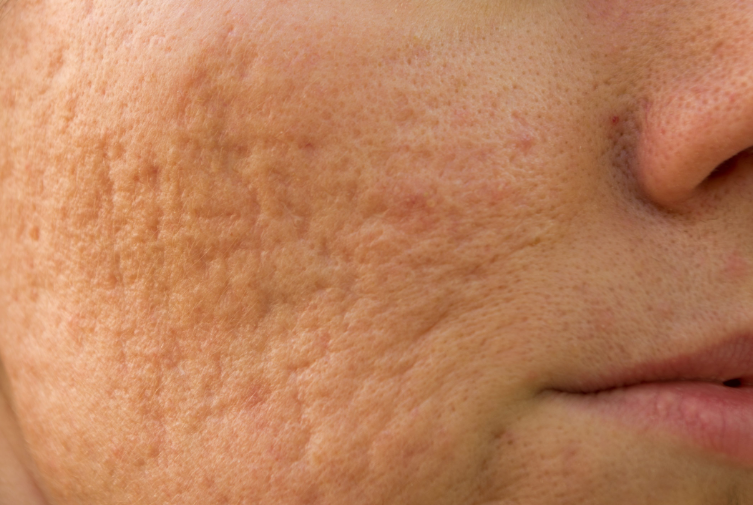
CureJet is a procedure often mentioned in scar treatment these days because it can treat scars while reducing pain and the burden of recovery. It is also used to deliver skin boosters into the dermis, not just for scars, so its uses are fairly broad. However, the effect and response of any procedure vary from person to person, so let us calmly start with the principles.
Delivering medication without a needle
CureJet is a device that pushes medication into the skin using strong air pressure. Its main features can be summarized as follows.
- Because it does not pierce the skin directly with a needle, it is less of a burden for people who are very afraid of injections
- As the practitioner, I find it easier to deliver the medication evenly to the target layer than when injecting by hand
- It helps in cases where it is tricky to place medication such as Juvelook precisely in the dermis
Injecting Juvelook evenly into the dermis by hand alone is harder than you might think. You can understand CureJet as making that process more uniform and helping reduce the burden of recovery.
How does medication get in without a needle?
So by what principle is this kind of delivery possible?
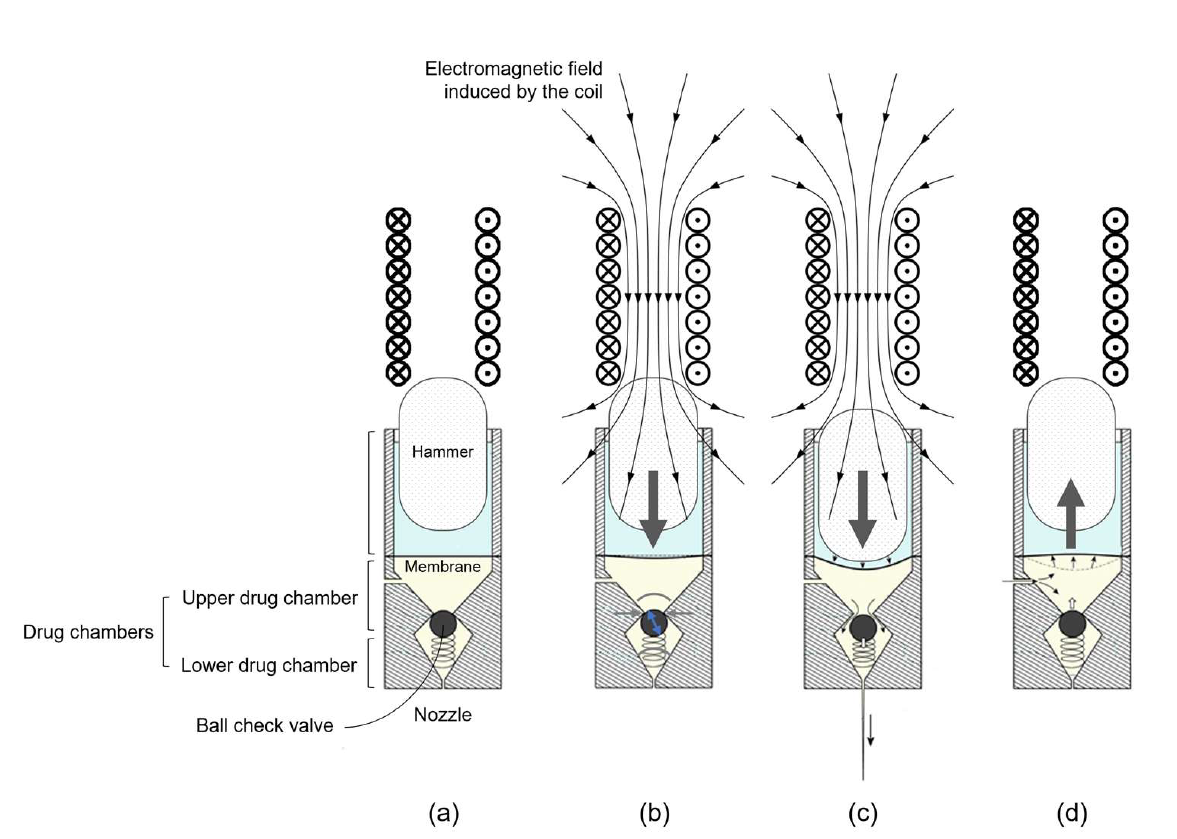
The figure above makes it easy to understand. Using a solenoid, a hammer behind a thin membrane is pushed out forcefully, and the pressure at that moment forms a jet that pushes the medication into the skin. Because of this principle, a small tapping hammer sound can be heard during the actual procedure.
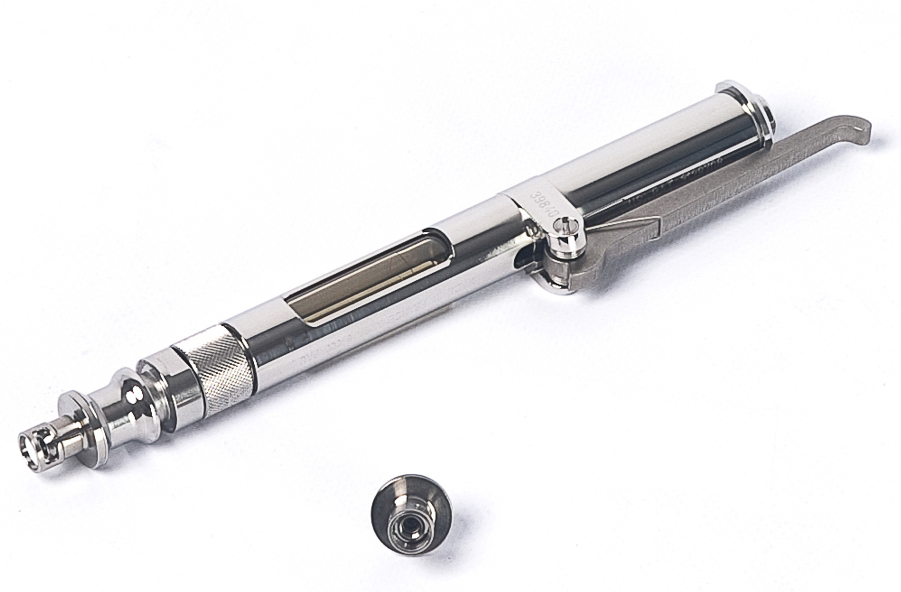
In fact, the concept of a needle-free injection itself is not new at all. During my residency, I sometimes used the Dermojet shown in the photo above to perform intralesional injections for patients who were afraid of needles. Comparing the character of the two devices, it can be summarized like this.
| Category | Dermojet | CureJet |
|---|---|---|
| Method | Manually loaded one shot at a time | Continuous firing |
| Analogy | Single-shot rifle | Automatic rifle |
| Ease of use | Needs reloading every time | The flow of the procedure is not interrupted |
The principle comes from the same lineage, but they differ in how smoothly the procedure flows.
Why do depressed scars need pressure?
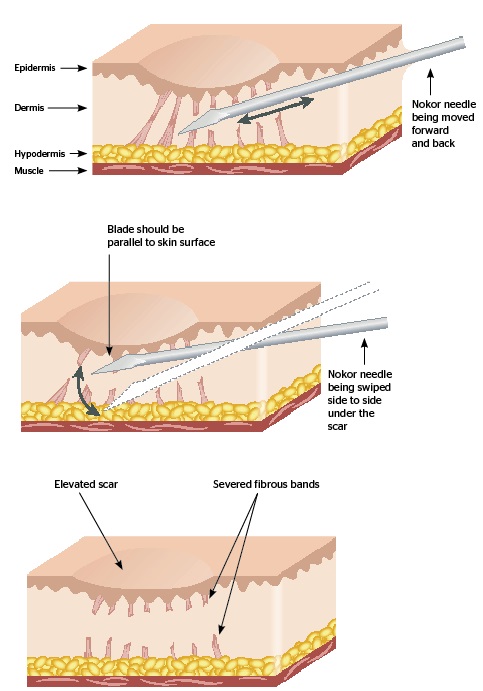
For widely depressed scars such as rolling scars and boxcar scars, the concept of subcision is used. It is a method of physically cutting the tissue that tethers the scar from below to induce collagen production. CureJet can attempt this process relatively quickly and uniformly using jet pressure, and its advantages are said to include relatively little pain during the procedure and rarely reported side effects. Of course, the degree of response varies with the type and depth of the scar and the condition of the skin.
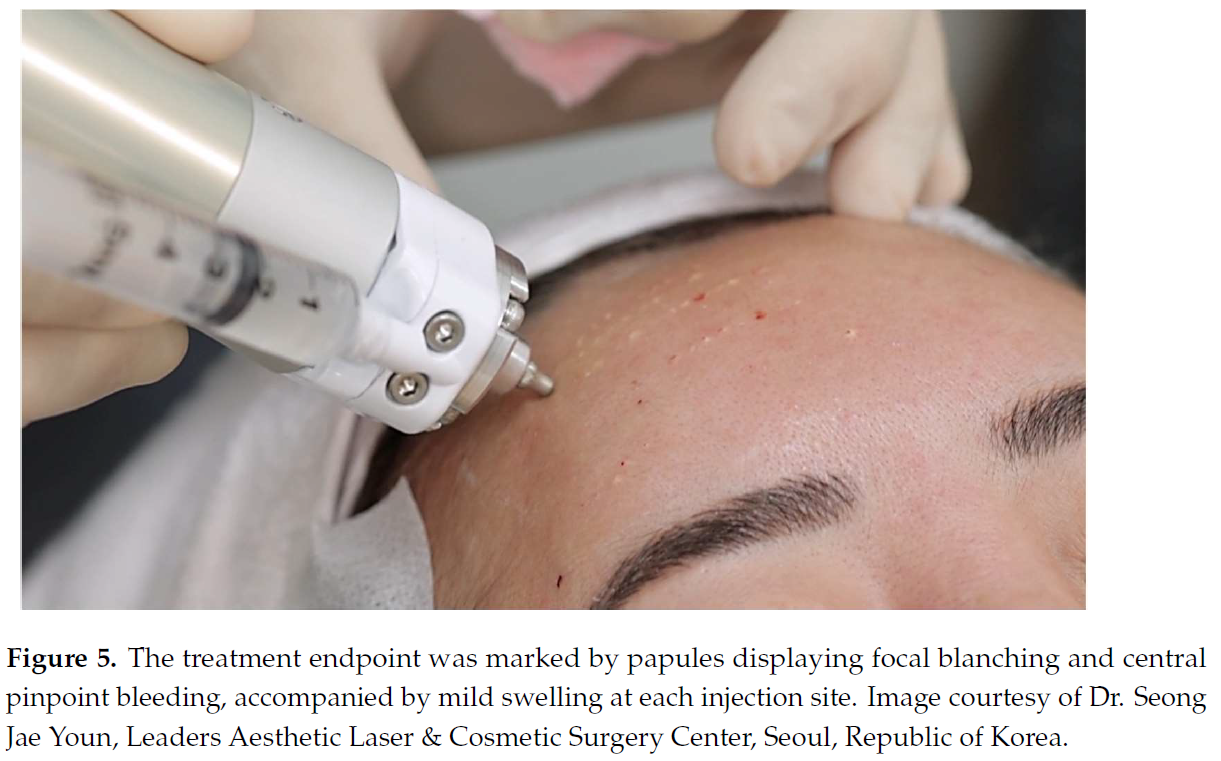
With atrophic scars, right after the procedure the fibrous bands that held down the scar are released and the depressed area is seen to fill up, and over time collagen production is stimulated by the action of the injected medication. Another flow I often see in the clinic is that, beyond the scars, the overall texture of the skin becomes more even, so improvements in tone and elasticity can also be expected.
One thing I always emphasize in scar treatment is that there is no magical procedure that finishes everything in one session. A scar is a trace the skin has left behind, so treatment is closer to a process of rebuilding the texture over time.
If you have any questions, please feel free to ask through Start a chat consultation now.
How many sessions are needed?
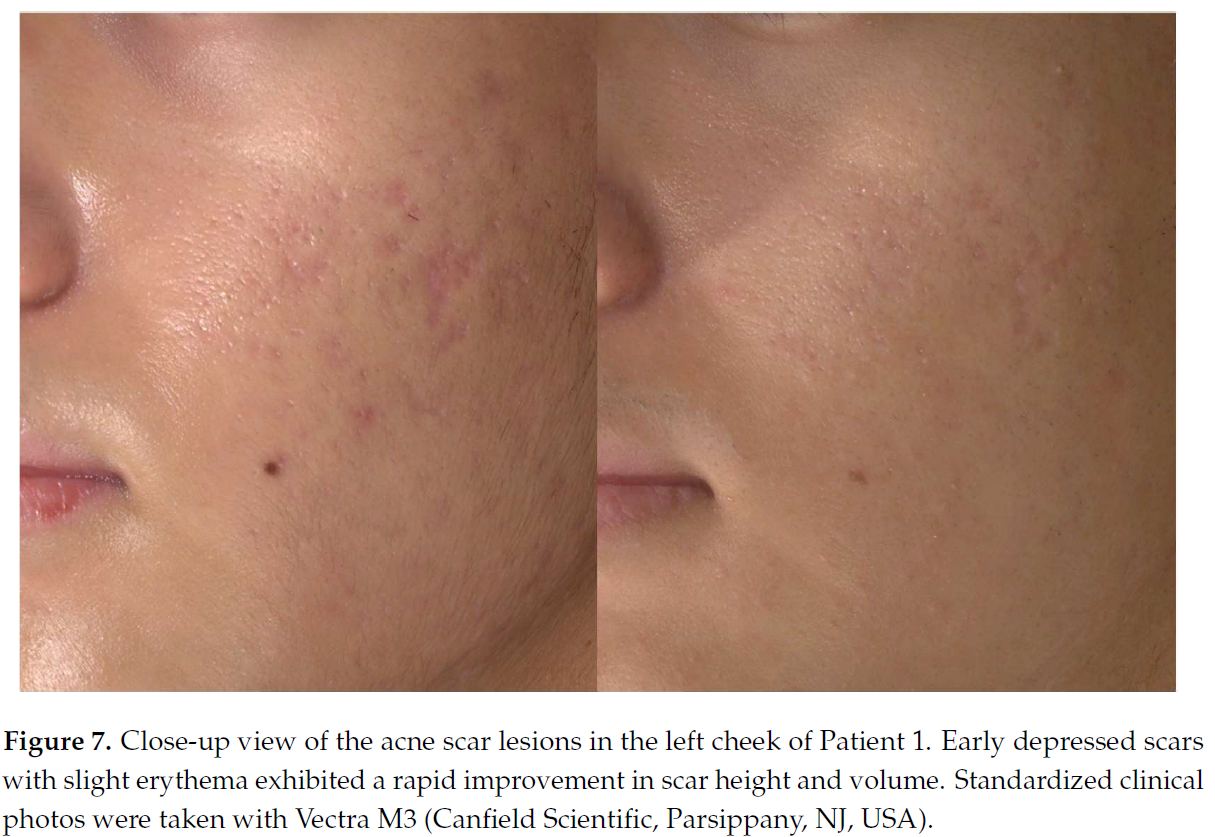
Scar procedures often cannot be wrapped up in a single session. I usually explain the flow as follows.
- Plan on the basis of at least three sessions.
- If scars are deep or wide, additional treatment may be added.
- As sessions accumulate, collagen production in the skin progresses toward becoming more active.
Improvement through repeated procedures has been reported even in people troubled by deep scars, but please also keep in mind that the degree varies from person to person. How acne scars form, and how I distinguish red marks from depressed scars, are explained in more detail in the post on treating red acne marks. If you are concerned about acne, pores and redness together, the post on how I approach the three separately is also a useful reference.
Not just scars, but stretch marks too
Besides scars, CureJet is also highly useful for stretch marks. Stretch marks are likewise traces formed when the fibrous structure of the dermis is damaged, so the approach of subcision and medication delivery applies in a similar way. I have covered how stretch marks develop and how they are treated separately in the post on treating stretch marks, so I recommend reading it as well. You can also find the principles and features of the device itself in the CureJet introduction.
In the end, it is a procedure that depends on the hands
CureJet is influenced by the practitioner's skill more than many other procedures. Even with the same device, the course changes depending on which layer it is delivered to and at what pressure. That is why I recommend first discussing your condition with a board-certified dermatologist who often treats scars. If depressed acne scars have weighed on your mind for a long time, please feel free to ask through Consult via chat which approach would suit your current condition. Costs are explained through a consultation after your condition has been checked.

Author: Dr. Cho Mingyeol, Medical Director (board-certified dermatologist; Master Certification in Pigmentation, Acne, Rosacea and Hair from the Korean Dermatologists Association). You can find the full profile on the Medical Team page. First published 2024-09-19 / Last reviewed 2026-07-09
This article is intended for general information only; the appropriate treatment and outcomes may vary depending on each individual's condition.