

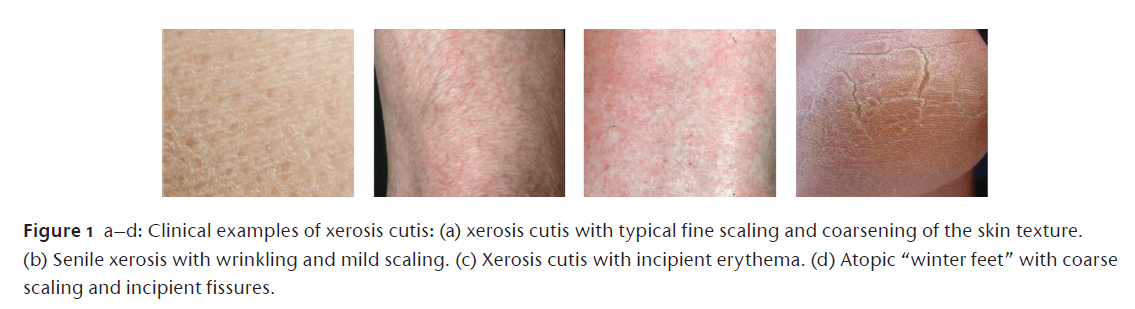
One of the complaints I hear most often in the clinic during the change of seasons is, "I changed my moisturizer, but I'm still itchy." When the weather turns cool and humidity drops, the skin reacts sensitively, and especially with dry skin, flaking, cracking and itching all come at once. At such times, rather than recommending a new expensive product, I first suggest adjusting the moisturizer you are already using.
Why I don't start by recommending a new moisturizer
When dryness and itching keep recurring, most people look for "a product with stronger moisturizing power." But in the clinic it is not rare for things not to improve even after changing products. That is because much of the problem lies not in the price of the product but in its ingredients and how it is used. So before buying a new product, I first look at ways to boost the performance of the moisturizer you currently use.

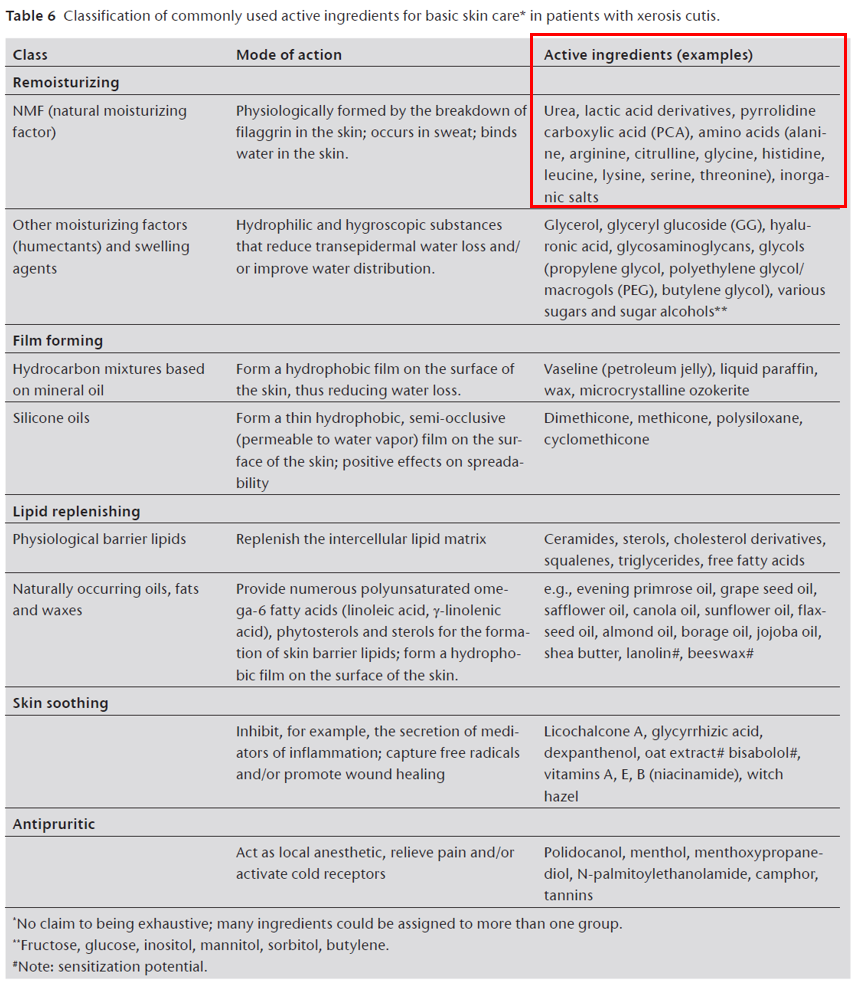
This is not an arbitrary anecdote of mine; it is organized on the basis of academic materials on moisturizing ingredients. A wide range of ingredients related to skin dryness has been studied for a long time, and within that body of work there is one ingredient I pay particular attention to.
Urea, a humectant whose character changes with concentration
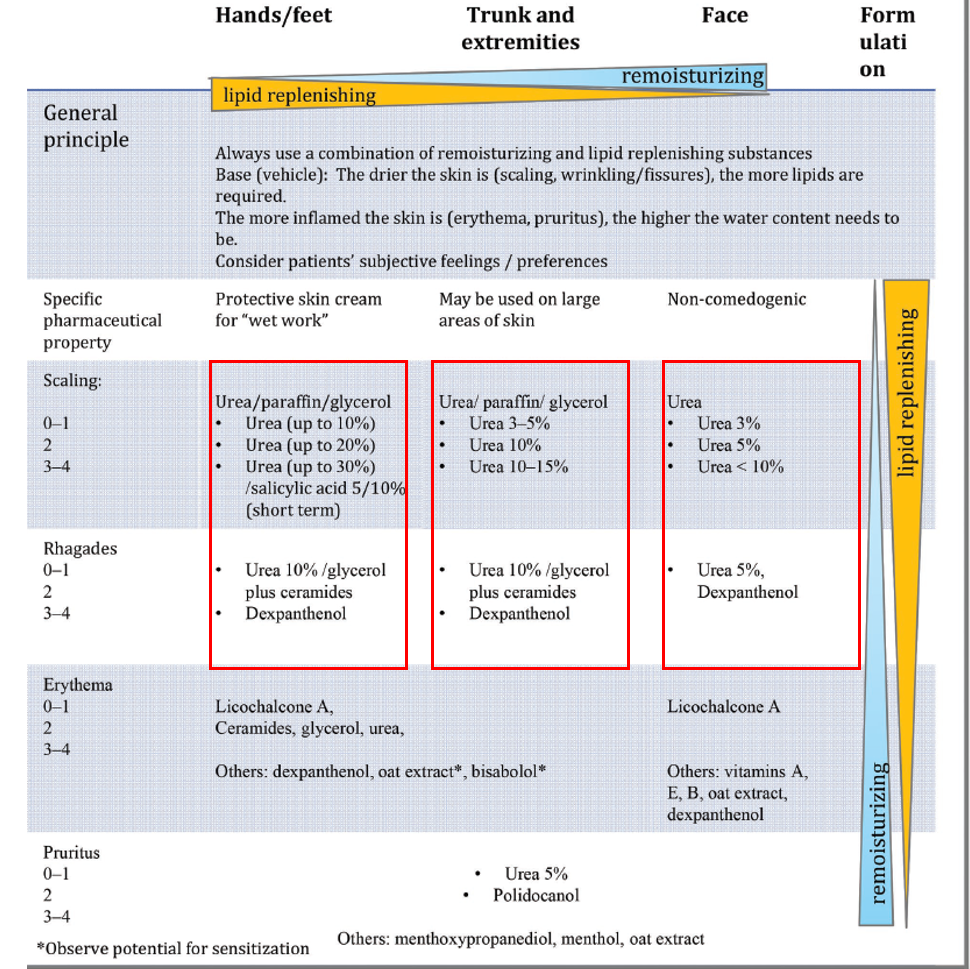
Moisturizing ingredients are broadly divided into occlusives, emollients and humectants. Today's main character is urea, which is classified as a humectant. Interestingly, even though it is the same ingredient, what it does changes completely depending on its concentration.
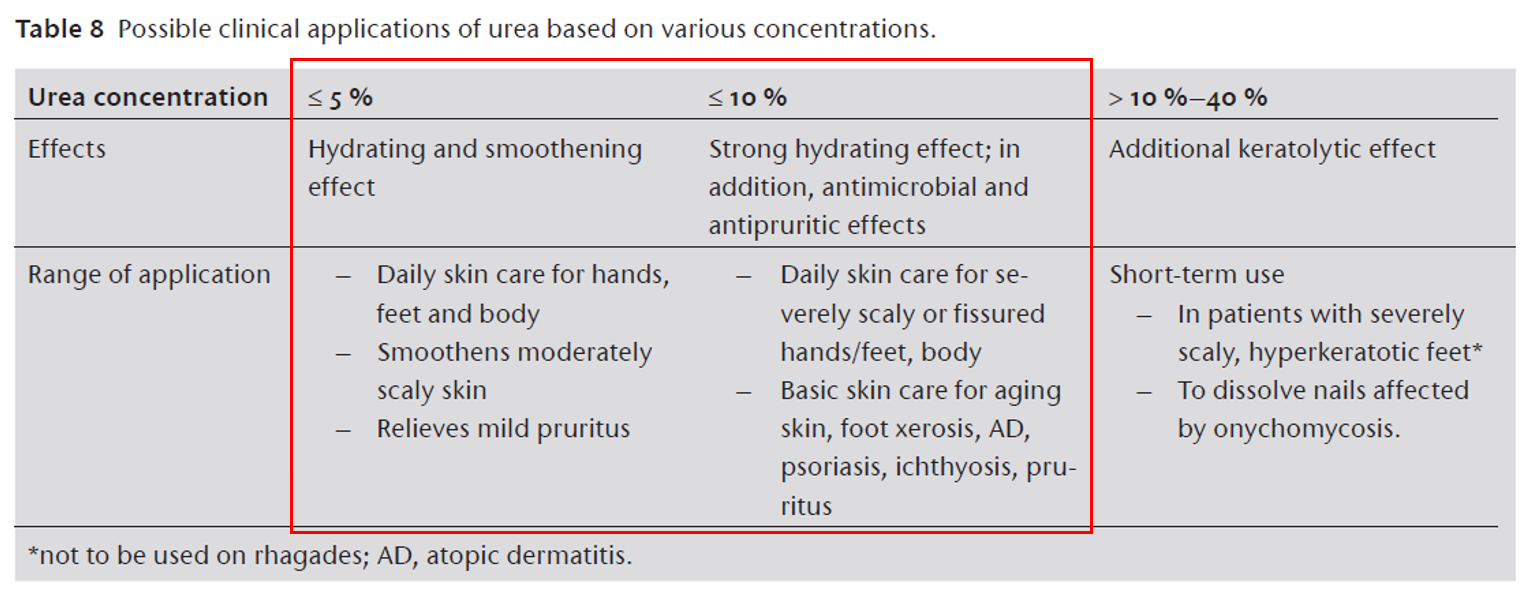
- At high concentrations of 10 percent or more, it works to dissolve keratin. That is why it is mainly used to deal with thick calluses on the soles of the feet.
- At concentrations of around 5-10 percent, its character changes and it has a strong moisturizing and humectant effect. It holds water in the skin and keeps it hydrated.
The same urea can become either an exfoliant or a moisturizer depending on the concentration at which it is used; this is the first thing to remember when working with this ingredient.
How to add urea to the moisturizer you already use
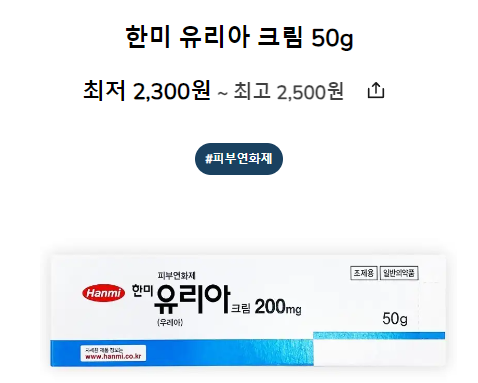
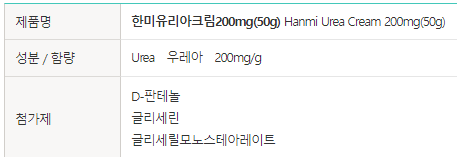
There is a urea-containing Yuria Cream on the market. Because it is an over-the-counter medicine, it is not hard to find at pharmacies. However, Yuria Cream has a concentration of 20 percent, which leans toward dissolving keratin if you apply it to your face as is.
So the method I recommend is dilution. If you mix it with your existing moisturizer to lower the concentration to around 5-10 percent, its keratin-dissolving property softens and you can bring out its moisturizing and humectant effects. This concentration range is also where it is reported to help relieve itching.
Before buying one more new product, there is a way to use the moisturizer you already have a little more wisely. Instead of switching to an expensive cream, try adding urea to your familiar moisturizer; this is the order I suggest first in the clinic.
The mixing ratio differs by area as follows.
| Area applied | Ratio of Yuria Cream to moisturizer | Reason |
|---|---|---|
| Face | 1 to 3 | The skin is thin and sensitive, so a low concentration is appropriate |
| Body, arms | 1 to 1 | Thick keratin over a wide area, so a slightly stronger mix |
Because effects and irritation vary from person to person, it is safer to first apply a thin layer to a small area, check the reaction and then expand the area.
Other ingredients you will see besides urea
Besides urea, Yuria Cream also contains ingredients such as dexpanthenol and glycerin. Dexpanthenol is known as an ingredient that helps soothe and restore the skin, and glycerin is a representative humectant. You chose the product looking only at urea, but in the end several moisturizing ingredients work together.
So how should you actually apply it?
In summary, the steps are simple.
- Have the moisturizer you currently use ready as it is.
- For the face, mix 1 part Yuria Cream with 3 parts moisturizer.
- For the body or arms, mix 1 part Yuria Cream with 1 part moisturizer.
- First apply it to a small area such as the back of the hand or the inner arm, and watch the reaction for about a day.
- If there is no irritation, apply it as part of your usual moisturizing routine.
I recommend starting with the areas that are especially dry or that keep cracking. However, for skin with wounds or oozing, or areas of severe atopic dermatitis, it is better to have the condition checked in the clinic first rather than applying it on your own.
What to check when dryness and itching keep recurring
Even the same dryness has different causes. The direction differs depending on whether it is simple seasonal dryness, a state in which the skin barrier has broken down, or whether another skin condition lies in the background. Urea dilution is an easy method to try for seasonal dryness and mild itching among these; it is not the answer to every kind of itch.
I have covered dryness and the skin barrier in more detail in The criteria I use to set a care direction for dry skin and The story of the skin barrier. If you are curious about cleansing habits, it will also help to look at The story of whether it is good to use soap. As for the creams I make a point of using in the clinic, I have summarized them in The story of the creams a dermatologist uses.
If the itching lasts a long time or does not improve even with application, it is quicker to have your condition checked once than to wander on your own from product to product. Please feel free to ask any questions through Consult via chat.

Author: Dr. Cho Mingyeol, Medical Director (board-certified dermatologist; Master Certification in Pigmentation, Acne, Rosacea and Hair from the Korean Dermatologists Association). You can find the full profile on the Medical Team page. First published 2024-09-30 / Last reviewed 2026-07-09
This article is intended for general information only; the appropriate treatment and outcomes may vary depending on each individual's condition.