

After washing with soap, your face feels squeaky clean and refreshed. In the clinic, quite a few people tell me, "I love that feeling so much that I can't give up soap." But have you ever heard that this very refreshing feeling can be a burden for certain types of skin?
The saying "soap is bad for your skin" is half true and half misunderstanding. Today I would like to explain, by my own criteria, how soap is actually made and which skin types would do better to change course. If you are busy, simply skimming the summary images along the way should give you the overall picture.

What reaction is soap made by?
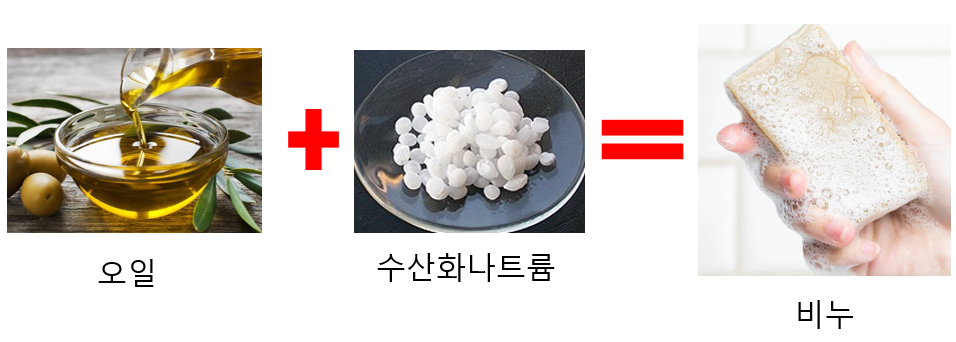
Two ingredients are essential for making soap. One is oil, and the other is sodium hydroxide, commonly known as caustic soda.

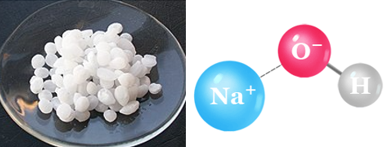
The ingredient to pay attention to here is sodium hydroxide (NaOH).
Sodium hydroxide is a typical strong base. If some sodium hydroxide remains after the oil and sodium hydroxide have gone through the saponification reaction, it acts to raise the pH of the soap.
One more chemical circumstance is involved here. The fatty acid salt (RCOO-) produced by saponification works properly as a surfactant only under alkaline conditions; once things shift to neutral or acidic, it turns back into a fatty acid. In other words, the very function of cleansing power is tied to an alkaline environment.
Why is a "mildly acidic soap" hard to achieve?
If you turn the principle above around, the conclusion becomes clear. If you force soap to be mildly acidic, the fatty acid salt turns back into fatty acid and cleansing power drops sharply, and then there is no point in using soap at all.
In short, a mildly acidic soap is hard to call soap at all. For soap to cleanse the way soap does, it has to be alkaline.

I am also often asked, "Isn't handmade soap made with natural oils different?" But handmade soap also goes through a chemical reaction using sodium hydroxide, a strong base. It is worth remembering that even when the word "natural" is attached, the manufacturing process is the same chemical reaction. In fact, the pH of most soaps on the market falls between 8 and 10.
If you have any questions, please feel free to ask. Consult via chat now
Why does the skin prefer a mildly acidic environment?
Then what kind of environment is favorable from the skin's point of view?
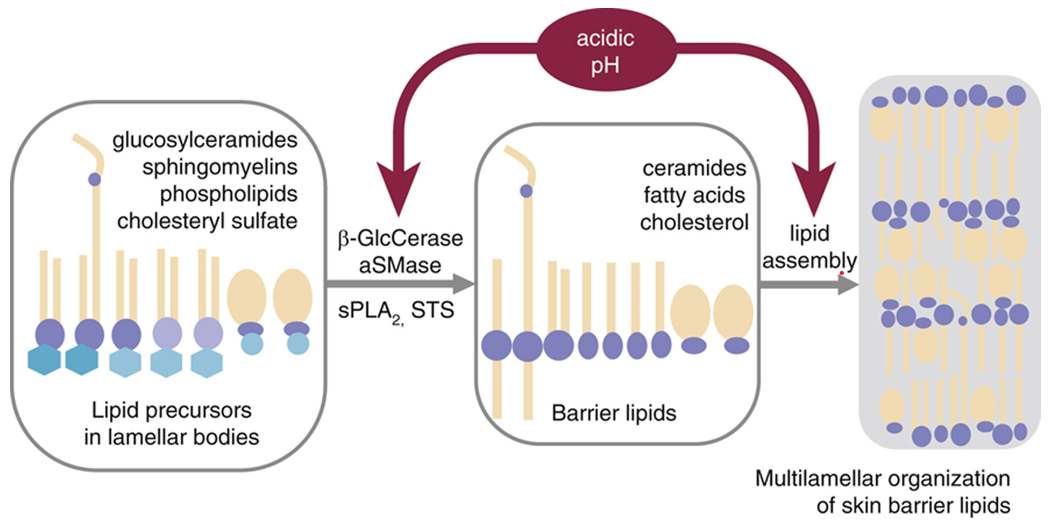
Skin lipids play a very important role in protecting the skin barrier. The three main lipids of the stratum corneum are as follows.
- Ceramides
- Cholesterol
- Free fatty acids
The environment in which these lipids are synthesized well and assembled neatly, like bricks, is a mildly acidic one (pH 5.5). In addition, bacteria and fungi find it harder to thrive in a mildly acidic environment. Academic sources have also reported that an acidic pH is required for the multilayer assembly of stratum corneum lipids.
That is why, for people with a weak skin barrier, such as those with atopic dermatitis, rosacea or sensitive skin, keeping the skin in a mildly acidic environment is helpful. If you would like to know more about the skin barrier, I recommend reading my post explaining the structure of the skin barrier by comparing it to the Great Wall of China as well.
Not every solid cleanser is soap
There is a common misconception here: "Then how can mildly acidic solid cleansers exist?"

In fact, such a product is not soap but a syndet bar (synthetic detergent bar). It means a cleanser made by solidifying synthetic surfactants into a bar. In other words, not everything solid is soap.
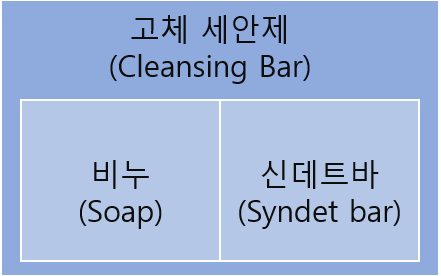
Dove, which is easy to find on store shelves, is also a syndet bar made this way. An ingredient commonly used to make mildly acidic syndet bars is sodium cocoyl isethionate, a synthetic surfactant widely found not only in syndet bars but also in ordinary foam cleansers. If you would like more specific guidance on how to set up your cleansing routine, my post summarizing the basic principles of cleansing may also help.
In summary, it breaks down like this
Summarizing everything so far in a table:
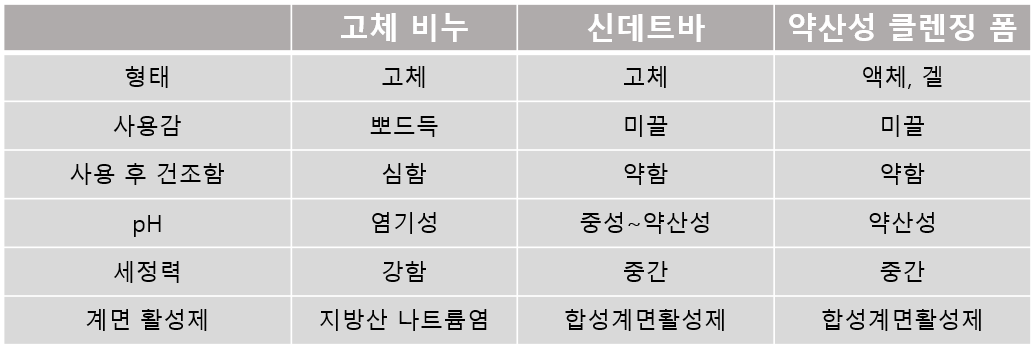
| Category | Form | Approximate pH | Cleansing characteristics |
|---|---|---|---|
| Bar soap | Solid | Alkaline, 8-10 | Refreshing feel and strong cleansing power |
| Syndet bar | Solid | Can be adjusted to mildly acidic | Based on synthetic surfactants |
| Mildly acidic cleansing foam or gel | Liquid | Can be adjusted to mildly acidic | Ingredients similar in nature to syndet bars |
A syndet bar and a mildly acidic cleansing foam (or gel) differ only in form, solid versus liquid; the nature of their ingredients is not very different. Then the question naturally arises: is there any reason to insist on the solid form?
So here is the direction I give in the clinic
The conclusion depends on the condition of your skin.
If you have healthy skin, use soap because you like the refreshing feel, and have no particular problems, I don't think you need to change. On the other hand, for people with a weak barrier, such as those with atopic dermatitis, rosacea or sensitive skin, I recommend mildly acidic cleansing foams or gel-type products whenever possible. Since individual responses vary, it is safer to adjust while watching both the product you currently use and how your skin reacts.
If you cannot tell which side your skin is closer to or which cleanser would suit you, Consult via chat
If you are curious about care strategies by skin type, such as dry or oily skin, I recommend reading the criteria I use in the clinic to set a care direction for dry skin next.
[References]
- Nováčková, Anna, et al. "Acidic pH is required for the multilamellar assembly of skin barrier lipids in vitro." Journal of Investigative Dermatology 141.8 (2021): 1915-1921.
- Elias, Peter M. "The how, why and clinical importance of stratum corneum acidification." Experimental dermatology 26.11 (2017): 999-1003.
Author: Dr. Cho Mingyeol, Medical Director (board-certified dermatologist; Master Certification in Pigmentation, Acne, Rosacea and Hair from the Korean Dermatologists Association). You can find the full profile on the Medical Team page. First published 2023-04-07 / Last reviewed 2026-07-09
This article is intended for general information only; the appropriate treatment and outcomes may vary depending on each individual's condition.