

When I ask in the clinic, "How do you wash your face?", many people hesitate for a moment. With so many types of cleansers and so many ways to wash, it is only natural that it is hard to judge what suits your skin. Most people end up using whatever product is at hand, with the vague thought that "clean must be better than dirty." But washing until clean and washing well for your skin are slightly different stories.
First, we need to clear up a misconception about cleanliness
Quite a few people believe that the more diligently they wash, the better their skin will become. In the clinic, however, I fairly often see cases where the skin barrier has broken down precisely because of overwashing. I have covered in more detail how excessive cleansing creates problems in my post on the relationship between cleansing habits and rosacea.
Today I want to speak not from personal intuition but on the basis of the consensus view of many dermatologists. This is based on an expert-consensus review published in the Journal of Cosmetic Dermatology, and on the topic of cleansing it is hard to find a more reliable source.
Then how should you choose a cleanser?
Let me start by summarizing the criteria for choosing an appropriate cleanser.
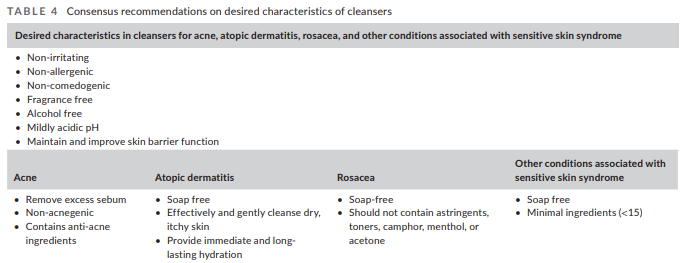
The point the consensus document consistently makes is this: except for acne-prone skin, using soap is not recommended. Of course, even for acne-prone skin, excessive washing is not recommended. Many people enjoy using handmade soap, thinking it must be good for the skin, but soap itself is alkaline and does not work in a direction that benefits the skin barrier.
It is easy to treat the feeling of strong cleansing power and the feeling of being good for your skin as the same thing, but from the barrier's point of view, the opposite is often true.
If you would like to look at this principle more broadly, my post explaining the skin barrier by comparing it to the Great Wall of China may help.
Foam and squeakiness: these are the two things I look at first
Cleansers inevitably contain surfactants. The problem is that these surfactants can adversely affect skin barrier function. In particular, anionic surfactants such as sodium lauryl sulphate (SLS) have been reported not only to destroy the protein and lipid components that make up the barrier, but also to raise the skin's pH by 2 to 3 units.
Recently, to compensate for these drawbacks, manufacturers sometimes add cocamidopropyl betaine, an amphoteric surfactant, or use nonionic surfactants. So how can you guess whether the product you use contains a lot of anionic surfactants? There are two signals you can check at home.
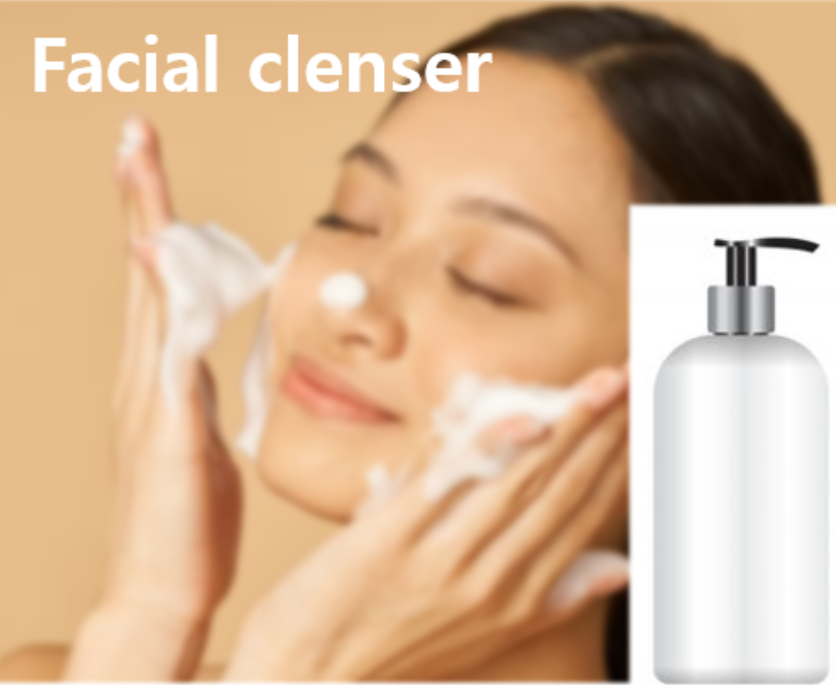
- First, the amount of foam. Products that produce rich foam, like in the photo below, often contain a lot of anionic surfactants, so it is better to limit their use where possible.
- Second, how your skin feels after rinsing. If your skin feels squeaky as you rinse with water, it is also likely that the product contains a lot of anionic surfactants.

Simply learning these two signals, foam and feel, lets you find your direction without decoding every ingredient list. This standard becomes even more important for sensitive skin, and the same thread continues in why I recommend mildly acidic cleansers instead of soap for sensitive skin.
Consult via chatThe question: "Can't I just wash with water?"
Some people ask whether washing with water alone would be better if surfactants are a burden. However, water alone cannot sufficiently wash away waste such as our body's sebum, old dead skin cells and pollutants.
There is one more thing. The pH of ordinary tap water is between 7 and 8, while the optimal pH of the skin is about 5.5. In other words, even tap water acts to raise the face's pH, so for people with atopic dermatitis, rosacea or sensitive skin, tap water alone can sometimes destabilize the barrier. Washing with water is not automatically a safe choice.
How should you wash on days you wear makeup?
On days you have worn makeup or applied a sunscreen of SPF 30 or higher, it is better to wash in two steps. The direction for choosing the first cleanser varies slightly by skin type.
| Skin type | Direction for the first cleanser |
|---|---|
| Acne-prone skin | Better to avoid oil-based products |
| Dry skin | Cleansing cream or oil is also fine |
| Most skin types | Cleansing lotion or milk is recommended first |
In order, it looks like this.
- First, use an oil-based cleanser to gently dissolve makeup and sunscreen. However, acne-prone skin should avoid oils.
- Second, finish with a cleanser that meets the foam and feel criteria described above.
Cleansing water has low cleansing power of its own, so its potential for irritation is not high, but rubbing the skin hard with a cotton pad to remove makeup can break down the barrier, so I recommend limiting it where possible. In seasons when dryness is severe, moisturizing after washing becomes especially important, and that story continues in why I recommend urea moisturizers first for winter itch.
In the end, what remains are your skin's own signals
To sum up: strong cleansing power is not the same as good cleansing, and washing with water alone is not the answer either. Watch for the two signals of rich foam and a squeaky feel after rinsing, and on days you wear makeup, wash in two steps. Following just this much helps your face washing settle into a routine that protects the skin barrier. That said, even with the same principles, the right product and intensity vary depending on skin condition, so when it is hard to decide, I recommend looking at your own skin type together with a professional.
If you are concerned about your face-washing habits or choosing a cleanser, feel free to ask through Consult via chat now.
References: Goh, Chee-Leok, et al. "Expert consensus on holistic skin care routine: Focus on acne, rosacea, atopic dermatitis, and sensitive skin syndrome." Journal of Cosmetic Dermatology 22.1 (2023): 45-54.
Author: Dr. Cho Mingyeol, Medical Director (board-certified dermatologist; Master Certification in Pigmentation, Acne, Rosacea and Hair from the Korean Dermatologists Association). You can find the full profile on the Medical Team page.
First published 2023-04-18 / Last reviewed 2026-07-09
This article is intended for general information only; the appropriate treatment and outcomes may vary depending on each individual's condition.