

When you look into lifting procedures, you often run into the question, "Can this one device do it all?" Recently, I have been getting this question about ONDA lifting in the clinic much more often. As we introduced ONDA at our clinic, criteria naturally took shape for which faces I recommend it alone and for which faces I design it together with other procedures. Today I would like to explain those criteria step by step, starting from the principle.
On what principle does ONDA create lifting?
ONDA is a device that delivers microwave energy in the 2.45 GHz band to the skin. With this energy it induces collagen remodeling and destroys fat cells, aiming at both improved elasticity and volume reduction. ONDA is said to mean "wave" in Italian, and, as the name suggests, its distinguishing feature is the way heat spreads beneath the skin.
The key lies in the temperature design. It has a cooling system that keeps the epidermal temperature lowered to within 5-10 degrees, and it uses dielectric heating to deliver heat efficiently to the dermis and fat layer below. Because the structure minimizes epidermal damage, there is reported to be relatively little pain during the procedure. Of course, how it feels varies from person to person.
The two handpieces do different jobs
ONDA's handpieces fall into two main types, and each targets a different layer.
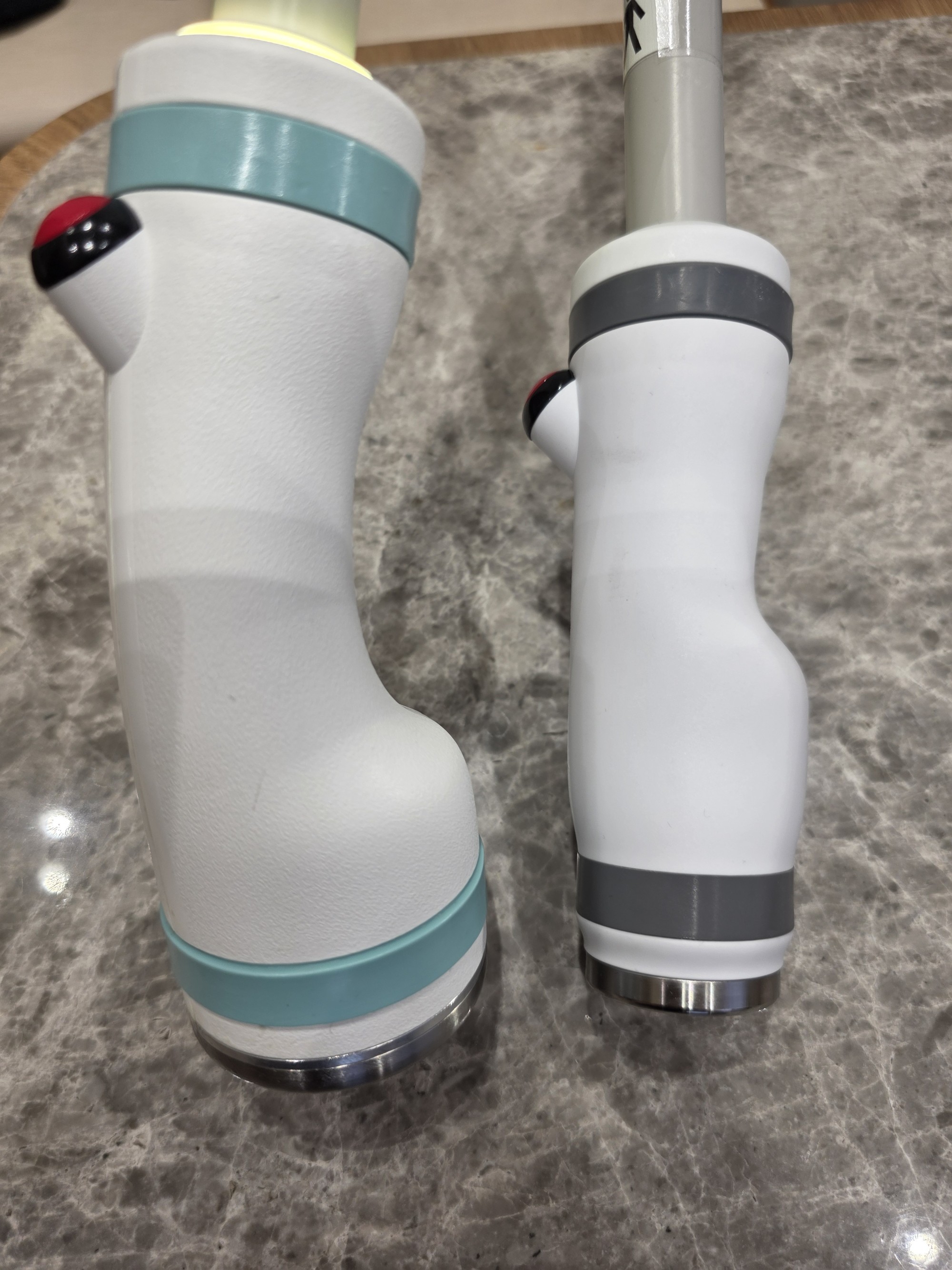
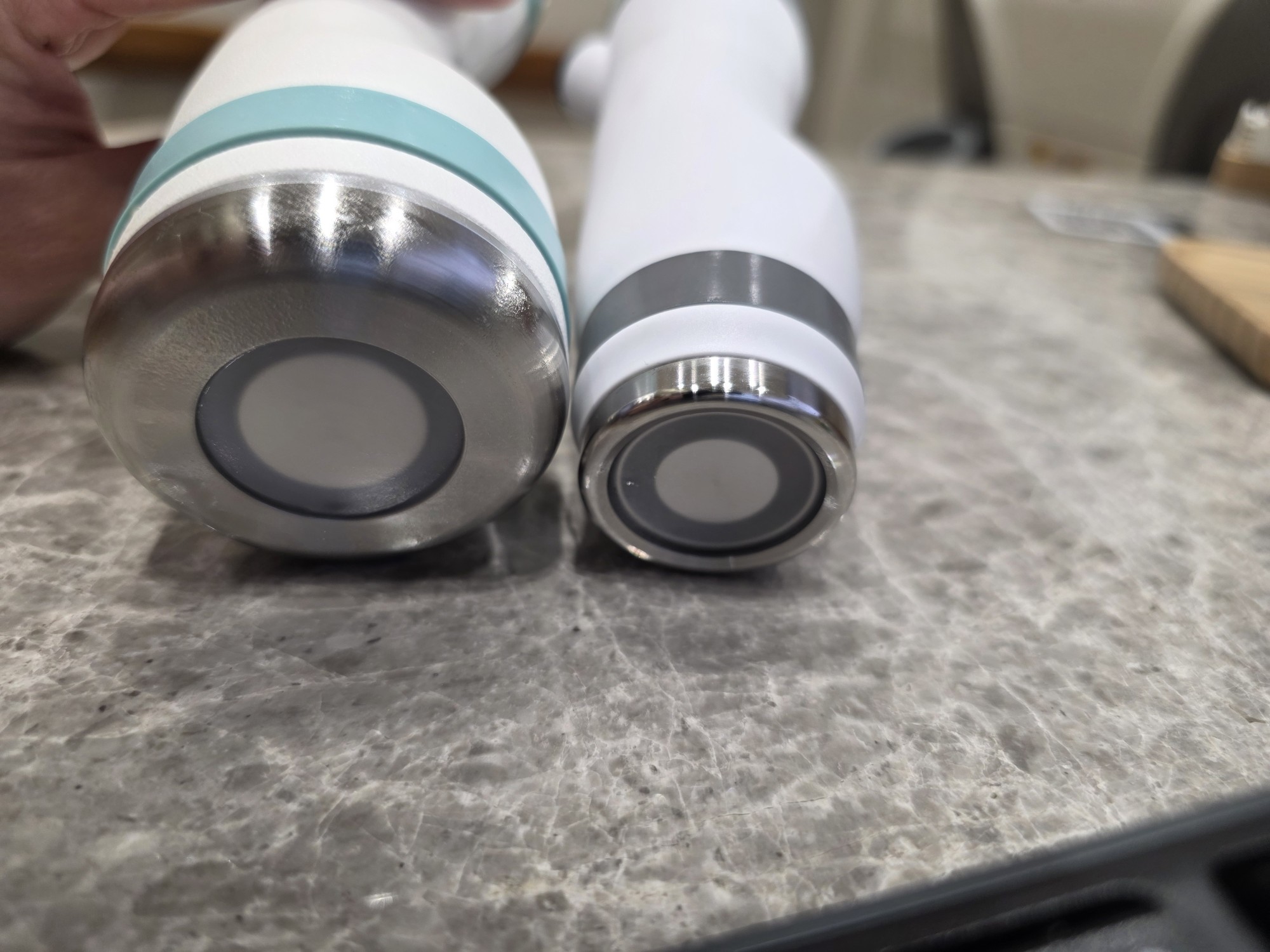
| Handpiece | Target layer | Main effect | Well-suited areas |
|---|---|---|---|
| 3mm | Dermis | Skin tightening, collagen regeneration | Areas with a thin fat layer such as the cheeks, cheekbones and forehead |
| 7mm | Subcutaneous fat layer | Fat cell destruction, volume reduction | Double chin, sagging cheek fat, deep (buccal) cheek fat |
The 3mm handpiece concentrates energy in the dermis and works in the direction of tightening the skin. I use it selectively in areas with little fat where collagen regeneration is needed. The 7mm handpiece, on the other hand, gathers energy in the subcutaneous fat layer and is effective at destroying fat cells.
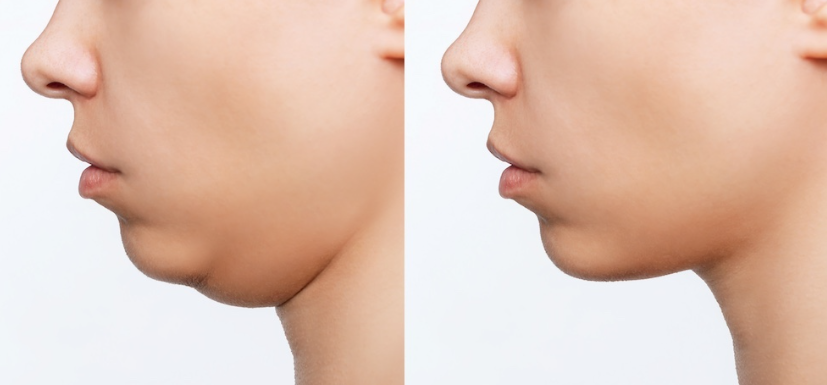
So when the 7mm handpiece is applied to people who have a certain amount of fat, such as a double chin, sagging cheek fat or deep cheek fat, both fat reduction and lifting can be expected at the same time. You could say that designing a combination of the two handpieces to fit each area is the real skill of an ONDA procedure.
Actual tissue changes shown in a paper
Since the principle alone may not feel concrete, let us look at biopsy results as well.
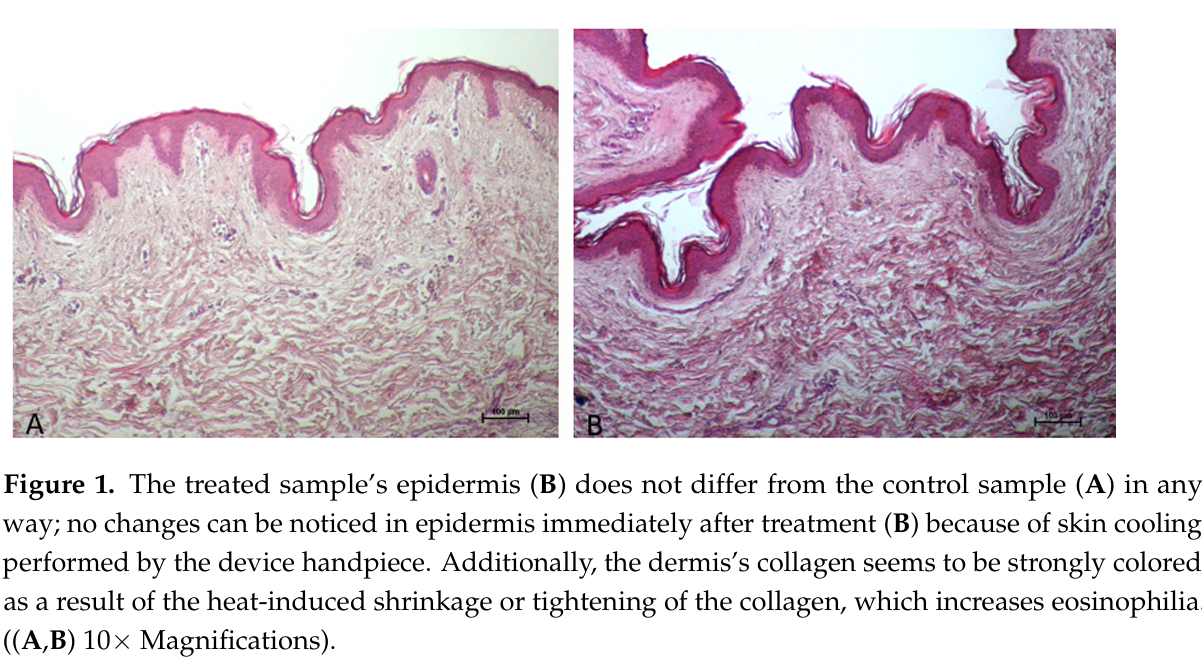
In the biopsy photos from the paper, the epidermis shows little change before and after treatment. This is evidence that the cooling and temperature design mentioned earlier protect the epidermis.
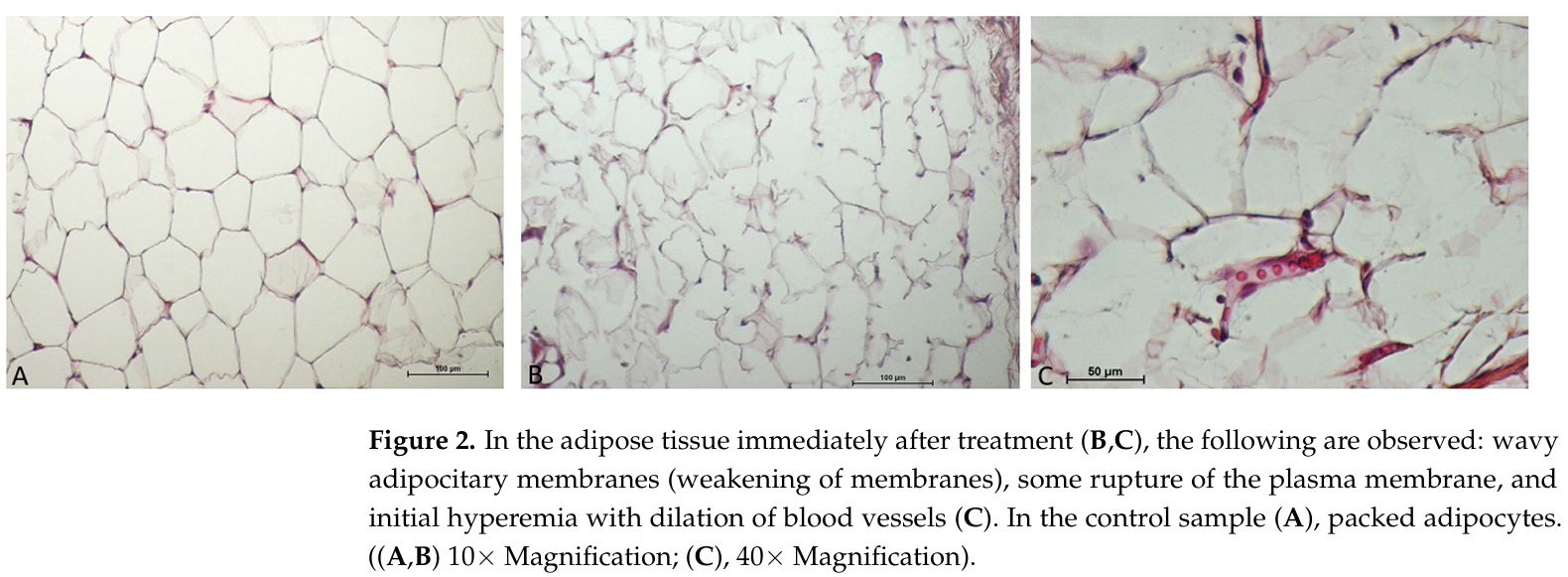
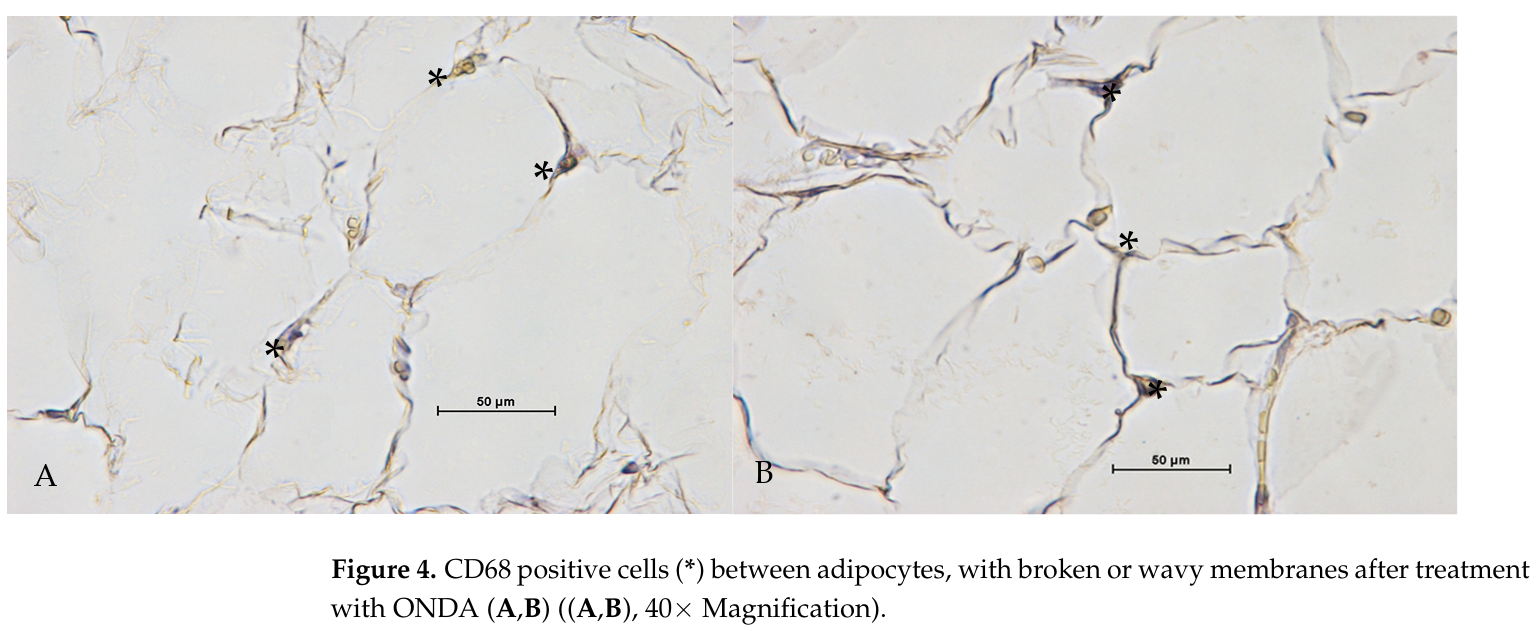
Below that, on the other hand, the destruction of fat cells (B, C) is clearly observed. The appearance of inflammatory cells clearing away the destroyed fat cells can also be seen. In effect, the principle of protecting the epidermis while creating changes in the lower layers is confirmed at the tissue level.
Each lifting device delivers heat in a different way, and if you are curious about the principle of the radiofrequency family, I recommend also reading the post summarizing how radiofrequency lifting works.
What ONDA does well and what it does not
In summary, ONDA's strengths are as follows.
- Pain and the burden of recovery are relatively low, so you can return to daily life quickly.
- Some people feel the skin tighten right after the procedure. However, how it feels varies from person to person.
- Over the medium to long term, improved elasticity through collagen remodeling is expected.
- It can be applied not only to the face but to various areas such as the double chin, upper arms and abdomen.
That said, I do not tell people that ONDA solves all sagging. People with severe sagging or a large amount of fat may find it difficult to achieve sufficient lifting with ONDA alone. Especially in cases of moderate or greater sagging, I recommend a combination design that pairs it with HIFU or radiofrequency (RF) treatments.
The performance of a device matters, but I believe what actually decides the result is the doctor's procedural experience, the design of the protocol and aftercare. Even with the same ONDA, the direction changes depending on which layer is targeted and how much.
If you are curious about how I divide the use of multiple devices, the post on the differences between Ulthera and Thermage and the post summarizing the criteria for choosing lifting procedures together will help you get the overall picture. If you are unsure whether your sagging calls for ONDA alone or a combination, feel free to ask through Start a chat consultation now.
Who ONDA lifting suits well
I have narrowed down to four the cases in which I particularly recommend ONDA in the clinic.
- People who are sensitive to pain. It is gentle enough that most people who struggled with pain during past Ulthera or Thermage procedures can have it done without anesthesia.
- People who want improved elasticity early on. It is suitable for those who want a change right after the procedure ahead of an upcoming event such as a wedding or wedding photos.
- Cases where both local fat reduction and lifting are wanted. It is advantageous when volume reduction and improved elasticity are expected at the same time in the double chin, sagging cheek fat and deep cheek fat areas.
- When a short procedure time and quick return to daily life are needed. It usually takes around 10-20 minutes, and daily life is possible without a separate long recovery period.
How I decide between ONDA and Titanium lifting, which has a different character, is written up in more detail in the post on the criteria for choosing between Titanium and ONDA.
How should you think about the cost?
ONDA is a high-end lifting device, so it is hard to say the price carries no burden at all. However, because the specific cost varies with the degree of sagging, the areas and the combination of handpieces, it is more accurate to explain it after a consultation.
Above all, rather than first looking for the cheapest place, I recommend deciding on lifting that suits your skin and degree of sagging after consulting directly with a doctor. Even with the same device, the experience can differ greatly depending on the design and aftercare. You may also check whether ONDA is the right choice for you through Consult via chat.

Author: Dr. Cho Mingyeol, Medical Director (board-certified dermatologist; Master Certification in Pigmentation, Acne, Rosacea and Hair from the Korean Dermatologists Association). You can find the full profile on the Medical Team page. First published 2025-06-09 / Last reviewed 2026-07-09
This article is intended for general information only; the appropriate treatment and outcomes may vary depending on each individual's condition.