

Hello. I am Cho Mingyeol, a board-certified dermatologist at OARO Dermatology. These days, there is one name that often comes up among people who have had several lifting and laser treatments: UltraClear.
"Doctor, I think my skin is really done for now. I've had Ulthera and Thermage and everything, but I'm not sure it did anything." I often meet people in the clinic who say this with their shoulders slumped. Each time, I carefully tell them that there is still room to reset the direction.
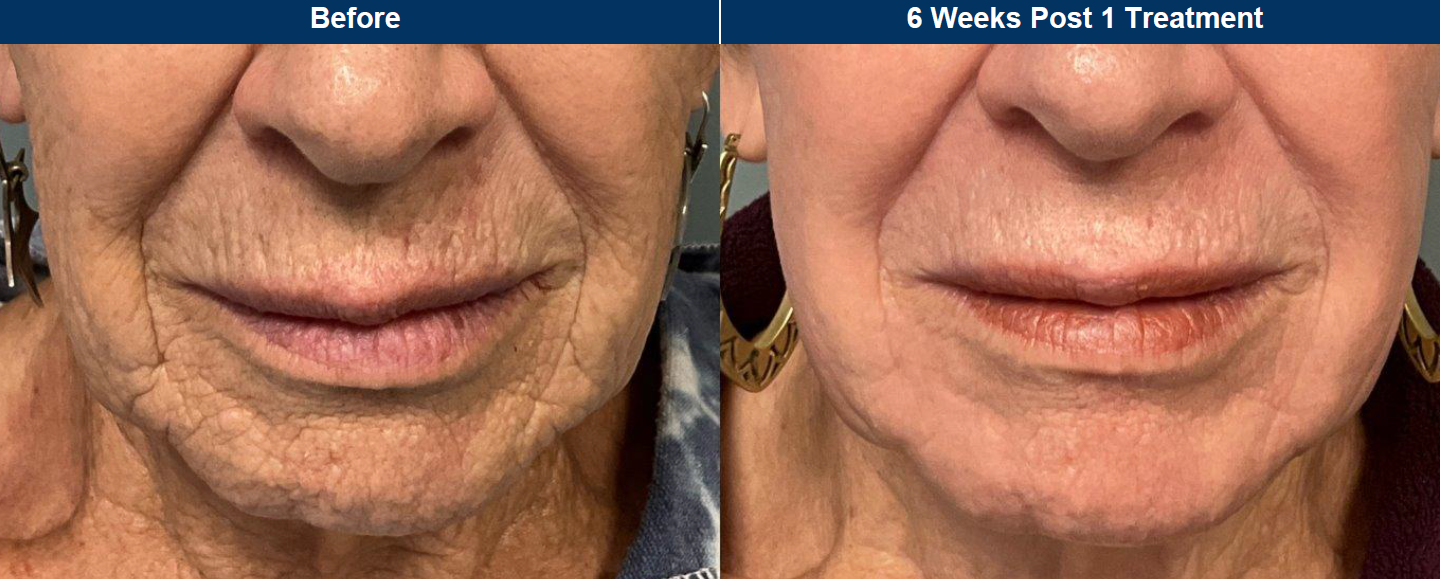
If you have had several lifting treatments and still were not satisfied, it is worth first sorting out again what each device targets. I have also covered this topic in my post on how to choose among lifting treatments such as Ulthera, Thermage and Density, so you may want to read it as well.
Why is change slow even after Ulthera and Thermage?
There is something I want to point out first. This does not mean the previous lifting treatments had no effect. It is just that the layers and methods they approach were different.
The lifting devices we commonly receive work by preserving (sparing) the existing skin while inducing new collagen to grow within it. They provide stimulation to awaken regeneration. The biggest advantage of this approach is that there is almost no downtime.
The problem is cases where damage has already settled deeply or the tissue itself has been altered. In such cases, merely inducing regeneration while leaving the existing tissue as it is may limit the extent of change. That is where the concept of removal and replacement comes in.
Preserve the existing skin, or build it anew?
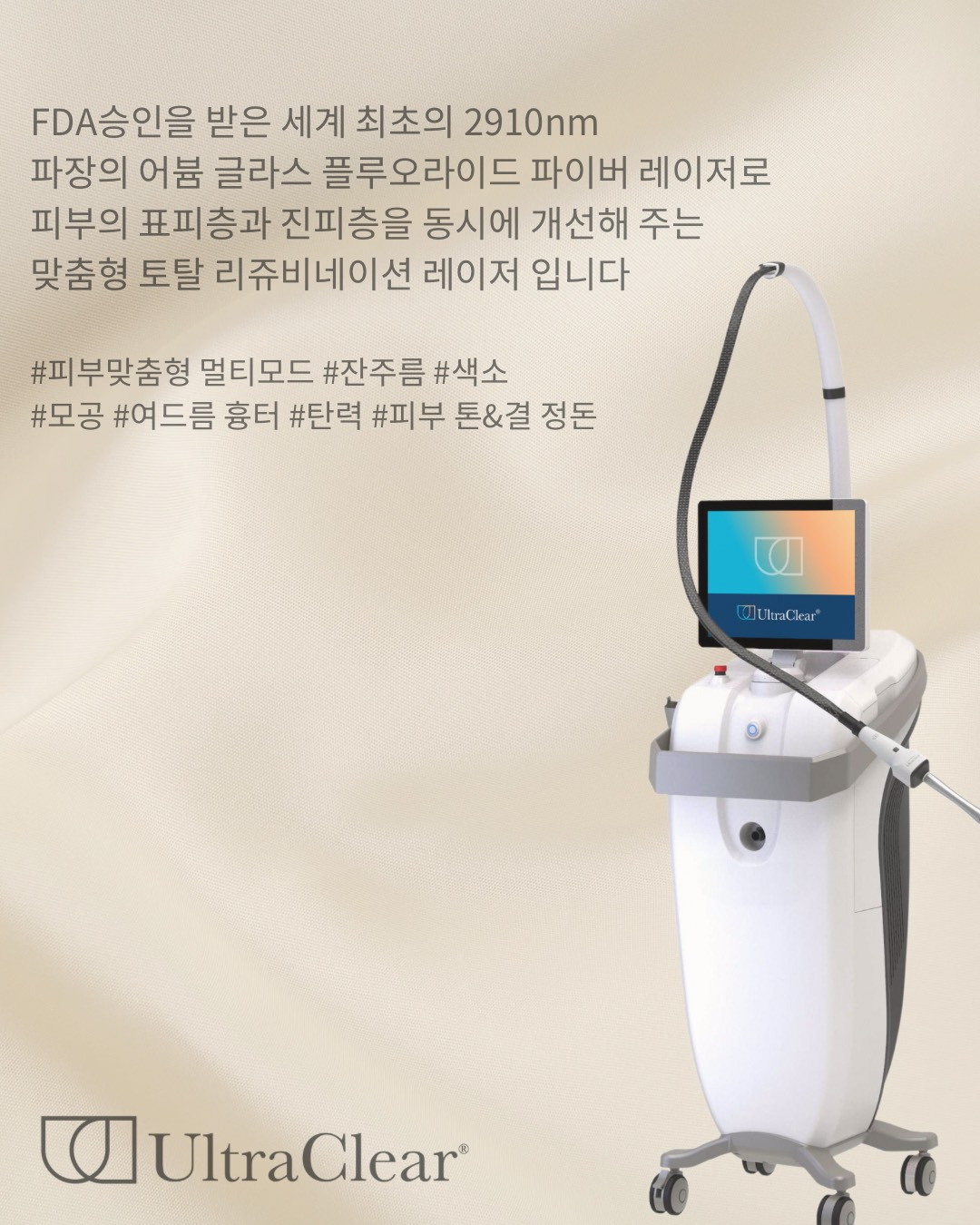
This is where UltraClear takes a different direction from other lasers. It goes through a process of boldly removing the existing skin and replacing it with new skin. Of course, because it actually removes tissue, there is some downtime compared with conventional lifting treatments.
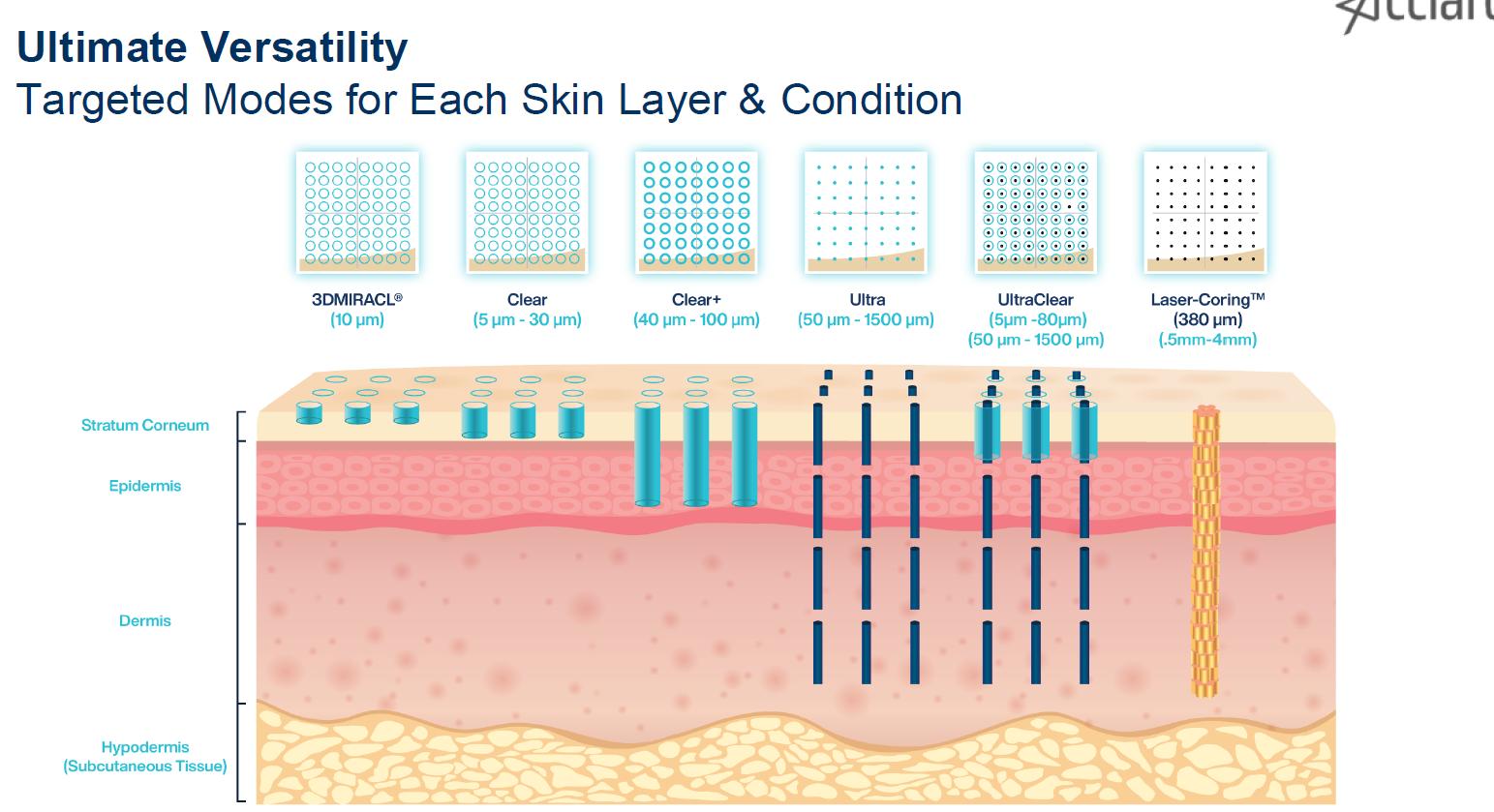
The principle is as follows. Using a 2910nm wavelength, UltraClear creates tiny micro-channels 170µm in size on the skin surface, less than a third of the thickness of a hair. These micro-channels stimulate the fibroblasts deep in the skin that produce collagen and elastin, acting as a regeneration switch that replaces existing tissue with new tissue.
Instead of only repairing the frame of an old building, you tear down the parts that need it and rebuild. This is the analogy I often use when explaining the principle of UltraClear to patients. It means that the approach itself is that different.
So how can such a bold method be carried out safely? The answer lies in the wavelength and the software. If you are curious about the specifications of the device itself, you can refer to the UltraClear device introduction.
What is different about the 2910nm erbium glass fiber laser?
UltraClear is a next-generation Erbium Glass Fiber Laser using the 2910nm wavelength band. Its absorption by water, the main component of skin tissue, is similar to that of the conventional Er:YAG (2940nm), but the way it delivers energy has become more refined.
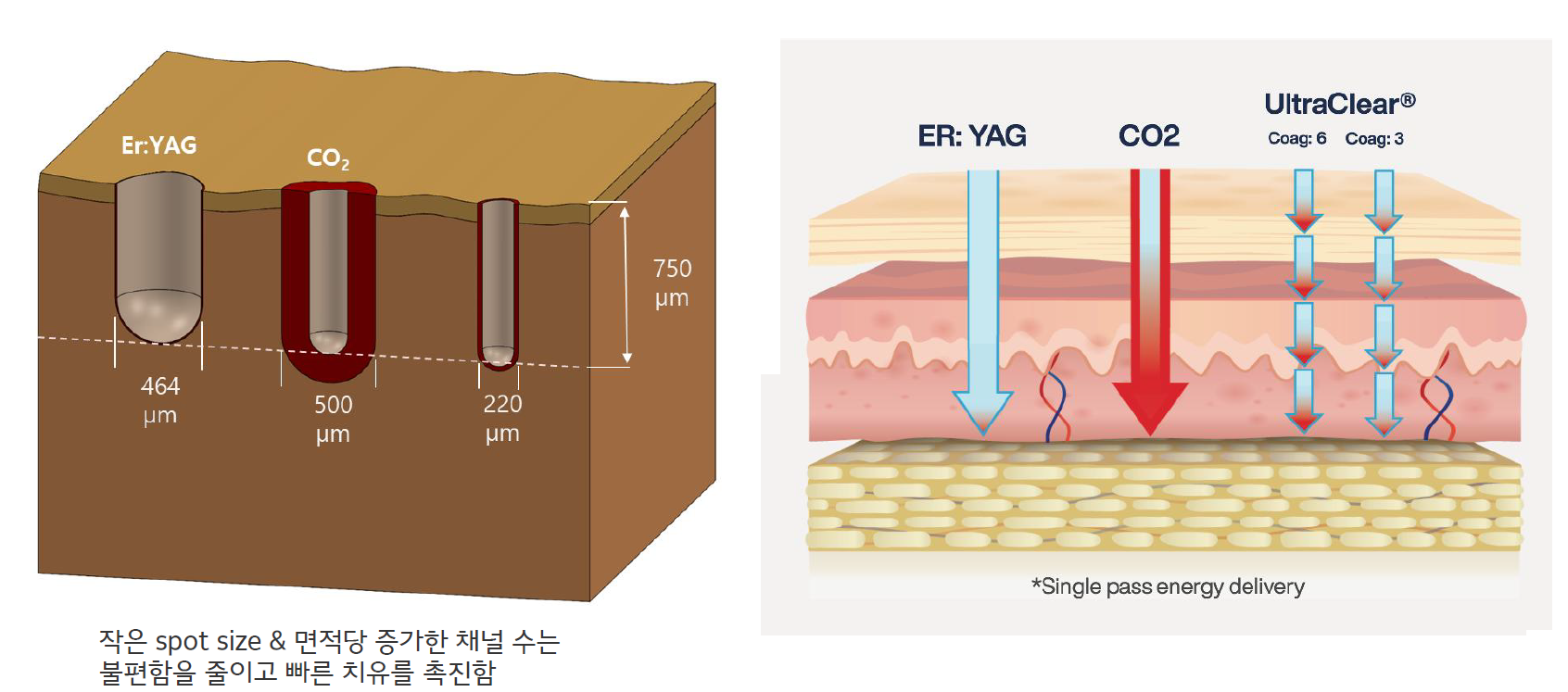
The key is the ratio of ablation to coagulation. Whereas the conventional CO2 laser (10,600nm) works by searing the skin and leaving widespread heat, UltraClear is designed to cut away only what is needed and minimize heat to the surroundings. Comparing the two methods in a table gives the following summary.
| Category | CO2 laser | UltraClear |
|---|---|---|
| Wavelength | 10,600nm | 2910nm |
| Ablation to coagulation ratio | About 40 to 60 | About 95 to 5 (adjustable) |
| Thermal damage to surrounding tissue | Relatively extensive | Relatively limited |
| Analogy | A red-hot soldering iron | A cold, sharp scalpel |
Of course, there are also many cases where coagulation is needed. UltraClear can also adjust this coagulation ratio as needed. Because there tends to be less unnecessary thermal damage to surrounding tissue, recovery is also reported to be relatively fast. However, the recovery pattern varies between individuals.
Why this ablation-centered approach is meaningful will become clearer if you set it side by side with the radiofrequency method in my post summarizing the differences between Thermage and Ulthera, including the cost of each.
It is not just fast; it fires in split pulses
There is something many people wonder about: can such results come from a single 2910nm wavelength? In fact, the wavelength is only half the story, and the other half lies in the precise control of the software.
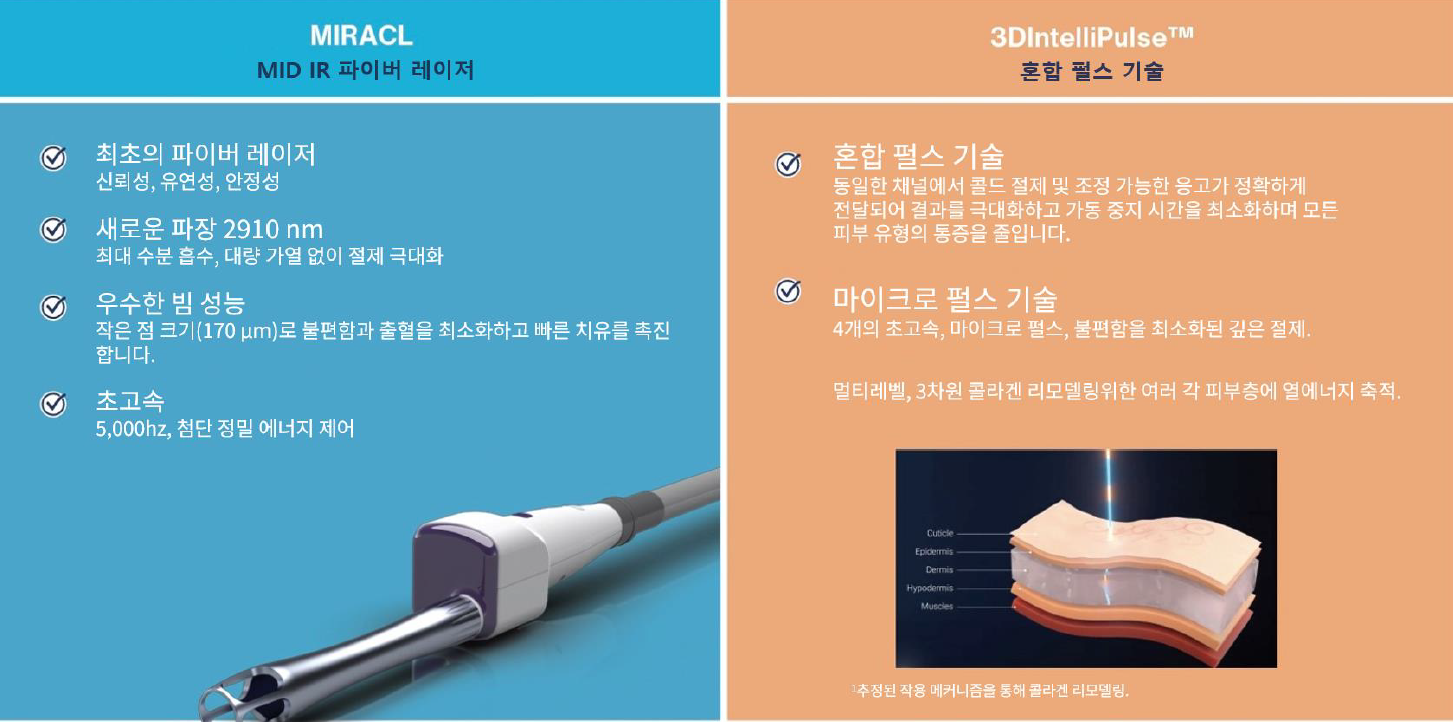
UltraClear delivers energy at an ultra-high repetition rate of 5,000 times per second (5,000Hz). But it does not simply fire quickly. The key is the 3D IntelliPulse technology that governs this speed.
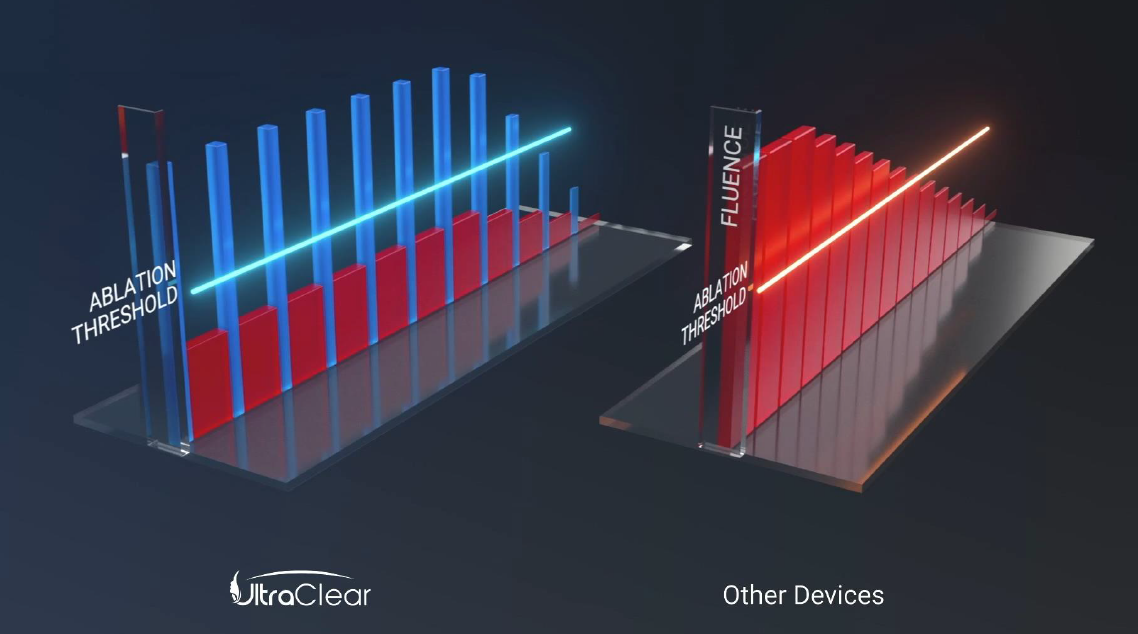
Instead of firing one large burst of energy at once, it splits it into four ultra-short sub-pulses of a few tens of microseconds each. A calculated thermal relaxation time (TRT) is placed between each pulse, creating room for pressure and water vapor within the tissue to escape. Through this process, it can penetrate up to 4 mm deep into the dermis while minimizing bleeding.
There is something I must mention alongside this. A high degree of freedom in control also means that results can vary widely depending on the practitioner's skill. That is why the design is as important as the device. Only when the mode, treatment depth, density and coagulation time are carefully designed to match the patient's skin thickness and Fitzpatrick skin type does it lead to suitable results.
Consult via chatCoring mode, which cuts out scars instead of filling them
The point where UltraClear's character shows most clearly is its Laser-Coring mode.
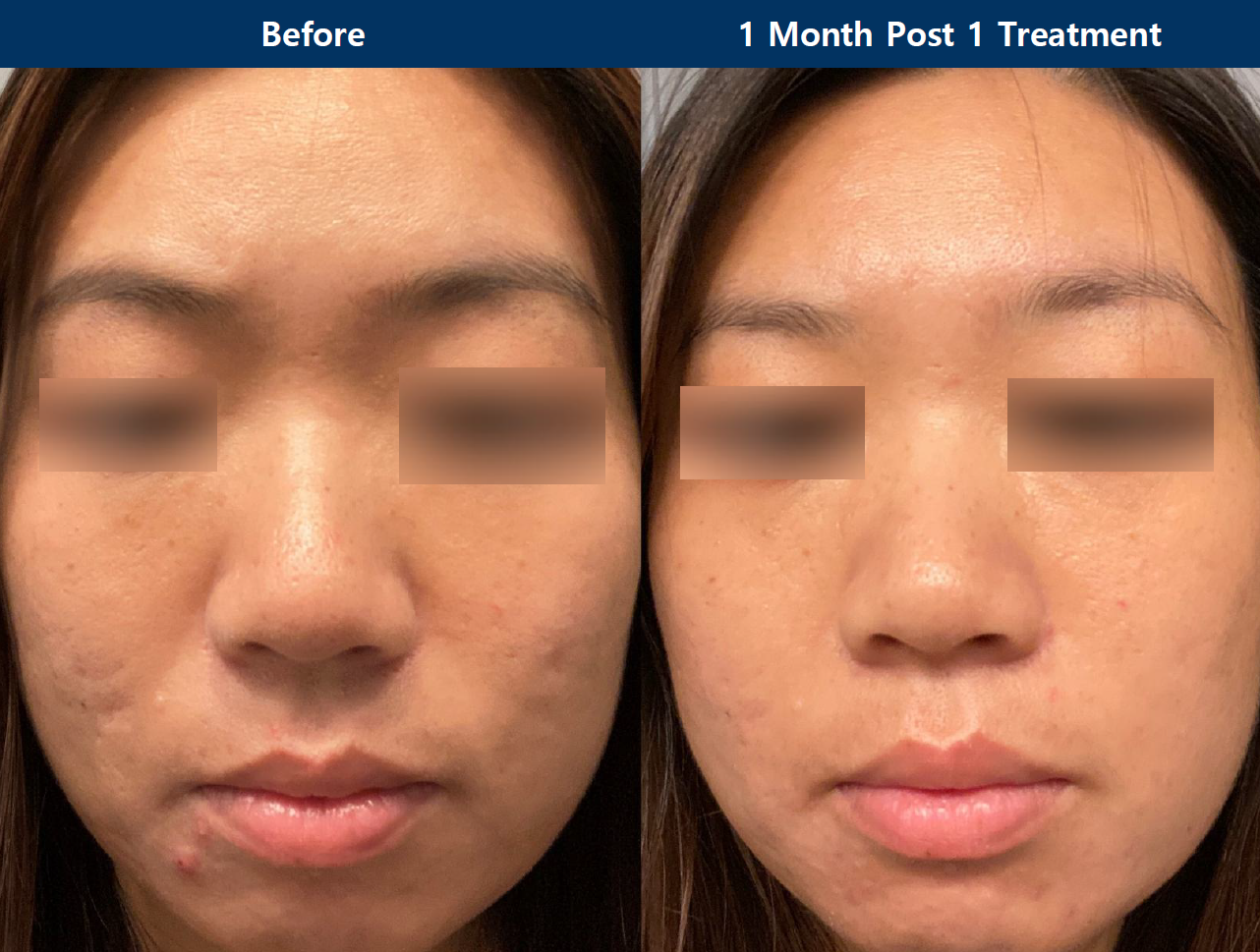
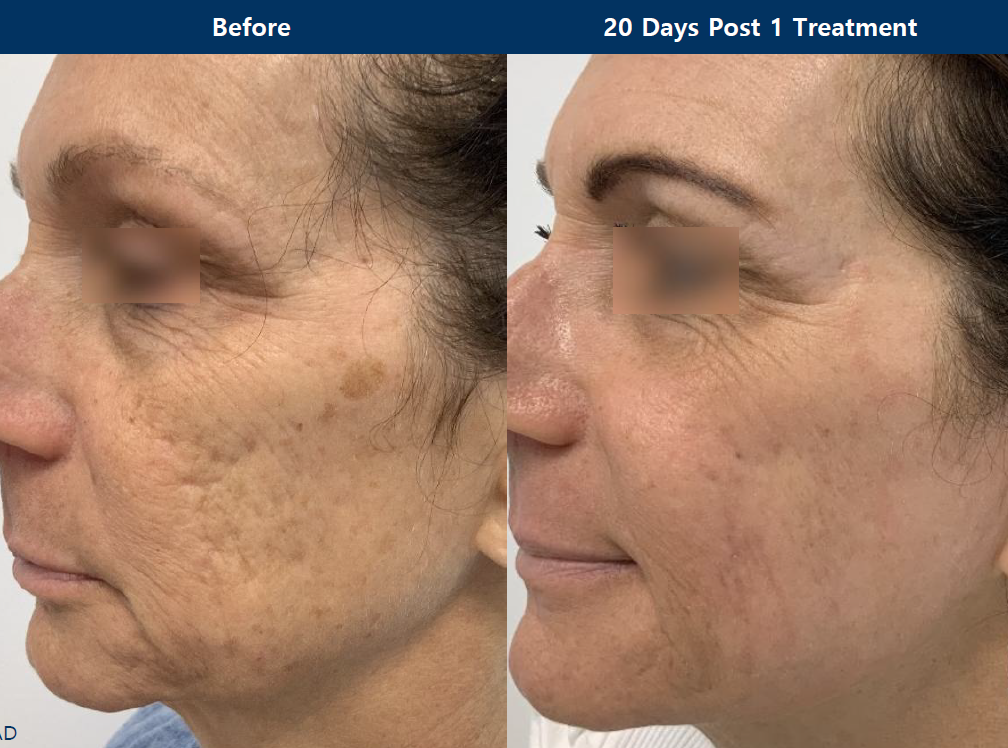
Whereas conventional Fraxel-type lasers induce regeneration by making tiny holes in scar tissue, the coring mode removes the scar tissue itself as if microscopically punching it out. Because it directly reduces the fibrotic scar tissue (de-bulking), it is reported to help even with stubborn acne scars that do not heal well.
The appropriate approach to acne scars differs depending on their cause and shape. I have explained in more detail which devices I consider for each type of scar in my post on acne scar treatment.
Why does skin tighten when it shrinks?
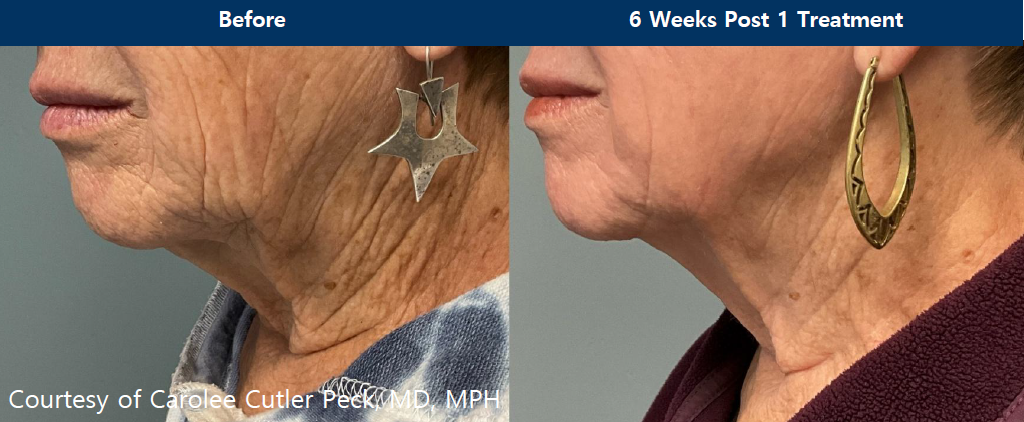
When tiny pieces of skin tissue are physically removed, the overall skin area shrinks as a result (skin shrinkage).

This shrinkage goes beyond a simple improvement in elasticity. It can lead to a lifting effect approaching that of a surgical lift, pulling up a sagging jawline or neck wrinkles. However, the extent of this effect varies between individuals depending on skin condition and treatment design.
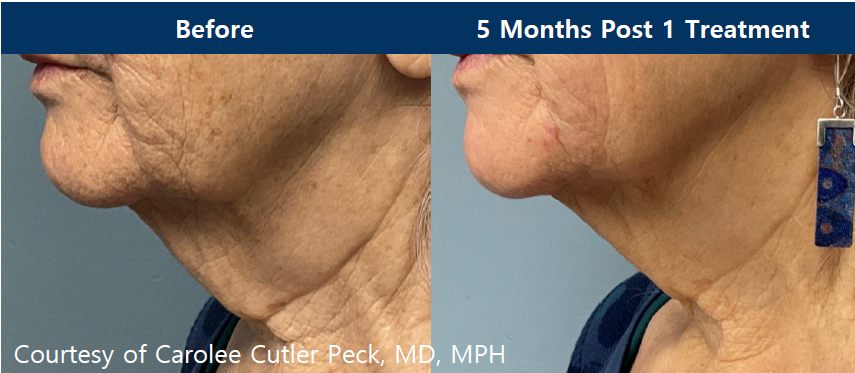
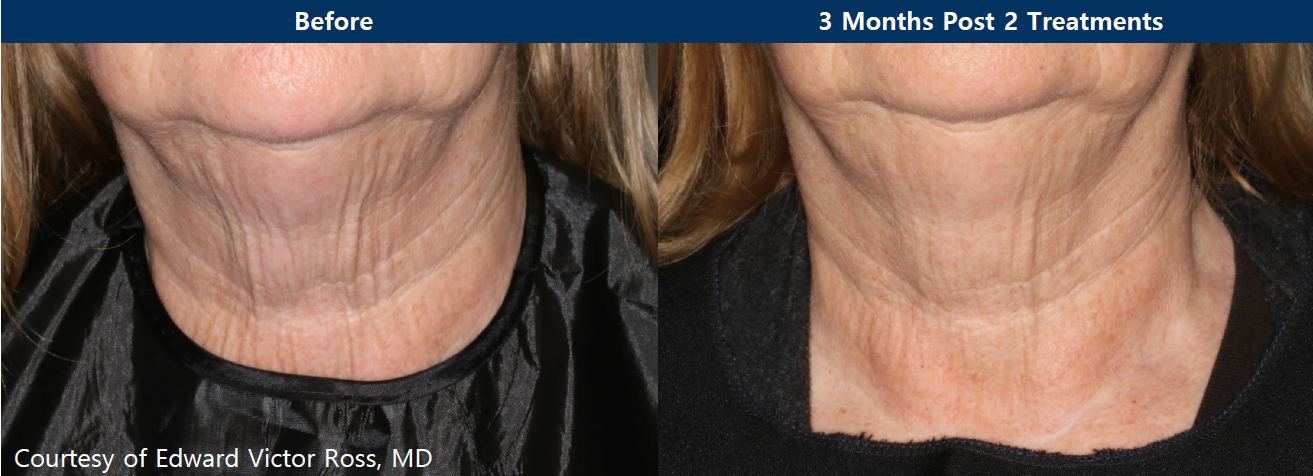
To summarize, the areas UltraClear can address are as follows.
- Loss of skin elasticity
- Shallow fine lines
- Deep wrinkles
- Stubborn acne scars
A distinctive feature of UltraClear is that a single device can address this broad spectrum. However, as I mentioned earlier, results depend on the design, the practitioner's skill and each individual's skin condition.
So for whom does it become an option for changing direction?
I do not introduce UltraClear as a cure-all. It is a treatment with downtime, and results vary greatly depending on the practitioner's design. Instead, I put it this way.
If you have had conventional lifting lasers several times without feeling a clear change and have hesitated about further treatment, a next-generation laser that builds the skin anew, rather than preserving it, can be one option. You can continue reading actual clinical judgments that started from the same concern in my post summarizing the criteria for changing direction when elasticity does not firm up well even with Thermage.
Which mode and depth suit your skin, and how much downtime to expect, can only be determined accurately by examining your skin directly and designing the treatment accordingly. Please feel free to ask if you have any questions.

Author: Dr. Cho Mingyeol, Medical Director (board-certified dermatologist; Master Certification in Pigmentation, Acne, Rosacea and Hair from the Korean Dermatologists Association). You can find the full profile on the Medical Team page. First published 2026-02-10 / Last reviewed 2026-07-09
This article is intended for general information only; the appropriate treatment and outcomes may vary depending on each individual's condition.