

When I consult on frown lines in the dermatology clinic, the conversation about the procedure sometimes naturally drifts toward facial expressions and mood. The saying that "Botox between the brows softens your look" is familiar, but the idea that this change can go beyond expression and reach emotions may sound a little unfamiliar. Today I would like to go through that connection, one point at a time, from a clinical perspective.
What a frowning habit leaves between the brows
When stressed or deep in worry, many people frown without realizing it. I have quite a few lines between my own brows, so I know well how easily this habit sets in. The problem is that as this frowning is repeated, marks settle in between the brows.
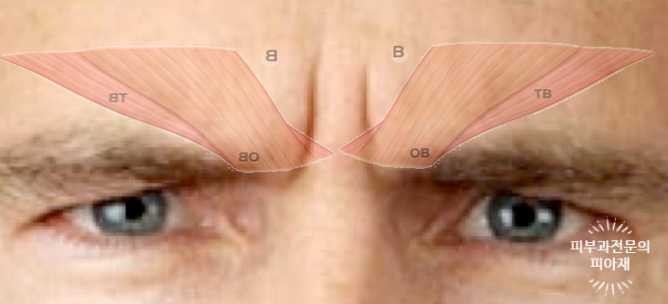
When frowning continues for a long time, vertical lines shaped like the character 川 or horizontal lines remain between the brows. Depending on which muscle acts more strongly, the direction of the lines that stand out on the surface differs.
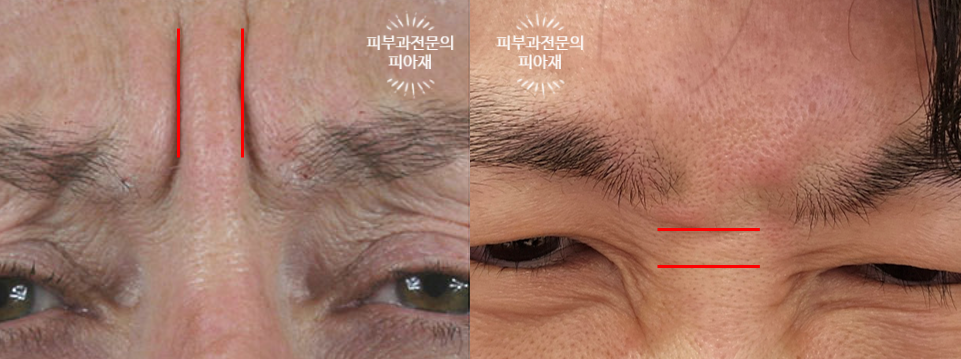
| Muscle | Lines that stand out when it acts strongly |
|---|---|
| Corrugator supercilii | Horizontal lines |
| Procerus | Vertical lines |
Even with the same frown lines, the strength of the muscles differs from person to person, so in some people the horizontal lines are noticeable first, while in others the vertical lines are deeply etched. That is why I check for this difference first in consultations.
Why Botox comes to mind first for frown lines
Botox is the easiest and most comfortable way to address wrinkles created by the muscles of facial expression. It works by temporarily dampening excessive muscle movement, helping the areas that used to fold when you frown fold less. This is also why it is often mentioned as the first option when consulting about frown lines.
However, Botox is not a cure-all, and when there are already deeply etched static wrinkles or sagging as well, the approach changes. I have explained in a little more detail how I distinguish and treat wrinkles caused by expression versus wrinkles caused by age-related sagging in my post summarizing the criteria for choosing a lifting treatment.
Is there evidence that Botox also affects mood?
This is where today's main topic begins. What principle lies behind the idea that glabellar Botox can improve depressed mood?
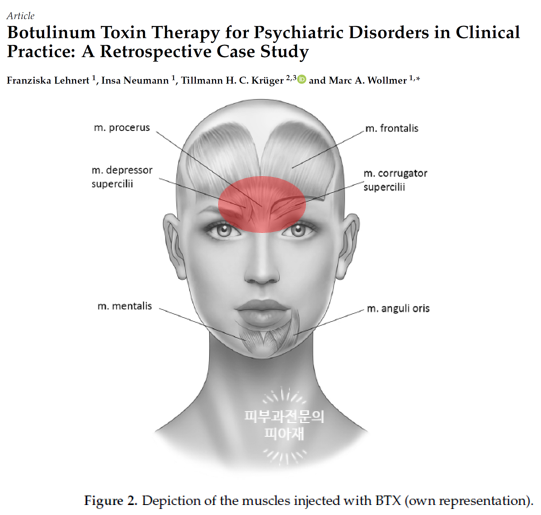
The most persuasive explanation offered is the peripheral feedback theory (peripheral feedback loop). It is the view that facial expressions are not only a result of emotions but, conversely, also send signals back to the emotions.
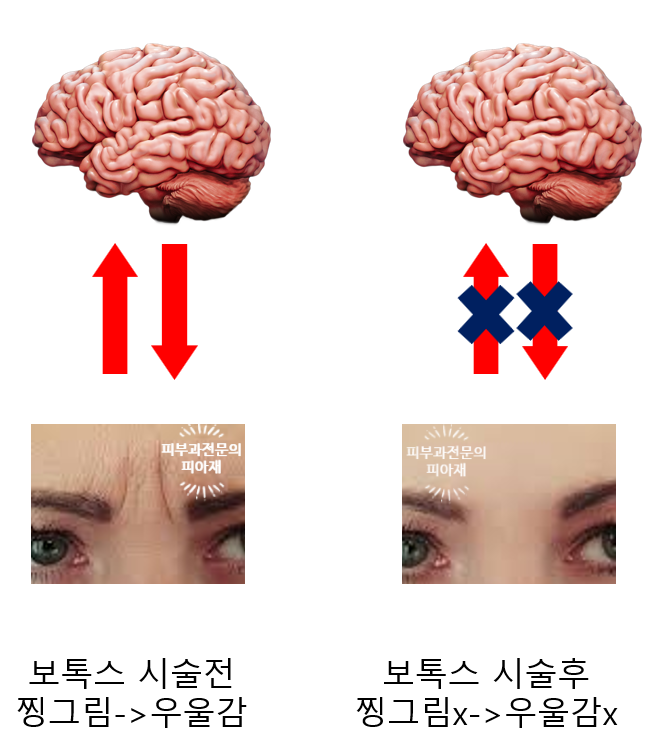
Facial expressions feed back into emotions
Unpacking this theory step by step looks like this.
- When angry or stressed, we naturally frown.
- When the frowning expression persists, the brain receives more stress signals.
- As a result, negative emotions may become even more intense.
The core of this theory is that reducing the frowning movement itself with glabellar Botox blocks, to some extent, the pathway through which negative signals are transmitted to the brain, and as a result depressed mood may improve.
Extending the same logic, I personally wonder whether treatments that soften a downturned expression, such as mouth-corner Botox, might also help soothe one's mood. Of course, this is a view that still leaves room for further observation, and effects and responses vary between individuals.
For how facial expressions and impressions change with treatment, reading my post on the process of shifting to a more approachable impression alongside this one continues today's discussion. If any questions come up, feel free to ask through Consult via chat now.
What does the research say?
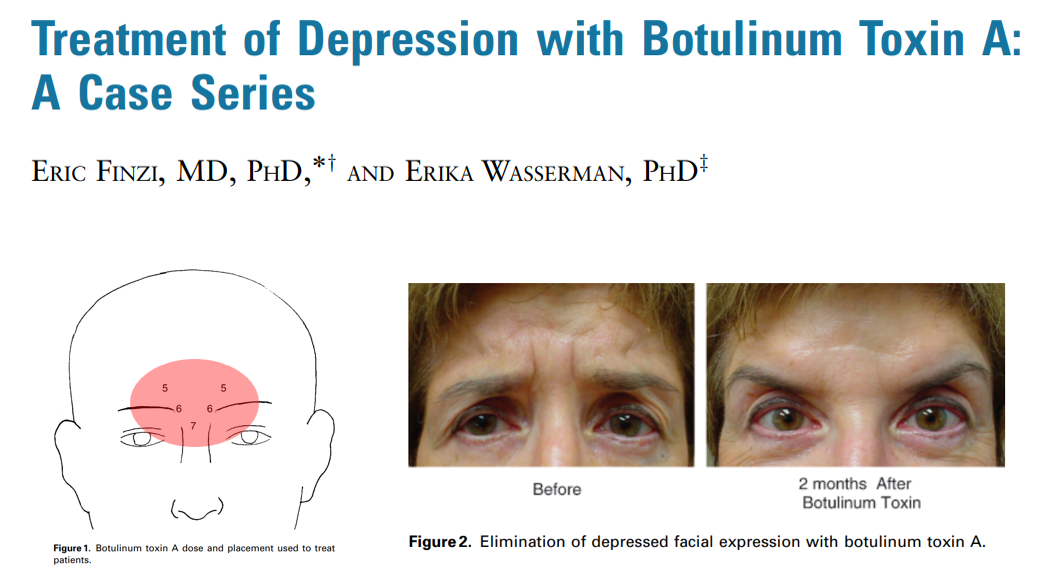
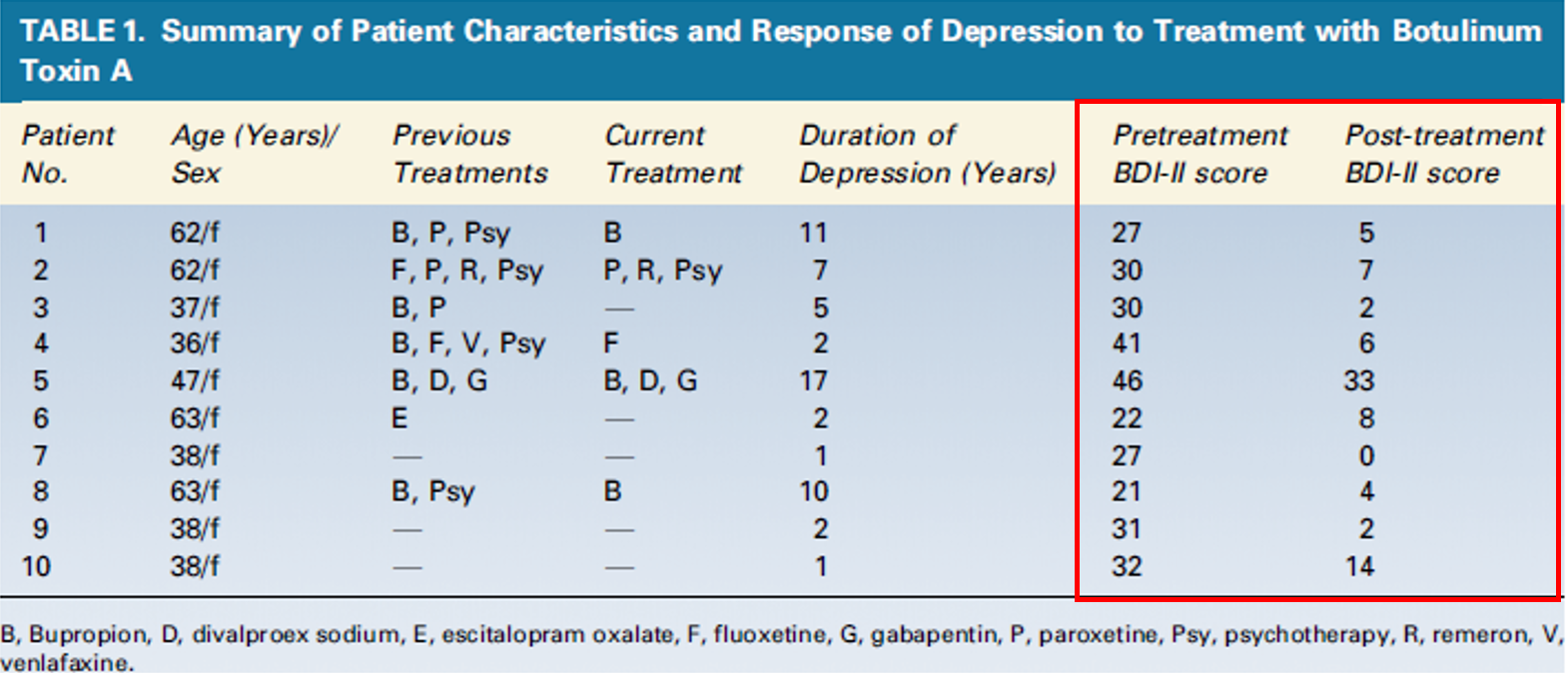
In one study reported at an academic conference, nine out of ten participants who received glabellar Botox were reported to have lower depression scale scores about two months later. With a small sample and individual variation, it is hard to draw firm conclusions, but it is worth noting in that it shows the direction that facial expressions actually influence our emotions.
If you are also considering glabellar Botox from the perspective of improving emotions, these are roughly the points I examine together with you in consultation.
- Whether frowning has become a habit and the movement of the expression muscles is prominent
- Whether there are already static wrinkles etched in as well, and whether sagging accompanies them
- Whether the goal of the treatment is improving wrinkles or changing your overall impression and expression
- How to adjust the dose and sites depending on the strength and position of the muscles
Because Botox is an injectable, it is often confused with other treatments such as fillers. I have summarized how each injectable treatment differs in purpose and nature in my post addressing misconceptions about fillers.
Care that looks at both expression and mind
I am cautious about saying that smoothing out the area between the brows will immediately heal the mind. However, the feedback perspective, in which loosening a set frown a little changes the expression with which you look at yourself, and that expression in turn sends signals to your mood, is certainly interesting. Remembering that facial expressions influence emotions, I hope you take care of some ease of mind along with the tension between your brows.

If you are unsure whether glabellar Botox is the right direction for you, or whether expression lines or sagging should be addressed first, please contact us via Consult via chat. The approach suited to your condition and the costs will be explained after consultation.
Author: Dr. Cho Mingyeol, Medical Director (board-certified dermatologist; Master Certification in Pigmentation, Acne, Rosacea and Hair from the Korean Dermatologists Association). You can find the full profile on the Medical Team page. First published 2024-08-19 / Last reviewed 2026-07-09
This article is intended for general information only; the appropriate treatment and outcomes may vary depending on each individual's condition.