

There is something I hear most often from vitiligo patients in the clinic: "I've been getting excimer laser for a year, but the color isn't coming back. Does that mean my skin can't recover?" The more consistently someone has been treated, the greater this anxiety. When I hear this, I judge that it is now time to change the approach.

Vitiligo treatment works differently at each stage
In the early stage, lasers or light therapy are used to wake up the remaining melanocytes and get them working. It is like getting dormant cells back to work. But in areas that do not respond, the melanocytes themselves have disappeared, so there is no change even when they are stimulated.
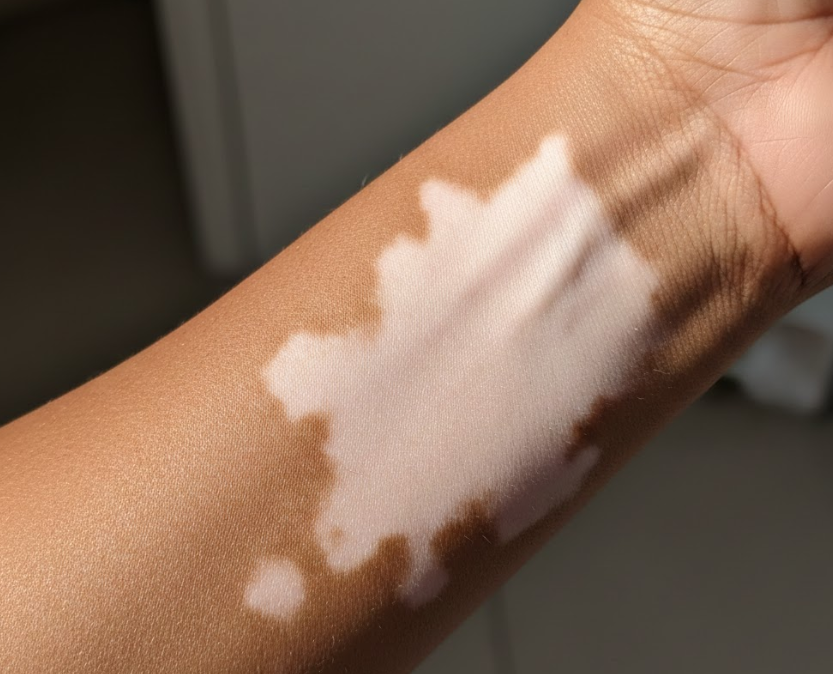
In a field with no seeds, no amount of water and sunlight will make sprouts come up. Areas where no cells remain are exactly like that.
Four signs for considering SST grafting
- When there has been almost no change in color after more than 6 months of laser treatment. Excimer and light therapy work by stimulating the remaining pigment cells. If there is no response, it may be a sign that there are no cells left to stimulate.
- When the lesions have been stable without spreading for more than 6 months. During a period of active spread, the immune response can attack even the grafted skin, so the principle is to proceed during a stable period.
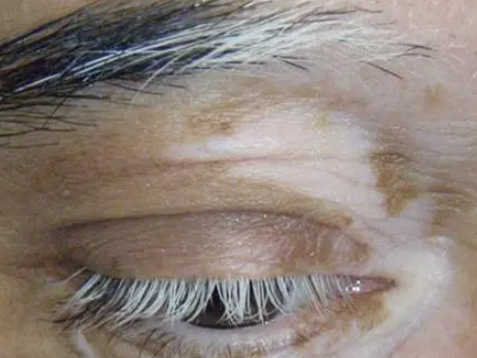
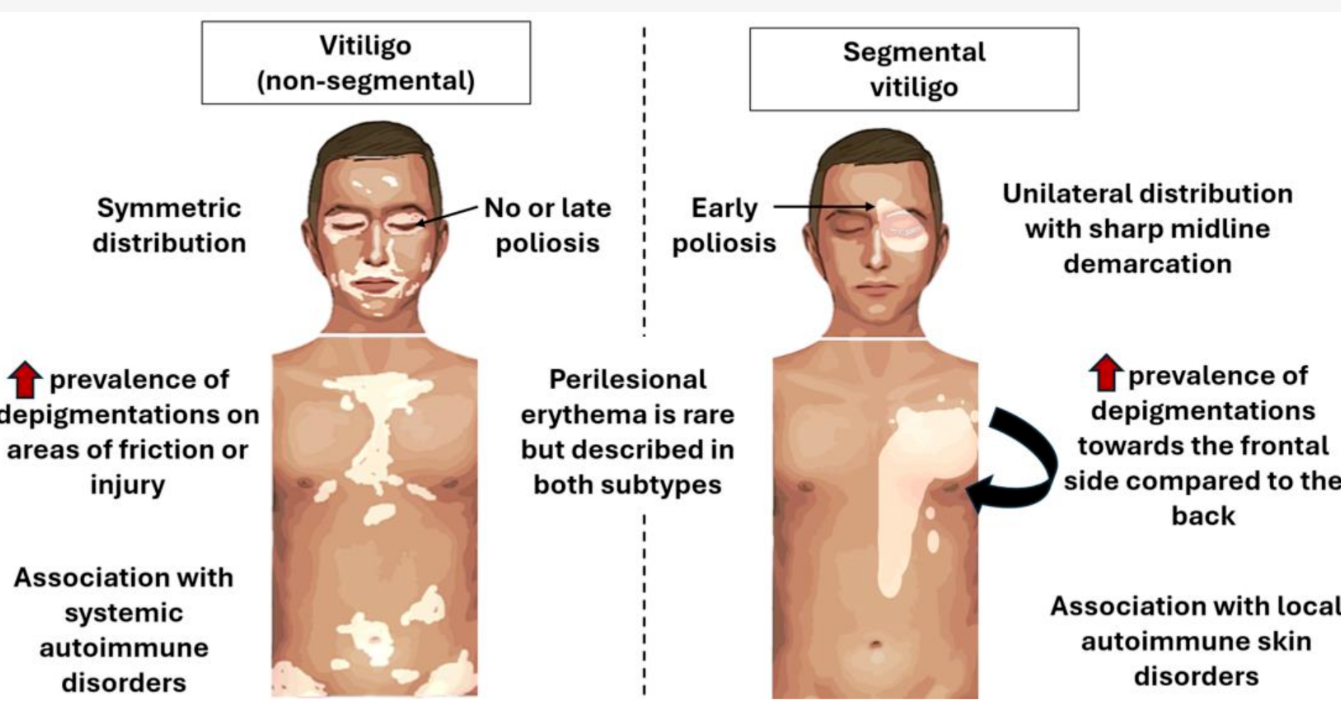
- When it is accompanied by leukotrichia, in which even the hair turns white. This means the reservoir of pigment cells in the hair roots is empty, so laser stimulation alone has limits.
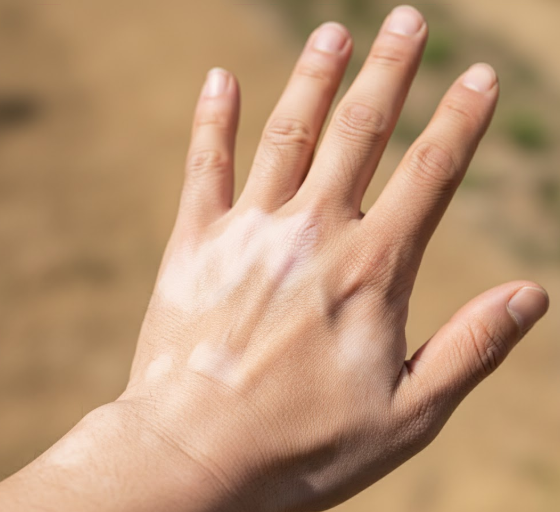
- When it is in a curved area such as the finger joints or elbows. In areas that fold and move, it is hard to spread pigment evenly with lasers, but a method of planting tiny pieces one by one can be applied.


SST is planting skin seeds
SST stands for Skin Seeding Technique, a method that, as the name says, plants skin like seeds. Very small pieces of skin, 0.4 to 0.8 mm in size, are harvested from inconspicuous areas such as behind the ear or the abdomen. The key is not to take only the epidermis but to include both the epidermis and the dermis, transferring the structure in which the pigment cells are alive as it is.
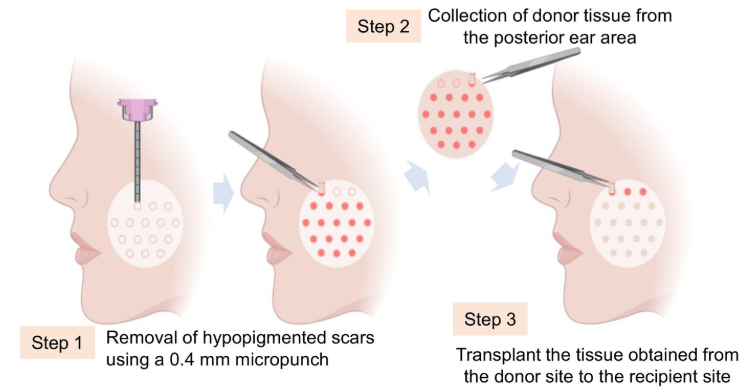
When explaining it to patients, I often compare it to planting rice seedlings in a paddy. Just as healthy seedlings planted at regular intervals take root and spread, the principle is to place pieces of normal pigment cells in the vitiligo area so that they adapt to the new environment and multiply.

Recovery after grafting proceeds like this
- Usually, 2 to 3 weeks after the procedure, pigment appears at the grafted sites like small dots
- Over the following 3 to 6 months, the pigment spreads to the surroundings and fills in the area
- Combining Palas or excimer laser to support cell activity can speed up recovery
So SST is not a procedure that ends in one session; results are stable when consistent follow-up treatment goes along with it. Because the harvested pieces are so small, there is little bleeding and scars at the harvest site tend not to remain, which also helps reduce the burden in conspicuous areas such as joints.
Knowing your current stage comes before treating for longer
Vitiligo is not a condition that is resolved simply by spending a long time on it. It is important to first understand what stage your skin is at now and which method suits it. If there has been no change for more than a year, it may not mean the treatment was wrong but be a signal that a different method is needed. If you are curious about the background of how pigment is made and settles in, the post that explains pigmentary conditions histologically is also helpful.
If you need to check whether your vitiligo is in a stable period and whether you are at a stage where SST is suitable, please use Start a chat consultation now on your vitiligo stage.

Author: Dr. Cho Mingyeol, Medical Director (board-certified dermatologist; Master Certification in Pigmentation, Acne, Rosacea and Hair from the Korean Dermatologists Association). You can find the full profile on the Medical Team page. First published 2026-01-24 / Last reviewed 2026-07-09
This article is intended for general information only; the appropriate treatment and outcomes may vary depending on each individual's condition.